Netflix revises Warner Bros.’ deal to $83 billion: All-cash offer
Netflix has decided to revise its bid’s deal for Warner Bros. after the company shares, unusually dropped in the latest update.
The streaming pioneer and Netflix co-CEOs’ decision to plunk down nearly $83 billion on Warner Bros.’ assets, marks a significant departure from the company’s long-standing mantra, “build, don’t buy.”
However, investors still aren’t buying it.
As reported by Reuters, the company shares were already under pressure even before Netflix took the initiative to offer Warner Bros Discovery’s open new tab for studio and streaming assets.
The stock, which has lost more than 15% since Netflix made its first offer on December 5, 2025, was down nearly 4% in early trading on Wednesday, January 21, 2026, as co-CEOs Ted Sarandos and Greg Peters found themselves having to explain their aggressive push that has forced them to suspend share buybacks.
Sarandos noted, how tech giants such as Alphabet’s open new tab YouTube had changed what television viewing meant, forcing Netflix to change tack to keep up.
Netflix is trying to stay ahead of Paramount Skydance (opens new tab) with its $82.7 billion all-cash offer for Warner Bros.’ film and television studios, its extensive content library, and major entertainment franchises—including “Game of Thrones” and “Harry Potter.”
“We have often in our Netflix history debated building a theatrical business, but we were busy investing in other areas, and it never became our priority.”
“But now with Warner Bros., they bring a mature, well-run theatrical business with amazing films, and we’re super excited about that addition,” he said, in a reversal of Netflix’s former position that theaters were an outdated model with audiences preferring stay-at-home streaming.
“And then you get to the streaming side of things, HBO. It is an amazing brand. It says prestige TV is better than almost anything. Customers know it. They love it. They know what it means,” Peters said, adding that Warner’s television studio was also a healthy business and complemented Netflix’s own, expanding its production capability.
Why are investors still not convinced for ‘Netflix-Warner Bros.’ deal?
With the expensive deal hanging over its head, Netflix delivered a tepid revenue beat for what is usually one of its strongest quarters and forecast equally dull prospects for the new year.
While a strong content line-up, including the final season of hit sci-fi series “Stranger Things,” helped revenue growth, high costs associated with the Warner Bros acquisition have made people apprehensive about the long-term payoff, analysts said.
Netflix said previously that it had obtained commitments for a $59 billion bridge loan to support the Warner Bros.’ deal.
On Tuesday, it increased the bridge loan commitment by $8.2 billion to support its all-cash $27.75 per share offer.
The deal is expected to face considerable scrutiny from lawmakers and competition regulators as high-profile acquisitions threaten to monopolize the market and leave consumers with fewer choices.
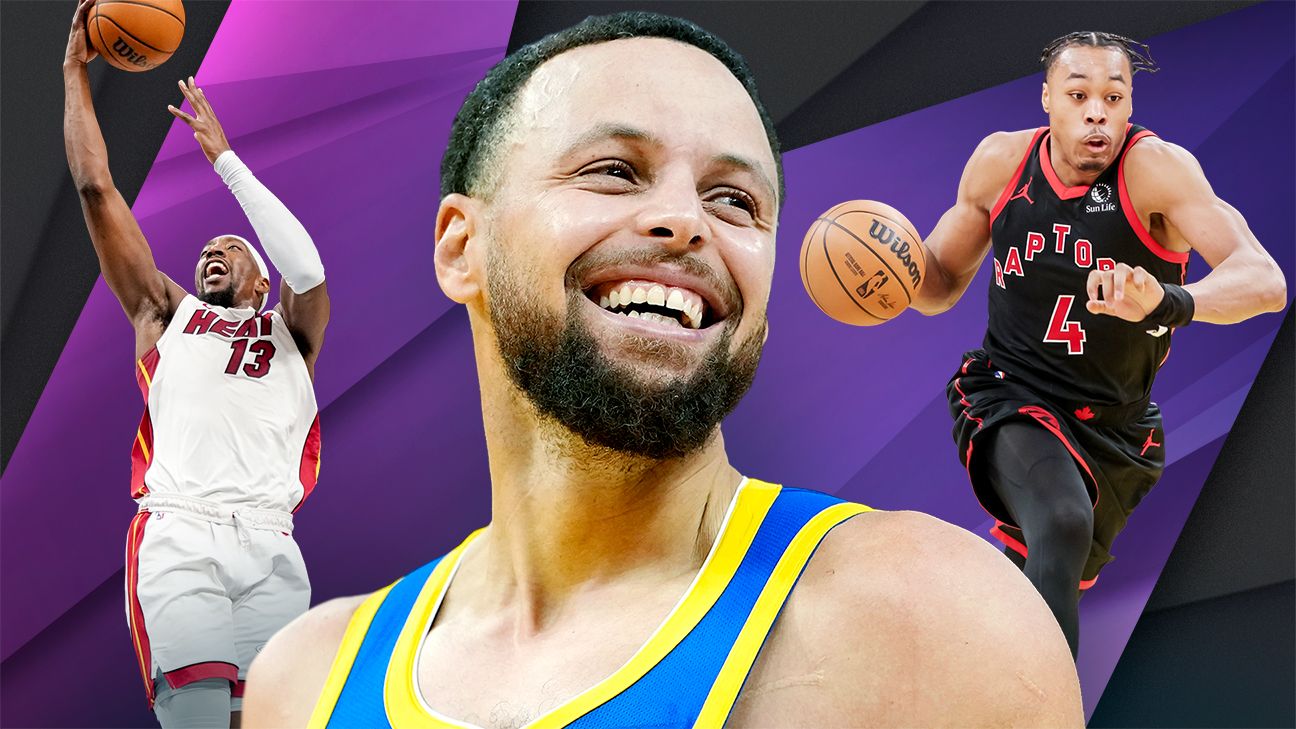
We’re two weeks out from the NBA trade deadline and midway through the 2025-26 NBA season, as tensions are high on which star player will be on the move next.
The Detroit Pistons stand firmly at the top of the East, stretching their lead over the Boston Celtics to 5.5 games after an exhilarating (and potential Eastern Conference finals matchup) on Monday.
In the West, the LA Clippers appear to be on the rise, recently riding a six-game win streak behind a Kawhi Leonard and James Harden surge. It’s a wave they’re hoping to ride as the battle for the top six teams in the conference is starting to heat up.
As teams around the league are preparing for the second half of an already exciting season, our NBA insiders checked in on the biggest questions surrounding each franchise as they start turning their attention to April.
Note: Team rankings are based on where members of our panel (ESPN’s Anthony Slater, Dave McMenamin, Jamal Collier, Kevin Pelton, Michael C. Wright, Bobby Marks, Tim Bontemps, Tim MacMahon, Vincent Goodwill and Zach Kram) think teams belong.
Bad news for the best team in the league this week: Williams strained his hamstring and will sit out at least two weeks and possibly longer, according to the team. It has been a difficult season for Oklahoma City’s co-star. His wrist rehab required a second procedure; he acknowledged the challenges he faced rediscovering his game upon return, and now he’s staring at another lengthy absence. Without him, the Thunder will continue to rely on Shai Gilgeous-Alexander, sturdy depth, and the continued rise of Chet Holmgren, who appears destined to be the second obvious All-Star for the Thunder. — Slater
2025-26 record: 31-10
Previous ranking: 2
Next games: @ NO (Jan. 21), vs. HOU (Jan. 23), vs. SAC (Jan. 25), @ DEN (Jan. 27)
Just how good can their defense get?
Those who don’t believe in the Pistons as true contenders have been waiting for shooting and shot-creation deficiencies to doom the East leaders. Thanks to a hellacious defense, Detroit’s place among the elite remains safe. That has been especially true this month, as the team has given up a league-low 99.5 points per 100 possessions — eight points better than second-place Oklahoma City. And in fourth quarters this month, that number drops to 91.8. — Goodwill
Can San Antonio maintain its momentum?
The Spurs appear to be up to the task. In the locker room after San Antonio secured its third consecutive win Monday, in the third straight game that Victor Wembanyama drained at least four 3-pointers, second-year guard Stephon Castle discussed how beneficial the All-Star break would be for a young team still learning how to handle success. Besides the physical rigors of the first half of the season, with several players sitting out extended time because of injuries, the Spurs have successfully overcome the mental dynamic of being a team with a target on its back. — Wright
2025-26 record: 29-15
Previous ranking: 4
Next games: @ WAS (Jan. 22), @ MIL (Jan. 23), @ MEM (Jan. 25), vs. DET (Jan. 27)
Watson’s recent breakout presents key short- and long-term questions for the Nuggets. He has averaged an efficient 21.9 points, 6 rebounds, 3 assists, 1.3 blocks and 1.2 steals per game to help the Nuggets go 7-4 since Nikola Jokic went down, using an increased role to display off-the-dribble creation ability. How can the Nuggets utilize that once the three-time MVP returns? And how can the Nuggets afford to keep Watson as the potential contract value rises for the pending restricted free agent? Rival teams anticipate the Nuggets could look to trade Cameron Johnson or Christian Braun this summer if Denver deems re-signing the 23-year-old Watson a priority. — MacMahon
2025-26 record: 26-16
Previous ranking: 7
Next games: vs. IND (Jan. 21), @ BKN (Jan. 23), @ CHI (Jan. 24), vs. POR (Jan. 26)
After Tatum’s public workout in Detroit on Monday, the question for Boston isn’t whether Tatum plans to return, but how good he will look when he does. Boston’s push to second in the East and a 50-win pace at the halfway mark of the season is proof that the Celtics will believe they can make it back to the Finals this season, even with Tatum sitting out most of the season. But if he can return at even 75% of his usual caliber this season, Boston probably would enter the postseason as the East’s favorites to make it to June. — Bontemps
Can Minnesota add some guard help between now and Feb. 5?
This question will continue to hang over the Timberwolves until either the trade deadline passes or they add much-needed guard help. Rob Dillingham, to this point, hasn’t worked out, and Mike Conley isn’t a long-term solution. Tim Connelly, Timberwolves president of basketball operations, is known for making big swings, and it’s fair to expect him to pursue another over the next few weeks — Bontemps
Can the supporting cast around Kevin Durant gain consistency?
Coach Ime Udoka remains confident in the Rockets’ bullying style of play without a bona fide facilitator running the show. Fred VanVleet, who tore his ACL in September, wants to return at some point this season. Until any potential comeback, young players such as Amen Thompson, Reed Sheppard and Tari Eason need to continue to make strides alongside Jabari Smith Jr. in Houston’s point guard-by-committee approach. Durant and Alperen Sengun will continue to draw extra attention, but the supporting cast needs to consistently make opponents pay. — Wright
Is the recent slide a blip or a sign of things to come?
There’s nowhere to hide now; the Knicks are nearing crisis, as being booed at Madison Square Garden against a depleted Mavs team might be a low point. Since owner James Dolan’s proclamation that the Knicks “absolutely have to” reach the Finals, New York is 2-6. Since winning the NBA Cup title in Las Vegas, the defense has given up 119.6 points per 100 possessions, second worst in the league to the Jazz during that span. But it is important enough to note that the Knicks are just two games off their pace from last season (25-18 this season compared to 27-16 through 43 games in 2024-25). — Goodwill
How will Jalen Green be integrated into their success?
After making his return Tuesday, his first game action since early November because of a right hamstring issue, the Suns’ rotation will now shift to fit Green into the rotation. Adding a 23-year-old dynamic scorer is undoubtedly a good problem to have for first-year head coach Jordan Ott; shuffling things on the fly, however, is always a challenge, and Phoenix has had a good thing going so far this season and is riding a three-game win-streak. — McMenamin
Will they be able to significantly upgrade around the trade deadline?
With about $40 million in expiring contracts between Rui Hachimura, Gabe Vincent and Maxi Kleber, and either their 2031 or 2032 first-round draft pick to package in trade scenarios, can L.A. find some sorely needed two-way wing help? Yes, Austin Reaves‘ eventual return will provide a boost, but this roster needs more to resemble a true contender. — McMenamin
Every level of the organization was reeling in the aftermath of Butler’s ACL tear, only beginning to come to grips with the seismic short- and long-term ramifications. The timing of it provides an opportunity. The front office has two weeks to assess the best path forward before the trade deadline. Should the team get more or less aggressive? Which picks should or shouldn’t be on the table? Does this change the Jonathan Kuminga calculus? There are several options available, but — considering Butler’s outsized importance — it’s hard to envision any that lead them back to even fringe contention. This was a franchise-altering injury. — Slater
2025-26 record: 24-20
Previous ranking: 12
Next games: @ CHA (Jan. 21), vs. SAC (Jan. 23), @ ORL (Jan. 24), vs. ORL (Jan. 26)
Can the Cavs reestablish themselves as East contenders?
Due to inconsistencies and injuries up and down the roster — Darius Garland is sidelined again with a Grade 1 sprain of his right big toe, an issue that has plagued him since last season — the East’s preseason co-favorite has struggled to break free from the play-in picture. The Cavs, who have played better in recent weeks, hope to get right during the second half of the season and enter the playoffs looking more like the contender they expected to be. — Collier
Can the offense perk up to league-average efficiency?
Toronto ranks second in the East and fifth overall in defensive rating. But despite many highly paid perimeter players, the offense hasn’t kept pace: On that end, the Raptors rank 9th in the East and 19th overall, and every team below them has a losing record. Typical championship contenders must be at least league average on both ends of the court, so Toronto needs to show meaningful offensive improvement — or make a significant deadline trade — to enter the true contender conversation. — Kram
2025-26 record: 23-19
Previous ranking: 11
Next games: vs. HOU (Jan. 22), vs. NYK (Jan. 24), @ CHA (Jan. 26), vs. MIL (Jan. 27)
What direction will the 76ers go in at the deadline?
Philadelphia has had a very encouraging first half of the season, settling into the middle of the muddled East playoff picture while continuing to get Paul George and Joel Embiid up to speed, and getting dynamic play from All-Star starter Tyrese Maxey and star rookie VJ Edgecombe. But will the 76ers look to improve the team, or to potentially duck the luxury tax? — Bontemps
Can Orlando stay consistent with a healthy team?
A projected top-4 team in the East before the season, the Magic have not won more than four consecutive games this season and are only four games above .500. The good news is that the Magic are beginning to get healthy with the return of Moritz Wagner and Franz Wagner. The bad news is that the lineup of Jalen Suggs, Desmond Bane, Franz Wagner, Paolo Banchero and Wendell Carter Jr. has started only 11 games, going 5-6 in that span. — Marks
Can the Heat find enough consistency to climb the East standings?
Before losing to Golden State on Monday, the Heat had their best win of the season against Oklahoma City at home. A positive of late has been Bam Adebayo‘s offense. In his past four games entering Tuesday night, Adebayo was averaging 21.3 points with 46.4% shooting from 3. Tyler Herro‘s health will be worth monitoring in the second half of the season. After a career-high 77 games and an All-Star breakthrough last season, Herro has played 11 of 44 games this season because of injuries to his left ankle, right toe, and, most recently, his ribs. — Marks
2025-26 record: 22-22
Previous ranking: 18
Next games: vs. MIA (Jan. 22), vs. TOR (Jan. 23), @ BOS (Jan. 26), @ WAS (Jan. 27)
Will the Trail Blazers make the playoffs for the first time since 2021?
For the first time since falling out of the 2023 play-in race, the Blazers hit midseason thinking about the postseason. They successfully navigated a four-game absence from star Deni Avdija, splitting those games before winning in his return to the lineup Sunday. That got Portland to .500 for the first time since Nov. 14. With Jerami Grant and Jrue Holiday also back, the Blazers are healthier than they’ve been since starting the season 5-3. Now they’ll look to secure a play-in spot with an eye toward the postseason. — Pelton
How long can they sustain this run?
After losing 21 of their first 27 games, the Clippers’ turnaround has been remarkable in winning 13 out of 16. Their surge has landed them in the play-in tournament conversation, but can they elevate even higher in the second half? If Derrick Jones Jr. and Bogdan Bogdanovic can get healthy, Clippers coach Tyronn Lue will have more options down the stretch, with Kobe Sanders, Kobe Brown and Jordan Miller showing growth in the meantime. — McMenamin
2025-26 record: 18-23
Previous ranking: 22
Next games: vs. ATL (Jan. 21), vs. NO (Jan. 23), vs. DEN (Jan. 25), @ HOU (Jan. 26)
After Sunday’s game against Orlando — the type of explosive performance that has made Morant one of the NBA’s most popular players — the star guard expressed a desire to remain in Memphis. That probably won’t stop the brass from surveying a potential trade, but given the Grizzlies’ collection of talent that includes Cedric Coward, Jaylen Wells, Jaren Jackson Jr. and Zach Edey, this team could make a serious push for a play-in spot if Morant is committed to the cause and stays healthy. — Wright
Will the Bulls find a direction?
Chicago seems stuck in a time loop. At the midway point of the season, its record was 19-22. Its record at the midway point last season was 18-23. The year before, it was 19-22. How about the year before that? It was 19-22. The Bulls are again positioned for the No. 9 seed in the East and a fourth straight play-in tournament. Will anything about the rest of this season give fans hope for a different future? — Collier
Can the Hawks generate enough offense to stay competitive?
A 5-10 record in their past 15 games — including a four-game losing streak since Jan. 13 — has Atlanta clinging to the final playoff spot in the East. Besides health, the big question moving forward is whether the Hawks have enough offense. Atlanta has ranked 29th in offensive efficiency since Dec. 22. Atlanta ranks 16th in 3-point percentage, despite ranking third in attempts. The Hawks also rank third worst in free throw attempts. Jalen Johnson, a breakout star this season who is averaging 23 points, is averaging 16.3 points — fourth best on the team — during this four-game skid. — Marks
2025-26 record: 16-27
Previous ranking: 23
Next games: vs. CLE (Jan. 21), @ ORL (Jan. 22), vs. WAS (Jan. 24), vs. PHI (Jan. 26)
How do the Hornets accelerate their rebuild?
On track to win the franchise’s most games since 2021-22, the Hornets will spend the second half evaluating a run at the postseason … in 2027. It’s clear Charlotte has one building block in place in Rookie of the Year contender Kon Knueppel. Meanwhile, LaMelo Ball‘s recent resurgence offers hope he can stick around long term. The Hornets must figure out how the rest of the players fit and where veteran talent could help accelerate the timetable, as we’ve seen with Detroit and Houston in recent seasons. — Pelton
2025-26 record: 18-24
Previous ranking: 20
Next games: vs. OKC (Jan. 21), vs. DEN (Jan. 23), vs. DAL (Jan. 25), @ PHI (Jan. 27)
How can the Bucks salvage this season?
The Bucks are coming off a huge victory against the Hawks on Monday, a win that brings them to within striking distance of the No.10 seed and at least a spot in the East play-in tournament. But just sneaking in has not been the goal for the Bucks or superstar Giannis Antetokounmpo. Can the Bucks pull off a big trade at the deadline to build around Giannis and change their fortunes, or will they be able to put together a winning streak that can catapult the team up the standings? — Collier
The team announced that Davis would be sidelined six weeks because of ligament damage in his left hand. And while the Mavs’ interim co-general managers continue to engage in trade discussions involving Davis, sources said that ownership does not feel pressure to make a deal if Dallas doesn’t get offers that it deems as good value. If Davis remains on the roster past the Feb. 5 deadline, expect discussions about whether it’s in the franchise’s best interest for the star forward to return at all this season. — MacMahon
When will the Jazz make winning as many games as possible the goal again?
This is the fourth season of Utah’s rebuild, and keeping the top-eight-protected pick owed to Oklahoma City — which turns to dust if not conveyed in this draft — is clearly the priority. There is optimism in the Jazz organization that a jump to competitiveness will be made this season. The team’s brass believes the Jazz have a solid core in place with Lauri Markkanen, Keyonte George, Ace Bailey and Walker Kessler, whom Utah intends to keep in restricted free agency. After the addition of another lottery pick, an true attempt to reach the postseason is anticipated next season. — MacMahon
2025-26 record: 12-29
Previous ranking: 26
Next games: @ NYK (Jan. 21), vs. BOS (Jan. 23), @ LAC (Jan. 25), @ PHX (Jan. 27)
Brooklyn’s win over Chicago last week — the Nets nearly gave it away in the final quarter after building an 18-point lead — prevented this current slide from hitting the eight-game mark. Amid a 2-10 stretch, things appear to be quiet on the Porter trade front. The forward, who is having a career-best season, has plenty of interest around the league, but the Nets haven’t begun to seriously entertain anything as the deadline approaches. With a five-game road swing coming that takes Brooklyn into February, it will be interesting to see if talks heat up. — Goodwill
2025-26 record: 12-32
Previous ranking: 27
Next games: vs. TOR (Jan. 21), @ CLE (Jan. 23), @ DET (Jan. 25), @ NYK (Jan. 27)
After sitting out 27 games because of a meniscus tear, Sabonis quietly returned to the Kings‘ lineup this past week, easing back in a 20-minute bench role. The pre-deadline timing allows Sabonis to attempt to get a rhythm and prove to the league that he’s healthy, while the Kings, league sources said, plan to explore potential deals in the next two weeks. Sabonis is owed $42.3 million this season, $45.4 million next season, and $48.6 million in the final year of his current contract. It’s a hefty contract to move, but Sabonis is the type of talent who will intrigue certain midtier teams in search of a shake-up and an interior boost. — Slater
2025-26 record: 10-35
Previous ranking: 30
Next games: vs. DET (Jan. 21), @ MEM (Jan. 23), @ SA (Jan. 25), @ OKC (Jan. 27)
With the Pelicans headed toward one of the NBA’s worst records, where do they shift their focus?
The development of rookie lottery picks Jeremiah Fears and Derik Queen will take center stage the rest of the season. Since New Orleans has no lottery incentive to lose games, the Pelicans’ veterans around them might not get shut down early. But it’s also important for New Orleans to keep Trey Murphy III and Zion Williamson healthy while being cautious with the return of guard Dejounte Murray, out since January 2025 because of an ACL tear. That should allow Fears and Queen plenty of opportunities to work on their game. — Pelton
Will the pingpong balls cooperate at the draft lottery?
In 1996-97, the Spurs fell from a 59-23 record the previous year to 20-62 amid a slate of injuries. But that lost season brought in No. 1 pick Tim Duncan — and, eventually, five titles — to San Antonio. Fast-forward three decades, and Indiana’s injury-plagued gap year might end up being worth it in the end, if the Pacers land a top prospect in the draft. — Kram
Despite a recent stretch of decent play, the Wizards are still nearly assured of finishing with a strong lottery position — and of retaining their top-eight-protected draft pick. ESPN’s Basketball Power Index projects Washington to finish with the NBA’s worst record. So the team’s biggest question, instead, is how much its new star acquisition plays as he works his way back from injury, and whether he can start to jell with his young teammates before the 2026-27 season. — Kram
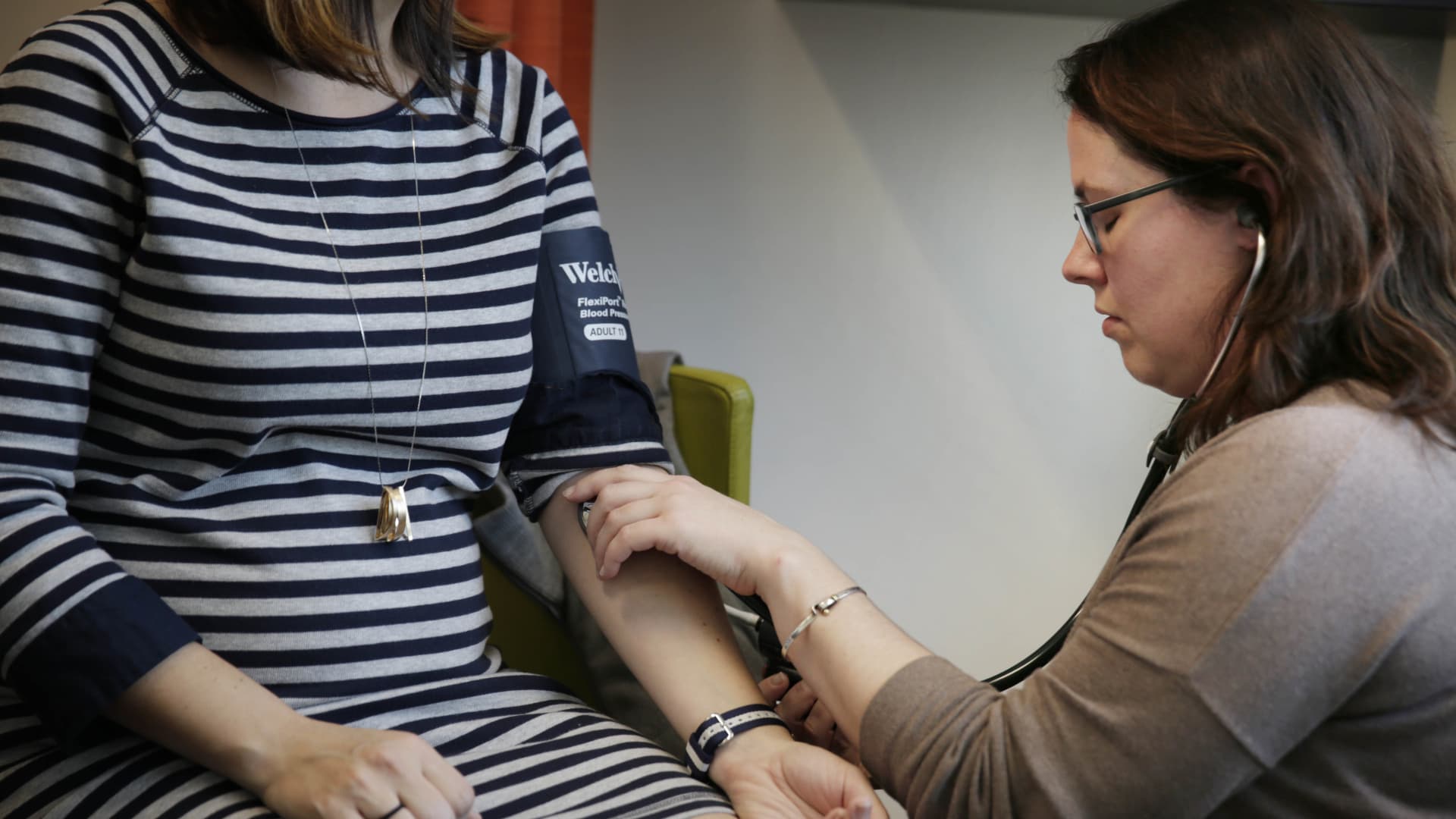
Dr. Stephanie Long (right), MD, of One Medical Group takes the blood pressure of Danielle Greene (left), who is 20 weeks pregnant, during a prenatal appointment on Thursday, February 4, 2016 in San Francisco, Calif.
Lea Suzuki | San Francisco Chronicle | Getty Images
The tool, called Health AI, uses large language models from Amazon’s Bedrock service to answer questions and provide members with personalized advice based on their medical records, lab results and current medications.
It can also assist with managing medications and book appointments with a user’s One Medical provider.
The tool pulls answers from a variety of sources, including licensed and proprietary data, knowledge verified by medical experts and in some cases, publicly-available data, Amazon said.
Health AI appears in the app for One Medical, the health-care company Amazon acquired for $3.9 billion in 2023. One Medical runs brick-and-mortar clinics and also offers some telehealth services to members who pay between $99 and $199 a year for its services.
Amazon said Health AI isn’t intended to provide diagnosis or treatment, and it shouldn’t replace a doctor’s visit. The tool is “programmed with clinical protocols” that identify when symptoms or conditions require escalation to a provider or for an in-person visit, the company said.
Conversations with Health AI also aren’t added to a patient’s medical records, Amazon said.
The company began testing Health AI among a subset of One Medical members last Spring before rolling out the tool more broadly.
Other AI providers have also jumped into the lucrative health-care market.
Earlier this month, OpenAI launched ChatGPT Health, a feature within its chatbot that enables users to upload medical records and receive personalized advice. Anthropic released its Claude for Healthcare feature shortly after.
Amazon said Health AI is easier for patients to use because it doesn’t require them to upload documents or connect outside apps, and it’s “more actionable” compared to other offerings.
“In short: other AI health chatbots provide general health information,” Neil Lindsay, senior vice president of Amazon Health Services, told CNBC in a statement. “One Medical’s Health AI assistant knows your health story, can take actions based on a patient’s request, and keeps your trusted providers in the lead. It’s the difference between getting answers and getting care.”
Amazon has pushed deeper into health-care over the past decade. In addition to acquiring One Medical, Amazon also bought online pharmacy PillPack for about $750 million in 2018. Two years later, it launched its own offering called Amazon Pharmacy.
The company said Health AI may direct users to One Medical and Amazon Pharmacy services “where it is helpful,” but protected health information isn’t used to market or advertise general merchandise from its broader webstore.
The families of Christie Harnett, Nadia Sharif and Emily Moore campaigned for a public inquiry into the Tees, Esk and Wear Valleys Trust
Families and former patients who say they were “failed” by a health trust are meeting to discuss what they would like to see covered in a public inquiry.
In 2022, an investigation found major failings in the care the Tees, Esk and Wear Valleys Trust provided to three teenagers before their death. Last month, Health Secretary Wes Streeting announced a public inquiry into it.
He said it would “uncover failures in care and look at the concerning number of patient deaths by suicide at the trust over the past 10 years”.
Streeting said he wanted the families to play a key role, and later about 50 families and former patients will meet in Middlesbrough to talk about issues they would like answers on.
Warning – this article includes details some readers may find distressing
Christie Harnett and Nadia Sharif, who were both 17, and Emily Moore, who was 18, were all treated at West Lane Hospital in Middlesbrough and all took their own lives within months of each other.
Their families led the campaign for a public inquiry.
At a meeting in Darlington last month, Streeting said he had been inspired by the families’ “remarkable courage and tireless campaigning while they were suffering unimaginable grief”.
Solicitor Alistair Smith said he hoped the inquiry would make “permanent and radical change”
Their solicitor Alistair Smith said the pain of their loss “does not go away, but they want this inquiry to make permanent and radical change”.
Among those meeting later is Kate, who was a teenager when she was a patient at West Lane Hospital and said she was “haunted” by the things she witnessed and heard.
A critical report described the unit as “chaotic and unsafe” and Kate said her own health rapidly deteriorated while she was there and she self-harmed more regularly.
“I’ve now got significant scars all over my body,” she said. “When I think of the rest of my life, my wedding day and having children I think about these scars.”
She said the constant support from her family helped her turn her life around but was frustrated that action was not taken sooner.
“It’s all coming out now, but what about when we were all suffering and complaining about the problems?
“What about the girls and the people who have lost their lives?”
In a statement, the Tees, Esk and Wear Valleys Trust said it would “fully support the process with transparency, openness and humility”.
It said it was committed to listening, reflecting and taking meaningful action to improve the experiences for patients, families, carers and staff, “so those who have been affected hear how sorry we are”.
If you have been affected by any of the issues raised in this article, support is available at BBC Action Line
Prince Harry struck a combative tone as he testified Wednesday in his lawsuit against the publisher of the Daily Mail and insisted that his latest legal battle with Associated Newspaper Ltd. was “in the public interest.”
Harry and six other prominent figures, including Elton John and actor Elizabeth Hurley, allege that the publisher invaded their privacy by engaging in a “clear, systematic and sustained use of unlawful information gathering” for two decades, attorney David Sherborne said. The celebrities allege that the company illegally spied on them by hiring private investigators to hack their phones, bug their cars and access private records. Testimony from several private investigators, who have said they worked on behalf of Associated Newspapers, is set to be used in the trial.
Associated Newspapers Ltd. has denied the allegations, called them preposterous and said the roughly 50 articles in question were reported with legitimate sources that included close associates willing to inform on their famous friends.
Harry said in his 23-page witness statement that he was distressed and disturbed by the intrusion into his early life by the Mail and its sister publication the Mail on Sunday, and that it made him “paranoid beyond belief.” Harry also alleged that the lives of “thousands of people” were “invaded” by Associated “because of greed.”
“There is obviously a personal element to bringing this claim, motivated by truth, justice and accountability, but it is not just about me,” Harry said in a written statement unveiled as he entered the witness box. Under the English civil court system, witnesses present written testimony, and after asserting that it’s the truth are immediately put under cross examination. “I am determined to hold Associated accountable, for everyone’s sake … I believe it is in the public interest.”
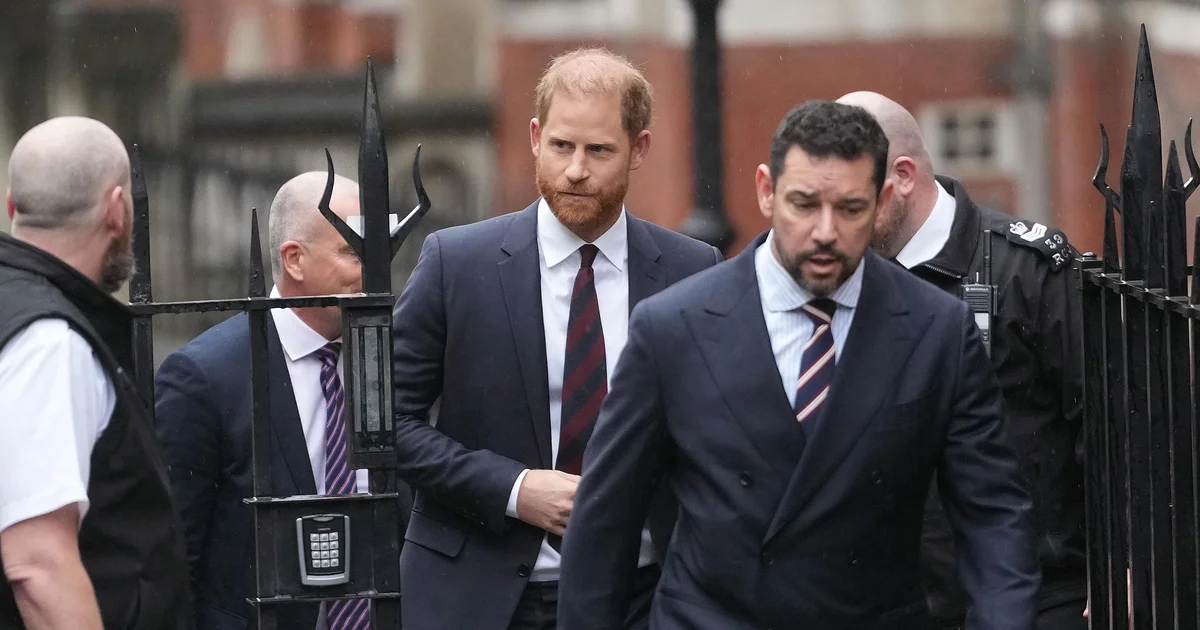
Britain’s Prince Harry arrives at London’s High Court in London, Wednesday, Jan. 21, 2026.
Kirsty Wigglesworth / AP
A heated cross examination
Harry, dressed in a dark suit, held a small Bible in his right hand in London’s High Court and swore to “almighty God that the evidence I shall give will be the truth, the whole truth and nothing but the truth.” After the Duke of Sussex said he preferred to be called Prince Harry, he acknowledged that his 23-page statement was authentic and accurate.
Defense lawyer Antony White, in a calm and gentle tone, began to put questions to Harry to determine if the sourcing of the articles, in fact, had come from royal correspondents working their sources at official events or from friends or associates of the prince. Harry said that his “social circles were not leaky” and disputed suggestions that he had been cozy with journalists who covered the royal family.
Harry suggested that information had come from eavesdropping on his phone calls or having private investigators snoop on him. He said journalist Katie Nicholl had the luxury to use the term “unidentified source” deceptively to hide unlawful measures of investigation.
“If you complain, they double down on you in my experience,” he said in explaining why he had not objected to the articles at the time.
As a soft-spoken Harry became increasingly defensive, White said: “I am intent on you not having a bad experience with me, but it is my job to ask you these questions.”
Eventually, Justice Matthew Nicklin intervened in the tense back-and-forth and told Harry not to argue with the defense lawyer as he tried to explain what it’s like living under what he called “24-hour surveillance.” Nicklin also reminded Harry that he does not “have to bear the burden of arguing the case today.”
At another point in his cross examination, Harry appeared close to tears as he said tabloids had made his wife Meghan’s life “an absolute misery.” Harry has previously said persistent press attacks led to the couple’s decision to leave royal life and move to the U.S. in 2020.
Harry’s media crusade
For decades, Harry has had what he called an “uneasy” relationship with the media, but kept mum and followed the family protocol of “never complain, never explain,” he said.
The litigation is part of Harry’s self-proclaimed mission to reform the media that he blames for the death of his mother, Princess Diana, who was killed in a car crash in 1997 while being pursued by paparazzi in Paris.
He said “vicious persistent attacks,” harassment and event racists articles about Meghan, who is biracial, had inspired him to break from family tradition to finally sue the press.
It is Harry’s second time testifying after he bucked House of Windsor tradition and became the first senior royal to testify in a court in well over a century when he took the stand in a similar, successful lawsuit against the publisher of the Daily Mirror in 2023.
Last year, on the eve of another scheduled trial, Rupert Murdoch’s U.K. tabloid publisher NGN agreed to pay Harry “substantial damages” for privacy breaches, including phone hacking.
This trial is expected to last nine weeks and a written verdict could comes months later.
“If Harry wins this case, it will give him a feeling … that he wasn’t being paranoid all the time,” Royah Nikkhah, royal editor for The Sunday Times and a CBS News contributor, told CBS News on Monday. “If Harry loses this case, it’s huge jeopardy for him, not just in terms of cost, but in terms of pushing all the way to trial and not seeking to settle. So we have to wait and see, but it’s high stakes for Harry.”
“We are in the midst of a rupture, not a transition,” Canadian Prime Minister Mark Carney said in his speech at Davos on Monday. “Great powers have begun using economic integration as weapons, tariffs as leverage, financial infrastructure as coercion, supply chains as vulnerabilities to be exploited.”
“You cannot live within the lie of mutual benefit through integration, when integration becomes the source of your subordination,” Carney said, making a case for “middle powers” like Canada to work together to gain leverage against “great powers,” which he said have the luxury of going it alone.
“When we only negotiate bilaterally with a hegemon, we negotiate from weakness. We accept what’s offered. We compete with each other to be the most accommodating,” Carney said. “This is not sovereignty. It’s the performance of sovereignty while accepting subordination. In a world of great power rivalry, the countries in between have a choice — compete with each other for favor, or to combine to create a third path with impact.”
Canadian Prime Minister Mark Carney delivers a speech at the World Economic Forum Annual Meeting held in Davos, Switzerland, Jan. 20, 2026.
Harun Ozalp/Anadolu/Getty
He called other nations to join Canada to pursue shared values, supporting Ukraine, NATO, and Danish and Greenlandic sovereignty, and warned them to “stop invoking rules-based international order as though it still functions as advertised. Call it what it is — a system of intensifying great power rivalry, where the most powerful pursue their interests, using economic integration as coercion.”
“The powerful have their power,” Carney said. “But we have something too — the capacity to stop pretending, to name reality, to build our strength at home and to act together. That is Canada’s path. We choose it openly and confidently, and it is a path wide open to any country willing to take it with us.”
UK national security is threatened by the loss of biodiversity in ecosystems like the Amazon rainforest, the new report says
The decline in the health of nature around the world poses a threat to the UK’s security and prosperity, an intelligence committee has concluded in a long-awaited report.
The document warns of “cascading risks” from the degradation of some of the planet’s most important ecosystems, including conflict, migration and increased competition for resources.
Pointing to the UK’s reliance on ecosystems that are “on a pathway to collapse” – such as the Amazon rainforest – the report warns of rising food prices and says that UK food security could be at risk.
In response, the government said that nature underpinned the UK’s security and prosperity and that the report would help it prepare for the future.
The 14-page report was officially published by the Department for Environment, Food and Rural Affairs (Defra). But the BBC understands it was put together by the Joint Intelligence Committee, which oversees the security services, in addition to input across government.
The report draws on scientific research and expert judgement to assess a “reasonable worst case scenario” for the impacts of nature loss on the UK’s security.
It highlights six ecosystem regions which it calls “critical for UK national security”, based on the likelihood of these ecosystems collapsing and the impacts were they to do so.
They include the rainforests of the Amazon and the Congo basin, the boreal forests of Russia and Canada, the coral reefs and mangroves of South East Asia, and the Himalayas.
These ecosystems are on the “pathway to collapse”, the report says, if current rates of nature loss continue. But exactly when this would happen – and how long it would take – is uncertain.
The report draws attention to several possible impacts on the UK’s security from ecosystem degradation and collapse, from rising migration and geopolitical competition to a higher risk of pandemics and economic insecurity.
But perhaps the strongest words are reserved for the potential consequences for UK food supplies.
The report says that ecosystem degradation or collapse “will challenge the UK’s food security”, pointing to its reliance on global markets for food and fertiliser.
If major food-producing regions were hit, some foods would become scarcer, driving up prices globally and potentially restricting choice, the report says.
But the report warns that the UK is “unable” to be food self-sufficient at present based on current diets and prices – and full self-sufficiency would also require “very substantial price increases” for consumers.
However, some technologies, like regenerative agriculture or lab-grown protein, could help with further research and investment, the report adds.
Getty Images
UK farmland has been hit by both flooding and drought in recent years
Gareth Redmond-King, head of international programme at the Energy and Climate Intelligence Unit, said that weather extremes fuelled by climate change were already hitting food production in some parts of the world.
“This is a cost-of-living crisis, driving up food prices on supermarket shelves for UK households,” he said.
In response to the new report, a Defra spokesperson said: “The UK has a resilient food system and remains one of the most food-secure nations in the world.
“We have access through international trade to food products that cannot be produced here, which supplements domestic production and ensures that any disruption from risks such as adverse weather or disease do not affect the UK’s overall security of supply.”
The document should have been published in October but was delayed. The Times reported that No 10 had blocked the report’s release owing to fears it could be considered too negative. A government source did not dispute this interpretation when asked by BBC News.
The government has faced accusations from some green groups that it is retreating from its promises to protect nature.
At November’s COP30 climate summit in Brazil, the UK failed to commit public funds to Brazil’s “Tropical Forests Forever Facility”, its flagship fund to try to protect these ecosystems.
The government cited pressures on the economy and has repeatedly said that it hopes to contribute to the fund in the future, and that it will encourage private sector investment.
However, the government points to its investments in flood defences and funds to support sustainable food production as evidence of its efforts to protect the UK from climate change and nature loss.
Despite conservation efforts, global biodiversity is deteriorating quickly, driven by habitat loss, climate change, invasive species and other factors.
A landmark UN report in 2019 warned that the rate of change in nature worldwide since 1970 “is unprecedented in human history” – and estimated that one million animal and plant species were threatened with extinction.
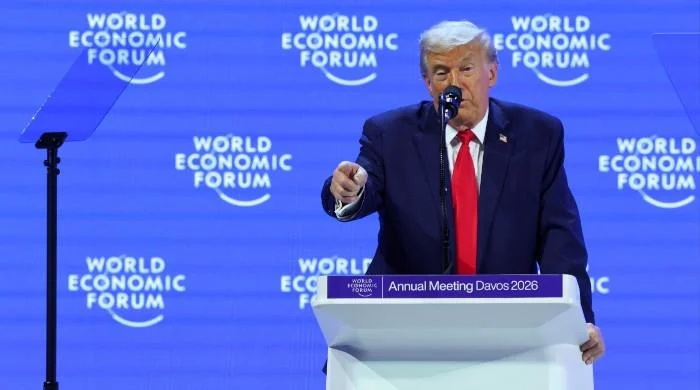
US President Donald Trump attends the 56th annual World Economic Forum (WEF) meeting in Davos, Switzerland, January 21, 2026. — Reuters
Trump downplays Greenland issue as “small ask”.
No nation in any position to secure Greenland: Trump.
Trump seeks “immediate negotiations” on Greenland.
US President Donald Trump on Wednesday ruled out the use of force in his bid to control Greenland, but said in a speech in Davos that no other country can secure the Danish territory.
“People thought I would use force, but I don’t have to use force,” Trump said at the World Economic Forum annual meeting in Switzerland. “I don’t want to use force. I won’t use force.”
Trump made the comments in a closely-watched economic speech that has been overshadowed by fraying transatlantic ties and tensions with Europe over his push to acquire Greenland.
He downplayed the issue as a “small ask” over a “piece of ice” and that an acquisition would be no threat to the North Atlantic Treaty Organisation (Nato) alliance that includes Denmark and the United States.
“No nation or group of nations is in any position to be able to secure Greenland other than the United States,” Trump said, adding: “I’m seeking immediate negotiations to once again to discuss the acquisition of Greenland by the United States.”
Trump, who marked the end of a turbulent first year in office on Tuesday, is set to overshadow the agenda of the WEF, where global elites chew over economic and political trends.
Nato leaders have warned that Trump’s Greenland strategy could upend the alliance, while the leaders of Denmark and Greenland have offered a wide array of ways for a greater US presence on the strategic island territory of 57,000 people.
“We want a piece of ice for world protection, and they won’t give it,” Trump said in his speech to a congress hall packed with business and political leaders.
In his speech, Trump also took aim at Canada, saying it “should be grateful” to Washington, a day after Prime Minister Mark Carney warned of a rupture to the US-led global system.
“I watched your prime minister yesterday. He wasn’t so grateful,” Trump said of Carney’s speech, which drew a rare standing ovation from the Davos audience.
“Canada lives because of the United States. Remember that, Mark, the next time you make your statements,” he added.
The US president said that he would meet with his Ukrainian counterpart, Volodymyr Zelensky, to discuss ending the war with Russia, but slammed Nato and stressed Washington had “nothing to do with” the conflict.
“I’m dealing with President Putin, and he wants to make a deal, I believe. I’m dealing with President Zelensky and I think he wants to make a deal. I’m meeting him today,” Trump said, adding that Nato has “to work on Ukraine, we don’t… We have nothing to do with it”.
Zelensky has not confirmed he would travel to Davos and earlier in the week indicated he would skip the forum to stay in Kyiv and deal with widespread blackouts, heating outages and power cuts following Russian strikes.
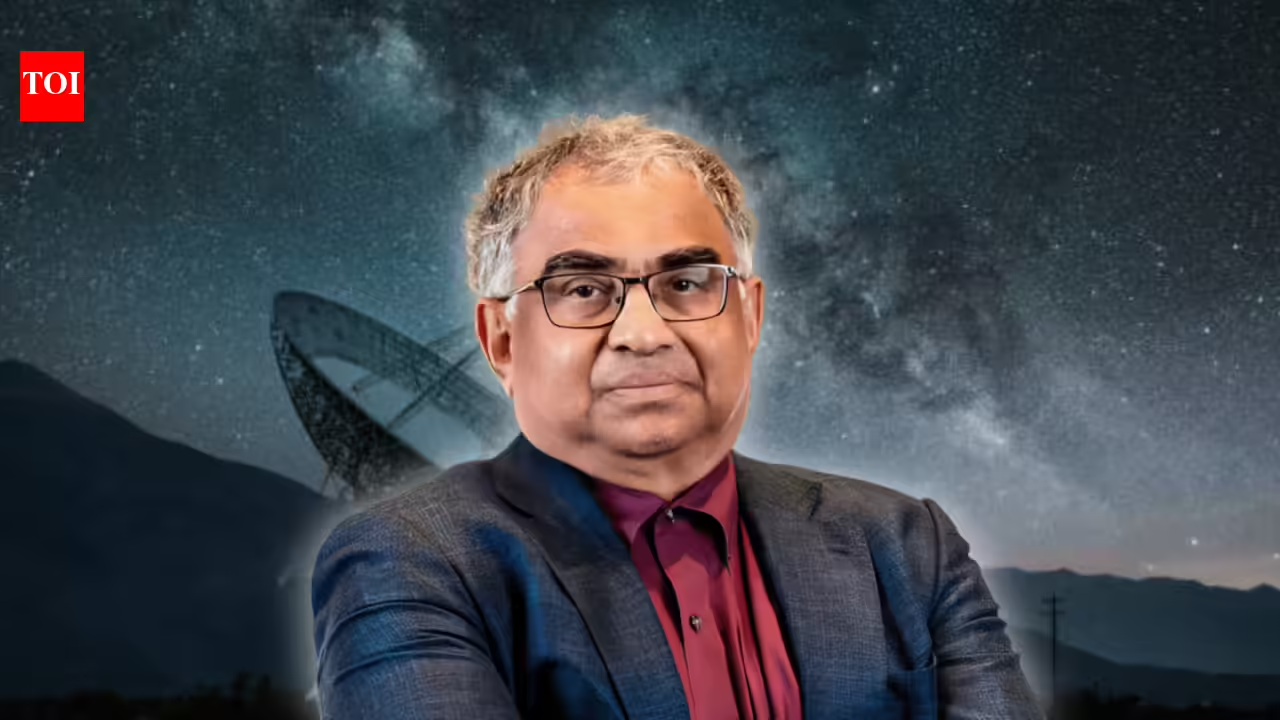
Shri Kulkarni, Indian-born RAS Gold Medal astrophysicist.
When the Royal Astronomical Society announced Shrinivas R. Kulkarni as the recipient of its Gold Medal, it marked more than another milestone in a decorated career. Awarded continuously since 1824, the medal is the Society’s highest honour, reserved for scientists whose work has fundamentally altered how humanity understands the universe.The prestigious award placed him among an elite group of scientific pioneers, Albert Einstein, Stephen Hawking, Edwin Hubble, and recognised his “field-defining” work in time-domain astronomy. Remarkably, Kulkarni is only the second Indian to receive the RAS Gold Medal, following Subrahmanyan Chandrasekhar, honoured in 1953 for his groundbreaking work on the structure and evolution of stars.In Kulkarni’s case, the citation acknowledged a lifetime spent reshaping astronomy itself, from a static science of distant objects into a dynamic discipline that tracks the universe in motion. Born in Maharashtra and educated in India before moving to the United States, Kulkarni’s career now spans more than four decades at the very frontier of astrophysics. The RAS credited him for “sustained, innovative and ground-breaking contributions to multi-wavelength transient astrophysics,” a field concerned with short-lived and rapidly evolving cosmic events. Few astronomers have done more to define that field, or to build the instruments that made it possible.
From India to the frontiers of astrophysics
Shrinivas Kulkarni was born in Kurundwad, a small town in Maharashtra, and spent his early years moving across Karnataka due to his father’s work as a government doctor. He completed his schooling in Hubli before enrolling at IIT Delhi, where he pursued an integrated BSc and MSc programme, graduating in 1978. From the outset, his ambition ran counter to expectation. “I wanted to do research and not go into industry or be a doctor or lawyer or engineer which is sort of the more traditional path,” he later recalled. That resolve took him to the United States, where he completed his PhD in astronomy at the University of California, Berkeley in 1983, specialising in radio astronomy. Of that period, he said: “I had an exceptional advisor who understood what I really wanted to do.” A Millikan Fellowship brought him to the California Institute of Technology, beginning an association that would define the rest of his professional life.Kulkarni joined Caltech’s faculty in 1987, progressing from assistant professor of astronomy to associate professor, professor, professor of astronomy and planetary science, MacArthur Professor, and eventually the George Ellery Hale Professor of Astronomy and Planetary Science. Along the way, he served as executive officer for astronomy and as director of Ca ltech Optical Observatories, overseeing the Palomar and Keck telescopes, two of the international astronomy community’s most prized instruments.
Discoveries that changed astronomy
Kulkarni’s scientific reputation rests not on a single breakthrough, but on a sequence of discoveries that repeatedly shifted the field’s centre of gravity. As a graduate student in 1982, he co-discovered the first millisecond pulsar, a neutron star rotating hundreds of times per second, forcing astronomers to rethink how stellar remnants evolve. In 1995, he and his colleagues identified the first brown dwarf, an object too large to be a planet yet too small to sustain hydrogen fusion like a star, opening an entirely new category of celestial bodies. Two years later, Kulkarni was part of the team that measured the distance to a gamma-ray burst for the first time, demonstrating that these violent flashes originated billions of light-years away, far beyond the Milky Way. More recently, his work has helped unravel the mystery of fast radio bursts (FRBs). Using an instrument known as STARE2, developed earlier in his career with a graduate student, Kulkarni was part of the team that in 2020 detected an FRB originating within the Milky Way itself. The source, a magnetar, or highly magnetised neutron star, provided the first direct confirmation that such objects can generate FRBs.
Building the machines that watch the sky
Equally central to Kulkarni’s legacy is his insistence that discovery depends on instrumentation. “My motto has been to build a big enough gizmo and things will happen,” he said in one of his Caltech lectures. Over his career, he has helped construct around ten astronomical instruments, many designed to capture fleeting cosmic events that older observatories would miss. This philosophy culminated in the Palomar Transient Factory (PTF) in 2009 and its successor, the Zwicky Transient Facility (ZTF) in 2017. Using a 70-year-old telescope at Palomar Observatory, these surveys scan the entire northern sky every two nights. Automated software analyses the data, and alerts about transient events, supernovae, asteroids, flaring stars, are sent to astronomers worldwide within minutes. According to the award citation, these projects have “revolutionised time-domain astrophysics at optical wavelengths.” The data from PTF and ZTF has enabled discoveries ranging from a star swallowing one of its planets, to some of the closest and brightest supernovae ever recorded, to binary stars orbiting each other every seven minutes and emitting low-frequency gravitational radiation. Funded by institutions worldwide and supported by major grants from the National Science Foundation and the Heising-Simons Foundation, the projects have also trained a new generation of astronomers now leading the field. Reflecting on ZTF after winning the Shaw Prize, Kulkarni remarked: “ZTF is only possible at Caltech, which values exceptionalism.”
Family, curiosity, and a lifelong fascination with the cosmos
Behind the accolades is a life shaped by an unusually high-achieving family, one that helps explain both Kulkarni’s intellectual confidence and his sensitivity to hierarchy. He is the youngest of four siblings and the brother of author, educator and philanthropist Sudha Murty, who is married to Infosys founder and billionaire Narayana Murthy. His eldest sister, Sunanda, followed their father into medicine and served as a gynaecologist at a government hospital in Bengaluru. Another sister, Jayshree, an IIT Madras alumna, is married to Boston-based IT entrepreneur Gururaj “Desh” Deshpande, one of the wealthiest Indian-born entrepreneurs and a billionaire. “All my sisters were gold medallists and evolved into competent professionals,” Kulkarni said in an interview. “Coming from such a family, I found it strange that there were so few women in high places in the US when I first moved to that country.”
Shrinivas Kulkarni in an old family picture with his parents and sisters Jayashree, Sudha and Sunanda | Photo Credit: rediff.com
During his PhD years at the University of California, Berkeley, Kulkarni met Hiromi Komiya, a doctoral student from Japan. He learned Japanese within a matter of weeks, and the two married soon after. They have two daughters, Anju and Maya.Although his work has helped define some of the most serious frontiers of modern astrophysics, Kulkarni has often pushed back against the popular image of scientists as permanently solemn or detached. In one interview with The Global Indian, he addressed that perception directly. “We astronomers are supposed to say, ‘We wonder about the stars and we really want to think about it,’” he said, acknowledging the stereotype. But, he added, that image misses something essential. “Many scientists, I think, secretly are what I call ‘boys with toys.’ I really like playing around with telescopes. It’s just not fashionable to admit it.”That combination, deep technical seriousness paired with a visible delight in experimentation, has remained a through-line in Kulkarni’s career, shaping both his discoveries and his lifelong commitment to building the tools that allow the universe to surprise us.
Recognition earned over a lifetime
The RAS Gold Medal joins a formidable list of honours, including the 2024 Shaw Prize in Astronomy, the US National Science Foundation’s Alan T. Waterman Award, the Dan David Prize, the Jansky Prize, and the Helen B. Warner Award. He is a member of the US National Academy of Sciences, the Royal Society of London, and the Indian Academy of Sciences. Kulkarni continues to work on future projects, including NASA’s Ultraviolet Explorer (UVEX), planned for launch around 2030, and Z-Shooter, a next-generation spectrometer for the Keck Observatory. Reflecting on awards, he has said simply: “Awards open doors.” With the Royal Astronomical Society’s Gold Medal, Shri Kulkarni takes his place among scientists whose work has not only explained the universe, but transformed how we observe it, teaching astronomy to watch the sky not as a fixed backdrop, but as a living, changing system.