Home Blog Page 2723

Boeing’s quarterly sales jump 57% as CEO says there’s ‘a lot to be optimistic about’

0
Boeing's quarterly sales jump 57% as CEO says there's 'a lot to be optimistic about'

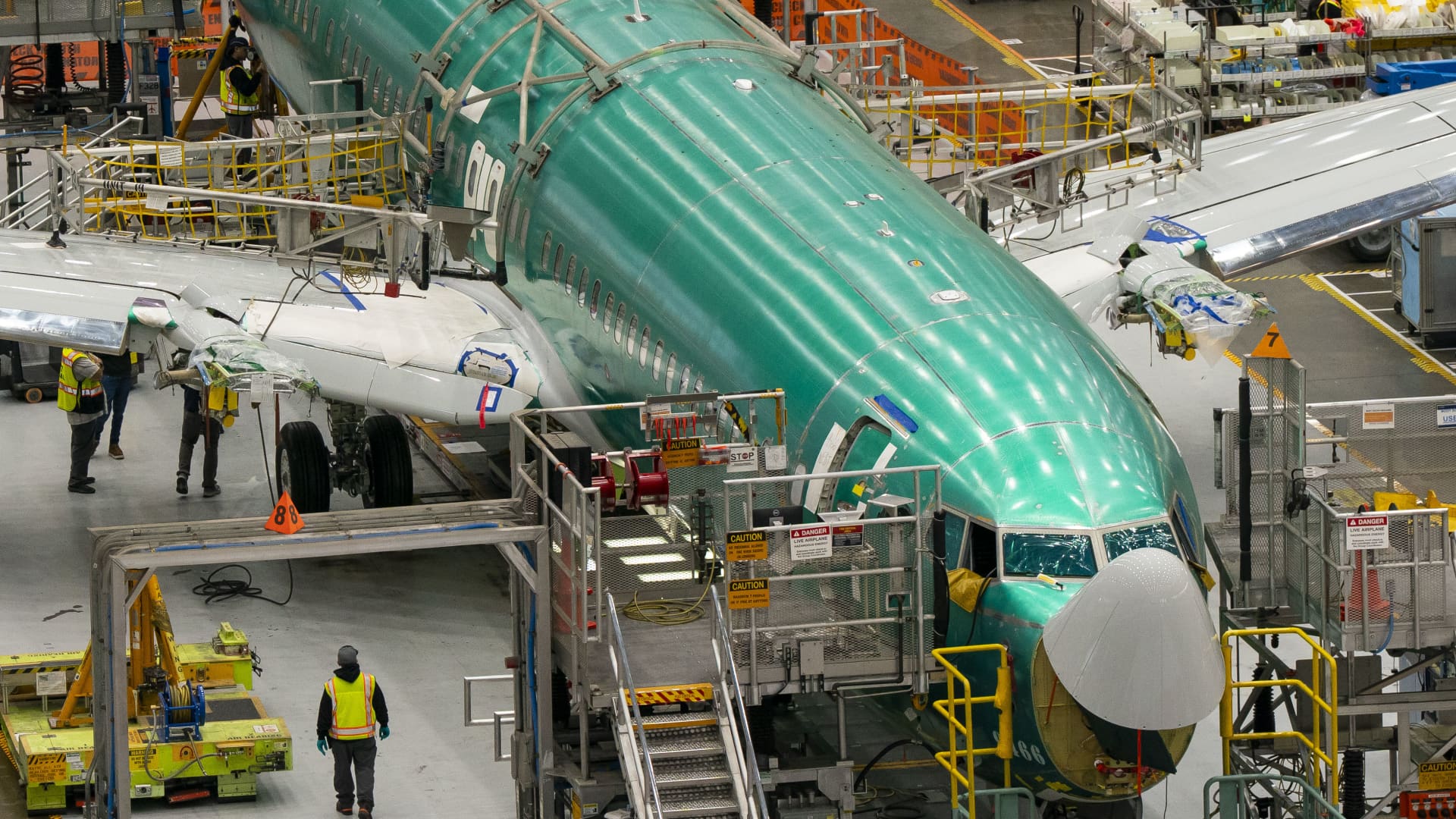
A Boeing Co. 737 Max airplane at the company’s manufacturing facility in Renton, Washington, US, on Thursday, Nov. 20, 2025.

David Ryder | Bloomberg | Getty Images

Boeing reported revenue ahead of Wall Street expectations for the fourth quarter as the company’s turnaround picked up steam following years of crises.

The company’s airplane deliveries last year were the highest since 2018, helping drive revenue. Boeing brought in $23.9 billion in the last three months of 2025, a 57% increase over the same period in 2024 and topping analysts’ expectations. Cash flow of $400 million was roughly double what Wall Street was expecting.

CEO Kelly Ortberg told staff that the company is making progress and that there’s “a lot to be optimistic about” in 2026.

“At the same time, with progress comes expectations, and our customers and stakeholders are going to expect more from us this year,” he said.

Here’s how Wall Street expects Boeing performed in the fourth quarter, according to analysts’ estimates compiled by LSEG:

  • Earnings per share: $9.92 adjusted
  • Revenue: $23.95 billion vs. $22.6 billion expected

The company’s reported earnings per share of $9.92 included the impact of the sale of its Jeppesen aircraft navigation unit.

Boeing still has a long road ahead to deliver delayed aircraft — some of which haven’t yet won regulator approval — to customers around the world. 

Boeing delivered 600 airplanes to customers last year, nearly double the number from 2024 and the most since 2018. Ortberg, who came out of retirement to run the manufacturer in 2024, and other executives have said more production increases are on the horizon in the coming months.

Deliveries are key for aircraft manufacturers because customers pay the bulk of an aircraft’s price when they receive it.

For Boeing, it’s a crucial ramp up after the company has burned through roughly $40 billion since the first quarter of 2019 — when the second of two fatal crashes of the best-selling 737 Max plunged it into crisis for years — through the third quarter of 2025. The Covid-19 pandemic, residual supply chain and labor shortages and a host of production problems have continued to hamstring the company, the largest U.S. exporter by value.

Boeing handed over 63 jetliners to customers last month, and 44 of those deliveries were 737 Maxes, the manufacturer said earlier this month.

Airbus still delivered more aircraft last year than Boeing, with 793, though that total is below the record 863 airplanes the European manufacturer handed over in 2019.

But Boeing outsold Airbus with 1,173 net orders in 2025 over its European competitor’s 889 net orders for the year. Airlines are starting to look out to the 2030s, securing delivery slots as they chart growth and replace older, more fuel-thirsty planes. Boeing counts Alaska Airlines and Delta Air Lines as customers in recent weeks for deliveries into the next decade.

Boeing is far from out of the woods, though. Investors will be eager to hear from the company’s leadership about what delivery pace is most realistic this year. The manufacturer still needs the Federal Aviation Administration’s approval for further Max increases beyond 42 per month, a requirement the regulator instated after a near-catastrophic midair blowout of a panel in January 2024.

Investors are likely to seek a firmer timeline for long-delayed 737 Max 7 and Max 10 certification as well as the twin-engine 777X, which will become the largest wide-body in its lineup. They are also looking for an update on Boeing’s defense business, where delays have included the two 747s that will serve as the next Air Force One aircraft.

Boeing executives will host an earnings conference call at 10:30 a.m. ET.

This is developing news. Please check back for additional updates.

Read more CNBC airline news

Uber unveils a new robotaxi with no driver behind the wheel

0
Uber unveils a new robotaxi with no driver behind the wheel

NEWYou can now listen to Fox News articles!

Uber is getting closer to offering rides with no one behind the wheel. 

The company recently unveiled a new robotaxi and confirmed that autonomous testing is already underway on public roads in the San Francisco Bay Area. While the vehicle first appeared earlier this month at the Consumer Electronics Show 2026, the bigger story now is what is happening after the show.

These robotaxis are no longer confined to presentations or closed courses. They are driving in real traffic as Uber prepares for a public launch later this year.

Sign up for my FREE CyberGuy Report
Get my best tech tips, urgent security alerts and exclusive deals delivered straight to your inbox. Plus, you’ll get instant access to my Ultimate Scam Survival Guide – free when you join my CYBERGUY.COM newsletter.

PRIVATE AUTONOMOUS PODS COULD REDEFINE RIDE-SHARING

Uber’s new robotaxi operates on public roads in the San Francisco Bay Area as the company moves closer to offering fully driverless rides later this year. (Klaudia Radecka/NurPhoto via Getty Images)

Who is behind Uber’s robotaxi

Uber is the name most riders recognize. However, two partners handle the technology behind the scenes. Lucid Group builds the all-electric vehicle. It is based on the Lucid Gravity SUV, which was designed for long-range efficiency and passenger comfort. Nuro provides the self-driving system. Nuro also leads testing and safety validation. Together, the three companies are developing a robotaxi service that will be available only through Uber.

Uber’s robotaxi is already driving itself

Autonomous on-road testing began last month in the Bay Area. These tests take place on public streets rather than private test tracks. Nuro runs the testing program using trained safety operators who supervise each trip. The focus is on everyday driving situations such as intersections, lane changes, traffic lights and pedestrians. This stage is critical. It allows engineers to evaluate how the system behaves in real conditions before opening rides to the public.

What makes Uber’s robotaxi different

Uber’s robotaxi was designed from the start to operate without a driver. It combines electric vehicle engineering with visible autonomy features that riders can understand.

Key features include:

  • A multi-sensor system using cameras, lidar and radar for full awareness
  • A low-profile roof-mounted Halo module integrated into the vehicle
  • Exterior LED displays that show rider initials and trip status
  • In-cabin screens for climate, music and support access
  • Real-time visuals that show what the vehicle sees and plans to do
  • Seating for up to six passengers with room for luggage

The robotaxi runs on high-performance computing powered by NVIDIA DRIVE AGX Thor. This system handles the real-time AI processing required for autonomous driving.

A robotaxi ride that explains itself

One standout feature is transparency. Riders can see how the robotaxi perceives the road and plans its next move. The display shows lane changes, yielding behavior, slowing at traffic lights and the planned drop-off point. This helps riders understand what the vehicle is doing instead of guessing. Inside the cabin, passengers can adjust heated seats, climate controls and music. They can also contact support or request the vehicle to pull over if needed.

CAN AUTONOMOUS TRUCKS REALLY MAKE HIGHWAYS SAFER?

Photo of an Uber insignia.

The all-electric Uber robotaxi, built with partners Lucid and Nuro, is now navigating real traffic without a human driver. (INA FASSBENDER / AFP via Getty Images)

Uber plans to scale robotaxis across the U.S. and global markets

Uber plans to deploy 20,000 or more robotaxis over the next six years. These vehicles will operate in dozens of U.S. and international markets. Lucid will integrate all required hardware directly on the production line at its Casa Grande, Arizona factory. Uber will own and operate the vehicles along with third-party fleet partners. Every robotaxi ride will be booked through the Uber app, just like a standard Uber trip.

How Uber is handling robotaxi safety and regulation

Safety sits at the center of this rollout. Nuro’s validation process combines simulation, closed-course testing and supervised on-road driving. The system relies on an end-to-end AI foundation model paired with clear safety logic. The goal is predictable, comfortable driving across a wide range of conditions. Uber and its partners are also working with regulators, policymakers and local governments to ensure the service aligns with public safety standards and city planning goals.

When Uber’s driverless rides are expected to launch

Uber says the first autonomous rides will launch in a major U.S. city later in 2026. The service will be available exclusively through the Uber app. Production of the robotaxi is expected to begin later this year, pending final validation.

What this means to you

If you use Uber, driverless rides may soon appear as an option. These vehicles could offer quieter trips, more consistent driving and improved availability during peak times. For cities, a shared electric robotaxi fleet could help reduce emissions and congestion. For riders, seeing how the vehicle thinks and reacts may make autonomous travel feel less intimidating.

Take my quiz: How safe is your online security?

Think your devices and data are truly protected? Take this quick quiz to see where your digital habits stand. From passwords to Wi-Fi settings, you’ll get a personalized breakdown of what you’re doing right and what needs improvement. Take my Quiz here: Cyberguy.com.

CES 2026 SHOWSTOPPERS: 10 GADGETS YOU HAVE TO SEE

Uber sign outside of a building.

Uber confirms autonomous testing is underway after unveiling its robotaxi at CES 2026, marking a major step toward a public launch. (INA FASSBENDER / AFP via Getty Images)

Kurt’s key takeaways

Uber’s robotaxi effort feels more grounded than many past autonomous promises. It combines a known ride-hailing platform a purpose-built electric vehicle and a self-driving system already operating on public roads. If testing continues to progress, driverless Uber rides could move from something new to something normal sooner than many expect.

Would you get into an Uber if there was no driver sitting in the front seat? Let us know by writing to us at Cyberguy.com.

CLICK HERE TO DOWNLOAD THE FOX NEWS APP

Sign up for my FREE CyberGuy Report
Get my best tech tips, urgent security alerts and exclusive deals delivered straight to your inbox. Plus, you’ll get instant access to my Ultimate Scam Survival Guide – free when you join my CYBERGUY.COM newsletter.

Copyright 2026 CyberGuy.com. All rights reserved.

Trade deal: India and EU announce FTA amid Trump tariff tensions

0
Trade deal: India and EU announce FTA amid Trump tariff tensions

Abhishek Dey and Arunoday Mukharji in India and Jessica Parker in Brussels

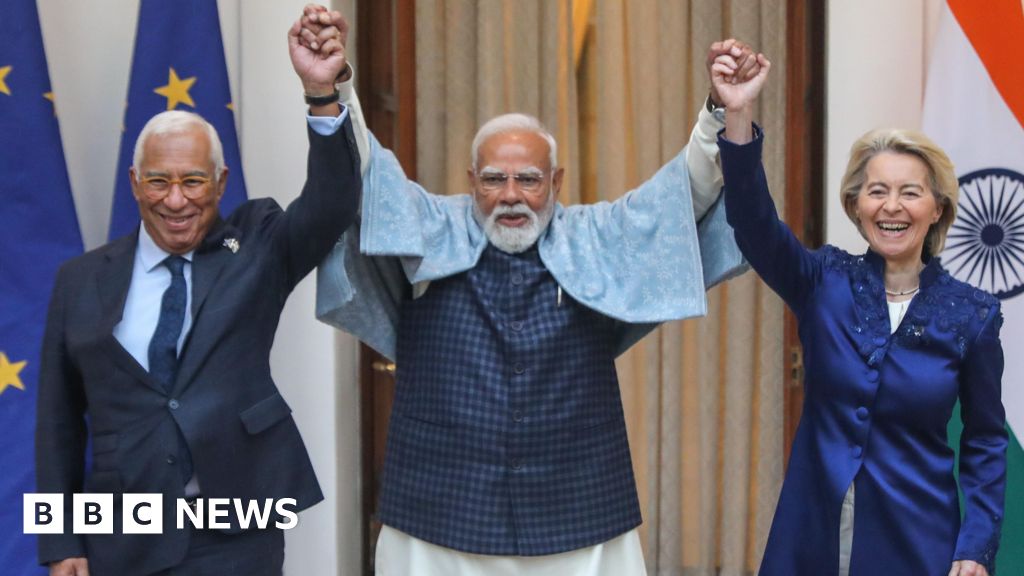
EPA/Shutterstock Three leaders hold hands and raise their arms, laughing during a friendly moment. The man in the centre, Indian Prime Minister Narendra Modi, with a white beard and glasses, wears a light shawl over a dark outfit. On either side, European Council President António Costa in a dark suit and European Commission President Ursula von der Leyen in a dark blue long jacketEPA/Shutterstock

(From left) European Council President António Costa, Indian Prime Minister Narendra Modi and European Commission President Ursula von der Leyen in Delhi on Tuesday

The European Union and India have announced a landmark trade deal after nearly two decades of on-off talks, as both sides aim to deepen ties amid tensions with the US.

“We did it, we delivered the mother of all deals,” European Commission President Ursula von der Leyen said at a media briefing in Delhi. Indian Prime Minister Narendra Modi called the pact “historic”.

It will allow free trade of goods between the bloc of 27 European states and the world’s most populous country, which together make up nearly 25% of global gross domestic product and a market of two billion people.

The deal will see a number of huge tariff cuts across a range of goods and services, and a joint security partnership.

Von der Leyen and European Council President António Costa are in Delhi, where they met Modi at a bilateral summit.

The European Commission said the agreement would eliminate tariffs on most exports of chemicals, machinery and electrical equipment, as well as aircraft and spacecraft, following phased reductions. Significantly, duties on motor vehicles, currently as high as 110%, would be cut to 10% under a quota of 250,000 vehicles. That is six times larger than the 37,000-unit quota India granted to the UK in a deal signed last July, Bloomberg reported.

India will also cut tariffs on wine, beer and olive oil from the EU. Brussels said the agreement would support investment flows, improve access to European markets and deepen supply-chain integration.

Delhi said almost all of its exports would get “preferential access” into the EU, with textiles, leather, marine products, handicrafts, gems and jewellery set to see a reduction or elimination of tariffs.

While commodities such as tea, coffee, spices and processed foods will benefit from the agreement, Delhi “has prudently safeguarded sensitive sectors, including dairy, cereals, poultry, soy meal, certain fruits and vegetables, balancing export growth with domestic priorities”, it said.

Delhi and Brussels have also agreed on a mobility framework that eases restrictions for professionals to travel between India and the EU in the short term.

“This is India’s biggest free trade agreement,” Modi said. “It will make access to European markets easier for India’s farmers and small business. It will also boost manufacturing and services sectors. It will boost innovative partnerships.”

The trade deal comes as both India and the EU contend with economic and geopolitical pressure from the US.

Delhi is grappling with 50% tariffs imposed by President Donald Trump last year amid talks aimed at securing a trade deal between India and the US that are still dragging on.

Last week, Trump threatened to escalate his trade war with European allies for opposing a US takeover of Greenland, before backing off.

That larger geopolitical context was evident in statements made by leaders.

On Tuesday, von der Leyen said: “This is the tale of two giants – the world’s second and fourth largest economies. Two giants which chose partnership in a true win-win fashion. A strong message that co-operation is the best answer to global challenges.”

A day before that Costa had said, without naming the US, that the trade deal would send an “important political message to the world that India and the EU believe more in trade agreements than in tariffs”.

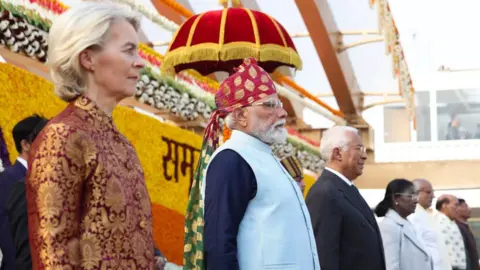
Narendra Modi/X Leaders stand in a line on a decorated stage at an outdoor ceremony. From left to right are a European woman leader in a red patterned jacket, Indian Prime Minister Narendra Modi wearing a traditional turban and light blue vest, a European male leader in a dark suit, and Indian President Droupadi Murmu in a light-coloured coat, with floral decorations and officials visible in the backgroundNarendra Modi/X

Von der Leyen (first from left) and Costa (third from left) were the chief guests at India’s Republic Day celebrations on Monday

The deal with the European Union may help labour-intensive sectors in India such as shrimp farming, textiles, gems and jewellery, which were hit hard by the US tariffs, experts say.

But some analysts also predict challenges – especially when it comes to compliance with EU regulations and standards. “The EU has very strict regulations, for instance, on environment. It is one of the leaders when it comes to carbon offsetting mechanisms,” says economist Mitali Nikore.

She says India’s manufacturing sector “might not be fully prepared” for this and that it is critical that it takes steps to fix this.

“It is an opportunity more than a challenge,” she says.

For the EU, the deal is aimed at providing some certainty, even security, in a time of economic coercion and global turbulence.

Germany and France are projected to be among the biggest beneficiaries even if this isn’t the “super maximally ambitious” version of a trade deal once envisioned, says Andrew Small, Asia director at the European Council on Foreign Relations.

However, he says, the agreement is seen as a building block rather than a final destination as the EU looks to tap into a massive, fast-growing economy.

“It really is understood as a floor for what is possible for the bilateral relationship.”

The formal signing is likely to take place only later this year, after the agreement is approved by the European Parliament and member states.

There may be some concerns around this after another major trade deal the EU struck with the Mercosur bloc of South American countries was recently derailed in the European Parliament.

However, the India agreement is regarded as less contentious as it “cuts around sensitives on both sides,” says Small.

Alongside the trade agreement, India and the European Union are also advancing separate talks on security and defence co-operation, and climate action.

On Tuesday, India’s Defence Minister Rajnath Singh said he had discussed a range of bilateral security and defence issues with the European Commission’s vice-president Kaja Kallas, including opportunities to integrate supply chains to build trusted defence ecosystems and develop future-ready capabilities.

The two sides are working on a draft security and defence partnership covering areas such as maritime security, cyber threats and defence dialogue, Reuters news agency reported.

The EU is India’s largest trading partner in goods, with bilateral merchandise trade reaching $136bn (£99.4bn) in 2024-25, nearly doubling over a decade.

Talks for a deal started in 2007 but stalled in 2013 over roadblocks in market access and regulatory demands. Discussions were formally restarted in July 2022.

Trump’s tariffs proved to be a “useful tailwind in the homestretch” to get the deal over the line, one EU diplomat told the BBC.

In the past seven months, India has signed major trade agreements with the UK, Oman and New Zealand, and a 2024 pact signed with the four-nation European Free Trade Association bloc of Switzerland, Norway, Iceland and Liechtenstein came into effect last year. It signed a trade pact with Australia in 2022.

Follow BBC News India on Instagram, YouTube, Twitter and Facebook.

Nipah virus outbreak in India: Is it deadly, symptoms, how it spreads, high fatality rates, all you need to know as 5 infected, 100+ quarantined

0
Nipah virus outbreak in India: Is it deadly, symptoms, how it spreads, high fatality rates, all you need to know as 5 infected, 100+ quarantined

Nipah Virus Outbreak In India: Following reports of a Nipah virus outbreak in India, several neighbouring countries have moved swiftly to strengthen safety measures. Thailand, in particular, has begun screening air passengers arriving from India after confirmation of five Nipah virus infections and nearly 100 individuals being quarantined in West Bengal. While authorities say the situation remains under control, the development has sparked widespread concern due to the virus’s historically high fatality rate. To understand how dangerous Nipah really is, how it spreads, and what symptoms to watch for, medical experts weigh in.

Is Nipah Virus Deadly? Experts Explain

According to Dr Deep Narayan Mukherjee, consultant clinical microbiology and infectious diseases, CK Birla Hospitals, CMRI, “Nipah virus is a highly dangerous RNA virus that often begins with flu-like symptoms such as fever, headache, cough, sore throat, and muscle pain. However, the disease can rapidly worsen when it affects the brain, leading to encephalitis.”

Add Zee News as a Preferred Source


Patients may experience seizures, drowsiness, confusion, coma, and in many cases, death. Dr Mukherjee warns that the mortality rate for Nipah virus infections ranges between 50 to 75 percent, making it one of the deadliest viral infections known.

Symptoms Of Nipah Virus Infection: How it spreads from human to human

Nipah virus symptoms typically progress in stages, starting mildly and becoming severe if the infection advances.

Common symptoms include:

1. Fever

2. Headache

3. Muscle pain

4. Sore throat

5. Cough

6. Difficulty breathing

7. Drowsiness

8. Confusion

9. Seizures

Experts divide the illness into early and late phases. Early symptoms often resemble non-specific respiratory infections, while severe stages involve neurological complications such as convulsions and coma, which can prove fatal if not managed quickly.

How Nipah Virus Spreads

Dr Mukherjee explains that Nipah is primarily a zoonotic disease transmitted by fruit bats, which are the natural carriers of the virus. Humans can become infected either indirectly through animals such as pigs or directly through contact with contaminated food or bat secretions.

Human-to-human transmission is also a major concern, especially in hospital and caregiving environments. Close contact with an infected person’s bodily fluids, including respiratory droplets, saliva, urine, or blood, can spread the virus if strict infection control measures are not followed.

Human-To-Human Transmission: Why Hospitals Are High Risk

Nipah virus spreads most commonly through prolonged close contact, particularly during the acute phase of illness. This includes exposure to coughing or sneezing, direct contact with bodily fluids, or contaminated surfaces and medical equipment. Such transmissions have been frequently reported in India and Bangladesh.

This is why healthcare settings remain especially vulnerable. Dr Mukherjee stresses the importance of strict asepsis and infection control practices, noting that any patient presenting respiratory symptoms is treated as a potential case until ruled out.

Prevention And Safety Measures In Place

The first step in prevention is immediate isolation of suspected patients. Healthcare workers are required to wear full personal protective equipment, including N95 masks, gloves, and gowns. Government-issued guidelines have already been implemented, and hospitals like CMRI are fully prepared to manage patients showing respiratory or neurological symptoms.

Sample collection and laboratory testing are carried out once the disease progresses or symptoms worsen. Experts urge the public not to panic, emphasizing that the current number of cases is limited and manageable if protocols are followed diligently.

Indian States Remain On High Alert

Indian authorities have confirmed that the outbreak remains contained. Dr Narendra Kumar Arora, President of AIIMS Bilaspur, stated that Kerala and West Bengal are endemic regions for Nipah virus. He reiterated that the virus carries a 40–75 percent mortality rate and that no vaccine is currently available. While monoclonal antibodies are being procured for treatment, global supplies remain limited.

For now, experts stress vigilance over fear, early detection, strict infection control, and public awareness remain the strongest tools in preventing further spread.


(This article is based on information available in the public domain and on input provided by experts consulted. Views expressed by experts in the articles are their own; Zee News does not confirm or endorse the same. This article is meant for informational purposes only and must not be considered a substitute for advice provided by qualified medical professionals. Always seek the advice of your doctor with any questions about infectious diseases, diabetes, weight loss, or other medical conditions.)

Depression, anxiety and other disorders may have the same genetic cause, study finds

0
Woman talking to therapist

NEWYou can now listen to Fox News articles!

Psychiatric disorders can share common genetic influences, which means parts of DNA can be at the root of more than one mental condition, new research has found.

The study, led by researchers at Texas A&M University and published in Nature, could explain why many mental health conditions occur together, according to a press release.

The researchers examined DNA data for more than one million individuals who had any of 14 childhood and adult-onset psychiatric disorders, and then compared it to data from five million individuals with none of the disorders.

FDA CLEARS FIRST AT-HOME BRAIN DEVICE FOR DEPRESSION

The disorders were sorted into five groups: compulsive disorders (like OCD and anorexia), schizophrenia and bipolar disorder, neurodevelopmental disorders (such as autism and ADHD), internalizing disorders (depression, anxiety, PTSD), and substance-use disorders.

New research suggests that many mental health conditions share the same genetic roots rather than acting as isolated disorders. (iStock)

Each pattern is linked to 238 tiny differences that influence how the brain works and offer clues about why some conditions overlap while others differ. Some traits, like suicidal thoughts and loneliness, were linked to all five patterns.

For the schizophrenia-bipolar group, the strongest genetic links were found in brain cells that send “go” signals and help enable communication between different regions.

FEELING LONELY? SIMPLE 5-3-1 RULE COULD HELP YOU MAKE MORE CONNECTIONS

In contrast, internalizing disorders (like depression, anxiety and PTSD) are more strongly linked to cells that help brain signals travel faster, the researchers found.

“By uncovering shared genetic roots, we can start thinking about treatments that target multiple disorders instead of treating each one in isolation,” said co-author John Hettema, M.D., Ph.D., in the release.

Medical staff examining the samples under a microscope to detect and prevent

The disorders were sorted into five groups: compulsive disorders (like OCD and anorexia), schizophrenia and bipolar disorder, neurodevelopmental disorders (such as autism and ADHD), internalizing disorders (depression, anxiety, PTSD), and substance-use disorders. (iStock)

The team relied on genome-wide association studies, or GWAS, which compare the DNA of large groups of people with and without a given condition. These studies scan millions of common genetic markers to find tiny differences that are more common in people who have the disorder.

CLICK HERE TO SIGN UP FOR OUR HEALTH NEWSLETTER

The researchers then compared each disorder with every other one to see how much their genetic risk overlapped. They did this using a technique called genetic correlation, which reveals whether the same genetic variants contribute to multiple conditions.

‘Another layer of insight’

Dr. Daniel Amen, a psychiatrist, brain imaging doctor and founder of Amen Clinics in California, said the biggest takeaway of the study is that the current method of diagnosing mental illness is “broken because it’s not based on biology.”

CLICK HERE FOR MORE HEALTH STORIES

“This new study confirms that mental health disorders share deep genetic connections, especially involving brain development and synaptic function,” Amen, who was not involved in the study, told Fox News Digital.

“What this means is that conditions like depression, bipolar disorder, schizophrenia and ADHD aren’t isolated silos — they’re part of overlapping biological systems that start in the brain, often as early as in utero.”

Therapist encourages emotionally distressed man.

While genetics “set the stage” for risk, environmental factors like stress can trigger the actual onset of a condition, an expert noted. (iStock)

Amen emphasized that mental illness should be regarded as a brain health issue rather than a collection of psychological symptoms.

“What this study adds is another layer of biological insight, especially for people at risk,” he said. “Eventually, it could lead to screening tools that identify vulnerabilities in childhood, allowing for early interventions before symptoms ever become severe.”

CLICK HERE TO DOWNLOAD THE FOX NEWS APP

Potential limitations 

The researchers emphasized that genetics alone don’t determine whether someone will have these disorders, just as they don’t determine medical conditions like hypertension and diabetes.

Instead, the genetic traits “set the stage” by increasing or decreasing one’s inherent risk, the authors say, which then can be triggered by other factors, like stress.

“Just because a gene is linked to a disorder doesn’t mean it causes it.”

Amen agreed that “association is not causation,” and that “we’re not yet at the point where doctors can prescribe based solely on genetic profiles.”

“Just because a gene is linked to a disorder doesn’t mean it causes it — or that changing it changes the outcome,” he said. “The environment still matters. Genetics load the gun, but stress, trauma, diet, infections, toxins and head injuries pull the trigger.”

TEST YOURSELF WITH OUR LATEST LIFESTYLE QUIZ

The brain expert also emphasized the importance of pairing genetic screening with brain imaging.

“If we get this right — and combine genetic research with brain imaging, digital phenotyping and clinical neuroscience — the entire landscape of mental health care will change,” he predicted. “We’ll no longer be diagnosing based on symptoms alone. We’ll be diagnosing based on objective, biological data.”

Access Denied

0
Access Denied


Access Denied

You don’t have permission to access “http://food.ndtv.com/news/content-creator-eans-rs-21-000-in-one-day-by-selling-in-mountains-internet-asks-job-chod-dun-fir-10891710” on this server.

Reference #18.dd711102.1769539047.1dc8d93

https://errors.edgesuite.net/18.dd711102.1769539047.1dc8d93

Access Denied

0
Access Denied


Access Denied

You don’t have permission to access “http://food.ndtv.com/health/apple-or-apple-milkshake-which-is-healthier-for-your-gut-expert-explains-10892743” on this server.

Reference #18.dd711102.1769572066.33608d9

https://errors.edgesuite.net/18.dd711102.1769572066.33608d9

Pineapple Core, Pomegranate Seeds, Dates: Do Viral Fertility Foods Actually Help Men?

0
Pineapple Core, Pomegranate Seeds, Dates: Do Viral Fertility Foods Actually Help Men?

Last Updated:

Can viral foods improve male fertility? Doctors break down the science behind pineapple, pomegranate and dates.

Pineapple contains bromelain, an enzyme with anti‑inflammatory properties, but it hasn’t been shown to improve sperm quality.

Pineapple contains bromelain, an enzyme with anti‑inflammatory properties, but it hasn’t been shown to improve sperm quality.

Social media has a way of turning everyday foods into overnight health miracles. From reels promising quick fixes to influencer-led ‘fertility diets,’ men trying to improve reproductive health are increasingly being told that pineapple cores, pomegranate seeds, and dates could hold the answer. While nutrition undeniably plays a role in fertility, medical experts caution against mistaking viral trends for clinical solutions.

Male fertility is influenced by a complex interplay of hormones, metabolic health, oxidative stress, lifestyle habits, and underlying medical conditions. Isolating one food as a fertility enhancer may sound appealing, but science paints a far more nuanced picture.

Pineapple Core: Anti-Inflammatory, Not A Fertility Fix

The pineapple core has recently gained attention for its bromelain content – an enzyme known for its anti-inflammatory and digestive properties. However, its reputation as a fertility booster is largely speculative.

“Pineapple, including the core, contains bromelain, which is known to reduce inflammation and improve circulation,” explains Dr Rashmika Gandhi, Fertility Specialist at Birla Fertility & IVF, Gurugram. She adds, “But there is no clinical evidence linking pineapple intake to improvements in sperm count, motility, or morphology.”

Echoing this, Dr Lepakshi Dasari, Consultant Gynaecologist & Laparoscopic Surgeon at Yashoda Hospitals, Hyderabad, adds that while pineapple is nutritionally beneficial, it hasn’t been shown to improve sperm quality.

In short, pineapple may support general health, but it doesn’t directly translate into improved male fertility.

Pomegranate Seeds: Antioxidant Support, Not A Standalone Solution

Pomegranate often receives stronger claims, largely due to its antioxidant profile. Oxidative stress is a well-established contributor to male infertility, damaging sperm DNA and impairing motility.

“Sperm cells are particularly vulnerable to oxidative damage. Some studies suggest pomegranate juice or extract may improve sperm parameters and even testosterone levels, likely due to its antioxidant properties,” says Dr Gandhi.

However, she cautions that these studies are small and limited. She adds, “There is currently no strong clinical evidence to suggest that pomegranate consumption alone leads to improved fertility outcomes.”

Dr Dasari agrees. She says, “While pomegranate can support overall reproductive health, it should be seen as a supportive addition – not a cure.”

Dates: Nutrient-Dense But Not Therapeutic

Dates are rich in fibre, minerals, and antioxidants, and they support metabolic health – an important factor since obesity and insulin resistance can negatively affect sperm quality.

“Dates are nutritionally rich and beneficial for overall health. But they have not been shown to independently improve semen parameters. Their role is supportive, not therapeutic,” says Dr Gandhi.

Dr Dasari says, “Although dates may benefit hormonal health, strong evidence linking them directly to better fertility in men is lacking.”

What Actually Supports Male Fertility

Both experts stress that fertility does not improve because of one superfood. Instead, it reflects a broader physiological picture.

Clinically proven dietary patterns that support sperm health are those rich in antioxidants, zinc, selenium, and omega-3 fatty acids – nutrients found in nuts, seeds, eggs, leafy vegetables, whole grains, and oily fish. Sleep quality, stress management, alcohol intake, smoking, body weight, and timely medical evaluation are equally critical.

“Depending only on viral food trends can create false hopes and may even delay proper medical care,” warns Dr Dasari.

Viral fertility foods may fit into a balanced, nutrient-rich diet, but they are not shortcuts to conception. Sustainable improvements in male fertility come from consistent lifestyle choices, evidence-based nutrition, and professional medical guidance – not from isolated ingredients trending on social media.

Disclaimer: Comments reflect users’ views, not News18’s. Please keep discussions respectful and constructive. Abusive, defamatory, or illegal comments will be removed. News18 may disable any comment at its discretion. By posting, you agree to our Terms of Use and Privacy Policy.

Maha infrastructure committee approves Metro Line 8 to connect Mumbai-Navi Mumbai Airports

0
Maha infrastructure committee approves Metro Line 8 to connect Mumbai-Navi Mumbai Airports

Mumbai: In a high-level meeting of the Cabinet Infrastructure Committee, Maharashtra Chief Minister Devendra Fadnavis issued several directives to accelerate the state’s transport and connectivity landscape. The committee granted formal approval to the ambitious Metro Line 8 and key highway projects in Nashik and Gadchiroli. 

The committee approved the 35 km Metro Line 8 of the Gold Line, a high-speed corridor designed to connect Chhatrapati Shivaji Maharaj International Airport (CSMIA) and the Navi Mumbai International Airport (NMIA).

Of the 35 km, 9.25 km will be underground and 24.636 km elevated. The Gold Line is designed as a crucial infrastructure link to reduce travel time between Mumbai and Navi Mumbai. There will be a total of 20 stations, including six underground from CSMIA Terminal 2 to Ghatkopar East and 14 elevated from Ghatkopar West to NMIA Terminal 2. The average distance between two stations will be 1.9 km. The estimated cost will be Rs 22,862 crore.

Add Zee News as a Preferred Source


Nearly 30.7 hectares of land is required at an estimated cost of Rs 388 crore. CM Fadnavis directed officials to complete land acquisition and all regulatory approvals within the next six months, with a mandate to complete the entire project within three years thereafter.

With NMIA set to handle significant passenger traffic, seamless movement between the two airports will be crucial for transit flyers, airline crew, cargo operators and outstation travellers. Road travel between the points where the airports are located currently takes over 70-90 minutes, depending on traffic.

The Gold Line was earlier planned jointly by the Mumbai Metropolitan Region Development Authority (MMRDA) and City and Industrial Development Corporation of Maharashtra Limited, which will now be constructed through a public-private partnership model by CIDCO in association with a private consortium.

To bolster connectivity in Eastern Maharashtra, CM Fadnavis ordered acceleration of the extended Samruddhi Mahamarg arms. These include the Nagpur-Gondia and Bhandara-Gadchiroli highway sections. He emphasised that projects must adhere to strict timelines to prevent cost overruns and delays.

In view of the upcoming Kumbh Mela, the committee fast-tracked the 66.15 km Nashik City Outer Ring Road (Parikrama Marg) with an approved budget of Rs 3,954 crore.

Additionally, to facilitate mineral transport in Gadchiroli, the committee approved improving the Navegaon More – Konsari – Mulchera – Hedari – Surjagarh highway. This 85.76 km stretch will be upgraded to a four-lane cement concrete highway.

CM Fadnavis, who was accompanied by Deputy Chief Minister and Finance Minister Ajit Pawar, underscored the importance of “readiness”, stating that all necessary permissions must be secured before physical work commences. “Projects must be completed within the stipulated period; there should be no lingering delays,” he noted.

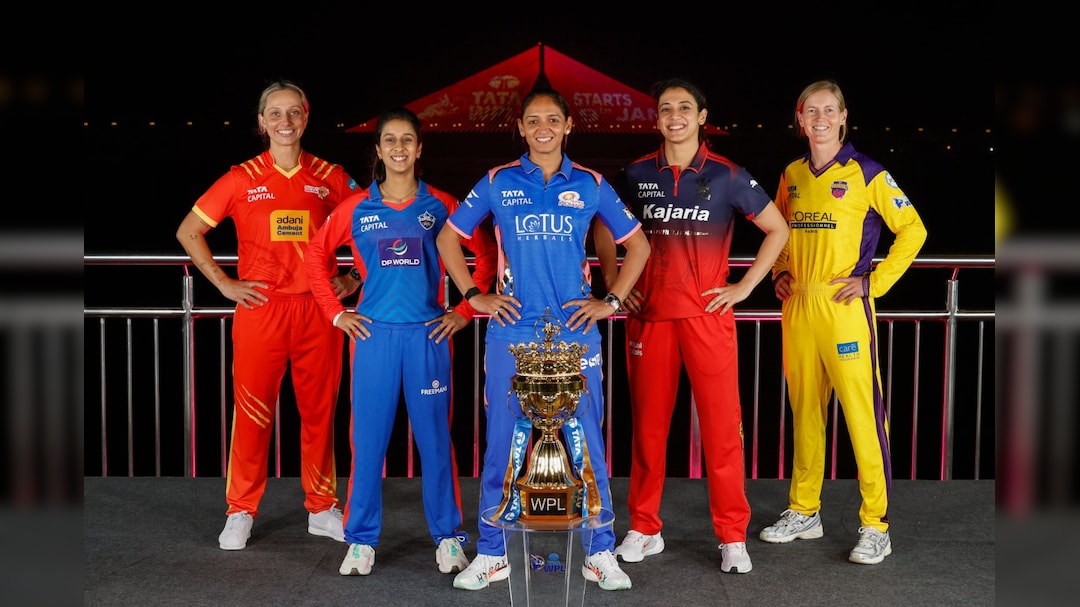
How Can DC, GG, UPW, MI Join RCB In Playoffs? WPL 2026 Qualification Scenarios Explained

0
How Can DC, GG, UPW, MI Join RCB In Playoffs? WPL 2026 Qualification Scenarios Explained

The Women’s Premier League (WPL) 2026 is now moving closer to the playoff stage, with 16 group-stage matches completed as of Monday, Jan. 26. Now, only four matches are left. It must be noted that only the Royal Challengers Bengaluru (RCB) have secured a spot in the playoffs. They are sitting on top of the table with 10 points from seven matches.

Defending champions Mumbai Indians (MI) moved up to second place with six points after their win against RCB on Jan. 26, but MI have played one more match than the other teams below them.

Delhi Capitals (DC) and Gujarat Giants (GG) are also in contention for the playoffs. Both have six points from six matches, the same as MI, but with one extra game in hand. UP Warriorz (UPW), with four points from six matches, have the toughest path to the next stage.

Updated Points Table As Of Jan. 27:

Royal Challengers Bengaluru: Played 7, Won 5, Lost 2, Net Run Rate +0.947, Points 10

Mumbai Indians: Played 7, Won 3, Lost 4, Net Run Rate +0.146, Points 6

Delhi Capitals: Played 6, Won 3, Lost 3, Net Run Rate -0.169, Points 6

Gujarat Giants: Played 6, Won 3, Lost 3, Net Run Rate -0.341, Points 6

UP Warriorz: Played 6, Won 2, Lost 4, Net Run Rate -0.769, Points 4

Playoff Qualification Scenarios:

Mumbai Indians (MI)

The Harmanpreet Kaur-led side can finish the league stage with a maximum of eight points and could end as high as second in the points table. For the Mumbai Indians to secure a top-three finish, they must beat the Gujarat Giants in their final league match on Friday, Jan.30, and hope that UP Warriorz and Delhi Capitals lose both of their remaining games. If that happens, MI will finish in the top three with eight points, while UPW and DC cannot exceed six points.

ALSO READ: MI Qualification Scenario Explained In Detail

Delhi Capitals (DC)

Delhi Capitals, led by Jemimah Rodrigues, are currently third on the points table with six points from six matches. After a slow start, losing three of their first four games, they have staged a strong comeback with back-to-back wins against MI and RCB. With two matches remaining, the team controls its own destiny. Winning both will ensure a spot in the playoffs.

Gujarat Giants (GG)

Gujarat Giants, led by Ashleigh Gardner, are also in contention for the playoffs despite a mixed run in the middle of the season. They began the campaign with back-to-back wins but managed only one victory in their next four games. The team can secure a place in the next stage by winning both of their remaining matches. Even a single win could be enough if UP Warriorz and Mumbai Indians lose at least one more game each.

UP Warriorz (UPW)

UP Warriorz, led by Meg Lanning, are at the bottom of the points table with just two wins this season. They also have the lowest net run rate among the five teams. To stay in contention, they must beat both RCB and DC by large margins in their final two matches to reach eight points and improve their net run rate. A win and a loss would leave them virtually out of the playoff race, even if they remain mathematically alive.

Watch LIVE TV, Get Stock Market Updates,
Top Business, IPO and
Latest News on NDTV Profit.