United States: The United States remains Europe’s largest trading partner, with transatlantic commerce continuing to dominate global trade flows. Between January and October 2025, total trade between the US and Europe stood at $883 billion. Of this, US exports to Europe were valued at $347 billion, while European exports to the US amounted to $538 billion, giving Europe a trade surplus of $191 billion. (News18 Hindi)
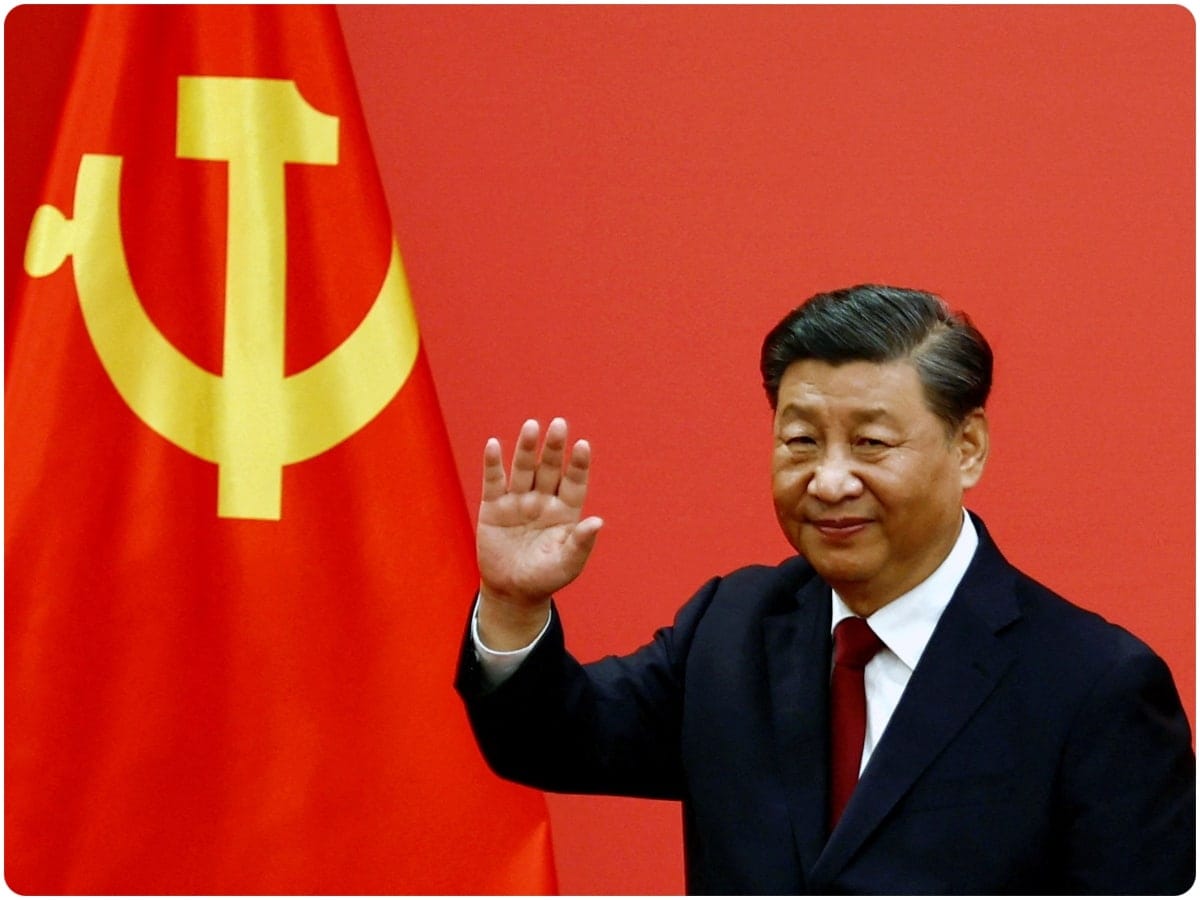
China: China ranks as Europe’s second-largest trading partner, though the balance of trade heavily favours China. From January to November 2025, total trade between the European Union and China reached $749 billion. EU exports to China were estimated at $213 billion, while imports from China stood at around $519 billion, resulting in a significant trade deficit for the European Union. (News18 Hindi)
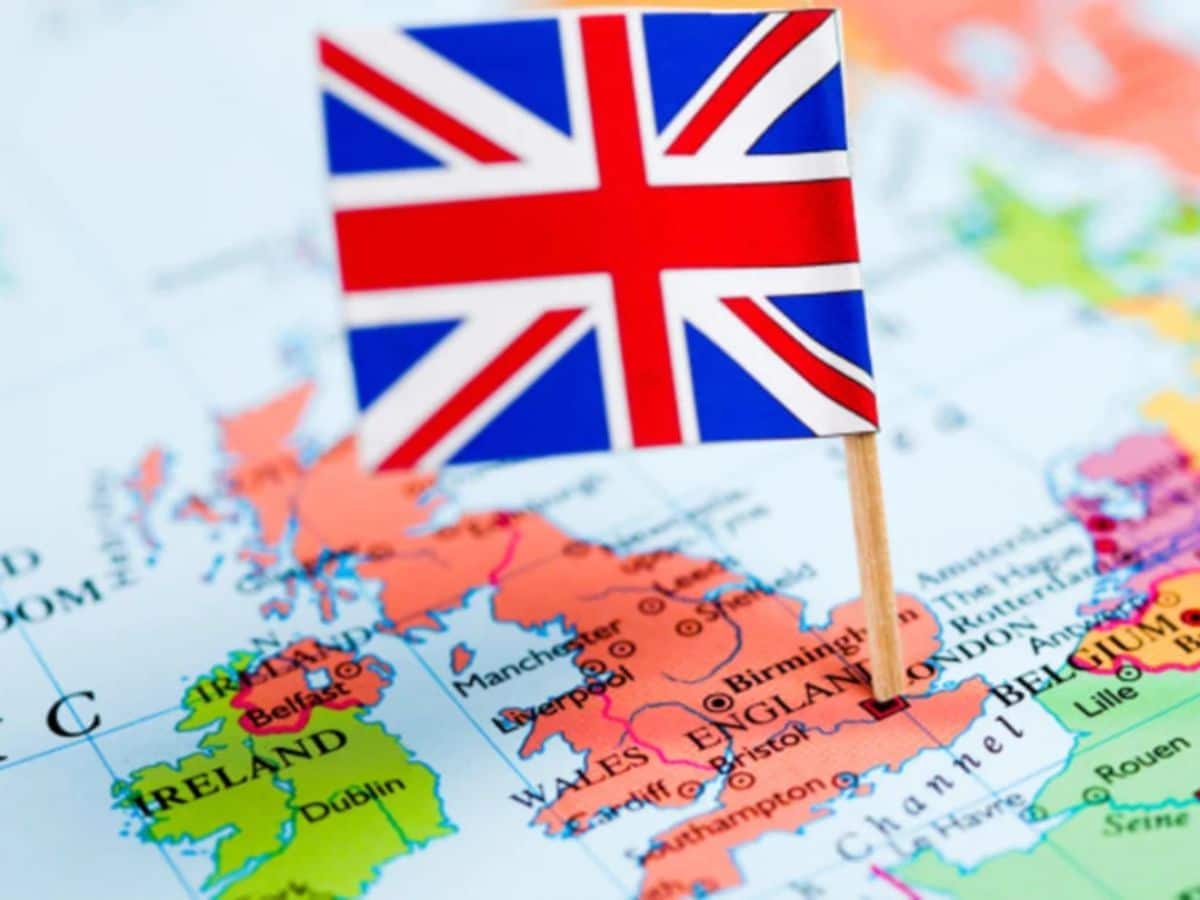
United Kingdom: The United Kingdom is Europe’s third-largest trading partner, with bilateral trade touching nearly $1 trillion in 2025. During the year, EU exports to the UK were valued at approximately €550 billion, while UK exports to the EU stood at around $350 billion. This left Europe with a trade surplus of roughly €176 billion in its dealings with the UK. (News18 Hindi)
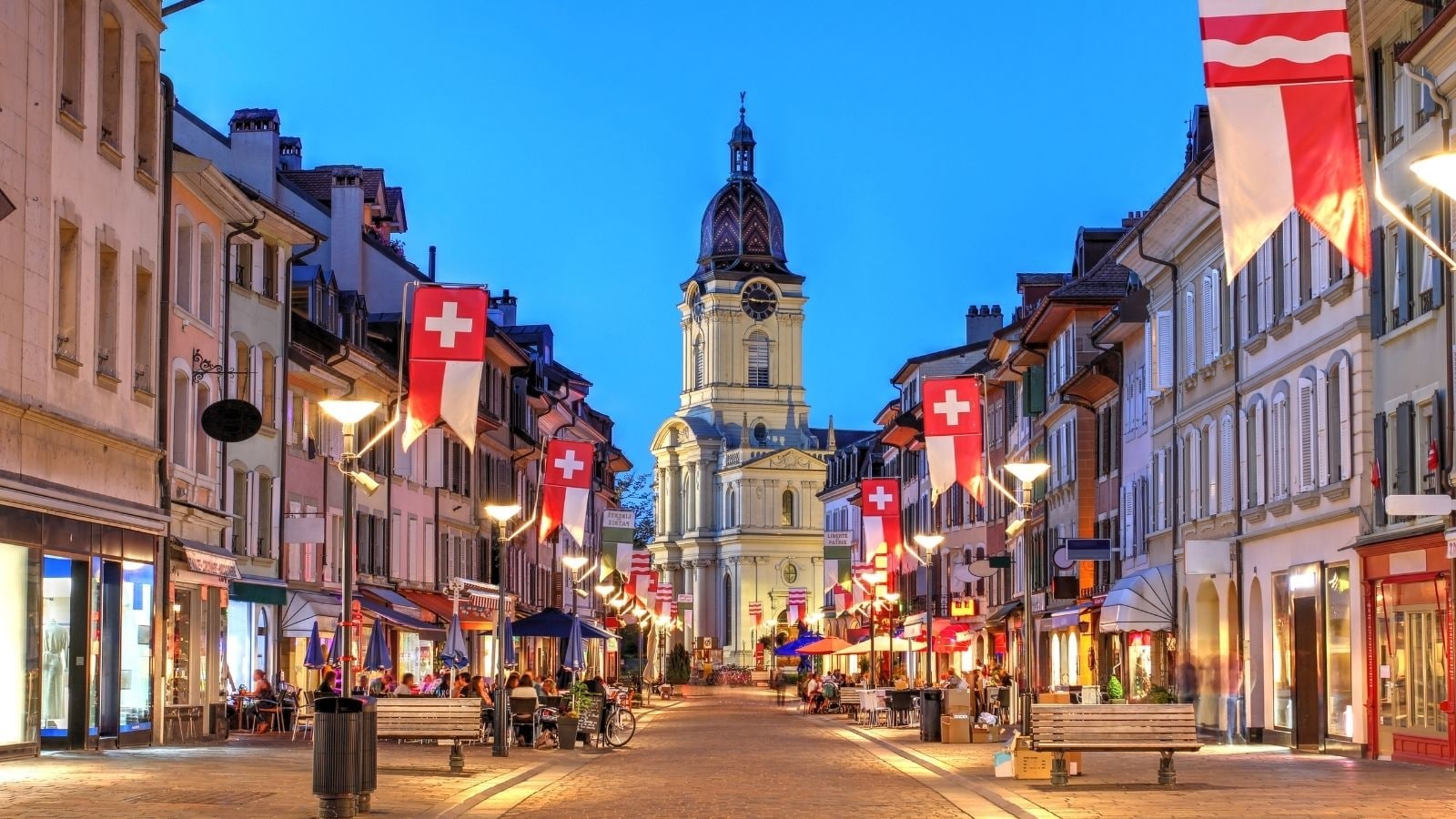
Switzerland: Switzerland emerged as the European Union’s fourth-largest trading partner in 2024, with total trade between the two estimated at about $650 billion. EU exports to Switzerland were valued at €193 billion, while imports from Switzerland stood at €135 billion, giving the bloc a trade surplus of around €121 billion. (News18 Hindi)
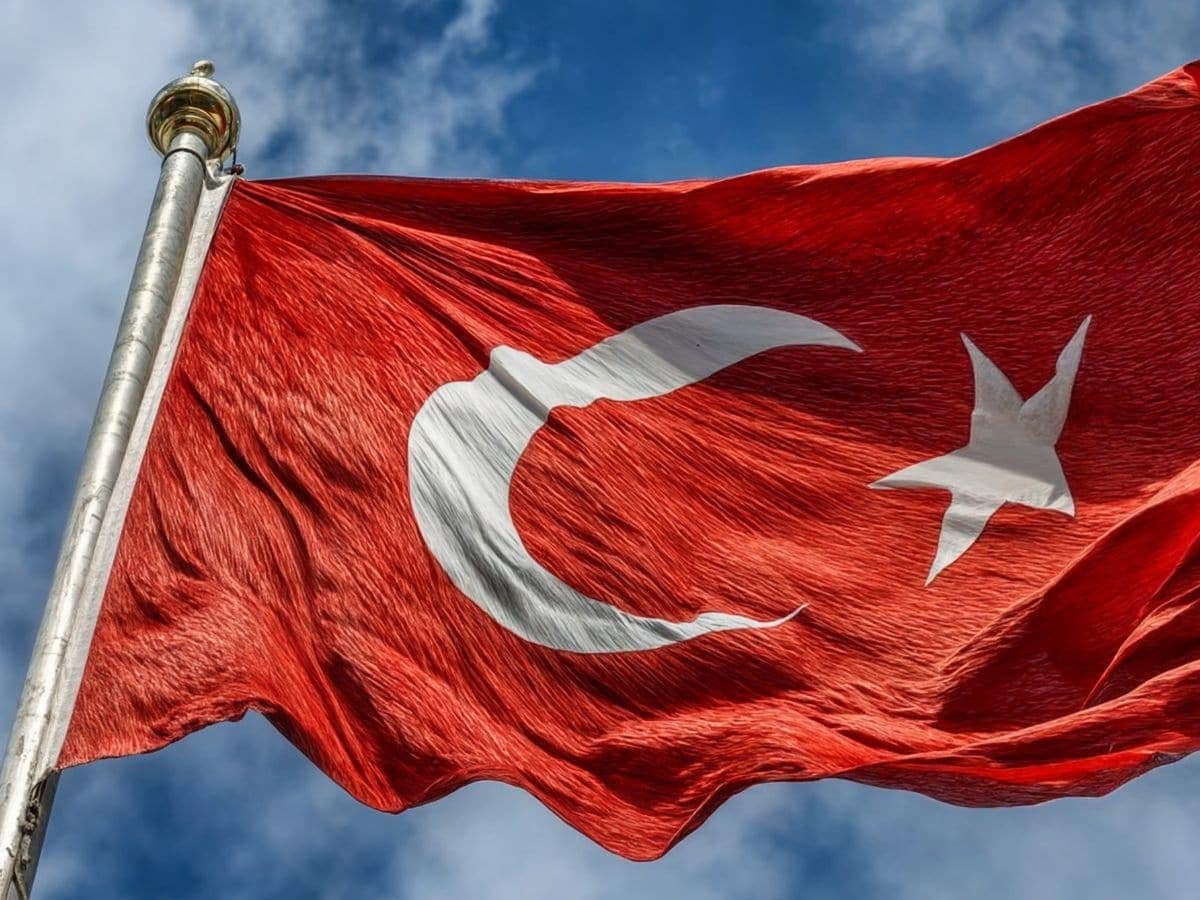
Turkey: Turkey ranked fifth among Europe’s trading partners. In 2024, total trade between the EU and Turkey reached approximately $243 billion. European exports to Turkey were valued at €112 billion, while Turkish exports to Europe stood at about $98 billion, resulting in a trade surplus of nearly €15 billion for the EU. (News18 Hindi)
India: India, though not among Europe’s top five trading partners, continues to be a significant player in EU trade. For India, Europe is the second-largest trading partner. In 2024, total trade between the two stood at around $136 billion. India exported goods worth approximately $76 billion to Europe, while imports from the EU were valued at about $61 billion, leaving India with a trade surplus of nearly $15 billion. (News18 Hindi)
February 2026 in India features key dates like Union Budget, Indian Coast Guard Day, World Cancer Day, Valentine’s Day, Arunachal Pradesh Statehood Day, and National Science Day
February is associated not only with Valentine’s Day but also with several important national and international observances.
In India, the festive calendar is not confined to a single season. Festivals, national events and internationally recognised days are spread across the year. With the first month of the new year behind us, attention now turns to February.
Popularly known as the month of love, February is associated not only with Valentine’s Day but also with several important national and international observances. These dates are significant from a general knowledge perspective, and questions related to them are frequently asked in competitive examinations and interviews. For candidates preparing for such exams, here is a list of important days and festivals falling in February 2026.
List of important days in February 2026
February 1 – Union Budget / Indian Coast Guard Day
February 2 – World Wetlands Day / Rheumatoid Arthritis Awareness Day
February 4 – World Cancer Day
February 6 – International Day of Zero Tolerance for Female Genital Mutilation
February 7 – Valentine’s Week / International Development Week
February 8 – National Opera Day
February 10 – World Pulses Day / National Deworming Day
February 11 – International Day of Women and Girls in Science / World Patient Day
February 12 – Darwin Day
February 13 – World Radio Day / Sarojini Naidu Jayanti
February 14 – Valentine’s Day
February 20 – Arunachal Pradesh Statehood Day / Mizoram Statehood Day
February 20 – World Social Justice Day
February 21 – International Mother Language Day
February 22 – World Thinking Day
February 23 – World Peace and Understanding Day
February 24 – Central Excise Day
February 26 – Veer Savarkar Death Anniversary
February 27 – World NGO Day
February 28 – National Science Day / Rare Disease Day
Disclaimer: The information and advice published in this news article are based on discussions with experts and are meant for general awareness only. This content does not substitute professional or personal advice. Readers are advised to consult a qualified expert before acting on any information. News18 will not be responsible for any loss or damage arising from the use of this information.
Handpicked stories, in your inbox
A newsletter with the best of our journalism
First Published:
January 27, 2026, 21:31 IST
Newslifestyleevents Important Dates In February 2026: Full List Of Festivals, National And International Events
Disclaimer: Comments reflect users’ views, not News18’s. Please keep discussions respectful and constructive. Abusive, defamatory, or illegal comments will be removed. News18 may disable any comment at its discretion. By posting, you agree to our Terms of Use and Privacy Policy.
WEST LAFAYETTE, Ind. — Keaton Wagler scored a career-high 46 points, making nine 3-pointers, as No. 11 Illinois defeated No. 4 Purdue88-82 on Saturday.
Wagler, a freshman guard, shot 13-for-17 overall, 9-of-11 from 3-point range and 11-of-13 on free throws. David Mirkovic added 12 points and eight rebounds for the Illini (17-3, 8-1 Big Ten).
Braden Smith led the Boilermakers (17-3, 7-2) with 27 points and 12 assists. Trey Kaufman-Renn added 12 points for Purdue, which lost its second consecutive game.
Wagler had 24 of the Illini’s 39 first-half points, including the first 14.
Smith’s 3-pointer cut Illinois’ lead to 82-80 with 45 seconds left. Wagler answered with a jumper with 18 seconds left, and after Smith made two from the line to again make it a two-point game, Wagler hit two to make it 86-82 with 9.3 seconds left. Purdue then turned the ball over.
Purdue shot 63% in the opening half compared to 43% for Illinois. However, the Illini countered that by hitting 9 of 21 3-pointers while the Boilermakers were 3-of-8 on 3-point shots.
Illinois played without reserve center Jason Jakstys, who was out with an injury. Illini coach Brad Underwood previously announced guard Kyle Boswell, who averages 14.3 points, will be out at least a month with a fracture bone in his right hand.
The Illini hit 18 of 38 3-pointers while Purdue was 7-of-19.
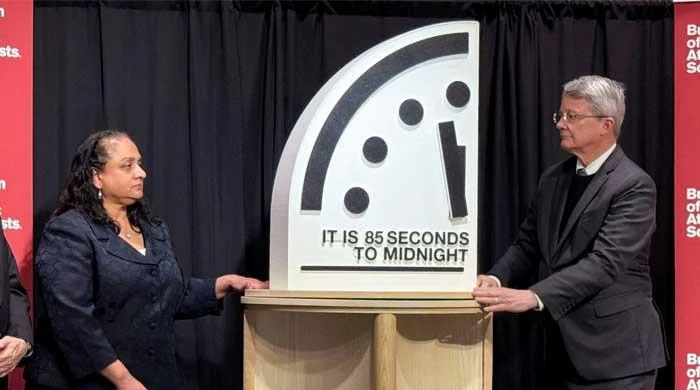
Jon Wolfsthal, director of global risk at the Federation of American Scientists (FAS), Asha George, executive director of the Bipartisan Commission on Biodefense, and Steve Fetter, professor of public policy and former dean at the University of Maryland, reveal the location of the minute hand on its Doomsday Clock, indicating what world developments mean for the perceived likelihood of nuclear catastrophe, during a town-hall in Washington, DC, US, January 23, 2026. — Reuters
WASHINGTON: The “Doomsday Clock” representing how near humanity is to catastrophe on Tuesday moved closer than ever to midnight as concerns grow on nuclear weapons, climate change and disinformation.
The Bulletin of the Atomic Scientists, which set up the metaphorical clock at the start of the Cold War, moved its time to 85 seconds to midnight — four seconds closer than a year ago.
The announcement comes a year into President Donald Trump’s second term in which he has shattered global norms including by ordering unilateral attacks and withdrawing from a slew of international organisations.
Russia, China the United States and other major countries have “become increasingly aggressive, adversarial and nationalistic,” said a statement announcing the clock shift, determined after consultations with a board that includes eight Nobel laureates.
“Hard-won global understandings are collapsing, accelerating a winner-takes-all great power competition and undermining the international cooperation critical to reducing the risks of nuclear war, climate change, the misuse of biotechnology, the potential threat of artificial intelligence and other apocalyptic dangers.”
The Doomsday Clock board warned of heightened risks of a nuclear arms race, with the New START nuclear arms reduction treaty between the United States and Russia set to expire next week and Trump pushing a costly “Golden Dome” missile defense system that would further militarise space.
It also noted the record emission levels of carbon dioxide, the key driver of the planet’s warming temperatures, after Trump sharply reversed US policy on fighting climate change and a number of other countries also backtracked.
Board members warned of a fracturing of global trust.
“We are living through an information Armageddon — the crisis beneath all crises — driven by extractive and predatory technology that spreads lies faster than facts and profits from our division,” said Maria Ressa, the Filipina investigative journalist and Nobel Peace Prize winner.
The Bulletin of Atomic Scientists, founded by Albert Einstein, Robert Oppenheimer and other nuclear scientists at the University of Chicago, initially placed the clock at seven minutes to midnight in 1947.
It was moved closer last year but by only one second, amid guarded hopes on newly reinaugurated Trump’s promises to pursue peace.
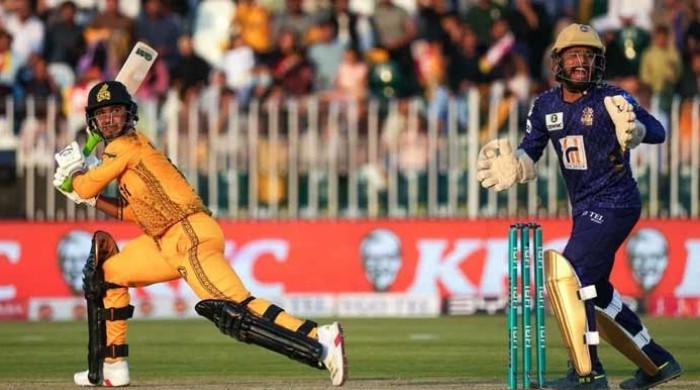
Peshawar Zalmi’s Saim Ayub watches the ball after playing a shot during their PSL 10 match against Quetta Gladiators at the Rawalpindi Cricket Stadium in Rawalpindi on April 12, 2025. — PSL
The Pakistan Super League (PSL) on Tuesday announced the players’ category renewals ahead of the first-ever player auction for the 11th edition, scheduled for February 11.
According to the league, a total of 32 players from all six franchises have been named in the Gold category, with the most from the 2020 champions Karachi Kings (eight), followed by six from Peshawar Zalmi, five each from Quetta Gladiators and Multan Sultans, while Lahore Qalandars and Islamabad United have four each.
Meanwhile, 16 players have been shortlisted for retention in the Silver category, out of whom six are from the Sultans, three from the Qalandars, two each from United and Qalandars, while the Kings and Gladiators have one apiece.
The Emerging category includes 14 national players eligible for retention.
Category renewals for PSL 11 retentions
Emerging
Islamabad United: Saad Masood, Mohammad Shahzad and Ghazi Gouri.
Peshawar Zalmi: Abdullah Fazal, Ali Raza and Maaz Sadaqat.
Karachi Kings: Razaullah, Fawad Ali and Saad Baig.
Multan Sultans: Shahid Aziz and Mohammad Zulfikal.
Quetta Gladiators: Mohammad Zeeshan and Shamyl Hussain.
Lahore Qalandars: Momin Qamar.
Silver
Multan Sultans: Yasir Khan, Amir Barki, Mohammad Junaid, Humayun Altaf, Ali Imran, Jahanzaib Sultan and Ubaid Shah.
Lahore Qalandars: Mohammad Akhlaq, Mohammad Naeem and Mohammad Azab.
Islamabad United: Mohammad Faiq and Hunain Shah.
Peshawar Zalmi: Arif Yaqoob and Mehran Mumtaz.
Quetta Gladiators: Ali Majid.
Gold
Multan Sultans: Kamran Ghulam, Mohammad Hasnain, Faisal Akram, Akif Javed and Tayyab Tahir.
Lahore Qalandars: Zaman Khan, Jahandad Khan, Asif Afridi and Asif Ali.
Islamabad United: Azam Khan, Haider Ali, Salman Irshad and Rumman Raees.
Peshawar Zalmi: Mohammad Haris, Mohammad Ali, Abdul Samad, Hussain Talat, Ahmed Daniyal and Ihsanullah.
Quetta Gladiators: Khurram Shahzad, Haseebullah Khan, Khawaja Mohammad Nafay, Hassan Nawaz and Danish Aziz.
Karachi Kings: Khushdil Shah, Aamer Jamal, Irfan Khan Niazi, Mir Hamza, Zahid Mahmood, Omair bin Yousuf, Shahnawaz Dahani and Arafat Minhas.
For the unversed, the historic 11th edition of the PSL will see the league expand to eight teams, with Hyderabad and Sialkot joining as new franchises.
For the first time, the league will conduct a player auction, replacing the traditional players’ draft, scheduled for February 11.
Diamond
Karachi Kings: Abbas Afridi and Shan Masood.
Lahore Qalandars: Abdullah Shafique and Mohammad Salman Mirza.
Peshawar Zalmi: Sufiyan Muqeem.
Multan Sultans: Usama Mir, Iftikhar Ahmed and Usman Khan.
Quetta Gladiators: Saud Shakeel, Mohammad Wasim Jr and Usman Tariq.
For the unversed, the historic 11th edition of the PSL will see the league expand to eight teams, with Hyderabad and Sialkot joining as new franchises.
For the first time, the league will conduct a player auction, replacing the traditional players’ draft, scheduled for February 11.
Pubs and music venues will get 15 per cent off their business rates bills from April as part of a major support package, the Treasury has announced.
It comes after warnings from the sector that changes from November’s autumn budget would lead to mass closures and job losses.
However, other hospitality businesses such as hotels, restaurants and cafes will not receive additional support despite their own concerns over soaring tax bills.
Treasury minister Dan Tomlinson said the property tax bills for pubs and music venues in England will be reduced by 15 per cent in 2026/27 and then be “frozen in real terms” for the next two years.
He added that the support will be worth £1,650 for the average pub next year.
Mr Tomlinson said: “This decision will mean that the amount of business rates paid by the pub sector as a whole will be lower in 2028/29.
“It will also apply to music venues too. Many are valued as pubs and it would not be right to draw the line.”
The Treasury’s intervention comes after an intensifying backlash from industry bosses and MPs over impending tax increases.
This has also seen dozens of Labour MPs, including ChancellorRachel Reeves, barred by pub landlords in response to November’s autumn budget.
In the budget, the Treasury announced changes to business rates which introduced a lower multiplier used to calculate the commercial property tax.
However, this was more than offset by the removal of a Covid-era 40 per cent discount to business rates bills for hospitality, leisure and retail businesses, as well as new property valuations.
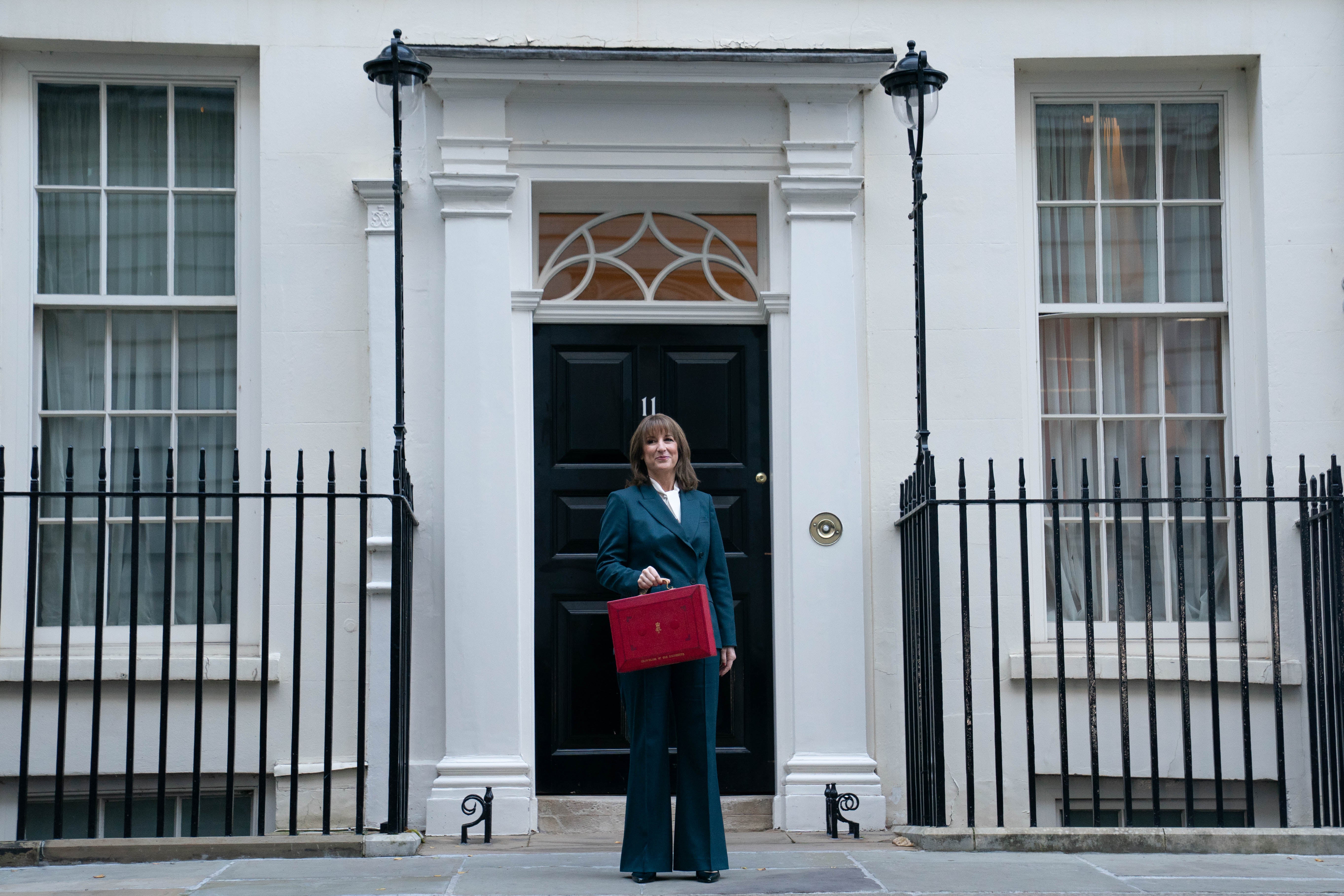
Chancellor Rachel Reeves delivered the budget in November (Stefan Rousseau/PA)
The Chancellor introduced transitional relief to manage increases to rates bills over the next three years after the removal of sector discounts.
However, industry bodies UKHospitality and the British Beer and Pub Association (BBPA) had warned that pub business rates bills would still increase by an average of 15 per cent, or £1,400, in April without an intervention.
They said this would have led to an average rise of 76 per cent, or £7,000, by the 2028/29 financial year.
Business rates are devolved in Scotland, Wales and Northern Ireland.
Emma McClarkin, chief executive of the BBPA, said: “We are pleased the Government has listened to our concerns, and those of publicans, consumers and MPs who rallied to defend our locals.
“This pub-specific package will stave off the immediate financial threat posed by accelerating business costs and will help keep the doors open for many.”
Leaders from around the world gathered in Jerusalem on Tuesday to highlight the global surge in antisemitism on International Holocaust Remembrance Day, marked annually on the anniversary of the 1945 liberation of the Auschwitz-Birkenau Nazi extermination camp.
An opening gala was held on Monday, during which Prime Minister Benjamin Netanyahu warned that the West’s democratic civilization is under threat from a destructive ideology that has infiltrated every country in Western Europe and the United States.
“They want to destroy the West as we know it. And they agree on one thing. What is the thing that they agree on? World War Jew. To conduct a world war, first against the Jews and against the Jewish state,” he said.
Israeli Prime Minister Benjamin Netanyahu addressed world leaders and officials at the Second International Conference on Combating Antisemitism in Jerusalem, Israel on Jan 26, 2026.(Haim Zach/GPO)
“And for the radical Muslims, they are right, because there would be no West in the Middle East if the Jewish state is eradicated. There would be no obstacle for the further invasion of Europe if the Jewish state doesn’t exist. And it also appeals to their internal hatred of the Jews, which has common roots with antisemitism over the centuries,” Netanyahu added.
Among the prominent international figures attending the conference were Albanian Prime Minister Edi Rama, former Austrian Chancellor Sebastian Kurz, former Australian Prime Minister Scott Morrison, Hungarian Minister for European Union Affairs János Bóka and U.S. Ambassador to Israel Mike Huckabee.
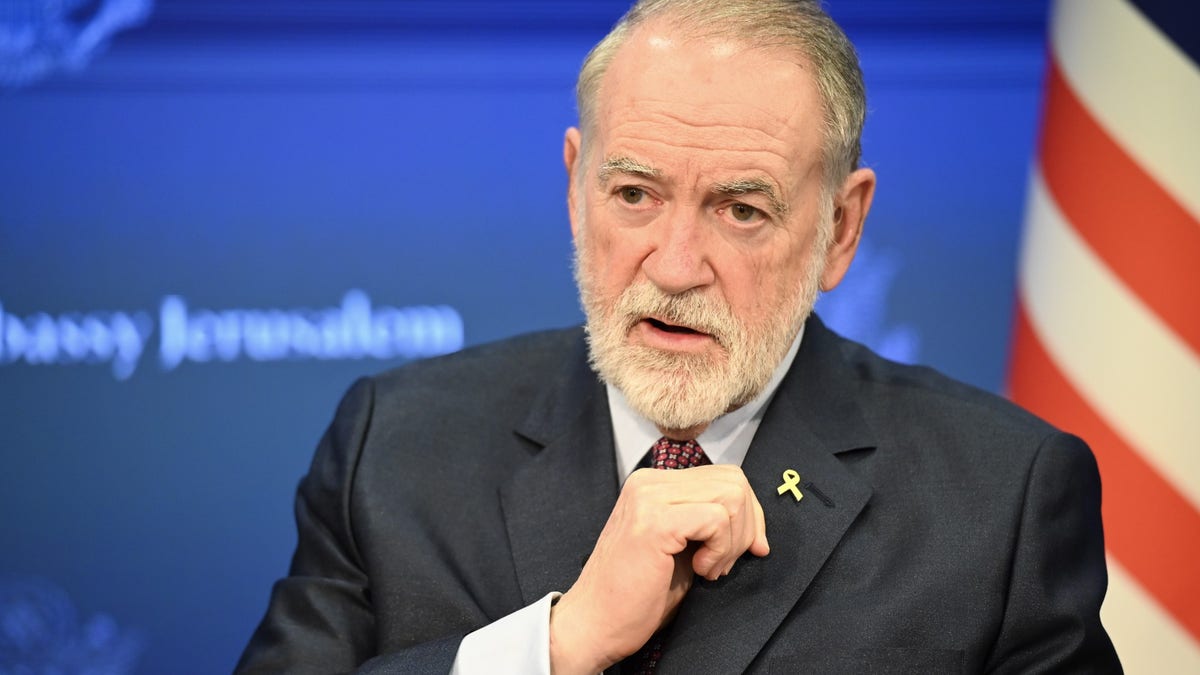
“Antisemitism is rooted in a spiritual disease of raw evil,” Huckabee told Fox News Digital. “It’s the bigotry of believing oneself to be superior to another, which is the essence of all forms of irrational hate and racism. We all should be speaking up and standing up against it,” he said.
U.S. Ambassador to Israel Mike Huckabee speaks to Fox News Digital during an interview at the American embassy in Jerusalem, Israel.(Yoav Dudkevitch/ TPS-IL)
“Hating the Jews today is hating Christians tomorrow and some other group the next. It’s a cancer that is never satisfied until every healthy human relationship is destroyed. It originates in hell. Any and all efforts to identify such darkness is helpful. Being quiet about it is to accept it and agree with it,” the ambassador added.
Israeli President Isaac Herzog was the first speaker to address the conference on Tuesday, warning of a deteriorating reality for Jewish communities worldwide.
“The same old plague has been let loose on our society once again. The rationale may be different, but it is the same ancient poison, it has taken many forms, but it has always carried the same name, antisemitism,” he said.
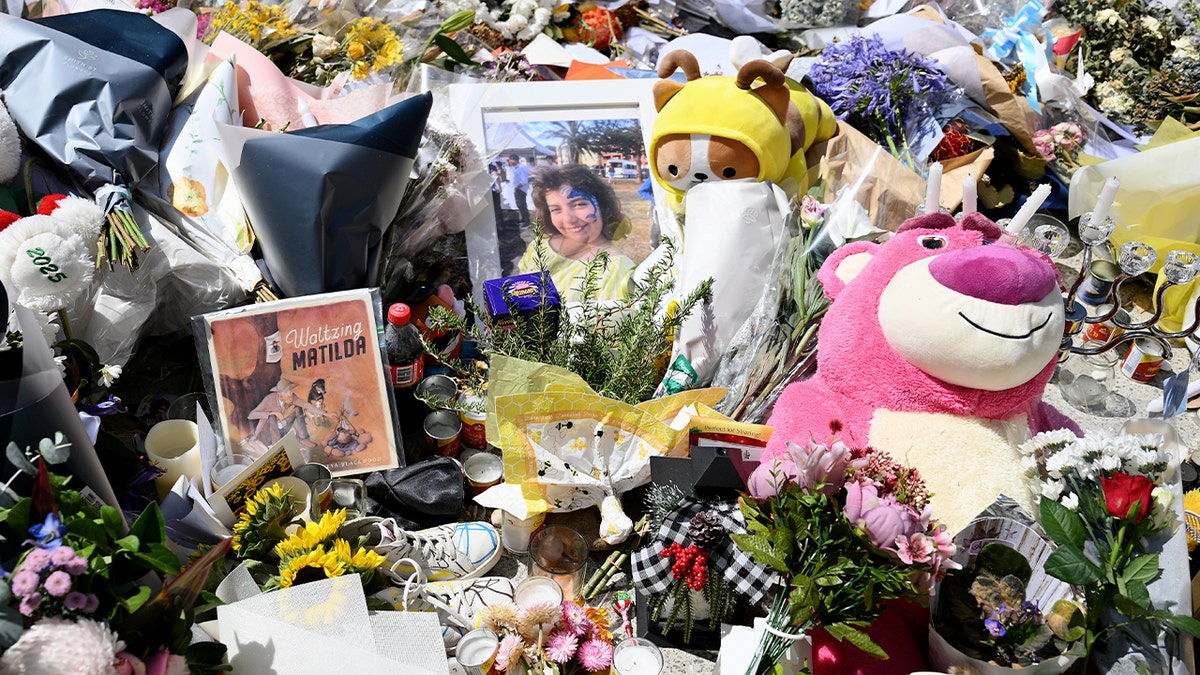
A tribute for Bondi Beach mass shooting victim, 10-year-old Matilda, whose last name is being withheld at the request of her family, at the Bondi Pavilion in Sydney, Thursday, Dec. 18, 2025.(Steve Markham/AP Photo)
Herzog noted that Jews now feel compelled to hide their identities on the streets of London and Paris, and that Jewish worshipers must be protected on Saturday mornings from Toronto to Boston to Buenos Aires.
He cited the killing of Jewish worshipers in Manchester, England, on Yom Kippur, the murder of innocents at a Chanukah celebration in Sydney, Australia, and the isolation and harassment of Jewish students on university campuses across the U.S. and Europe.
“When this happens,” Herzog said, “we are failing to meet our vow. We are failing to meet our duties to humanity.”
Herzog also addressed concerns in the United States, citing New York City Mayor Zohran Mamdani. “To deny the Jewish people and only the Jewish people the right to self-determination in their national homeland is antisemitism – even if you are the mayor of the city with the most Jews outside Israel,” he said.
Israeli President Isaac Herzog meeting leaders at the Second International Conference on Combating Antisemitism in Jerusalem, Israel on Jan 27, 2026.(Amos Ben-Gershom/GPO)
The conference, titled Generation Truth, and hosted by Israel’s Minister of Diaspora Affairs and Combating Antisemitism Amichai Chikli, focused on three primary manifestations of modern antisemitism: violent Islamist antisemitism, progressive antisemitism that seeks to delegitimize Israel and exclude Jews from public life, and far-right antisemitism, which has gained renewed visibility in recent years.
On Tuesday, Chikli drew a connection between Nazi ideology and what he described as “Islamo-Nazism,” which he said underpins the worldview of Hamas and the Muslim Brotherhood.
“Eighty-one years have passed, and the Jewish people have still not fully recovered from the horrific campaign of annihilation carried out by Nazi Germany. Eighty-one years have passed and yet an axe is still raised against us seeking to destroy the small Jewish state and to harm Jews at every point on the globe, from the kibbutzim and communities in southern Israel still scared by the barbaric Hamas atrocities of Oct. 7 to Manchester and Sydney,” Chikli said.
A police vehicle parked outside the Manchester synagogue, where multiple people were killed on Yom Kippur in what police have declared a terrorist incident, in north Manchester, Britain, Oct. 5, 2025.(Hannah McKay/Reuters)
“This conference seeks to banish political correctness… and to mobilize all essential forces in the ideological and physical fight against the modern heirs of the Nazi,” he continued.
Also speaking at the conference was Sylvan Adams, president of the World Jewish Congress for the Israel region, who told Fox News Digital that on Oct. 8, 2023 — before the war in Gaza began and while Israel was still counting its dead — demonstrations took place across the globe celebrating the Hamas-led massacre.
He blamed the events on several countries that he said are part of an organized campaign led by Qatar, which he said serves as a frontline for the Muslim Brotherhood, with backing from Iran and, more recently, China — actors he argued exploit Israel and the Jewish people to intimidate and overturn Western society.
CLICK HERE TO DOWNLOAD THE FOX NEWS APP
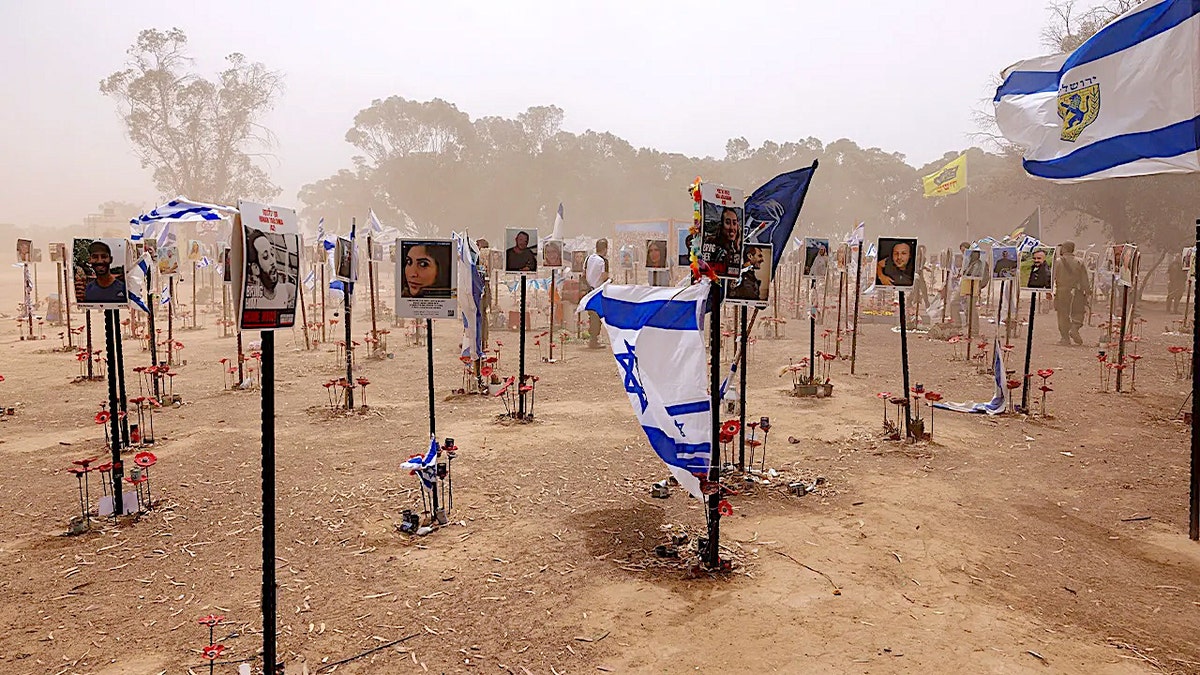
Memorials at the site of the Oct. 7 Hamas terror attack on the Supernova music festival near Kibbutz Re’im, Israel, on Monday, May 27, 2024.(Kobi Wolf/Bloomberg via Getty Images )
“After Israel appeared wounded and vulnerable on Oct. 7, they activated a massive, long-prepared campaign — investing vast resources, infiltrating institutions, and planting paid operatives in Western cities in an effort to deliver a final blow. But we see how deeply mistaken they were,” Adams said.
“We need to push back and remind leaders in the West, institutional leaders as well as political leaders, that we are under attack. Our way of life, our freedoms are under attack. It’s not Israel’s fight, this is a clash of civilizations, we are fighting for all of the West,” he added.
Amelie Botbol is a freelance journalist based in Tel Aviv. Her articles have appeared in the New York Post, Canada’s National Post, and the Washington Times. Amelie can be followed on X @DatReporter
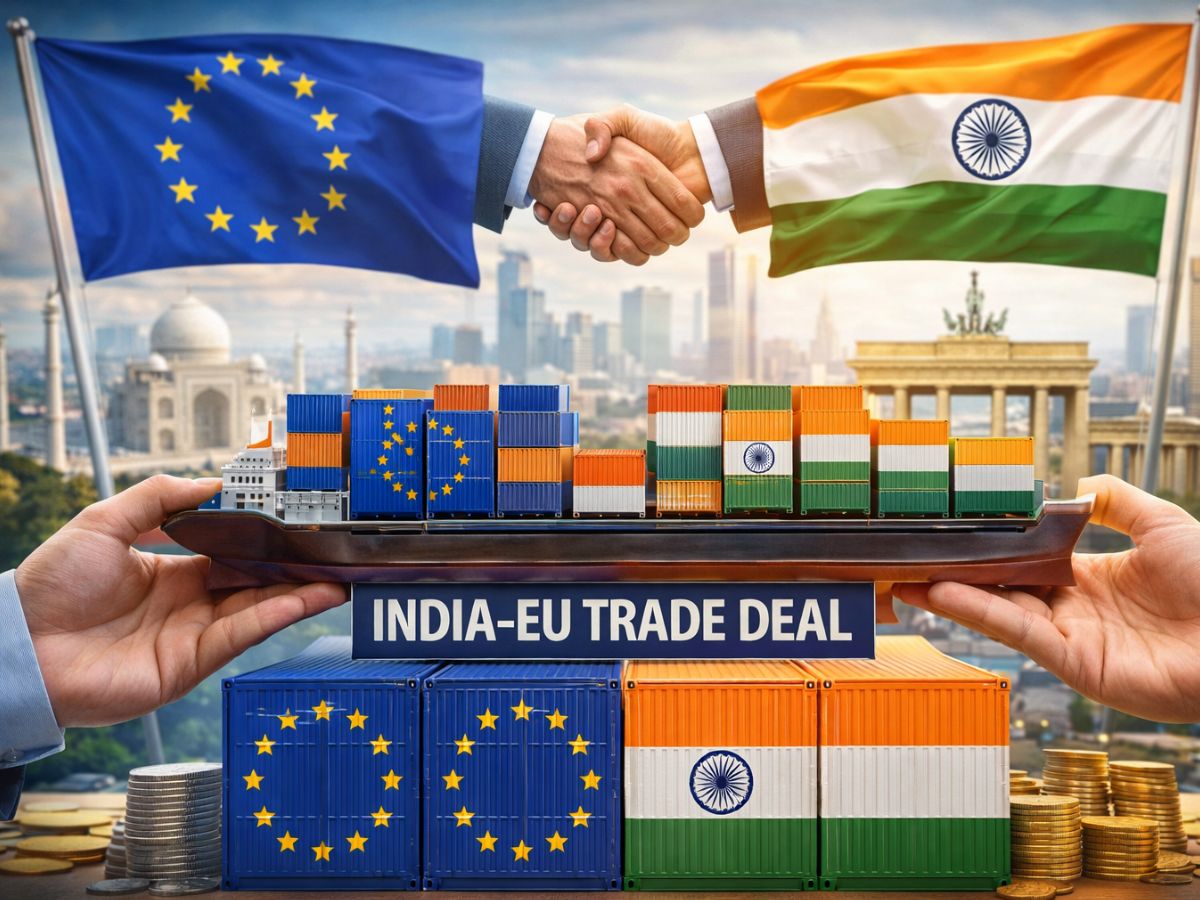
By eliminating 9,425 tariff lines and improving market access, India-EU FTA will expand opportunities for sectors such as textiles, apparel, leather, gems and jewellery, etc
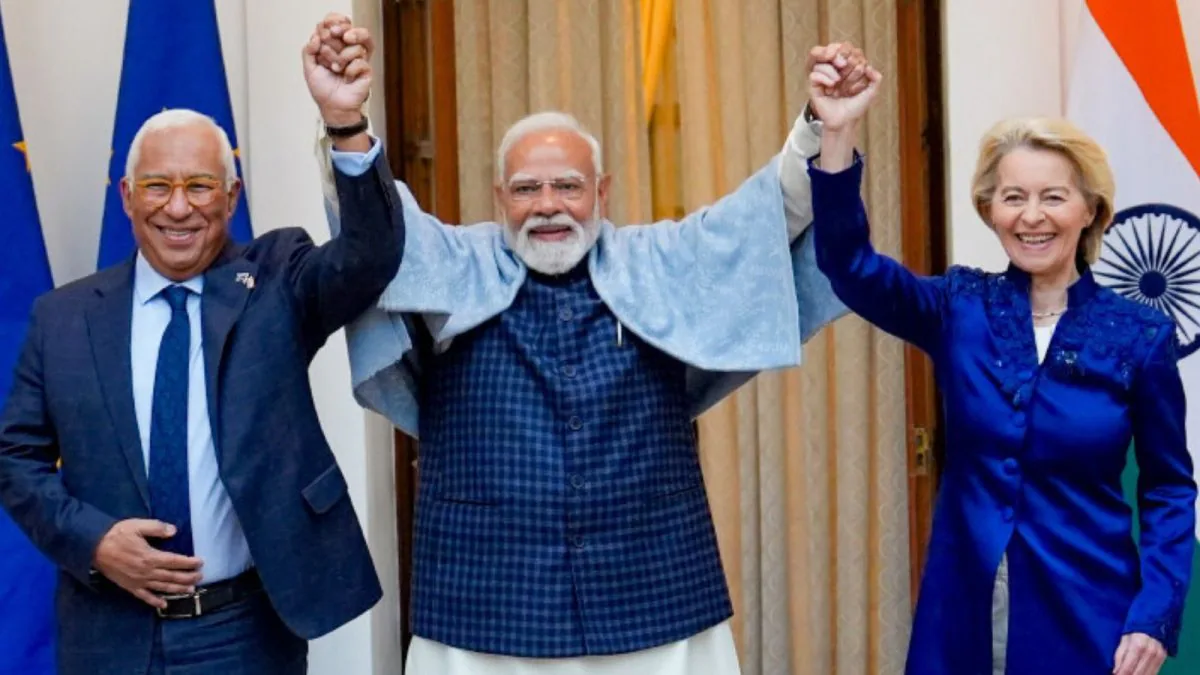
PM Narendra Modi with European Council President Antonio Costa (left) and European Commission President Ursula von der Leyen in New Delhi on Tuesday. (PTI)
Prime Minister Narendra Modi on Tuesday said that the India-European Union Free Trade Agreement finalised on Tuesday will provide the country’s labour-intensive products easy access to the European Union market.
The India-EU FTA is projected to deliver a Rs 6.4-lakh-crore boost to Indian exports to the European Union, while opening EU markets to Indian MSMEs, manufacturers, farmers, students, and professionals.
By eliminating 9,425 tariff lines and improving market access, the agreement will expand opportunities for labour-intensive sectors such as textiles, apparel, leather, gems and jewellery, handicrafts, agriculture exports in tea, spices, marine products and high-tech manufacturing exports of engineering goods, electronics, pharmaceuticals and medical devices.
The gains will be broad-based and cluster-led, benefiting manufacturing and services hubs across multiple states especially those anchored in MSMEs and labour-intensive value chains. Export-oriented ecosystems such as textile and apparel belts, leather clusters, marine export hubs, pharma and electronics corridors stand to see direct demand expansion and stronger integration into EU supply chains.
How States Will Benefit
MAHARASHTRA
Maharashtra will see strong demand from E.U markets translate into stronger orders across both scale manufacturing and MSMEs. With textiles moving from 12% to 0% and electronics from 14% to 0% on 99.6% of exports, clusters such as garments manufacturing clusters in Ichalkaranji and engineering goods as well as electronics and pharmaceutical sector in Pune can expand orders and deepen EU supply chain linkages.
Pharmaceuticals exports from Thane-Raigad, and gems and jewellery exports from Mumbai are positioned to grow as tariffs come down and market access improves. This mix creates a jobs boost across labour-intensive production as well as high value manufacturing.
GUJARAT
Gujarat gains through its export-led industrial belt where large anchors and MSME vendors operate in the same supply chains. Surat is set to expand textiles and diamonds and jewellery, while Bharuch-Vadodara can scale chemicals with tariffs falling from 12.8% to 0% on 97.5% of chemicals exports to EU. Rajkot is likely to benefit through surge in export of engineering goods and electronics, and Veraval through higher marine exports that support coastal livelihoods and processing units.
TAMIL NADU
Tamil Nadu stands out for immediate upside in labour-intensive clusters that are already globally competitive. Apparel from Tiruppur becomes significantly more competitive with textiles tariffs moving from 12% to 0%, while Vellore-Ambur leather and footwear exporters gain from a major cut in tariffs from 17% to 0% now to EU. At the same time, manufacturing corridors of engineering goods and electronics in Chennai and Coimbatore can deepen exports strengthening the full value chain from MSME suppliers to large manufacturers.
WEST BENGAL
West Bengal is set to see benefits that connect directly to livelihoods in tea, coastal production, and crafts. North Bengal can strengthen exports of Darjeeling tea, building on preferential access to European markets. Seafood exports from Digha and Haldia such as shrimp and frozen fish which currently attract as high as 26% tariff will see preferential access to E.U markets. Traditional handicrafts will gain from improved access, supporting small producers and local value addition.
ASSAM
Assam sees a direct pathway for farmers and artisans into premium EU markets, with strong potential for brand-led exports. Dibrugarh–Jorhat tea exports can expand, while Upper Assam spices gain from improved access and better price realization. Barpeta and Nalbari are positioned to scale bamboo-based furniture and handicrafts, and niche pharmaceutical exports also get a lift through more predictable market entry.
KERALA
Kerala stands to benefit through high-demand food and spice categories that are closely tied to farmer and fisher incomes. Kochi and Alappuzha can expand shrimp and tuna exports through preferential access to EU markets supporting processing units and port-linked logistics. Idukki and Wayanad gain through spices like pepper and cardamom which will benefit from increased access to wider EU market.
KARNATAKA
Karnataka is well-placed to convert preferential access into growth across advanced manufacturing and export services linkages. Export momentum is expected from Bengaluru-Tumakuru in engineering goods, electronics and pharmaceuticals, supported by a strong ecosystem of component and ancillary MSMEs.
Bengaluru’s apparel exporters also stand to gain, helping job creation in labour-intensive manufacturing alongside high skill sectors.
ANDHRA PRADESH
Andhra Pradesh benefits strongly through its coastal export economy where EU demand can lift both volumes and value addition. Visakhapatnam and Kakinada are expected to see a substantial rise in shrimp and seafood exports, supporting fisheries, processing and cold-chain jobs. Visakhapatnam also gains in pharmaceuticals and electronics exports, strengthening the state’s manufacturing base.
TELANGANA
Telangana benefits through a balanced profile of textiles and advanced manufacturing sectors. Hyderabad-Warangal can expand textile and apparel exports, supporting MSMEs and factory employment in labour-intensive units. Hyderabad is also positioned to grow exports of pharmaceuticals, electronics, medical devices and engineering goods, reinforcing the state’s role in high-value global supply chains.
PUNJAB
Punjab gains through clusters where MSMEs dominate and employment intensity is high. Ludhiana can expand garments and knitwear exports, while Jalandhar is poised to push sports goods deeper into EU markets. Mandi Gobindgarh’s light engineering units also stand to benefit, strengthening industrial jobs and ancillary supply chains.
RAJASTHAN
Rajasthan gains through labour-intensive craft and manufacturing clusters that are export-ready but often constrained by market access. Jaipur jewellery exports are expected to rise, while Jodhpur can expand wooden furniture and handicrafts with stronger EU reach. Churu sports goods, textiles such as Bandhej, and leather goods also stand to gain, spreading benefits across MSMEs and artisan communities.
UTTAR PRADESH
Uttar Pradesh is among the biggest potential job multipliers because of its large labour-intensive base in leather and crafts. Leather footwear exporters in Kanpur and Agra can scale up shipments, while Saharanpur benefits through furniture and handicrafts exports. Noida’s electronics manufacturing and Western UP’s agri-products also gain, widening the state’s export basket.
Taken together, the India-EU FTA is a state-by-state opportunity to scale India’s most competitive export clusters. It creates a clear runway for labour-intensive manufacturing such as textiles, apparel, leather, gems and jewellery, sports goods and handicrafts, while also expanding demand for agriculture-linked exports such as tea, spices and marine products.
Handpicked stories, in your inbox
A newsletter with the best of our journalism
First Published:
January 27, 2026, 19:51 IST
Newsindia Maharashtra, Karnataka To UP, Tamil Nadu: Why India-EU FTA Is Good For All States
Disclaimer: Comments reflect users’ views, not News18’s. Please keep discussions respectful and constructive. Abusive, defamatory, or illegal comments will be removed. News18 may disable any comment at its discretion. By posting, you agree to our Terms of Use and Privacy Policy.
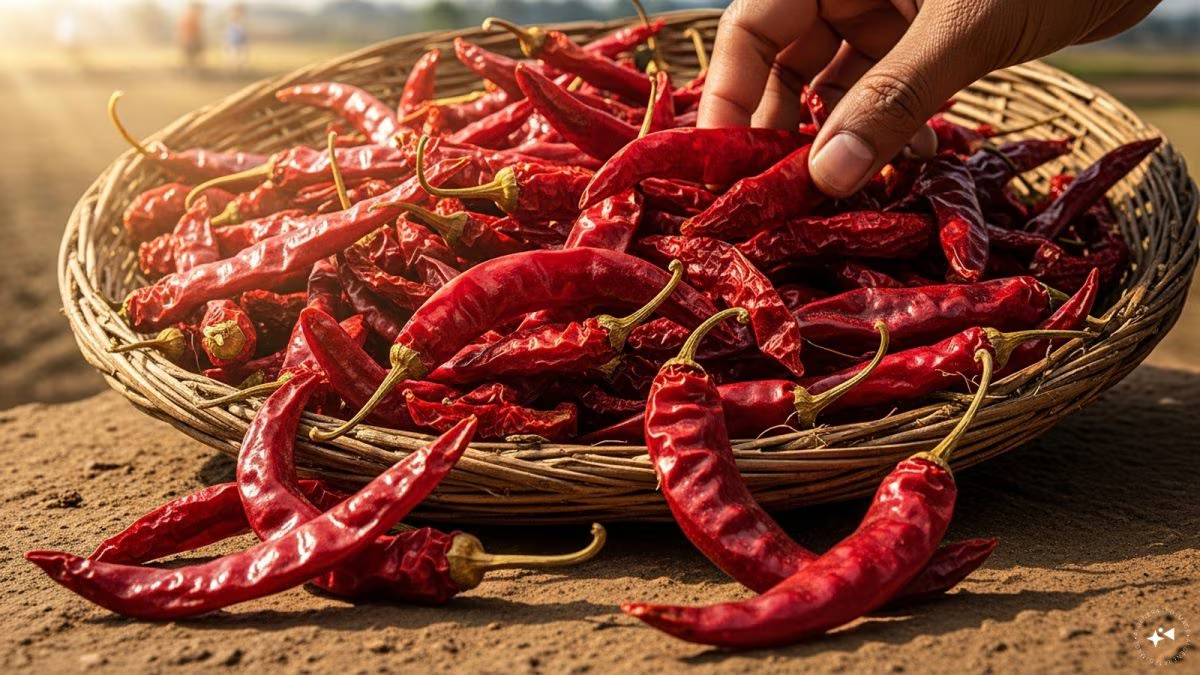
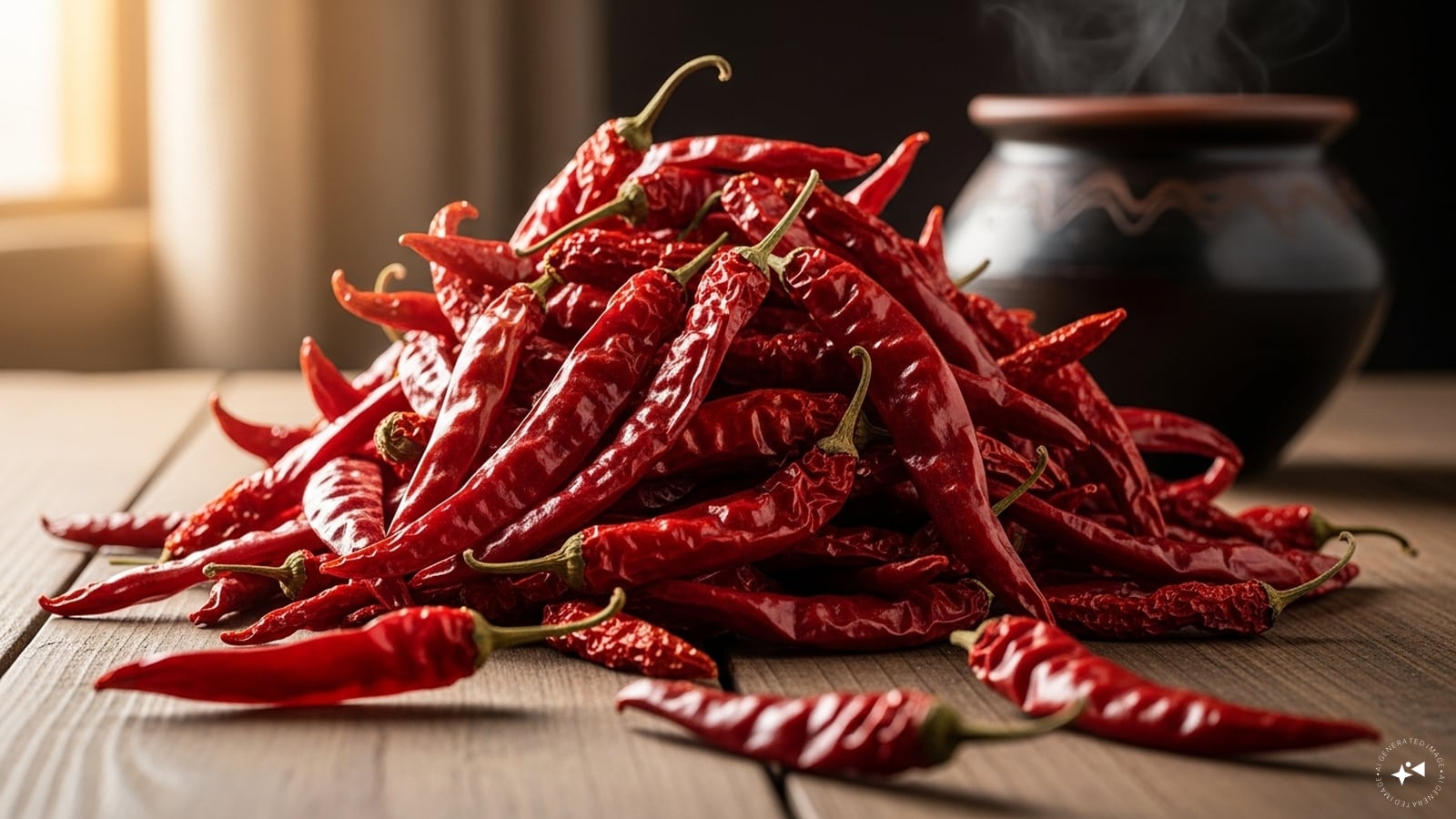
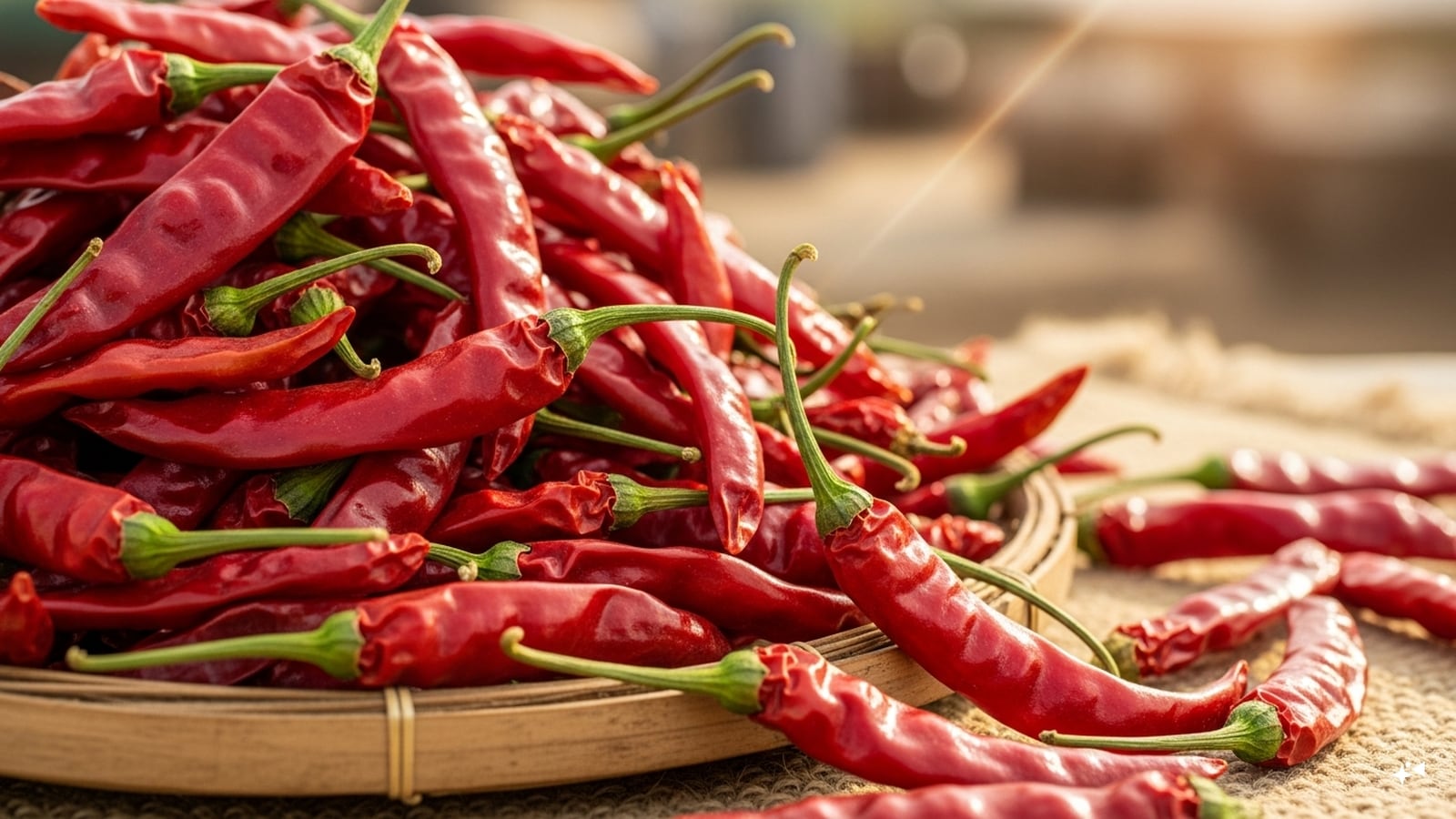
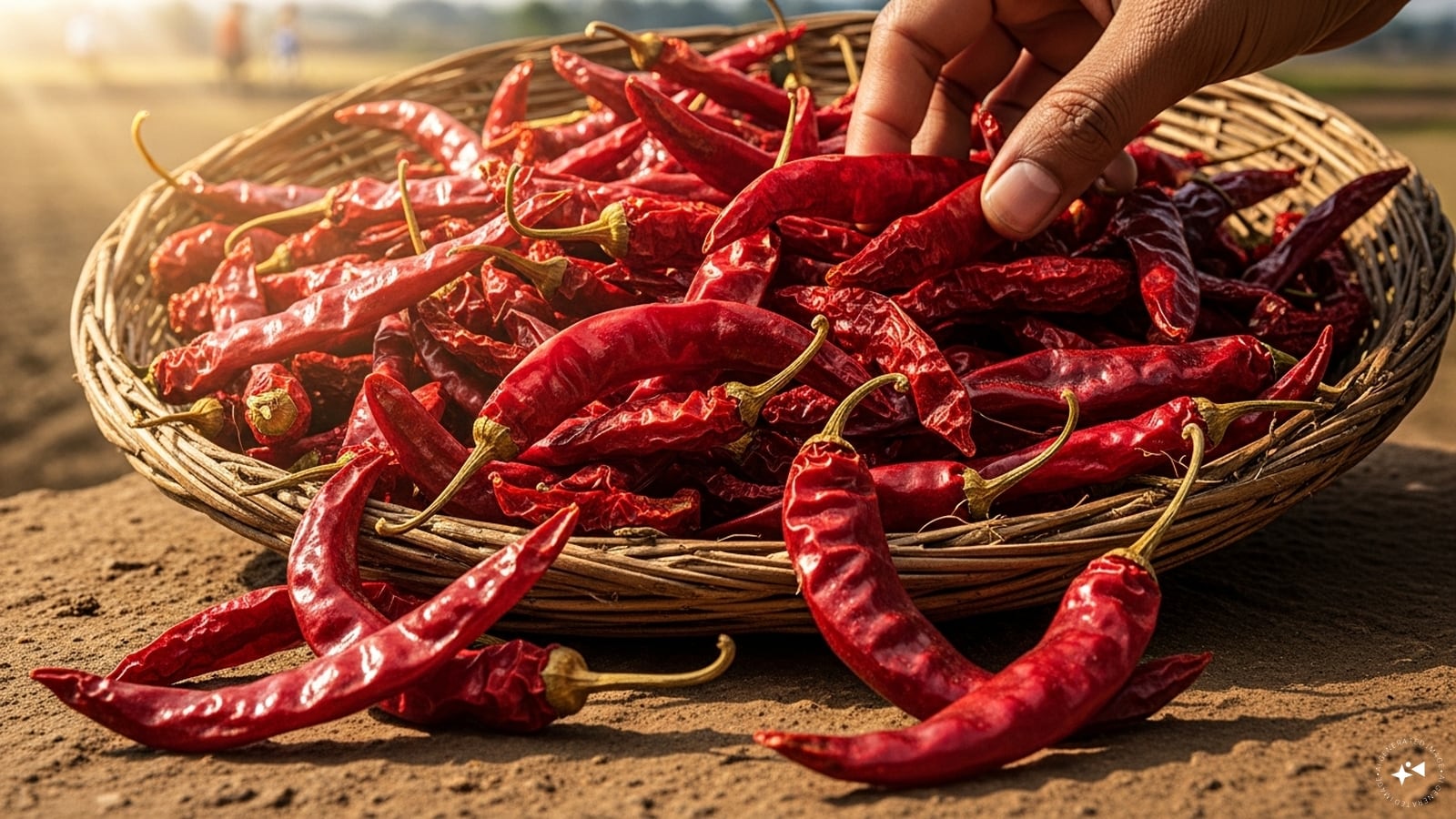
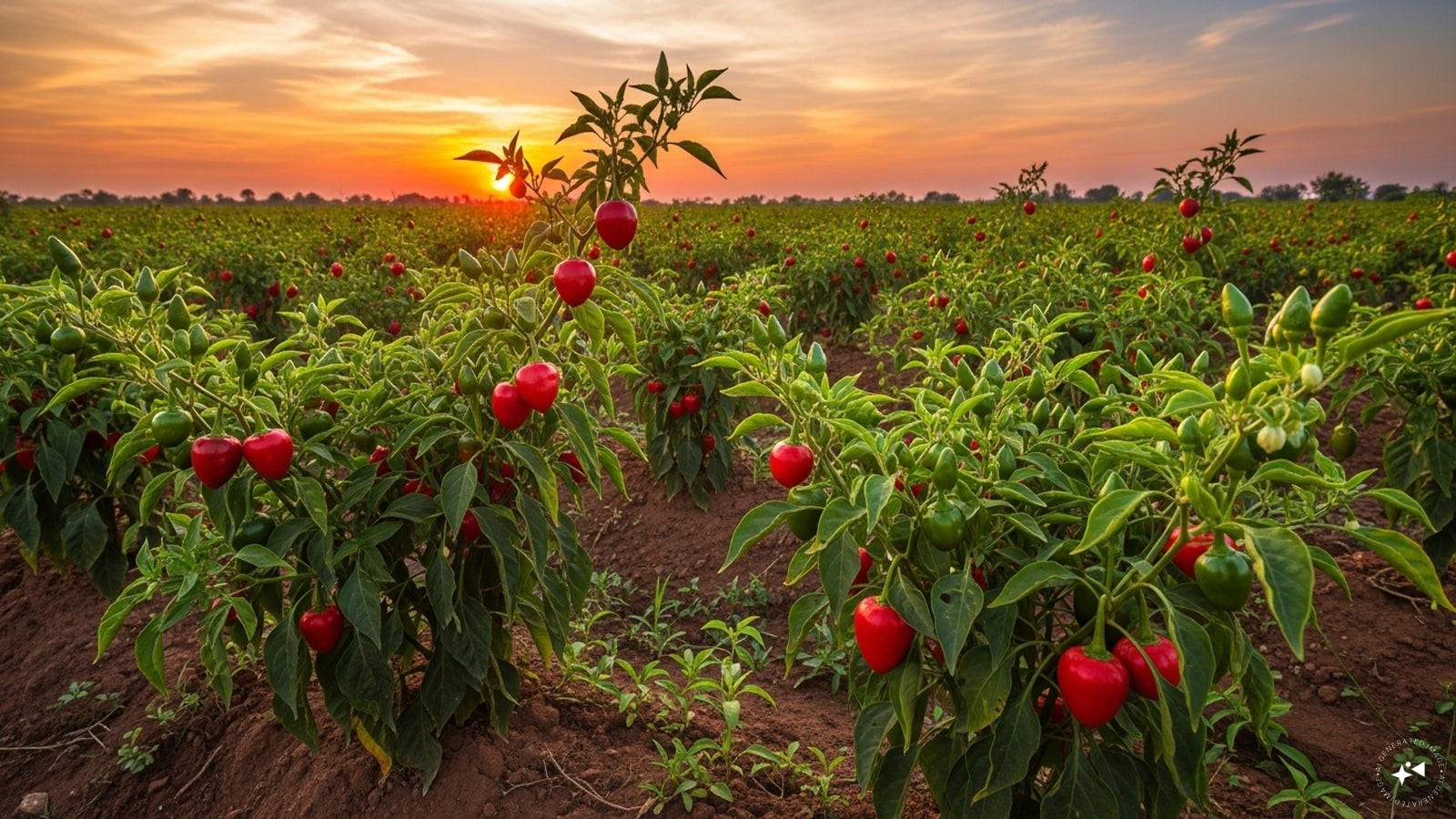
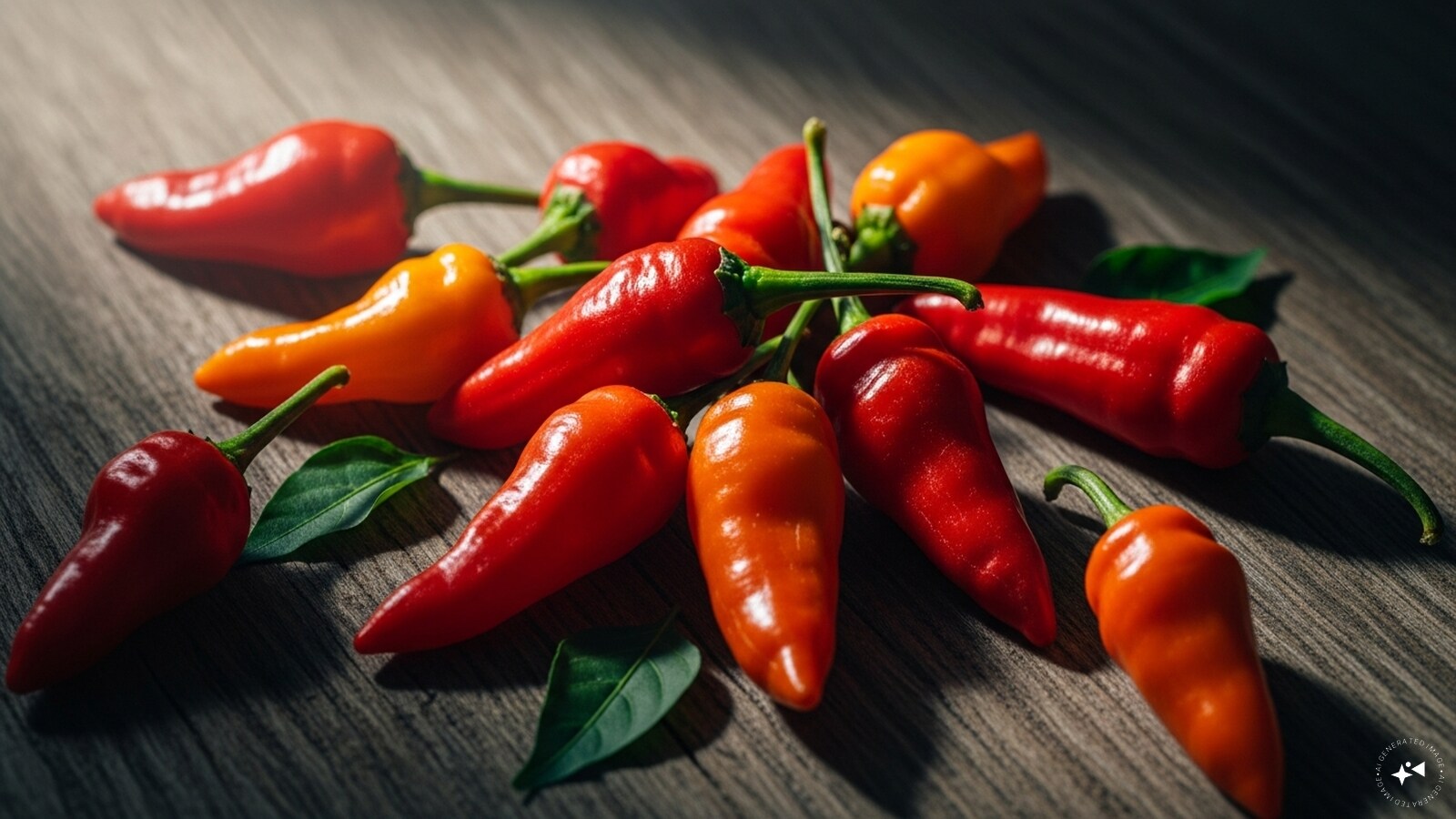
Chillies are more than just a spice in India; they are a cultural staple, adding heat, colour, and depth to countless dishes. With diverse climates and culinary traditions, India cultivates a wide range of chilli varieties, each with unique characteristics. From the vibrant red Kashmiri chilli used for its colour to the blistering Bhut Jolokia that ranks among the hottest in the world, these chillies reflect the diversity of Indian food culture.
Kashmiri Chilli: The Kashmiri chilli is famous for its mild heat and striking red hue. It is often used in curries and tandoori dishes to impart a rich color without overwhelming spice. Its smoky undertones make it a favorite for chefs who want to balance flavor and presentation.
Guntur Chilli (Andhra Pradesh): Grown in Andhra Pradesh, the Guntur chilli is known for its pungent aroma and medium to hot spice level. It is widely exported and forms the backbone of Andhra cuisine, especially in fiery chutneys and pickles that showcase the region’s love for bold flavors.
Byadgi Chilli (Karnataka): Byadgi chillies from Karnataka are easily recognized by their deep red color and wrinkled skin. They are less pungent than other varieties, making them ideal for adding color without excessive heat. South Indian cooking often relies on Byadgi chillies to achieve that perfect balance of taste and appearance.
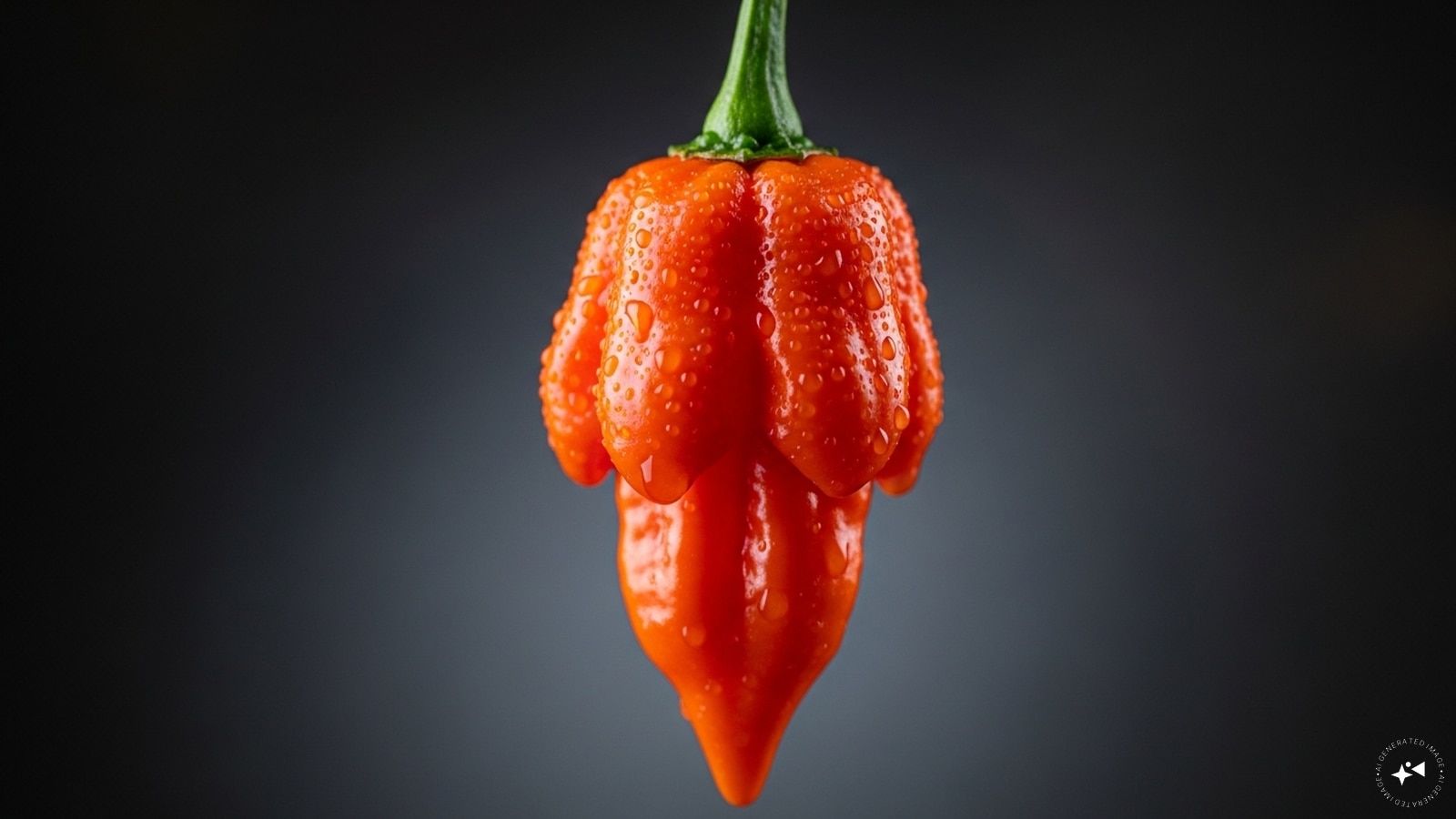
Bhut Jolokia (Assam & Northeast): One of the hottest chillies in the world, Bhut Jolokia (also known as ghost pepper) originates from Assam and the Northeast. Its fiery intensity once earned it a place in the Guinness World Records. Used sparingly in chutneys and pickles, it is so potent that it has even been incorporated into defense sprays.
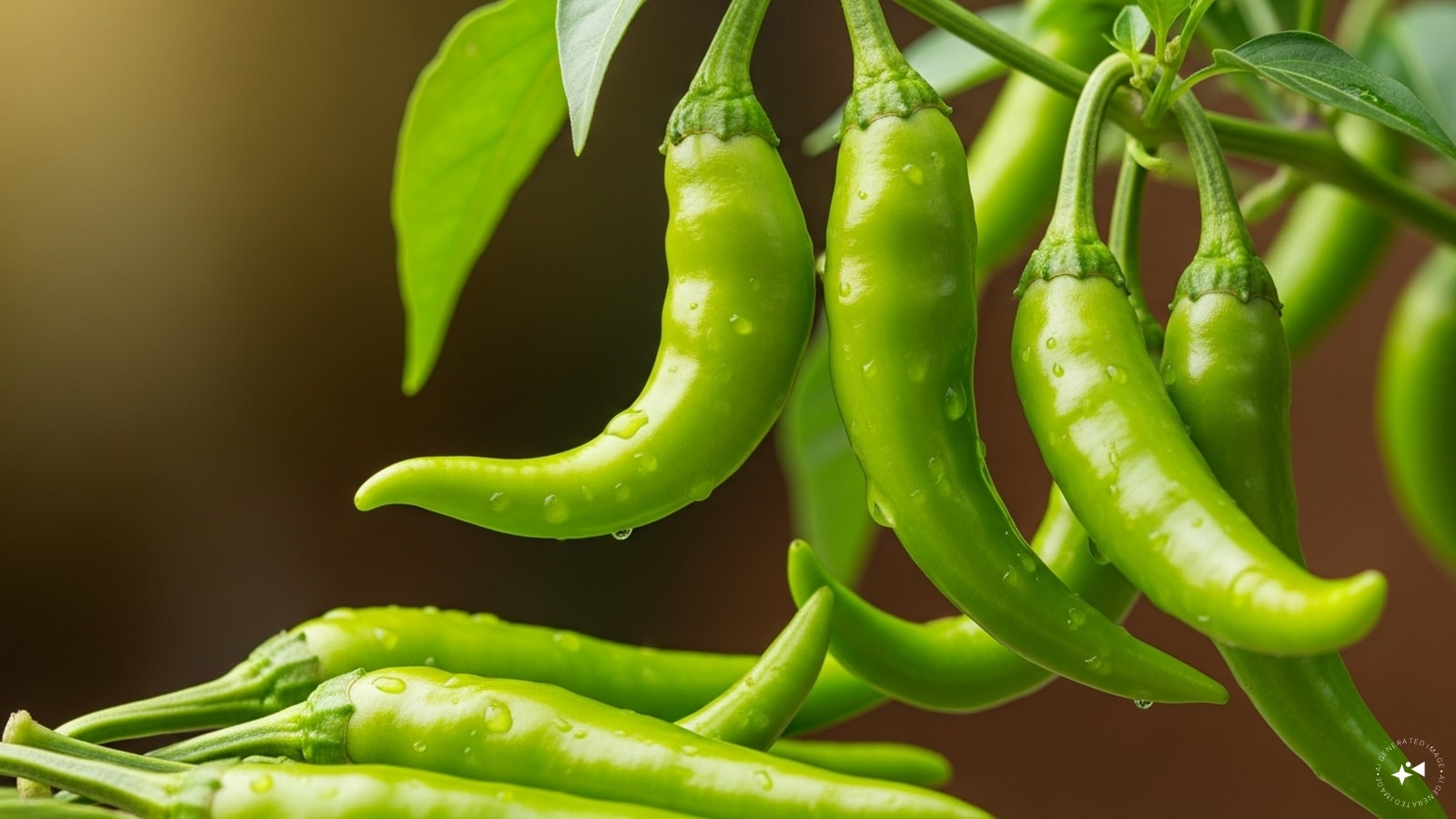
Jwala Chilli (Gujarat): The Jwala chilli, slender in shape and sharp in pungency, is a staple in Gujarat. Known for its hot flavor, it is often used fresh in everyday cooking, particularly in Gujarati snacks and curries where its heat adds a distinctive punch.
Kanthari Chilli (Kerala): Small in size but intense in heat, the Kanthari chilli is an essential ingredient in Kerala’s cuisine. It is particularly popular in fish curries and spicy chutneys, where its fiery flavor enhances the traditional coastal dishes of the region.
Ramnad Mundu (Tamil Nadu): Ramnad Mundu chillies from Tamil Nadu are round in shape and bright red in color. With a mild to medium spice level, they are commonly used in South Indian gravies and sambars, adding both flavor and visual appeal to the dishes.
Bird’s Eye Chilli (Northeast & Kerala): Tiny but explosive, the Bird’s Eye chilli packs a powerful punch. Found in the Northeast and parts of Kerala, it is used in fiery chutneys, pickles, and traditional tribal dishes. Despite its size, it delivers one of the most intense heat levels among Indian chillies.
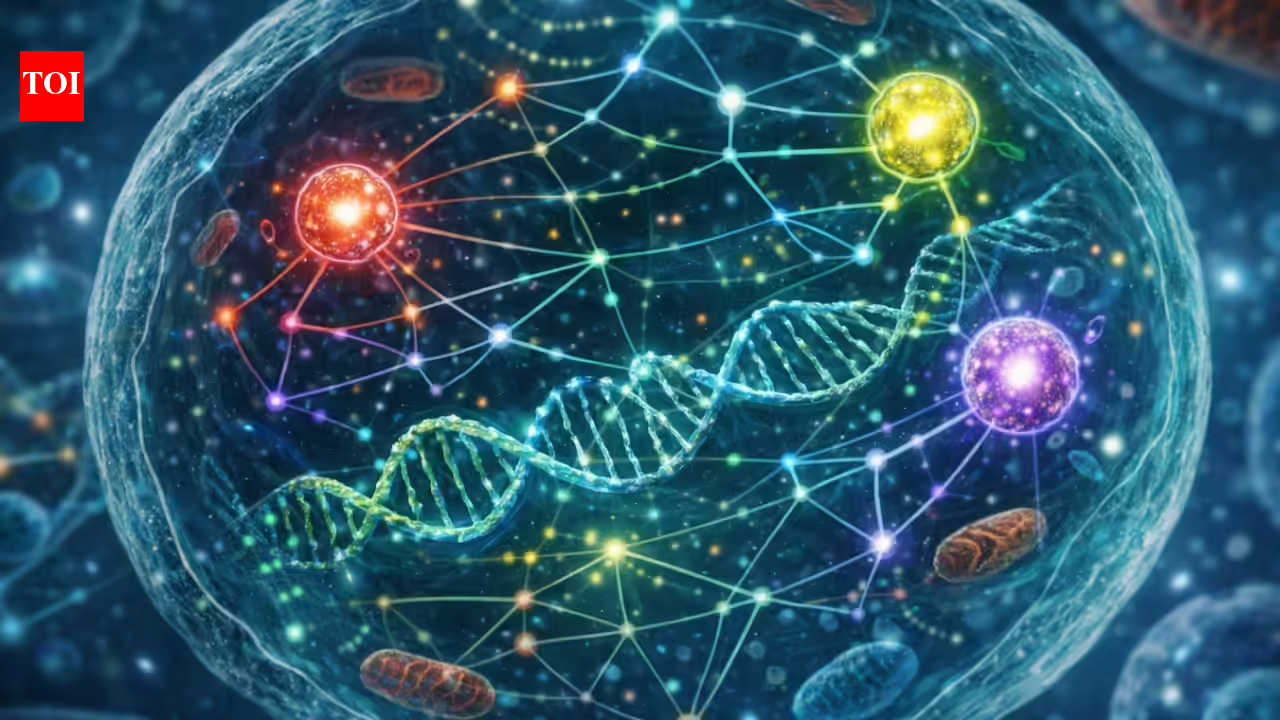
Ageing is often described as a slow accumulation of damage, but a new study suggests something more subtle may be happening inside our cells. Researchers at University of California, San Francisco report that as cells grow older, they do not simply wear out, they lose the coordinated gene activity that keeps them functioning efficiently. By restoring that internal order, scientists were able to make old cells behave in ways normally associated with youth. The findings, published in the Journal Proceedings of the National Academy of Sciences, hint at a future where ageing-related decline might be slowed or partially reversed by resetting cellular control systems rather than replacing cells altogether.
How scientists approached cell aging
The work was led by researchers at the University of California, San Francisco, who set out to understand what fundamentally separates young cells from old ones. Instead of focusing on broken DNA or damaged proteins, the team examined how genes are regulated over time. Using computational models, they compared gene activity in young and aged human cells and noticed a striking pattern: ageing cells showed a breakdown in coordination across large gene networks.This led them to focus on transcription factors, proteins that act as master regulators of gene expression. After narrowing down hundreds of candidates, the researchers identified four transcription factors that appeared central to maintaining a youthful cellular state: E2F3, EZH2, STAT3, and ZFX. Adjusting the activity of these factors became the core experiment.
What happened when old human cells were reset
The first tests were carried out on aged human fibroblasts, cells that form connective tissue and play a key role in repair and structural support. When the researchers restored the activity of the four transcription factors, the old cells began to behave differently. They divided more readily, produced more energy, and showed gene expression patterns closer to those seen in younger cells.Biochemist Hao Li, one of the study’s authors, explained that the cells were not turned into stem cells or fundamentally changed in identity. Instead, they remained fibroblasts but functioned more efficiently. In his words, “Old fibroblasts behaved as if they were younger,” a crucial distinction because maintaining cell identity reduces the risk of dangerous side effects.
Evidence from ageing mice
To see whether the approach worked beyond lab-grown cells, the team tested it in elderly mice, focusing on the liver, an organ heavily affected by ageing. By activating just one of the transcription factors in old mice, researchers observed meaningful physiological improvements. Liver fat and fibrotic scarring were reduced, and glucose metabolism improved, making the tissue function more like that of younger animals.These results were important because they showed that restoring gene regulation could improve whole-tissue health, not just isolated cells in a dish. It suggested that the mechanism might be broadly relevant across different biological systems.
Why this matters for ageing research
The study adds weight to a growing shift in how scientists think about ageing. Rather than viewing it solely as irreversible damage, researchers are increasingly exploring the idea that ageing involves a loss of cellular organisation. Restoring that organisation could allow cells to recover some of their former function.The implications were significant enough to draw attention from leading science outlets, including Nature, which highlighted the findings as part of a broader rethinking of ageing biology. The researchers themselves wrote that their results point to a shared molecular framework for rejuvenation across species, suggesting that the underlying mechanism may be universal.
How this differs from earlier rejuvenation efforts
Previous attempts to rejuvenate cells often relied on reprogramming them into stem-like states. While effective in some contexts, that approach carries serious risks, including loss of cell identity and increased cancer potential. The new strategy avoids this by working within the cell’s existing identity, fine-tuning the regulatory system rather than rebooting it entirely.By targeting transcription factors that already exist in cells, the approach aims to restore balance rather than induce radical change. Researchers believe this could make future therapies safer and more controllable.
Potential risks and unanswered questions
Despite the excitement, scientists are careful to stress that this research is still at an early stage. One of the transcription factors involved, EZH2, has been linked to cancer when overactivated, raising concerns about uncontrolled cell growth. The mouse experiments lasted only a few weeks, so long-term effects remain unknown. Only a limited number of cell types were studied, and it is unclear how other tissues would respond.Any future treatment based on this work would require precise control over where and how strongly these factors are activated. Without that precision, the risks could outweigh the benefits.
What this does and does not mean
The findings do not suggest that humans will soon be able to reverse ageing entirely or extend lifespan dramatically. The researchers are focused instead on healthspan, the length of time tissues and organs remain functional. Even modest improvements in cellular health could delay the onset of age-related diseases and improve quality of life.Janine Sengstack, a senior author on the study, has emphasised that the goal is not immortality, but understanding whether age-related decline can be slowed or partially reversed in a safe way. For now, the research offers a compelling insight: ageing cells may still know how to function like young ones, if the right molecular instructions can be restored.