Home Blog Page 2679

Late Cancer Detection Is Still Linked to Ignoring Early Body Changes

0
Late Cancer Detection Is Still Linked to Ignoring Early Body Changes

Last Updated:

An oncologist explains how overlooking subtle symptoms, fear, and delays in seeking care contribute to late cancer detection and why early attention can improve outcomes.

When subtle symptoms are ignored, cancer gets the time it needs, early attention can change the outcome.

When subtle symptoms are ignored, cancer gets the time it needs, early attention can change the outcome.

Late detection of cancer continues to be closely associated with people overlooking or misinterpreting early changes in their bodies. Many cancers begin quietly, with symptoms that appear mild, vague, or easily explained away. Fatigue, unexplained weight loss, persistent pain, unusual lumps, changes in bowel habits, or a cough that does not go away are often dismissed as the effects of stress, ageing, lifestyle issues, or routine infections. When such warning signs are ignored, diagnosis is delayed, giving the disease time to progress to advanced stages where treatment becomes more complicated and outcomes are less favourable.

“A key factor behind this delay is limited awareness of how cancer can present in its early stages,” says Dr Ankur Bahl, Principal Director, Medical Oncology, Fortis Gurgaon. “Public understanding is often shaped by the belief that cancer always causes intense pain or severe, obvious symptoms.”

This misconception leads many people to assume that if discomfort is manageable or intermittent, it cannot be serious. “In reality, early-stage cancers may cause little or no pain, and symptoms may develop slowly,” explains Dr Bahl. “Without clear knowledge of which changes could be significant, people may not recognise the need to seek medical attention at the right time.”

“Another major contributor is fear,” notes Dr Ankur Bahl. The possibility of receiving a cancer diagnosis can be frightening, leading some individuals to avoid consulting a doctor altogether. Concerns about invasive tests, treatment side effects, financial burden, or the emotional impact on family members often result in postponement.

“This avoidance creates a harmful cycle,” he adds. “Symptoms persist or worsen, anxiety increases, and the delay continues until the disease reaches a stage that is harder to manage—reinforcing the very fears that caused the delay in the first place.”

“Social and cultural influences also play an important role in late detection,” says Dr Ankur Bahl. In certain communities, talking openly about health problems is discouraged or associated with stigma. People may feel pressure to endure discomfort silently or to prioritise work and family responsibilities over personal health.

“There is often a tendency to normalise symptoms and wait for them to resolve on their own,” he explains. Practical barriers such as limited access to healthcare services, long waiting periods, or previous unsatisfactory experiences with medical professionals can further discourage timely consultation.

“Lack of time is another frequently cited reason for postponing medical visits,” adds Dr Ankur Bahl. Busy routines, competing priorities, and the belief that symptoms can be addressed later often lead to delays. Over time, these postponements accumulate, increasing the likelihood that the disease will be detected at a more advanced stage.

“Addressing late cancer detection requires a strong focus on education and awareness,” emphasises Dr Ankur Bahl. People need to understand that cancer does not always announce itself dramatically and that subtle, persistent changes can be meaningful.

“Public health messaging should clearly explain common warning signs and emphasise that early evaluation does not automatically mean a cancer diagnosis,” he says. “Instead, it offers reassurance when findings are benign and allows for timely intervention when they are not.”

“Improving accessibility to healthcare services is equally important,” notes Dr Ankur Bahl. When individuals can consult a healthcare provider easily, they are more likely to seek help early. Screening programmes for common cancers play a critical role, especially for individuals at higher risk due to age or other factors.

“Regular screening can identify disease before symptoms become noticeable, significantly improving the chances of successful treatment,” he adds.

“A supportive and non-judgemental healthcare environment also encourages earlier detection,” says Dr Ankur Bahl. When people feel heard, respected, and informed, they are more willing to discuss concerns that may seem minor or embarrassing.

“Clear communication reduces fear and builds trust, making it easier for individuals to take the first step towards evaluation,” he explains.

Ultimately, Dr Ankur Bahl advises people to pay close attention to their bodies and take persistent changes seriously. “Any symptom that does not resolve, worsens over time, or feels unusual should prompt medical advice.”

“Acting on early signals allows for diagnosis at a stage when treatment is more effective, less intensive, and associated with better outcomes,” concludes Dr Bahl. “Early attention to bodily changes remains one of the most effective ways to reduce the burden of advanced cancer and improve survival.”

Disclaimer: Comments reflect users’ views, not News18’s. Please keep discussions respectful and constructive. Abusive, defamatory, or illegal comments will be removed. News18 may disable any comment at its discretion. By posting, you agree to our Terms of Use and Privacy Policy.

Pakistan to play T20 World Cup 2026 but skip India match: government | The Express Tribune

0
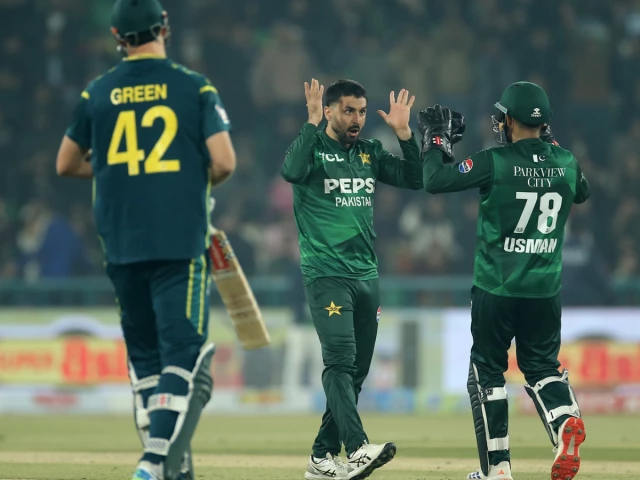
pakistan and india are set to lock horns in the asia cup final for the first time in the tournament s history photo afp

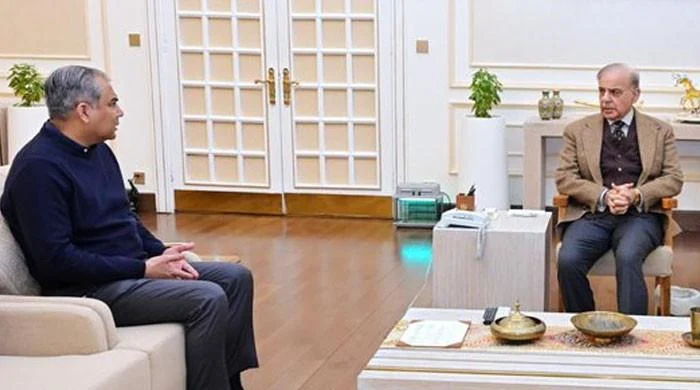
The decision was made following a meeting between PCB Chairman Mohsin Naqvi and PM Shehbaz Sharif

Pakistan and India are set to lock horns in the Asia Cup final for the first time in the tournament’s history. Photo: AFP

Pakistan will participate in the ICC Men’s T20 World Cup 2026 but will not take the field in its scheduled match against India on February 15, the government said on Sunday, confirming a politically sensitive decision ahead of the global tournament.

In a post on the government’s X account, it said: “The Government of the Islamic Republic of Pakistan grants approval to the Pakistan Cricket Team to participate in the ICC World T20 2026, however, the Pakistan Cricket Team shall not take the field in the match scheduled on 15th February 2026 against India.”

The decision was taken following a meeting between Pakistan Cricket Board (PCB) chairman Mohsin Naqvi and Prime Minister Shehbaz Sharif, according to the statement.

The development comes amid a broader Bangladesh controversy, which has already cast a shadow over the tournament. Bangladesh were removed from the T20 World Cup 2026 and replaced by Scotland in the tournament, a decision that triggered criticism from several quarters, including Pakistan, over what was described as inconsistent treatment by the International Cricket Council (ICC).

The Government of the Islamic Republic of Pakistan grants approval to the Pakistan Cricket Team to participate in the ICC World T20 2026, however, the Pakistan Cricket Team shall not take the field in the match scheduled on 15th February 2026 against India.

— Government of Pakistan (@GovtofPakistan) February 1, 2026

Bangladesh’s replacement — following disputes related to hosting arrangements, security concerns and scheduling under the hybrid model involving India and Sri Lanka — intensified debate over governance and fairness in international cricket, with Pakistan openly expressing solidarity with Bangladesh earlier in the row.

The T20 World Cup 2026, scheduled to be co-hosted by India and Sri Lanka from February 7 to March 8, is now facing renewed uncertainty as political considerations intersect with cricketing commitments. A Pakistan–India clash is traditionally the tournament’s biggest commercial draw, and Pakistan’s refusal could force the ICC to revisit scheduling or points-allocation scenarios.

Pakistan’s T20 World Cup campaign begins against the Netherlands on February 7 in Colombo, followed by matches against the United States on February 10 and Namibia on February 18.

Despite opting out of the India match, Pakistan’s participation in the rest of the ICC Men’s T20 World Cup 2026 signals a calibrated approach rather than a full boycott, following days of speculation linked to the Bangladesh issue and regional tensions.

The ICC has yet to issue an official response on how Pakistan’s decision will impact the tournament structure, while cricket administrators continue to monitor the fallout from both the Pakistan–India match refusal and the Bangladesh replacement controversy, which together have made the build-up to the World T20 unusually fraught.

India-Pakistan rivalry

In the cricketing world, an India–Pakistan contest is the most anticipated fixture at any ICC tournament, particularly since the suspension of bilateral tours between the two cricket-mad neighbours.

Owing to strained relations, India have not toured Pakistan since 2008, and the rivals now face each other only at multi-team events. Pakistan, however, visited India for the 50-overs World Cup last year, the 2016 T20 World Cup, and a three-match ODI series in 2012.

Pakistan also hosted the Asia Cup in 2023, but eventual winners India played all their matches in Sri Lanka under a hybrid model.

Controversy erupted after India refused to travel to Pakistan for the ICC Champions Trophy, despite Pakistan having toured India for the ODI World Cup. India maintained that its government did not grant permission for the tour — a stance accepted by the ICC at the time, though a similar justification was later rejected when put forward by Bangladesh.

After weeks of deliberations, the International Cricket Council (ICC), the global governing body of the sport, approved the hybrid model proposed by the Pakistan Cricket Board for the ICC Champions Trophy 2025, as well as other ICC events scheduled between 2025 and 2027.

In a formal statement, the ICC said: “India and Pakistan matches hosted by either country at ICC events during the 2024–2027 rights cycle will be played at a neutral venue, the ICC Board confirmed.”

The ICC added that the hybrid arrangement would apply to two major events next year — the men’s Champions Trophy in Pakistan and the women’s ODI World Cup in India. It will also be in place for the men’s T20 World Cup in 2026, co-hosted by India and Sri Lanka, and the women’s T20 World Cup in Pakistan in 2028.

Under this arrangement, all of Pakistan’s matches were shifted to Sri Lanka, as they were to be played at a neutral venue.

The issue appeared to have been resolved but resurfaced when India dropped Bangladesh’s pacer from the Indian Premier League amid rising tensions with Bangladesh, further worsening the already strained relations between the two cricketing nations.

Bangladesh demanded that the ICC shift its matches to Sri Lanka, but the international cricket body refused to comply, forcing Bangladesh to withdraw from the World Cup, with Scotland added as a replacement.

The dispute, centred on hosting arrangements, security concerns and scheduling under the hybrid model involving India and Sri Lanka, intensified debate over governance and fairness in international cricket. Pakistan openly expressed solidarity with Bangladesh earlier during the row.

The Pakistan Cricket Board (PCB) and the government held extensive deliberations over the decision to participate in the World Cup, including the option of a complete boycott in solidarity with Bangladesh and in protest against what they described as the ICC’s unfair treatment. However, it was eventually decided that Pakistan would boycott only the match against their arch-rivals.

India and Sri Lanka are hosting the ICC Men’s T20 World Cup for the second time. Sri Lanka were the hosts of the 2012 edition while India hosted it in 2016, with West Indies winning both the editions.

India (2007 and 2024) and England (2010 and 2022) are the other teams to win the championship more than once while Pakistan (2009), Sri Lanka (2014) and Australia (2021) are the other past winners.

Nawaz stars as Pakistan complete whitewash against Australia | The Express Tribune

0
pakistan spinner abrar ahmed celebrates after dismissing australia s josh inglis during the second t20 at gaddafi stadium lahore on saturday photo x pcb

Pakistan spinner Abrar Ahmed celebrates after dismissing Australia’s Josh Inglis during the second T20 at Gaddafi Stadium, Lahore, on Saturday. Photo: X/ PCB

A collective bowling effort, highlighted by a superb five-wicket haul from Mohammad Nawaz, powered Pakistan to a crushing 111-run victory over Australia in the third and final T20 International at the Gaddafi Stadium on Sunday, completing a 3-0 whitewash in the home series.

The emphatic win provided Pakistan with a major confidence boost ahead of the ICC Men’s T20 World Cup 2026, scheduled to be co-hosted by India and Sri Lanka from February 7 to March 8, with both teams using the series as part of their final preparations.

Chasing a daunting target of 208 runs, Australia’s batting collapsed against a disciplined Pakistan bowling attack led by Nawaz, as the visitors were bowled out for just 96 in 16.5 overs.

All-rounder Marcus Stoinis was the top scorer for Australia with 23 off 22 balls, while Cameron Green contributed a cautious 22 off 24 deliveries. Wicketkeeper-batter Josh Philippe was the only other player to reach double figures, scoring 14.

Nawaz spearheaded Pakistan’s bowling charge with outstanding figures of 5 for 18 from his four overs. He was well supported by Shaheen Shah Afridi, who claimed two wickets, while Abrar Ahmed and Naseem Shah picked up one wicket each as Pakistan wrapped up the match with ease.

Earlier, Pakistan captain Salman Ali Agha won the toss and elected to bat, a decision that paid rich dividends as the hosts posted an imposing 207 for 6 in their allotted 20 overs.

The Green Shirts suffered an early setback when opener Sahibzada Farhan was dismissed for 10 in the second over with the score on 14. Agha promoted himself to number three but failed to make an impact in the series finale, falling for a three-ball five to Ben Dwarshuis, leaving Pakistan at 34 for 2.

The innings was stabilised by an important 69-run partnership for the third wicket between Babar Azam and Saim Ayub, which shifted momentum firmly in Pakistan’s favour. Ayub top-scored with a fluent 56 off 37 balls, striking six fours and two sixes, before being dismissed on the first ball of the 12th over by Matthew Kuhnemann, with Matthew Renshaw taking a spectacular catch in the deep.

Babar then combined with Khawaja Nafay for a quick 28-run stand for the fourth wicket. Nafay impressed with a brisk 21 off 12 balls, including two sixes and a boundary.

With Pakistan well placed at 131 for 4 after 14 overs, all-rounder Shadab Khan provided the late surge, smashing 46 off 19 balls with seven boundaries, including five sixes. He also shared a vital 57-run partnership with Babar, who anchored the innings and remained unbeaten on 50 off 36 deliveries, hitting three fours and a six.

For Australia, Ben Dwarshuis was the most successful bowler with 2 for 39, while Matthew Kuhnemann, Cameron Green, Cooper Connolly and Matthew Short claimed one wicket each.

Snowstorm disrupts travel in southern US as blast of icy weather widens

0
Snowstorm disrupts travel in southern US as blast of icy weather widens

This handout image released by the Gastonia Police Department shows a semi-truck struck by a freight train at the intersection of Poplar Street and Airline Avenue in Gastonia, north of downtown Charlotte, North Carolina, on January 31, 2026, amid a winter snowstorm affecting the region. — AFP

WASHINGTON: Travel misery was set to continue Sunday as a powerful snowstorm blasted southern US states, bringing subzero temperatures to regions not accustomed to the deadly winter conditions.

The latest bout of extreme weather came about a week after a monster storm pummeled a wide swath of the United States, killing more than 100 people and leaving many communities struggling to dig out from snow and ice.

Heavy snow fell in North Carolina and neighbouring states Saturday, as authorities urged residents to stay off the roads and warned oceanfront structures were threatened by the storm.

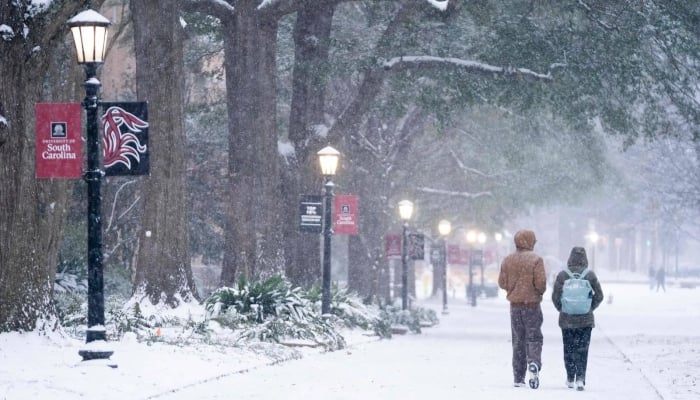
Students walk across the historic Horseshoe as snow falls at the University of South Carolina on January 31, 2026, in Columbia, South Carolina, US. — AFP

All of North and South Carolina, and portions of Georgia, eastern Tennessee and Kentucky, as well as southern Virginia were under a winter storm warning.

North Carolina saw 750 car crashes on Saturday, the highway patrol said.

Faust, North Carolina recorded 14.5 inches (37 cm) of snow, while West Critz, Virginia got 12.5 inches. Harrisburg, Tennessee received more than nine inches of accumulation.

In the North Carolina town of Cape Carteret, high winds sent thick snow blowing sideways, prompting the National Weather Service to warn that travel was “Treacherous and Potentially Life-Threatening especially if you become stranded.”

In dramatic footage released by police in Gastonia, North Carolina, a train ploughed at high speed into a semi-truck that had gotten stuck on the tracks, crushing the vehicle. No one was hurt.

The weekend storm forced more than 1,800 flight cancellations Saturday and Sunday at Charlotte Douglas International Airport in North Carolina, a major hub for American Airlines, data from the tracker FlightAware showed.

A 300-strong “snow team” was working to clear runways, taxiways, roads and sidewalks, the airport said Saturday.

More than 600 flights were cancelled Saturday at Atlanta’s international airport, the world’s busiest. About 50 flights in and out of Atlanta were cancelled in the early hours of Sunday.

“An explosively deepening coastal cyclone will continue to bring moderate to heavy snow, high winds, and possibly blizzard conditions for the Carolinas,” the National Weather Service said Saturday.

“An intense surge of arctic air behind the coastal storm will send below freezing temperatures down toward South Florida by Sunday morning.”

Davis, West Virginia recorded the lowest temperature in the lower 48 states on Saturday — a frigid minus 28°F (minus 33°C).

About 156,000 customers remained without power early Sunday, mostly in the south, according to poweroutage.us, with Mississippi, Tennessee and Louisiana hardest hit.

In North Carolina, the National Park Service announced the closure of campgrounds and some beaches at the Outer Banks, a series of barrier islands off the coast of the southern state that are vulnerable to storms.

It said oceanfront structures were threatened, and a section of highway that threads through its dunes was closed.

In Mississippi, Governor Tate Reeves said the US Army Corps of Engineers helped to install generators at critical sites, and authorities were opening 79 shelters and warming centres across the state.

The freezing weather forced Nasa to postpone a key fueling test over the weekend of the 322-foot (98-metre) rocket that is on the Cape Canaveral launch pad in Florida.

That in turn is likely to push back by at least a couple of days a planned manned Moon flyby slated for this month.

Access Denied

0
Access Denied


Access Denied

You don’t have permission to access “http://food.ndtv.com/food-drinks/6-silly-mistakes-that-can-spoil-your-homemade-chilli-chicken-10914135” on this server.

Reference #18.dd711102.1769982313.11e2e125

https://errors.edgesuite.net/18.dd711102.1769982313.11e2e125

India’s finance minister projects modest fiscal consolidation in budget

0
India's finance minister projects modest fiscal consolidation in budget

India’s government plans a modest improvement in its fiscal picture in the coming financial year, with reductions in the fiscal deficit and debt, while boosting manufacturing in sectors ranging from textiles to chips.

Finance Minister Nirmala Sitharaman, in her ninth consecutive budget speech, said on Sunday that the government sees its fiscal deficit falling to 4.3% of GDP in the 2026-27 financial year, down from 4.4% in 2025-26.

Sitharaman said the government expects India’s debt-to-GDP ratio to fall to 55.6% in the coming financial year from 56.1% in 2025-26.

The finance minister pointed to the wider uncertainties facing India.

“Today, we face an external environment in which trade and multilateralism are imperilled and access to resources and supply chains are disrupted,” Sitharaman said. “New technologies are transforming production systems while sharply increasing demands on water, energy and critical minerals.”

The government plans to encourage manufacturing in seven key sectors, including semiconductors, rare-earth magnets, pharmaceuticals, chemicals, capital goods, textiles and sports goods.

India’s benchmark Nifty 50 stock index was down about 1.7% shortly after Sitharaman’s speech to parliament.

In its economic survey for the financial year 2026 released on Thursday, India said it sees its economy growing between 6.8% to 7.2% in the fiscal year 2027, outpacing most other major economies.

“As a growing economy with expanding trade and capital needs, India must also remain deeply integrated with global markets, exporting more and attracting stable long-term investment,” Sitharaman said.

Consultancy firm PwC India said the budget places the country “at a crossroads to push the nation into its next phase of transformation”.

“The Union Budget 2026-27 holds opportunities to set India’s role towards financial stability, while boosting businesses to be future ready — especially as they navigate the opportunities of AI adoption alongside challenges around talent, infrastructure, governance and trust,” PwC India said in an online commentary.

‘How rejection sensitivity dysphoria almost killed me’

0
‘How rejection sensitivity dysphoria almost killed me’

I like making pancakes. It’s one of the things I pride myself in being good at. One day, I decided to make pancakes for my partner, and I was very excited. I went to buy the flour, eggs and milk, and as I was stirring the ingredients, she said: “Alex, you’re stirring the ingredients in the wrong order!”

It was a throwaway comment. But I remember my euphoria and excitement for the evening instantly disappeared. I almost went non-verbal. I didn’t understand why and how there could be such a drastic change in my mood.

I didn’t come across the term RSD – rejection sensitivity dysphoria – until years later.

I was diagnosed with ADHD in 2023, and soon after, started a podcast called ADHD Chatter. I started interviewing everyone I could find. There were lots of familiar stories that came up about this extreme emotional response to perceived or real criticism; that really triggered my awareness of it. Then I started speaking to experts on the topic.

I had an awakening on my journey doing the podcast. The more I interviewed people, the more I recognised my own behaviour, my own vulnerability, to real or perceived criticisms. I discovered there was a name that had been put to it.

A psychiatrist called William Dodson in America first coined the phrase rejection sensitivity dysphoria after recognising that there was a pattern of behaviour in his patients who have ADHD and autism, and other neurodivergent conditions.

RSD is a heightened emotional pain response to perceived criticisms from other people. And it is physically painful. You feel it in your gut sometimes – it’s instant and it’s visceral. It can be completely derailing, to the point where you’re having a reasonably nice day and a tiny little comment, or something as benign as a thumbs up emoji in response to a text – anything that’s not overtly positive – makes you catastrophise. You assume the worst-case scenario, and you think that person hates you and that you’re a nuisance to them.

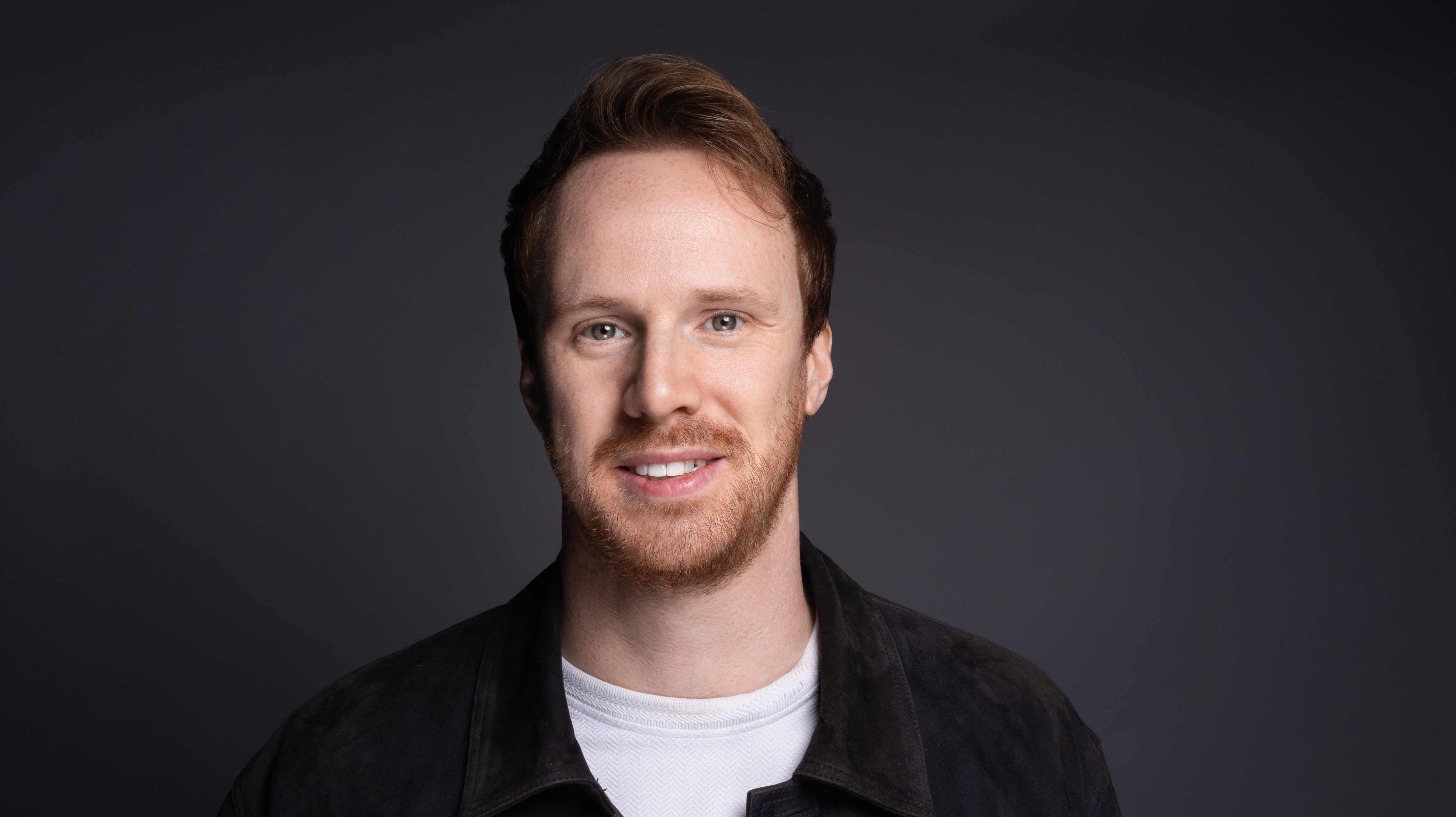
Alex Partridge was diagnosed with ADHD in 2023

Alex Partridge was diagnosed with ADHD in 2023 (Alex Partridge)

And it doesn’t always need to involve verbal comments, either. It can be an eye roll at the dinner table, or you putting an idea forward and it being dismissed and ignored.

It is very damaging because when you live your life in fear of that horrible pain, you end up putting things around yourself to protect yourself from it. That can look like always putting other people’s needs ahead of your own, doing everything to such a high standard that you shield yourself from any criticisms, or just not trying. You don’t start stuff. You avoid doing things because it feels safer to stay within your comfort zone. After all, the chance of you getting criticised if you do that is a lot smaller. It’s a horrible thing, and it seems to be very prevalent in people who have neurodivergent conditions.

RSD seems to start in childhood. The obvious example for me was not being chosen for the sports team at school, or being left out of a game of “It” on the playground: little things that a lot of the time have reasonable explanations. I remember on one particular occasion when I was not chosen, feeling that intense sadness and removing myself from the situation, finding a little corner in the playground and just rocking back and forward. It’s a very shameful experience.

Neurodivergent kids are exposed to so many more criticisms than the average child. Dodson theorised that you can actually put a number on it: he estimated that it adds up to 20,000 extra comments, 20,000 extra little micro-criticisms in your early years if you are “different”.

You assume the worst-case scenario, and you think that person hates you

My first memory of feeling different was in the playground. Someone said, “You could be one of the cool kids if you weren’t so weird.” Those comments and criticisms compound over a childhood to create an adult who is so ashamed of who they are that they hide it.

You end up abandoning yourself. When someone does criticise you, it feels like, in that moment, all your effort of masking has gone to waste. You’re so fearful of your true self, which was told so many times when you were younger that there’s something wrong with you; you’re so scared of that being exposed.

You hide yourself in fear of being triggered. I know it’s a medical term, but it’s the word I use. When you do experience that intense pain, it does feel like a trigger – you instantly fill with sadness, sometimes rage. Shame is there all the time. I had a brilliant guest on my podcast, Dr Samantha Hiew, who has a PhD on the topic; she theorised that all of those comments compound to create a brain that is similar to that of someone who has complex PTSD.

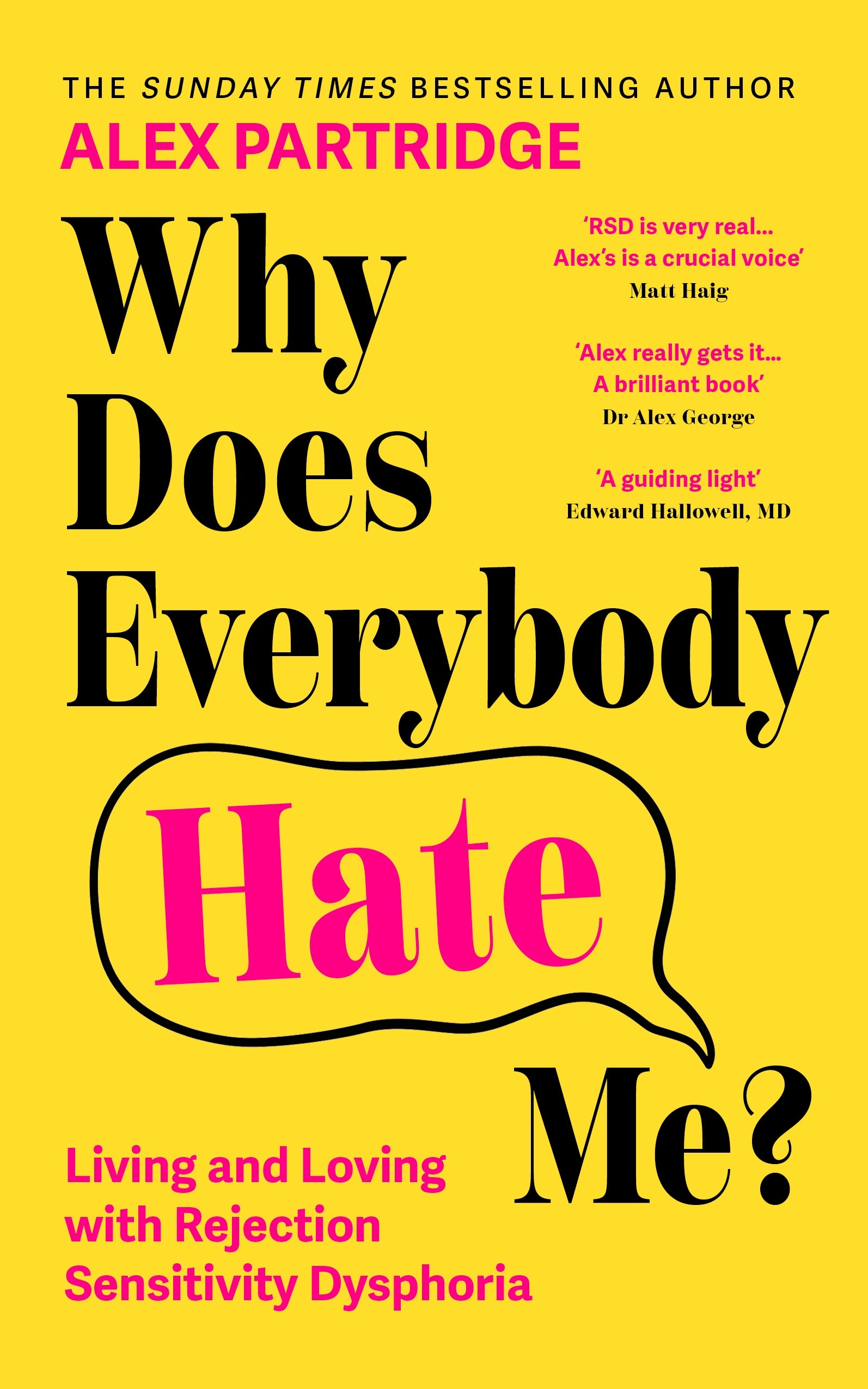
Alex Partridge has written 'Why Does Everybody Hate Me?', a book about RSD

Alex Partridge has written ‘Why Does Everybody Hate Me?’, a book about RSD (Sheldon Press)

The comments that I and many people in my community and I relate to are: “You’re too sensitive”; “You’re too dramatic”; “Why are you so emotional?” It’s such an underdiscussed aspect of the neurodivergent experience, but one that I think is the hardest. Because it’s the one that does the most damage, when you’re going through your life tip-toeing around the possibility of experiencing the pain that comes with rejection, you make decisions that aren’t good for you but are often good for other people instead.

I would say that RSD nearly killed me. I started a business when I was at university, a website called UNILad. I always prefer to work on my own – I’ve never particularly been a social person – but the business got to a point where I might have needed help. I ended up meeting these two potential business partners. I remember the day very well; my intuition was telling me: walk away. This is not a good idea. You don’t want to work with these people. You’re better on your own.

It’s very clear that that particular day in 2013, the people pleaser in me, the version of me that’s always been terrified of confrontation, just signed the bit of paper put in front of me. Ultimately, it triggered a five-year court case that tipped me into alcoholism and many hospital visits.

If you can hold it out in your hand and name it as RSD, you can disarm it a lot

On one occasion, the nurse told my mum that if I’d had one more drink the night before, I’d have suffered from acute alcohol poisoning – that it most likely would have ended my life.

In the end, I won the court case and got the company back. But it would have all been avoided had I listened to that intuition and said “no” instead of saying “yes” and signing a bad business contract. That’s my story, but so many people I speak to with RSD have their own. They get into bad relationships. For example, at the start of a relationship, you feel that it’s not right and it’s toxic and not a good fit for you. I think it can make many people with neurodivergent conditions very vulnerable, because you never want to say no to someone.

Relationships can be really hard regardless, because there will be real moments of tension. Unless there’s clear communication, even neutral comments will be very painful to someone with RSD. Real criticisms can be totally destructive and lead to very impulsive decisions in the moment. Decisions like: “I want a divorce”, “I’m leaving you”. Then you come down from the heightened emotional state, and often you didn’t mean what you said, because you weren’t really reacting to what your partner said in the here and now. You know that if they come home and the door slams slightly heavier, or you sense a slight abruptness in their voice, that they probably had a bad day at work – but you internalise it. You think it’s about you.

I think RSD has to be spoken about more. When you don’t have a name for it, and you don’t have an understanding or an explanation behind these big, volatile swings in emotion, it can be a car crash – a trail of relationships that you’ve left behind you. Maybe you’ve sensed or perceived a criticism from a partner, and it just felt safer to leave the relationship rather than wait for them to abandon you, all because they asked if you could talk later.

Alex Partridge is raising awareness of RSD

Alex Partridge is raising awareness of RSD (Ben Stevens Photography)

I’ve spoken to 300 experts now on ADHD, and nobody has really got a solution to the immediate effect of RSD, that moment of trigger and intense emotion. There seems to be no antidote. But what does help a lot is, when you are experiencing that moment, to recognise what it is – to call it out and say: “This isn’t me. This is RSD. I’m not responding to what that person has said today. My nervous system has been snapped back to those horrible 20,000 comments.” I truly believe it’s a trauma response.

There is no easy fix, but I think it’s about having awareness and tools. If you can hold it out in your hand and name it as RSD, you can disarm it a lot. When you have an awareness and you know what you’re dealing with, you can then also isolate and see the consequences of it, which you might have previously thought were because you’re “broken”. When you start realising that you’re not broken, you’re just different – you’re not actually “too sensitive”, you have RSD – you can then start working towards putting systems in place to help you stop people pleasing so much, or stop overworking.

Or you can start putting yourself forward for opportunities – because you absolutely deserve to do amazing things.

Alex Partridge is the host of the ADHD Chatter podcast and a Sunday Times bestselling author. His new book, ‘Why Does Everybody Hate Me?: Living and Loving with Rejection Sensitivity Dysphoria’ is available to pre-order now (Sheldon Press, 24 March, £16.99)

Pakistan ‘to decide’ on T20 World Cup 2026 participation today

0
Pakistan 'to decide' on T20 World Cup 2026 participation today

Interior Minister and PCB chairman Mohsin Naqvi meets PM Shehbaz Sharif in Islamabad on January 26, 2026. — PID
  • PCB Chairman Mohsin Naqvi to meet PM Shehbaz at 6pm: sources.
  • Premier to decide on participation; jersey to be unveiled afterwards.
  • PCB to hold 4-team tournament in Lahore if team not participates.

LAHORE: The Pakistan Cricket Board (PCB) is likely to decide on the national side’s T20 World Cup 2026 participation today, the sources said on Sunday.

PCB Chairman Mohsin Naqvi, the sources added, is expected to meet Prime Minister Shehbaz Sharif at 6pm today, who will decide on the Green Shirts’ participation in the tournament.

The development comes in the aftermath of the reports of a potential boycott by Pakistan after the International Cricket Council (ICC) rejected the Bangladesh Cricket Board’s (BCB) request to move their games to a venue outside India.

The BCB requested the venue change after Bangladesh pacer Mustafizur Rahman was removed from the Indian Premier League (IPL) on the Indian cricket board’s instructions, sparking fury in Bangladesh.

However, the ICC replaced them with Scotland in the showpiece event on Saturday, saying it was not feasible to change the schedule so close to the February 7 start of the tournament.

Bangladesh’s exclusion triggered reports of Pakistan’s possible withdrawal from the tournament.

PCB chief Naqvi had already held a meeting with the PM on January 26, where the two had discussed the pressing matter.

Meanwhile, sources say that an announcement regarding the T20 World Cup 2026 is expected after the PCB chief-PM meeting today.

The decision to reveal the team’s World Cup jersey, postponed due to “unavoidable reasons”, is also expected after the participation issue is settled.

Furthermore, the PCB has prepared a plan in case of not participating in the T20 World Cup 2026.

A four-team tournament will be held in Lahore, the said sources.

The Pakistan and Shaheens Under-18 teams will be divided into four teams, they added.

Bangladesh-India tensions

Relations between Bangladesh and India have been strained relations in recent times, with political tensions between the two neighbouring countries after Bangladesh’s former prime minister, Sheikh Hasina, fled to New Delhi following protests against her.

Political tensions have since then spilt into cricket.

Bangladesh bowler Mustafizur Rahman was dropped from this year’s Indian Premier League despite signing with its Kolkata franchise. Bangladesh responded by banning IPL broadcasts in the country and demanding to play World Cup matches in Sri Lanka.

The standoff mirrors previous tensions in South Asian cricket.

For the Champions Trophy last year, the Indian cricket board (BCCI) stuck to its policy of not touring Pakistan because of the strained political ties between the bitter neighbours, who play each other only in ICC events.

Like for the 2023 Asia Cup in Pakistan, a “hybrid model” was agreed on under which India were allowed to play their Champions Trophy matches in Dubai to salvage the tournament.

Under the agreement running until 2027, Pakistan will play in a neutral venue for any ICC event, including the T20 World Cup, where they are scheduled to play their matches in Sri Lanka.

Marvel star accidentally reveals ‘Avengers: Doomsday’ spoiler

0
Marvel star accidentally reveals

 Ian McKellen lets slip ‘Avengers: Doomsday’ spoiler

Marvel goes beyond the measures to protect the surprises it has packed for fans in its projects. However, there have been instances in which actors in the franchise accidentally let slip spoilers.

Ian McKellen, who plays Magneto in Avengers: Doomsday, is the latest one.

In a chat with Jake’s Takes, the star let slip a scene that may prove pivotal in the upcoming movie.

“Though I did destroy New Jersey the other day,” the actor shares, adding, “Oh, I perhaps shouldn’t have said that.”

Fans became excited about the accidental spoiler, discussing the connections of the villainous mutant to other Marvel characters based on his remarks.

For example, Scarlet Witch, who met her demise in Doctor Strange in the Multiverse of Madness, is the daughter of Magneto in one Marvel Comics timeline and lives in Westview, New Jersey.

But Wanda is not the only character belonging to the city. Kamala Khan, who essays Ms Marvel, is also from New Jersey and is a mutant.

Avengers: Doomsday debuts in theatres on Dec. 18.

Ahmad Baig triumphs at Rashid D. Habib Memorial Golf Tournament | The Express Tribune

0
photo rashid d habib memorial golf tournament

Photo: Rashid D. Habib Memorial Golf Tournament

The 15th Rashid D. Habib Memorial National Professionals Golf Tournament concluded today at Karachi Golf Club, marking four days of exceptional competition, sportsmanship, and national pride.

Held from January 29 to February 1, 2026, the tournament brought together Pakistan’s finest golfing talent across professional, senior, junior, lady, and caddie categories.

Ahmad Baig emerged as the overall champion with a stunning score of 276 gross (12 under par), securing the top prize of Rs. 1,203,913. His final round on February 1 was a masterclass in consistency and control, carding a 68 with birdies on holes 4, 8, 12, 13, 15, 16, and 17.

This victory marks his third consecutive win at the Rashid D. Habib Memorial, cementing his status as one of Pakistan’s most dominant golfing talents. The runner-up group—M. Zubair, M. Shabbir, M. Ashfaq AGGI, and Hamza T. Amin—finished at 281 gross (7 under par), each receiving Rs. 498,947.

Two spectacular Hole-in-One achievements added unforgettable moments to the tournament. On January 26, 2026, during the opening day of the 25th Rashid D. Habib Memorial Golf Tournament for KGC Professionals and Caddies, caddy Muhammad Akram struck perfection on Yellow Hole 16 (Par 3), claiming a brand-new Suzuki Alto Automatic.

On February 1, 2026, professional Zubair Hussain delivered another Hole-in-One on Red Hole 7, securing a Toyota Altis—his second such triumph in the Rashid D. Habib Memorial National Professional Golf Tournament.

In the senior professionals category, Muhammad Nazir clinched the title with 136 gross (8 under par), earning Rs. 301,200, while Afsar Ali followed closely with 138 gross. Among junior professionals, Muhammad Kashif led with 146 gross (2 over par), winning Rs. 272,080.

Lady professionals also delivered commendable performances, with Humna Amjad triumphing at 158 gross (14 over par), securing Rs. 187,020. The KGC Professionals division saw Shahzad Mushtaq post 151 gross (7 over par) to take home Rs. 199,793. In the KGC Senior Professionals category, Ghani Khan won with 78 gross (6 over par), while Abdul Waheed and Taj Nabi shared runner-up honors. Among KGC Caddies, Kamran Zahoor emerged victorious with 154 gross (8 over par), followed by Nabeel Khan.

The Pro-Am event featured 30 professionals, each receiving Rs. 25,000 for participation. The Winner Team, led by Muhammad Shabbir, scored 49.3 net and earned Rs. 50,000. Runner-Up Wisal Khan’s team also posted 49.3 net, receiving Rs. 30,000. Tallat Ejaz’s team placed third with 50.0 net and was awarded Rs. 20,000.

Appearance money was awarded to outstanding performers across three distinct categories, honoring both experience and emerging talent. In the Professional category, PKR 1,000,000 were equally distributed among Ahmad Baig, Muhammad Shabbir, Matloob Ahmed, Muhammad Alam and Muhammad Minhaj Maqsood. The Senior Professionals recognized were Muhammad Tariq, Muhammad Akram, and Nisar Hussain and paid PKR 75,000 each.

In the Junior Professionals category, the rising stars were Muhammad Sahil, Shahbaz Ali, and Rehan Babar who were paid PKR 50,000 each.

Vice Admiral Muhammad Faisal Abbasi HI(M), Commander Karachi, Pakistan Navy graced the closing ceremony as Chief Guest and presented awards to the winners. Speaking at the ceremony, Chairman Bank AL Habib, Mr. Abbas D. Habib, expressed his appreciation for the players, organizers, and supporters. “It is an honor to host this tournament in memory of Rashid D. Habib, whose legacy inspires excellence and unity,” he said. “We welcome players from across the country and extend our gratitude to the Karachi Golf Club Managing Committee, the tournament team, the Bank AL Habib team, and every worker for their dedication.”