William Stevenson, reportedly former first lady Jill Biden’s ex-husband, was arrested and charged with murdering his current wife, authorities said Tuesday.
Stevenson, 77, was taken into custody Monday and has been charged with first-degree murder in the death of Linda Stevenson, said the New Castle County Police in Delaware.
President Joe Biden, left, and first lady Jill Biden arrive on Marine One at East Hampton Airport, Saturday, June 29, 2024, in East Hampton, N.Y. (AP Photo/Evan Vucci)
Stevenson was arrested following an “extensive weeks-long investigation,” police said.
A grand jury indicted Stevenson on Monday. He was taken to the Howard Young Correctional Institution after failing to post $500,000.00 cash bail.
Fox News Digital reached out to the office of Joe and Jill Biden, but they did not immediately respond.
The former first lady married Stevenson in 1970 when she was 18 and attending the University of Delaware, and he was 23, according to reports.
First Lady Jill Biden speaks during the White House Conference on Women’s Health Research in the East Room of the White House in Washington, D.C., US, on Wednesday, Dec. 11, 2024. (Yuri Gripas/Abaca/Bloomberg via Getty Images)
Islamabad United captain Shadab Khan lifts the Pakistan Super League (PSL) season nine title after beating Multan Sultans in the final in Karachi on March 18, 2024.— PCB
The Pakistan Cricket Board (PCB) has sold the international broadcasting rights for the Pakistan Super League (PSL) 11, while withholding media rights for the Indian market.
Preparations for PSL 11 are progressing steadily, with the tournament scheduled to run from March 26 to May 3, and the players’ auction is set to take place on February 11.
The one-year agreement for global media rights, excluding India, has been awarded to Walee Technologies, the highest bidder, surpassing the PCB’s reserve price.
On a comparable basis, this deal represents a 149% increase in value over the previous cycle, highlighting the growing brand value and international reach of the PSL.
Salman Naseer, CEO of PSL, expressed his satisfaction with the outcome, highlighting the league’s expanding influence and commercial potential.
“We are extremely pleased with the outcome of the International Media Rights sale, which has delivered a remarkable 149% increase over the last cycle for the same regions,” said Naseer, adding that this growth validates the PSL brand, its competitive quality, and its increasing appeal to cricket fans worldwide.
The PSL continues to attract strong global interest, and this agreement reinforces our confidence in the league’s long-term commercial trajectory and its ability to deliver value across diverse international markets.
“We are grateful to Walee Technologies for breaking records. The continued rise in international media rights value reflects the collective efforts of franchises, players, and partners who have helped position the PSL as a globally recognised cricketing property.”
Walee Technologies, the successful bidder, also shared its excitement about partnering with the PSL.
Muhammad Ahsan Tahir, CEO of Walee Technologies, describes the achievement as a milestone for Pakistani innovation and technology: “This is a victory for every Pakistani who believes in ‘Made in Pakistan’ technology.”
“This is just the start of our PSL journey. We have a lot of plans, and we’d like everyone to eagerly await everything Walee is about to do.”
Since its inception in 2016, the PSL has shown consistent commercial growth in media rights, sponsorships, and digital platforms, establishing itself as Pakistan’s premier sporting brand and a key fixture in the global T20 cricket ecosystem.
The PCB and PSL management remain committed to enhancing the international broadcast experience and expanding the league’s reach, ensuring fans worldwide can enjoy the PSL at an unprecedented scale.
The Indian equity indices had a blockbuster rally on the back of India-US trade deal clinch on Tuesday. Analysts expect positive momentum to continue, even amid heightened volatility because of uncertain global cues.
“The index formed a bear candle (as close was below the open) with a sizable bullish gap ( 25108-25641) below its base signaling profit booking at higher levels after a strong opening on the weekly expiry trade,” said Bajaj Broking Research.
The research firm expects bias to remain positive if the index stays above the immediate support zone of 25,450. Key short-term support is placed between 25,100 and 24,800 levels, while on the upside Nifty can rally up to 26,000 and 26,350 levels in the coming sessions.
“With the deal-related uncertainty now being lifted, we believe that multiple positives will accrue in the form of reversal of FII outflows, INR recovering its lost ground and general improvement in sentiments towards Indian equities. Thus, we expect Indian markets to witness continued positive momentum in the near term, with sector/stock specific action, driven by recent trade deals (US and EU), Union Budget announcements and the ongoing Q3 earnings season,” said Siddhartha Khemka – Head of Research, Wealth Management, Motilal Oswal Financial Services.
Nifty Bank
Upcoming RBI monetary policy announcement is likely to keep the index on its toes. Analysts expect volatility to remain high amid uncertain global cues, as per Bajaj Broking Research.
“Index holding above the support area will keep the bias positive and will open upside towards 60,800 and 61,700 levels in the coming sessions,” the research firm added.
Market Recap
The Nifty 50 closed firmly in the green, surging more than 2.5% to end above the 25,700 mark and clocking its best performance since may 2025. Sensex jumped 2.54% to end at 83,739.13.
Midcap and small-cap indices outperformed, with both gaining nearly 3%, reflecting strong broad-based participation. Most sectoral indices ended higher, with realty leading the gains at nearly 4.8%, followed by infrastructure, energy, pharma and banking, while FMCG rose modestly and IT lagged other sectors.
Traders work at the New York Stock Exchange on Jan. 27, 2026.
NYSE
The S&P 500 pulled back as investors rotated out of technology stocks into shares more broadly linked to improvements in the economy.
The broad market index fell 0.7%. The 30-stock Dow dipped 0.1%, after earlier rising as much as 0.5% to touch 49,653, a new record. The Nasdaq Composite shed 1.3% with Nvidia, Microsoft and software shares declining.
However, there were a few bright spots in markets. Walmart surpassed a $1 trillion market capitalization threshold on Tuesday following an eye-watering stock climb driven by its digital businesses growth and acquisition of new customers, joining a small group of stocks that have crossed that mark. The retail name was last up nearly 3% on Tuesday.
In the health care sector, Merck posted fourth-quarter earnings and revenue that topped estimates on strong demand for its cancer immunotherapy Keytruda and some of its other products. The pharmaceutical company was up 3.5%, making it the biggest gainer in the Dow.
PepsiCo earnings were also strong, fueled by improving organic sales across its business — a fact that pushed up shares about 4%. Elsewhere, bank stocks were also in the green. JPMorgan and Wells Fargo rose 2%, while Citigroup gained about 1%.
But most technology shares were in the red. Nvidia and Microsoft shed 2% apiece with both AI bellwethers adding to their losses for the year. Software stocks continued their 2026 tumble with shares like ServiceNow and Salesforce down 7% and 5% respectively on Tuesday.
“Revenue trends look incredibly solid, but at the margin, there continues to be some concerns emanating around the software space, in particular, related to the potential disintermediation that can occur from artificial intelligence,” U.S. Bank Asset Management Group senior investment director Bill Northey told CNBC. “And I think that’s a story that is still yet to be written, but ultimately, we’re seeing that reflected in sentiment at this point in time.”
But helping sentiment Tuesday was a rebound in silver and gold prices, with spot gold up 5% and spot silver up 10% on the day. Gold and silver have been the most popular trades of retail traders this year. Big losses in silver last week raised fears that the trade unraveling would trigger a risk-off mentality for the group across the board.
Investors this week are digesting more than 100 S&P 500 companies reporting earnings results. In addition to Alphabet, fellow “Magnificent Seven” giant Amazon is slated to report later this week. Tech earnings will be in focus as investors look for signs of AI-driven efficiency and profit growth, particularly after the market’s unforgiving reaction to Microsoft’s results last week.
“The themes that have been driving risk assets higher — the Federal Reserve obviously not tightening rates, probably reducing rates a little bit more this year, the strong economy and profit backdrop and the tariff story not getting worse … you still have those tailwinds in place,” Solus Alternative Asset Management strategist Dan Greenhaus said Monday on CNBC’s “Closing Bell.” “The AI story is still driving markets.”
“I think when you put all of that together, you might get a little more volatile in February, but what’s driving the market is still there,” Greenhaus added.
The FTSE 100 closed lower on Tuesday as a rally in mining stocks was offset by hefty falls in software, data analytics and advertising companies amid perceived AI threats.
The FTSE 100 index closed down 26.97 points, or 0.3%, at 10,314.59.
The FTSE 250 ended down 135.68 points, or 0.6%, at 23,290.37, and the AIM All-Share closed up 3.99 points, 0.5%, at 818.33.
On the FTSE 100, Relx slid 14%, London Stock Exchange Group tumbled 13%, Experian slumped 8.3%, Sage Group declined 6.5% and Pearson 7.7%.
The sharp falls came after US artificial intelligence firm Anthropic released new ‘agentic AI’ tools for corporate legal teams, including a legal plug-in for its Claude generative AI chatbot.
The US AI company said the tool can automate legal work such as reviewing contracts, triaging non-disclosure agreements, composing briefings and providing templated responses.
The roll-out renewed fears that AI will threaten existing business models, hitting sales and growth.
Relx owns LexisNexis, a provider of information and analytics to law firms, while London Stock Exchange is a financial data provider.
Experian is a credit checker, Pearson a provider of educational content and assessments while Sage sells accountancy software.
In Europe, Dutch publisher Wolters Kluwer fell 13%, while losses spread to the advertising world where WPP slumped 8.7%, and Publicis, which also reported fourth quarter results, which was down 8.9% in Paris.
In European equities on Tuesday, the CAC 40 in Paris closed down slightly, while the DAX 40 in Frankfurt eased 0.1%.
Heading higher in London were mining stocks, which rallied after recent falls.
Gold was quoted higher at 4,971.16 dollars an ounce on Tuesday, up against 4,696.11 dollars at the same time on Monday.
Silver rebounded 12% and copper strengthened 4.5%.
The top five blue chip risers were all miners, with Anglo American up 7.3%. Fresnillo up 6.4%, Antofagasta up 6.3%, Endeavour Mining, up 3.9% and Glencore up 3.3%.
“The sharp sell-off in gold over the past few days has encouraged investors to buy on the dip, scooping up the precious metal in their droves and making it sparkle again,” said AJ Bell analyst Russ Mould.
Thursday is the deadline day for Rio Tinto to firm up a bid for Glencore.
On Tuesday, Glencore said Orion Critical Mineral Consortium is looking into buying a 40% stake in Glencore’s interests in its Democratic Republic of Congo assets, Mutanda Mining and Kamoto Copper Co for around nine billion dollars.
On the FTSE 250, Plus500 rose 7.0% after it announced the launch of a US prediction markets platform with a regulated business-to-consumer offering.
The Haifa, Israel-based contracts-for-difference trading platform operator said it entered into the US retail prediction markets segment with the launch of the platform which includes products from Kalshi Exchange, which Plus500 says is the first regulated event-based contracts exchange in the US.
AG Barr jumped 5.7% as it said its annual trading was in line with forecasts, and announced the acquisitions of the Fentimans and Frobishers Juices brands.
The Cumbernauld-based soft drinks manufacturing company said revenue for the year ended January 31 increased by around 4% to about £437 million from £420 million the year before.
The Irn-Bru owner delivered “modest growth” in the second half, it said, with “good performances” from Rubicon and Boost.
Stocks in New York were lower. The Dow Jones Industrial Average was down 0.1%, the S&P 500 index was 0.6% lower, and the Nasdaq Composite declined 1.3%.
PayPal sank 19% after naming a new chief executive as fourth quarter results and guidance missed forecasts.
The San Jose, California-based financial transaction processing services company said performance had been “solid”, but execution “has not been where it needs to be, particularly in branded checkout”.
PayPal said some progress has been made in a number of areas over the last two years, but “the pace of change and execution was not in line with the board’s expectations”.
As a result, PayPal appointed Enrique Lores as president and chief executive, effective March 1.
Mr Lores, who has served on the PayPal board for nearly five years and as chairman since July 2024, succeeds Alex Chriss.
Another change at the top came at Disney which announced chief executive officer Robert Iger will step down next month.
The expected move sees Disney Experiences chairman Josh D’Amaro promoted to the role of chief executive, as widely flagged.
Disney, which reported results on Monday, was down 2.4%.
The yield on the US 10-year Treasury was quoted at 4.29%, stretched from 4.25%. The yield on the US 30-year Treasury was quoted 4.92%, widened from 4.85%.
The pound was quoted higher at 1.3695 dollars at the time of the London equities close on Tuesday, compared with 1.3651 dollars on Monday.
The euro stood higher at 1.1818 dollars, against 1.1804 dollars. Against the yen, the dollar was trading higher at 155.73 yen compared with 155.52 yen.
Elsewhere, CyanConnode soared 19% after announcing it had received a takeover approach from Dubai-based Esyasoft Holding.
The Cambridge-based developer of narrowband radio frequency mesh networks said the possible takeover offer would value it at £35 million, around 9.75 pence per share.
Brent oil was quoted at 67.15 dollars a barrel at the time of the London equities close on Tuesday, up from 66.03 dollars late on Monday.
The biggest risers on the FTSE 100 were Anglo American, up 250.0p at 3,700.0p, Fresnillo, up 234.0p at 3,902.0p, Antofagasta, up 228.0p at 3,868.0p, Endeavour Mining, up 162.0p at 4,272.0p and Glencore, up 16.3p at 517.3p.
The biggest fallers on the FTSE 100 were Relx, down 371.0p at 2,214.0p, London Stock Exchange Group, down 1,054.0p at 7,180.0p, ICG, down 148.0p at 1,656.0p, Pearson, down 75.0p at 894.6p and Experian, down 185.0p at 2,555.0p.
Wednesday’s global economic calendar has a slew of composite PMI readings, eurozone PPI figures and ADP payroll data in the US.
Wednesday’s UK corporate calendar has full-year results from pharmaceuticals firm, GSK.
Amanda Seyfried reflects on turning 40 in Hollywood
Amanda Seyfried is embracing the decade of 40s as her career reaches new heights.
Amanda celebrated her 40th birthday in December 2025 and is full of gratitude for the roles she’s receiving. The Letters to Juliet star had two films released within days of each other.
The Housemaid and The Testament of Ann Lee have both garnered her critical acclaim and the latter even got her a Golden Globe nom.
Reflecting on turning 40, she told Porter magazine, “I’m embracing myself in this new decade in a way that I wondered if I’d be able to when I was a little younger.”
She gushed over surviving in the entertainment industry, saying, “I kind of value myself a little differently in that, wow, I got here and I’m doing OK.”
“I don’t feel like I have anything to prove to Hollywood anymore, to my peers or the industry, but I feel like, if I did, I’d be really quite happy,” she stated.
Elsewhere, she spoke about raising her kids, Nina, eight, and Thomas, five, away from Los Angeles in the upstate New York mlet of Stone Ridge. The actress lives there with her kids and husband Thomas Sadoski.
“It’s way less Hollywood noise,” she said. “My children know that I’m a recognized person in the world, that I’m an actor and that me being on TV is very normal for them.”
“And they also know that they’re safe at home and they have their own privacy – and that’s everything,” added Amanda Seyfried.
A popular restaurant, celebrated in the Michelin Guide, has had its hygiene rating slashed after an inspector uncovered a series of concerning issues.
They included flies, a bucket of “foul-smelling” fish, and risks of contamination.
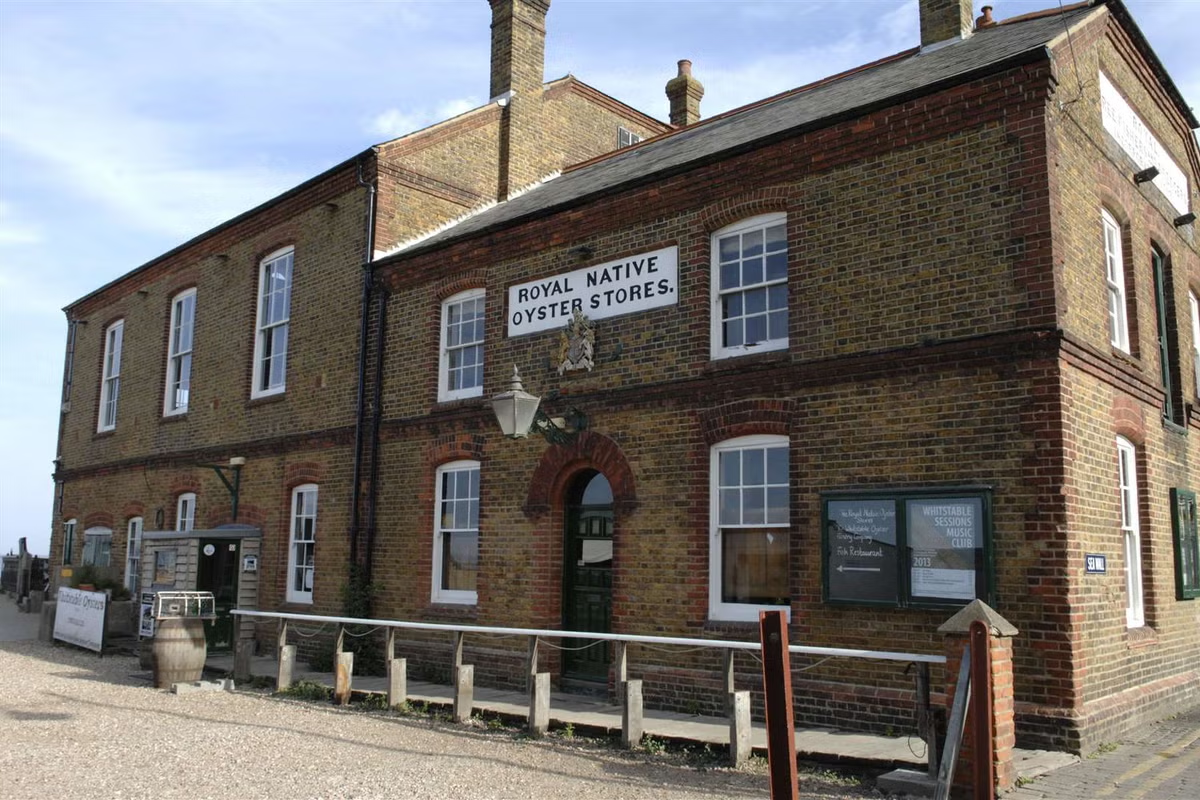
The Royal Native Oyster Stores, operated by the Whitstable Oyster Company in Whitstable, has for years been a member of the prestigious guide and is credited with playing a key role in the town’s revival.
However, the seafront establishment has now plummeted from a five-star food hygiene score to just two following a recent visit by Canterbury City Council (CCC).
An environmental health inspector from the council downgraded the popular eatery after highlighting several critical problems within its kitchen.
The council inspector visited the restaurant in September, writing in their report that they found “a foul-smelling bucket containing discarded portions of fish”.
The bucket of discarded fish in the yard at Royal Native Oyster Stores (Cover Images)
It was also alleged that chefs in the restaurant did not have any formal food safety training, and the level of cleanliness was criticised multiple times.
The inspector noted: “A foul-smelling open bucket was noted to be stored directly outside the premises in the external yard containing discarded portions of fish.
“As discussed at the time of inspection, this is not appropriate storage for food waste and will significantly increase the risk of pest activity within the yard area.
“You must ensure food waste is disposed of appropriately.
“At the time of inspection, I was unable to see any evidence of formal food safety training amongst the chefs.”
The potato chipping room at the Royal Native Oyster Stores needed deep cleaning. (Cover Images)
A number of flies were spotted in the wash-up area, seen landing on various worktops in the area and food contact equipment at the time of inspection.
The potato chipping room needed to be deep-cleaned after dirt and food debris were found on the floor.
There was similar dirt inside cutlery trays, on fans blowing air into the kitchen and on the bottom of a freezer.
It was found the crushed ice machine was in a significantly poor state of cleanliness, and the lid was in a state of “significant disrepair, presenting a risk of contamination”.
The spade used to remove ice from the machine, and the scoop used for putting ice in drinks, were in a poor state of cleanliness and were not stored in a way that prevents contamination.
Food debris was found in multiple areas of the kitchen (Cover Images)
“More detailed cleaning is required throughout the kitchen,” said the inspector.
“A buildup of dirt, grease and food debris was noted behind, underneath and inside equipment.
“A thorough deep clean is required throughout, paying particular attention to the flooring underneath and behind the fryers, the inside of the plate cabinet and the underside of the handle, [and] fridge and freezer door seals.”
Multiple parts of the building had missing ceilings, including a small area of the potato chipping room and a large section of the roof in the prep room.
Various damage was noted to the walls in the dry store room and on the wall leading from the kitchen to the prep area.
The floor within the main kitchen was damaged, and bare concrete was exposed in the kitchen and underneath the fryers, making “cleaning more difficult due to its porous nature”.
A version of this article appeared in CNBC’s Inside Alts newsletter, a guide to the fast-growing world of alternative investments, from private equity and private credit to hedge funds and venture capital. Sign up to receive future editions, straight to your inbox.
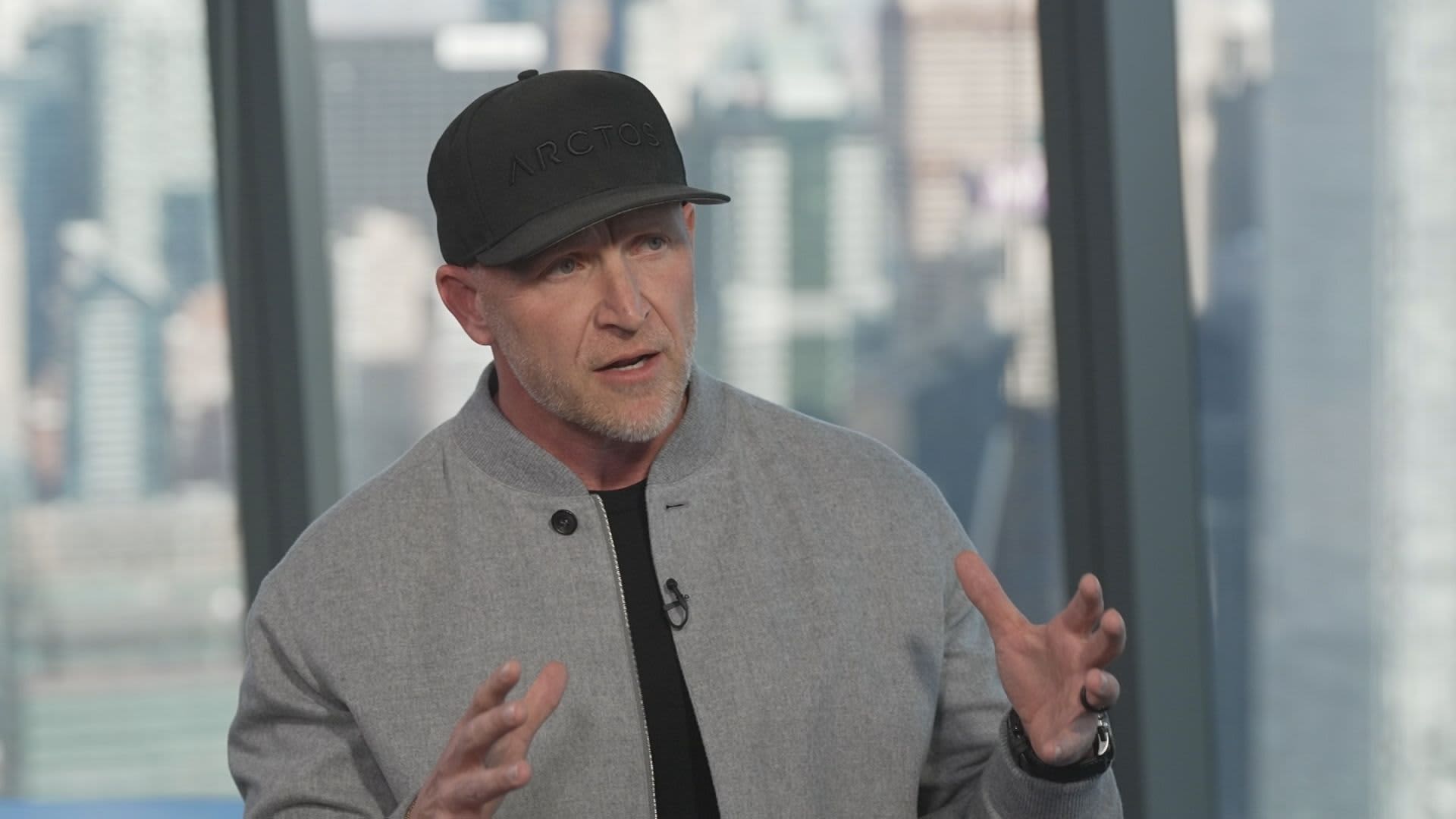
The rise of artificial intelligence is likely to boost the valuations of sports teams and media rights, making sports an even more attractive asset class for investors, according to Ian Charles, managing partner of Arctos Partners.
With AI-generated video and online content becoming more ubiquitous, live sports will become even more important in the battle for attention, Charles told Inside Alts. Since fans will pay more for live experiences and in-person games, team values will continue to climb and generate strong returns, he said.
“Sport is the only must-see, appointment-viewing content,” Charles said. “In a world where people are increasingly lonely and looking for a connection — for the communal, tribal connection you get from watching a sporting event with your friends, being part of your community, crying and screaming and cheering — the value of that to the media landscape and ecosystem is just becoming exponential.”
Arctos is at the center of an investing boom in sports. With $15 billion in assets under management, the Dallas-based firm has helped pioneer the growing role of private equity in sports team ownership and capital raises. It’s the only private equity firm approved to own equity in teams across all five major North American professional leagues — the NFL, NBA, MLB, NHL and MLS.
The firm has gained such a big lead in sports that it’s become an attractive target for other private equity firms. Bloomberg reported last month that private equity giant KKR has agreed to buy Arctos at a $1 billion valuation, keeping Charles and other top management in place. Arctos and Charles declined comment on the report.
Yet despite concerns over a bubble in team valuations, Charles said the thesis for sports as an investment is in the early innings.
Team values have two drivers, he said. The first is league revenues, which are distributed among teams and equates to intellectual property. The second is the live entertainment business, driven by stadiums and other revenue that are protected since “no one is allowed to compete with you in your particular form of live entertainment.”
Get Inside Alts directly to your inbox
“Those two assets are quite unique,” Charles said. “You have this very durable, very important IP piece, and then this local live entertainment piece.”
Those twin drivers have given major-league sports teams unique characteristics as investments.
Charles said North American sports teams have mostly outperformed public equities during a 3-year, 5-year and 10-year period, with only occasional exceptions. Team values have increased steadily in value, with little volatility. They are also largely uncorrelated with stocks, delivering the elusive “alpha” that many wealthy investors and family offices are always searching for.
Once seen as trophy assets and unprofitable vanity plays for billionaires, sports teams have become more rigorous businesses that are increasingly accessible for investors through private equity funds. In 2024, the NFL voted to approve select PE firms to buy minority stakes in teams, becoming the last of the major U.S. pro leagues to welcome private equity investors.
Nearly 1 in 5 professional sports teams now has some kind of private equity investment, according to JPMorgan. The cumulative returns of the four big major sports leagues — NFL, NBA, MLB and NHL — have surpassed the S&P 500 since 2014, the bank said.
Charles said sports are also “anti-cyclical,” meaning they are less vulnerable to economic cycles and recessions.
“They’ve got this sort of monopolistic local live-entertainment business in sports, that’s really interesting,” he said. “And 70% to 80% of the total revenue in premium sports is long term and contracted through sponsorships, through media rights, with guaranteed payments and escalators. So it doesn’t matter if GDP goes down or up.”
Not every team or league is a sure bet, however. Charles said Arctos sticks only to the five major leagues. He said emerging sports, like padel, pickleball, E1 Series electric-powerboat racing and others, have yet to prove themselves as durable investments.
“I have no idea which of the professional pickleball leagues is going to be the premium source of content in 20 years,” he said. “I do know that when there is a Super Bowl in 2045 it’s going to command the attention of the entire world.”
If there is one new league that can could break out and become a big business, it’s likely to be in women’s sports, he said.
“I think that one of the women’s sports leagues is going to ascend and command global attention,” he said. “I don’t know which one it is. I don’t know where it will be based. One of them is going to capture the energy and the fandom of the globe.”
A patient receives chemotherapy treatment for breast cancer at the Antoine-Lacassagne Cancer Centre in Nice, France, on July 26, 2012. —Reuters
PARIS: Nearly four out of every 10 cancer cases could be prevented if people avoided a range of risk factors, including smoking, drinking, air pollution and certain infections, the World Health Organisation said Tuesday.
New research published on the eve of World Cancer Day estimated that 38% of all new cancer cases globally in 2022 — 7.1 million — were linked to preventable causes.
The large team of researchers, which included the WHO’s International Agency for Research on Cancer, looked at 30 factors that increase the risk of getting cancer.
Tobacco was the leading offender, responsible for 15% of all new cancer cases, followed by cancer-causing infections with 10% and drinking alcohol with 3%, according to the study published in the journal Nature Medicine.
Other risk factors included being overweight, a lack of exercise, UV radiation and being exposed to threats such as asbestos while working.
“This is the first global analysis to show how much cancer risk comes from causes we can prevent,” senior study author Andre Ilbawi, the WHO’s team lead for cancer control, said in a statement.
Almost half of all the preventable cases were lung, stomach or cervical cancer.
Lung cancer was linked to smoking and air pollution, while stomach cancer was largely linked to a bacteria called Helicobacter pylori.
Cervical cancer cases were overwhelmingly caused by human papillomavirus (HPV), which vaccines are effective against.
Men were far more likely to get preventable cancer, with 45% of new cases compared to 30% for women.
And nearly a quarter of all preventable cancer cases among men were from smoking, compared to 11% for women.
To address the problem, the researchers called for countries to adopt strong tobacco control measures and alcohol regulation, and to vaccinate against common infections such as HPV, improve air quality and ensure safer workplaces, healthy diets and exercise.
“If we want to reduce the cancer burden we also need to reduce the noncommunicable disease (NCD) burden — it is indisputable that tobacco, alcohol, ultra-processed food and air quality are major drivers of multiple kinds of cancer,” said Katie Dain, CEO of the NCD Alliance.
Authorities overseeing some of Britain’s most famous countryside landscapes are launching targeted outreach programs aimed at ethnic minority communities, after a government-commissioned review warned rural areas are widely perceived as a “white” and unwelcoming space.
“The countryside is seen by both black, Asian and minority ethnic groups and white people as very much a ‘white’ environment,” the report stated, “We are all paying for national landscapes through our taxes, and yet sometimes on our visits it has felt as if National Parks are an exclusive, mainly white, mainly middle‑class club, with rules only members understand and much too little done to encourage first time visitors.”
Autumn mists hang over villages and the countryside in the South Downs National Park near Amberley in Southern England Oct. 7, 2013. (Luke MacGregor/Reuters)
Critics say the initiative reflects misplaced government priorities. Michael McManus, director of research at the Henry Jackson Society, told Fox News Digital: “At a time of low growth, high taxes and stretched public services, it’s astonishing that ministers are spending time and money worrying about the ‘whiteness’ of the countryside. Government exists to grow the economy and fix real problems, not to indulge in culture war distractions that deliver nothing for working people.”
The initiatives stem from the 2019 Landscapes Review, commissioned by the Department for Environment, Food & Rural Affairs (DEFRA) and led by author Julian Glover. The review concluded that England’s protected landscapes often feel disconnected from large parts of the population.
Sheep pass by entrants in the annual Friends of the Lake District Dry Stone Walling Competition, who were working on their section of wall, in Little Asby Common, northern England, July 3, 2010. (Suzanne Plunkett/Reuters )
The review also criticized the leadership of protected landscapes, arguing that governance bodies do not reflect the country they serve. “Of the almost 1,000 people on National Park and AONB boards today, the great majority are male… and a tiny fraction are of black, Asian or minority ethnicities,” the report said, calling that imbalance “wrong for organizations which are funded by the nation to serve everyone.”
Following the review, organizations representing National Landscapes, formerly known as Areas of Outstanding Natural Beauty, have published updated management plans outlining steps to attract more diverse visitors. According to individual plans published between 2024 and 2025, and as reported by U.K. outlets including LBC and GB News, the measures apply to landscapes including the Cotswolds, the Chilterns, the Malvern Hills and others.
Tourist on nature trail in lakeland countryside at Easedale Tarn lake in the Lake District National Park, Cumbria, UK (Tim Graham/Getty Images)
Under those plans, the Chilterns National Landscape will launch targeted outreach programs in Luton and High Wycombe, areas with large Muslim populations. One barrier cited in follow-up research was concern among some visitors about unleashed dogs in rural areas.
The Cotswolds National Landscape referenced the DEFRA findings directly, saying it is seeking to broaden its appeal to reach “the widest demographic.”
In its own management strategy, the Malvern Hills National Landscape said many minority communities lack a generational connection to the countryside because parents and grandparents “did not always feel welcome in it.” The plan added that while many white English visitors value solitude, ethnic minority visitors may be more inclined toward group or family-based activities.
A red panda walks on a snowy branch at Cotswold Wildlife Park in Burford, western England January 6, 2010. Blizzards swept across central and southern England on Wednesday, bringing more road and rail chaos, forcing airlines to suspend flights and hundreds of schools to close.(Eddie Keogh/Reuters)
Other landscapes raised similar concerns. Nidderdale National Landscape in North Yorkshire warned that ethnic minority visitors may worry about how they will be received in unfamiliar rural settings. Dedham Vale, Surrey Hills, and Suffolk and Essex Coast Heaths said they aim to identify and address barriers limiting access for under-represented groups, including people without English as a first language.
Together, the plans signal a broader shift in how Britain’s publicly funded countryside is managed, as landscape authorities face growing pressure to demonstrate cultural relevance to a changing society, even as critics warn the focus risks sidelining economic priorities and traditional conservation goals.
Fox News Digital reached out to the Department for Environment, Food & Rural Affairs in England for comment but did not receive a response before publication.
Efrat Lachter is a world reporter for Fox News Digital covering international affairs and the United Nations. Follow her on X @efratlachter. Stories can be sent to efrat.lachter@fox.com.