COLORADO SPRINGS, Colo. — The Mountain West Conference on Tuesday announced a six-year media rights package with CBS Sports, Fox Sports and streaming platform Kiswe and a five-year deal with The CW Network.
The agreements begin in 2026-27 and provide broadcast, cable and streaming for football, men’s and women’s basketball and Olympic sports.
Commissioner Gloria Nevarez said the partnerships represent the broadest media distribution plan in conference’s 27-year history.
“Aligning with three nationally recognized broadcast media partners and marquee streaming platforms powered by Kiswe’s expertise ensures that our student‑athletes showcase their athletic excellence, academic achievements, personal stories, and the pride they bring to their universities,” Nevarez said in a statement.
CBS will continue to carry the top game selections for football and men’s and women’s basketball and Fox will carry the Mountain West championship football game. The broadcast channels will be CBS, CBS Sports Network, Paramount+, Fox, FS1, FS2, Fox One and The CW.
CBS Sports Network will feature 15 regular-season football games with at least one game broadcast annually on CBS Television Network and streamed on Paramount+. A total of 18 Mountain West regular-season men’s basketball games will be broadcast on CBS Sports Network, and the CBS Television Network will carry the men’s basketball championship game.
Two regular-season women’s basketball games will be broadcast on CBS Sports Network in addition to the conference championship game.
There will be 12 regular-season football games annually on Fox, FS1, and FS2 and 20 regular-season men’s basketball games on Fox channels.
The CW will debut its coverage of the Mountain West with an annual package of 13 regular-season football games, 20 regular-season men’s basketball games and 15 regular-season women’s basketball games.
Kiswe will be the exclusive streaming platform for all 21 conference sports that are not distributed on national linear television.
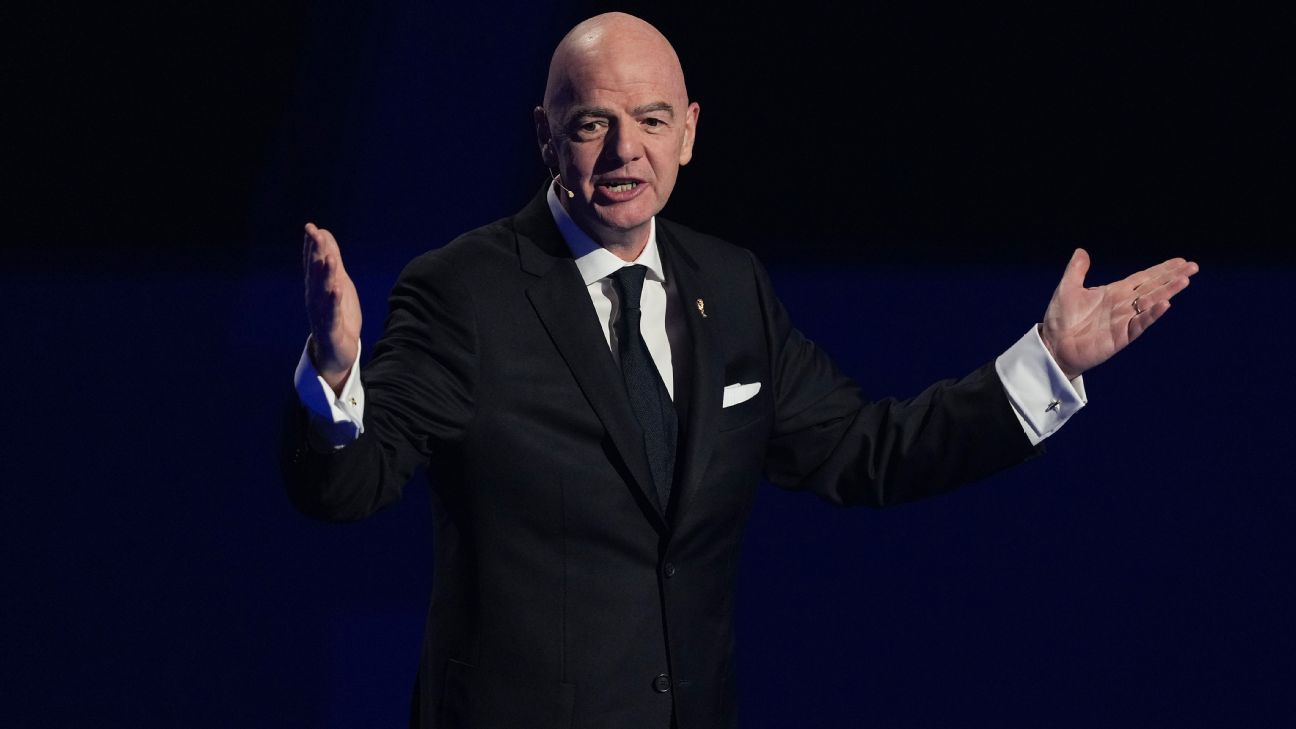
Ukraine’s sports minister has said FIFA president Gianni Infantino’s bid to lift a ban on Russia competing at youth level are “irresponsible” and “infantile.”
Infantino said the ban on Russia competing, which was imposed by FIFA and UEFA after Russia launched its invasion of Ukraine in 2022, should “definitely” be lifted, “at least at youth level.”
Infantino added on Sky News that the ban had “not achieved anything” and “created more frustration, and hatred.”
“Having girls and boys from Russia being able to play football games in other parts of Europe would help,” the Swiss said.
Matvii Bidnyi, Ukraine’s sports minister, said on Tuesday: “Gianni Infantino’s words sound irresponsible — not to say infantile. They detach football from the reality in which children are being killed.
“Let me remind you that since the start of Russia’s full-scale aggression, more than 650 Ukrainian athletes and coaches have been killed by Russians.
“Among them were more than 100 footballers. One example is Illia Perezhogin, a 10th-grade student at a Mariupol school, who was simply playing football at his school stadium when a Russian missile struck.
“Former futsal player Viktoriia Kotliarova was killed together with her mother during the shelling of Kyiv on Dec. 29, 2023. She was a Kyiv Student Futsal Cup champion and a winner of the Dynamo Student League tournament.
“War is a crime, not politics. It is Russia that politicises sport and uses it to justify aggression. I share the position of the Ukrainian Association of Football, which also warns against Russia’s return to international competitions.
“As long as Russians continue killing Ukrainians and politicising sport, their flag and national symbols have no place among people who respect values such as justice, integrity, and fair play.”
On Dec. 17 the FIFA Council announced plans for a new U15 festival, with a boys’ event to be staged next year and a girls’ event in 2027. That followed a recommendation from the Olympic Summit for international sports federations to allow Russian teams and athletes to compete under their national flag at youth level.
A media release confirming the FIFA Council’s decisions said the events would “be open to all 211 FIFA member associations.”
Speaking on Boxing Day last year, the Russian Football Union president Alexander Dyukov said: “We expect that next year, following the IOC [recommendation], international football regulators will make decisions that will allow our teams to participate in official international competitions.
“We hope that, taking into account the IOC recommendations, a way will be found to include our teams in the appropriate groups at the next draw. We also expect similar decisions from FIFA.
“The contacts and communications that have taken place indicate that FIFA and UEFA view the IOC’s decision positively, although it is not binding on them.”
Dyukov said he intended to attend next week’s UEFA Congress in Brussels, which would be “an opportunity to discuss our return.”
Senior figures within the administration of European football spoken to by the Press Association remain sceptical around the lifting of the ban in practical terms even at youth level, amid fears other teams would simply refuse to line up against Russia until a lasting political settlement is reached to end the conflict.
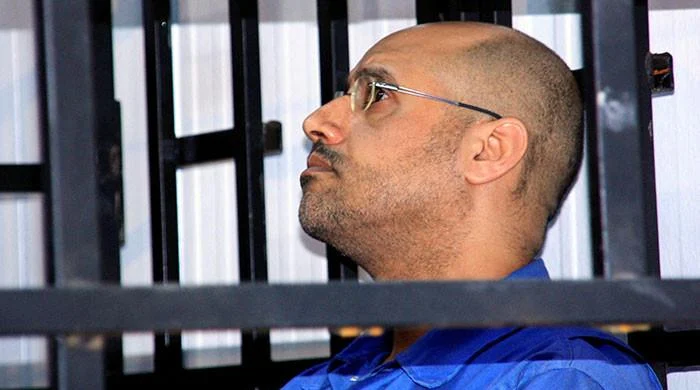
Saif al-Islam Gaddafi, son of late Libyan leader Muammar Gaddafi, attends a hearing behind bars in a courtroom in Zintan May 25, 2014. — Reuters
Gaddafi’s death disclosed by sources close to his family.
Circumstances of his death are not immediately clear.
Gaddafi held clout, despite having no official position.
Libya’s Saif al-Islam Gaddafi went from his notorious father’s heir apparent to a decade of captivity and obscurity in a remote hill town before launching a presidential bid that helped derail an attempted election.
He has been killed, sources close to the family, his lawyer Khaled el-Zaydi and Libyan media said on Tuesday.
Details surrounding the circumstances of his death were not immediately clear.
Despite holding no official position, he was once seen as the most powerful figure in the oil-rich North African country after his autocrat father Muammar Gaddafi, who ruled for more than four decades.
Saif al-Islam shaped policy and mediated high-profile, sensitive diplomatic missions.
He led talks on Libya abandoning its weapons of mass destruction and negotiated compensation for the families of those killed in the bombing of Pan Am Flight 103 over Lockerbie, Scotland, in 1988.
Determined to rid Libya of its pariah status, Saif al-Islam engaged with the West and championed himself as a reformer, calling for a constitution and respect for human rights.
Educated at the London School of Economics and a fluent English speaker, he was once seen by many governments as the acceptable, Western-friendly face of Libya.
But when a rebellion broke out against Gaddafi’s long rule in 2011, Saif al-Islam immediately chose family and clan loyalties over his many friendships to become an architect of a brutal crackdown on rebels, whom he called rats.
Speaking to Reuters at the time of the revolt, he said: “We fight here in Libya, we die here in Libya.”
He warned that rivers of blood would flow and the government would fight to the last man and woman and bullet.
“All of Libya will be destroyed. We will need 40 years to reach an agreement on how to run the country, because today, everyone will want to be president, or emir, and everybody will want to run the country,” he said, wagging his finger at the camera in a TV broadcast.
‘I’m staying here’
After rebels took over the capital Tripoli, Saif al-Islam tried to flee to neighbouring Niger dressed as a Bedouin tribesman.
The Abu Bakr Sadik Brigade militia captured him on a desert road and flew him to the western town of Zintan about one month after his father was hunted down and summarily shot dead by rebels.
“I’m staying here. They’ll empty their guns into me the second I go out there,” he said in comments captured in an audio recording as hundreds of men thronged round an old Libyan air force transport plane.
Saif al-Islam was betrayed to his rebel captors by a Libyan nomad.
He spent the next six years detained in Zintan, a far cry from the charmed life he lived under Gaddafi when he had pet tigers, hunted with falcons and mingled with British high society on trips to London.
Human Rights Watch met him in Zintan. Hanan Salah, its Libya director, told Reuters at that time that he did not allege ill treatment. “We did raise concerns about Gaddafi being held in solitary confinement for most if not all of the time that he had been detained,” she said.
Saif al-Islam was missing a tooth and said he had been isolated from the world and that he did not receive visitors.
He was, however, granted access to a television with satellite channels and some books, she added.
In 2015, Saif al-Islam was sentenced to death by firing squad by a court in Tripoli for war crimes.
Saif al-Islam is also wanted by the International Criminal Court (ICC) at The Hague for war crimes. The court issued an arrest warrant against him for “murder and persecution”.
‘You need to come back slowly’
He spent years underground in Zintan to avoid assassination after he was released by the militia in 2017 under an amnesty law. From 2016, he was allowed to contact people inside and outside Libya, said Mustafa Fetouri, a Libyan analyst with contacts in Saif al-Islam’s inner circle.
Saif al-Islam received visitors almost every week and debated politics and the state of the country. Sometimes he received gifts and books.
Wearing a traditional Libyan robe and turban, he appeared in the southern city of Sabha in 2021 to file his candidacy for the presidential elections.
He had been expected to play on nostalgia for the relative stability before the 2011 NATO-backed uprising that toppled his father and ushered in years of chaos and violence.
However, his candidacy was controversial and opposed by many of those who had suffered at the hands of his father’s rule. Powerful armed groups that emerged from the rebel factions that rose up in 2011 rejected it outright.
As the election process ground on in late 2021 with no real agreement on the rules, Saif al-Islam’s candidacy became one of the main points of contention.
He was disqualified because of his 2015 conviction, but when he tried to appeal the ruling, fighters blocked off the court. The ensuing arguments contributed to the collapse of the election process and Libya’s return to political stalemate.
In an interview with The New York Times Magazine in 2021, Saif al-Islam discussed his political strategy. “I’ve been away from the Libyan people for 10 years,” he said. “You need to come back slowly, slowly. Like a striptease. You need to play with their minds a little.”
Matthew McConaughey weighs in on doing emotional scenes in films
Matthew McConaughey is known for his diverse acting. But when it comes to performing emotional scenes, he says he prefers the first take.
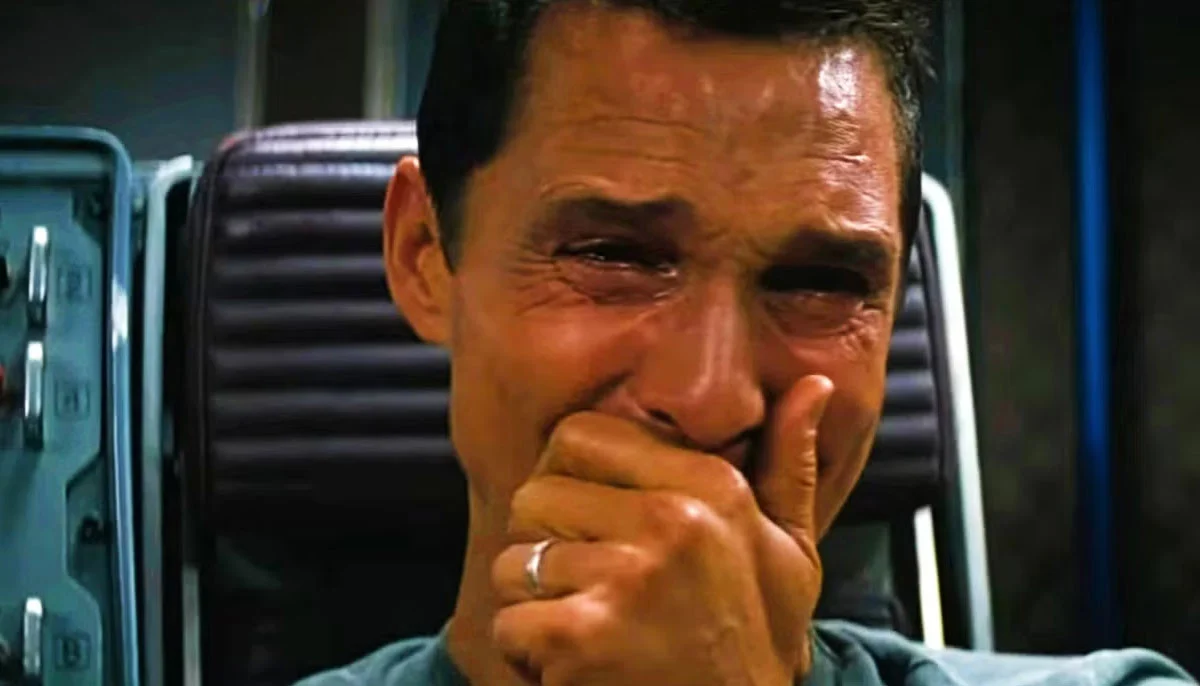
The Academy-winning star points to a scene in Interstellar, heavy on emotion, that unfolds as he travels through space while watching videos of his kids growing older, drawing tears to his eyes.
The impactful scene, McConaughey recalls, was shot in one take.
“Those emotional scenes like this, I like to do them first up and let’s get the close-up, so I remember sitting down and [Christopher Nolan] was like, ‘Okay, so let’s rehearse and we’ll run the video.'”
The noted actor adds that after one take, the emotional authenticity turned into acting, which he tends to avoid for scenes like these.
“Why? Because everything after take one is acting, but take one, I don’t know what I’m going to see, so if I can be relaxed enough and I know the scenes where I’m going to see my children who have evidently grown older and I haven’t.”
To make the scene believable, McConaughey recalls that he imagined the fictional story as reality in his mind: the pain of losing the time to see his kids grow up.
“The idea that how much, if I personalize that, oh my gosh. If I was dead, what if I didn’t see [his three real-life children] Vida and Levi and Livingston for that many, oh, that’s a sick feeling,” he says, referring to his children.
Given the raw emotions unfolding on camera, he is right to express surprise when he learns the scene has become a pop-culture meme.
At first, he tells John Mayer, on whose show SiriusXM’s How’s Life he recently appeared, that he did not know the emotional scene became “a massive visual milestone,” noting the film has seen “a resurgence in popularity over the years.”
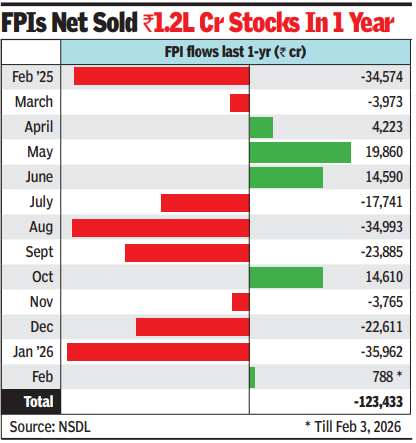
MUMBAI: The US-India trade deal is expected to have a positive impact on foreign fund buying in India, potentially reversing their massive outflow from the stock market witnessed in recent months.On one hand, the deal lifts a long-standing overhang from the market that in turn would improve investor sentiment about India globally. In addition, this could also strengthen the rupee, and combined with better corporate earnings, may attract foreign funds to invest in India in a major way again, top broking house official said.So far in 2026, foreign portfolio investors (FPIs) have net sold stocks worth nearly Rs 35,000 crore in the Indian market. This comes on top of the Rs 1.7 lakh crore worth of stocks net offloaded in 2025. The sell-off, in turn, put pressure on the rupee.
FPI flows last 1 year
Despite strong central govt intervention, the rupee had depreciated over 6% since the start of 2025. FPI selling in India also led to underperformance of the Indian market with Nifty up a modest 7.4% in the last one year to Feb 2 and sensex up 5.8%. In comparison, South Korea’s Kospi Composite more than doubled in value while Brazil returned 45%.“The underperformance of Indian equities over the past year can be traced, at least in part, to large and persistent FPI outflows,” said Sujan Hajra, chief economist & executive director, Anand Rathi Group. These flows were driven by rising geopolitical and policy uncertainty around India’s trade relationship with the US.“For global investors, deteriorating India–US relations translated into higher perceived risk premia, currency uncertainty and capital flight, even as domestic earnings held up.”“With the India–US treaty now in place, that overhang is beginning to lift. The key shift is not incremental tariff relief, but the restoration of geopolitical and trade stability. As risk premia normalise, India once again looks investable to global capital—a high-growth, politically aligned, strategically important economy with deep domestic demand and improving external linkages to both the US and Europe,” Hajra said. In Tuesday’s market, net inflow by FPIs was at Rs 5,236 crore, the biggest single-day inflow in three months, BSE data showed. Market players, however, feel that this could be an aberration but the direction of the flows are likely to change soon.
Director axed Sydney Sweeney & Michele Morrone scene in ‘The Housemaid’
There is a scene in The Housemaid, a film that has raged on at the box office, between Sydney Sweeney and Michele Morrone.
However, it was axed from the final edit.
Now, Paul Feig, the director behind the psychological thriller drama, says the audience at the test screenings showed little interest in the scene, leading the makers to remove it.
“When you’re putting a movie together and you’re doing your test screenings, you find out there’s certain moments when people want to be with one character and people want to be with other characters. That was the only scene we had to lose.”
But he also tells the People the scene featuring the two stars may return in the sequel.
“But if there’s another [film], it probably will come back in a sequel if that happens, if people go to the movies and make this happen.”
The Housemaid, released last year, has become a top box-office hit for Sweeney, raking in more than $300 million.
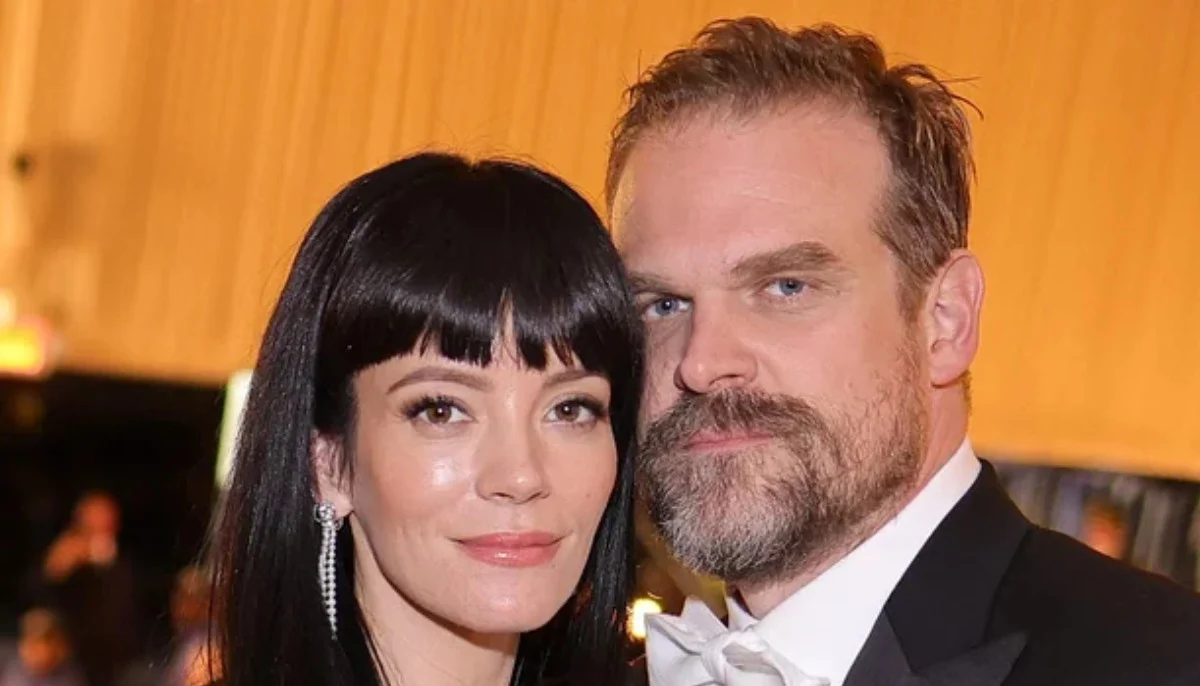
Photo: Here’s how David Harbour split planted Lily Allen’s musical comeback
Lily Allen and David Harbour have officially gone their separate ways, announcing their split in January 2025 following reports that they had been in an open relationship.
As Allen recently reflected on the support she received from her parents during that period, a November 2025 interview has resurfaced in which the singer offered rare insight into how the strain of her marriage impacted her creativity.
Speaking to Interview Magazine, Allen explained that her album West End Girl arrived seven years after her previous release, No Shame, because she was not in the right emotional headspace to make music she believed in.
“Well, everything I was writing was dog s***.”
“I felt like I had writer’s block or something, but actually I think I just knew that something wasn’t right,” the 40-year-old singer confessed.
She added that her instinct to be honest in her songwriting made it impossible to push through creatively while her personal life felt unsettled.
“I always strive to tell the truth in my art, so I guess I subconsciously knew that something wasn’t right in my personal life, and I couldn’t go there creatively because if I did, then it would all fall apart.”
“I wouldn’t say I was ashamed (of the music) but I was not excited by anything I had done to the point where I wanted to share it with people that I love, never mind the rest of the world,” the Smile hitmaker said, adding, “Whereas when I started writing this, I was immediately like, ‘I’m onto something,’” after which she signed off from the chat.
Xbox Game Pass February 2026 line up revealed: See full list
Xbox has revealed a stacked first wave of exciting game titles joining its Game Pass subscription service this February.
The list is full of blockbuster additions, adding to the enthusiasm of players.
The major highlight is the arrival of High on Life 2, which will be available from February 13.
Squanch Games sequels will also be available to subscribers. The subscribers can also play the two recent AAA releases.
On February 17, the open-world epic Avatar: Frontiers of Pandora will launch, enabling players to dive into the exciting Western Frontier of Pandora.
For all the football fans, Madden NFL 26 kicks off the month on February 5.
Other major additions include the Like A Dragon: Pirate Yakuza in Hawaii, which is available now, and Relooted, which is set to release on February 10.
Swings wildly, rebounds strongly after heavy sell-off, settles at Rs514,362; rupee stable
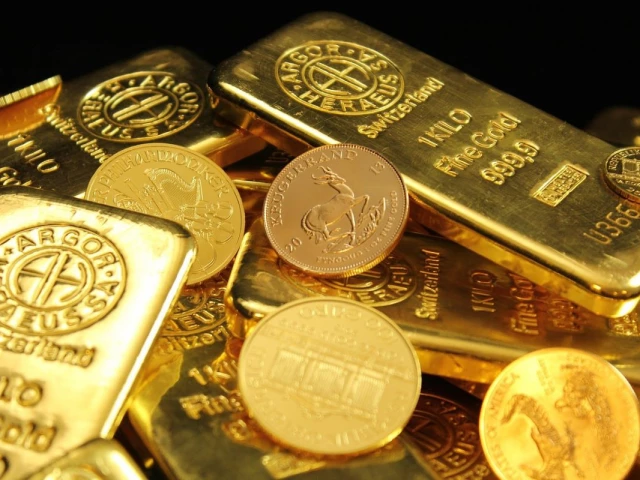
At current prices, the looted gold is worth around $70 million. PHOTO: PIXABAY
KARACHI:
Gold prices in Pakistan rebounded sharply on Tuesday, tracking a strong recovery in the international bullion market after several sessions of steep losses that had rattled investors and traders.
In the local market, the price of gold per tola surged by Rs24,000 to settle at Rs514,362, according to rates released by the All-Pakistan Gems and Jewellers Sarafa Association. Similarly, the price of 10-gram gold rose by Rs20,576 to Rs440,982.
The sharp rebound came a day after gold had suffered a significant decline. On Monday, gold per tola had fallen by Rs21,500 to close at Rs490,362. Overall, the yellow metal had lost a cumulative Rs85,500 per tola over the previous three sessions, reflecting heightened volatility in global markets.
Internationally, gold prices jumped by $240 on Tuesday to reach $4,916 per ounce, including a premium of $20. The recovery followed a dramatic sell-off in recent days, during which gold experienced unusually wide price swings.
Commenting on market condition, Adnan Agar, Director at Interactive Commodities, said the gold market was witnessing extreme volatility that posed serious risks to investors. He noted that gold had seen a downward move of nearly $1,200, hitting a low of around $4,440 and a high close to $5,600 within a short span.
“After such a massive drop, if the market increases by $300, $400 or even $500, it is understandable,” Agar said. However, he cautioned that daily price movements of $200 to $300 were unhealthy for the market. “Ideally, movements of $70 to $100 would be much more stable. These large swings are very dangerous, cause losses to clients and increase overall uncertainty.”
Agar added that while volatility had persisted since the recent downturn, there were expectations that market conditions might gradually stabilise in the coming days. Much would depend on the upcoming US economic data and broader geopolitical developments.
He pointed out that gold could face downward pressure as concerns over a potential US government shutdown appear to be easing after reports that a deal has been reached. Additionally, upcoming negotiations between Iran and the United States, scheduled to begin later this week, could influence market sentiment. While immediate breakthroughs are unlikely, prolonged talks may reduce geopolitical risk premiums in the near term.
Meanwhile, silver prices in Pakistan moved higher, with the price per tola increasing by Rs741 to settle at Rs9,146.
The Pakistani rupee recorded a marginal uptick against the US dollar in the inter-bank market on Tuesday. By the close of trading, the local unit settled at 279.75 per dollar, appreciating by Rs0.01.
Agreements focus on technology transfer and B2B partnerships across farm value chain
FAISALABAD:
A delegation of Chinese agricultural experts and industry leaders has concluded a visit to the University of Agriculture Faisalabad (UAF), with the signing of several memorandums of understanding (MOUs) paving the way for enhanced technological collaboration and market integration between the two countries.
The visit, hosted by the Confucius Institute at UAF (CI-UAF), brought together a broad cross-section of China’s agricultural innovation sector. The delegation comprised 12 senior executives from leading Chinese agribusinesses, along with a senior professor from Northwest A&F University (NWAFU) and representatives of the Silk-Road Biohealth Agricultural Industry Alliance.
The visiting entities showcased expertise spanning the full agricultural value chain, including the sesame and chilli industries, smart hen breeding technology, fruit tree cultivation and processing, advanced agricultural machinery, rapeseed improvement and vegetable seed breeding.
The delegation held detailed discussions with Prof Dr Zulfiqar Ali, Vice Chancellor of UAF, and Dr Saddam Hussain, Local Dean of CI-UAF. Talks focused on strengthening bilateral cooperation and on accelerating the translation of academic research into practical, market-driven solutions tailored to Pakistan’s agricultural development needs.
Facilitated by CI-UAF, the core of the visit involved targeted business-to-business matchmaking sessions. Chinese delegates held face-to-face meetings with more than ten major Pakistani companies operating in poultry, fruit processing, fertiliser and precision agriculture.
THIS ARTICLE ORIGINALLY APPEARED ON THE CHINA ECONOMIC NET