Home Blog Page 2623

Did You Know: Your Favourite Chocolate Exists Because Its Founder Hated Alcohol

0
Did You Know: Your Favourite Chocolate Exists Because Its Founder Hated Alcohol

Last Updated:

The founder of Dairy Milk, John Cadbury, was a staunch opposer of alcohol who believed that cocoa-based drinks could offer a healthier substitute

The defining moment in Cadbury's history arrived in 1905 with the launch of Dairy Milk chocolate.

The defining moment in Cadbury’s history arrived in 1905 with the launch of Dairy Milk chocolate.

With Valentine’s Day just around the corner, the celebrations begin well in advance, and February 9 is marked as Chocolate Day. For many, the very thought of chocolate instantly brings Cadbury Dairy Milk to mind. As millions exchange the iconic purple bar with friends and loved ones, few pause to consider the long and fascinating journey behind one of the world’s most recognisable chocolate brands.

Cadbury, today the world’s largest chocolate company and a part of Mondelez International, traces its origins back nearly 200 years to the United Kingdom. Interestingly, the brand was born not out of indulgence, but as a moral alternative to alcohol.

The story began in 1824 on Bull Street in Birmingham, where John Cadbury opened a small grocery shop. At the time, there was a strong resistance in the UK against alcohol, and Cadbury was a staunch opposer of alcohol who believed that cocoa-based drinks could offer a healthier substitute.

At his stall, Cadbury sold tea, coffee and drinking chocolate, preparing the cocoa himself using a mortar and pestle. The chocolate drink, promoted as a temperance beverage, quickly gained popularity. By 1831, growing demand pushed Cadbury to move from retail to manufacturing, and he acquired a warehouse to scale up production, with his sons George and Richard joining the business.

By the early 1840s, Cadbury was producing 11 varieties of cocoa and 16 kinds of drinking chocolate. In 1847, when John’s brother Benjamin joined the venture, the business was renamed Cadbury Brothers, and a factory was set up on Bridge Street. Recognition followed soon after. In 1854, Cadbury received a Royal Warrant from Queen Victoria, granting the company the honour of supplying chocolate to the British Royal Family.

The company faced turbulence in the 1860s when John Cadbury’s health declined, forcing him into retirement. Financial losses mounted, but his sons managed to turn the business around. A major breakthrough came in 1866 with the purchase of a cocoa press from the Netherlands, which enabled the extraction of pure cocoa butter. This innovation marked the introduction of unadulterated cocoa to Britain, replacing earlier mixtures that used flour or potato starch.

In 1879, Cadbury relocated its factory to Bournville, on the outskirts of Birmingham. The move was historic not just for the business, but for industrial welfare in the UK. The company built houses, schools, parks and hospitals for its workers, creating a model village with no pubs, reflecting the company’s anti-alcohol roots.

The defining moment in Cadbury’s history arrived in 1905 with the launch of Dairy Milk chocolate. Made with a significantly higher milk content, the bar went on to become the company’s most successful product and remains a bestseller more than a century later.

Cadbury continued to expand through the 20th century, entering partnerships and mergers, including a tie-up with JS Fry & Sons in 1919 and a merger with Schweppes in 1969 to form Cadbury Schweppes. In 2010, the company was acquired by Kraft Foods, now Mondelez International, in a £11.5 billion deal.

Over the years, Cadbury has also left a cultural imprint. It introduced the world’s first heart-shaped chocolate box in 1868, now synonymous with Valentine’s Day. Today, the company produces over 500 million chocolates annually and operates in more than 50 countries. In Birmingham, Cadbury World continues to draw over 6,00,000 visitors every year, offering a glimpse into the chocolate-making process.

In India, Cadbury Dairy Milk has become a household name, woven into celebrations, festivals and everyday moments.

Click here to add News18 as your preferred news source on Google.

Follow News18 on Google. Join the fun, play games on News18. Stay updated with all the latest business news, including market trends, stock updates, tax, IPO, banking finance, real estate, savings and investments. To Get in-depth analysis, expert opinions, and real-time updates. Also Download the News18 App to stay updated.
News business Did You Know: Your Favourite Chocolate Exists Because Its Founder Hated Alcohol
Disclaimer: Comments reflect users’ views, not News18’s. Please keep discussions respectful and constructive. Abusive, defamatory, or illegal comments will be removed. News18 may disable any comment at its discretion. By posting, you agree to our Terms of Use and Privacy Policy.

Read More

Think flushing coffee grounds is safe? Here’s why experts say it might be risky for your pipes | – The Times of India

0
Think flushing coffee grounds is safe? Here’s why experts say it might be risky for your pipes | - The Times of India

Something strange is happening online. A simple tip involving a spoonful of coffee grounds has taken over social media, especially across Europe. Videos show people tossing damp coffee grounds into the toilet, scrubbing a bit, then flushing. It supposedly cleans, freshens, and removes stains without bleach or harsh chemicals. The idea of reusing waste to clean something grossly everyday is appealing. But experts say it’s not all harmless fun. What seems like a smart, sustainable trick might actually be quietly sabotaging plumbing systems. And once things go wrong, the effects aren’t so easy to fix.Coffee grounds aren’t useless. Just not in the toilet. Compost bins love them. Gardens too. Rich in nitrogen and phosphorus, they feed plants. Scrubbing bowls? Maybe a bit okay. But regular flushing? Risky.

How this simple coffee trick can clog your pipes

The hack is very simple.

  • Brew your coffee.
  • Scoop out the damp grounds.
  • Sprinkle into the toilet.
  • Scrub lightly.
  • Flush. That’s it.

Advocates say it’s mildly harsh, helping remove surface stains. It also supposedly absorbs odours. Perfect for households trying zero-waste lifestyles or anyone avoiding chemical cleaners. For the moment, it seems harmless. But there’s a problem! Coffee grounds don’t dissolve. Wet, they clump. Fibres, oils, tiny particles, they settle. Over time, those particles stick to pipe bends and junctions. In older homes, particularly those built before the 1980s, pipes are narrower, with sharp turns. They weren’t made for solids. Slowly, the material builds up, drainage slows, partial clogs appear. Maintenance crews report these soft obstructions regularly. And fixing them isn’t cheap.

Hidden plumbing risks of flushing coffee grounds

It’s not just single households. In apartment blocks, even occasional flushing of coffee grounds can cause trouble. Shared vertical stacks can get clogged. One unit’s “innocent” practice might affect neighbours. Reports from German cities mention a noticeable rise in service calls. Pipes layered with organic waste, soap residue, and calcium scale become a headache. People might be surprised. What looks like a harmless eco-hack ends up causing real infrastructure problems.

Gross NPAs of Scheduled Commercial Banks for domestic operations reach historic low of 2.15% as of September 2025

0
Gross NPAs of Scheduled Commercial Banks for domestic operations reach historic low of 2.15% as of September 2025


New Delhi: The gross NPA ratio, which is gross NPAs as a percentage of gross loans and advances of Scheduled Commercial Banks (SCBs), for domestic operations, has been continuously declining during the last eight financial years.

They were at a historic low of 2.15 per cent as at the end of September 2025 (provisional data), which is lower than 2010-11 level, Minister of State in the Ministry of Finance Pankaj Chaudhary in a written reply to a question in Lok Sabha said on Monday.

The Reserve Bank of India (RBI) initiated the Asset Quality Review (AQR) in 2015, post which the Government initiated 4R’s strategy of recognising NPAs transparently, resolving and recovering value from stressed accounts through clean and effective laws and processes, recapitalising PSBs, and reforms in banks and financial ecosystem to address the problem of rising NPAs and growing loan default.

Add Zee News as a Preferred Source


Enabled by these initiatives, a large drop in gross NPAs was achieved by PSBs, the minister said in his written reply today.

RBI has apprised that the data on gross NPAs of SCBs is not collected by RBI on monthly basis.

However, as per the latest data available with RBI, as of September 2025, for domestic operations, the gross NPA ratio of SCBs was 2.15 per cent, PSBs was 2.50 per cent, Private Sector Banks (PVBs) was 1.73 per cent and Foreign Banks was 0.80 per cent. Also, PSBs have a higher decline in gross NPA ratio in comparison with the PVBs and Foreign Banks since March, 2018.

“This continuous decline in gross NPAs of SCBs, including PSBs, has led to reduced provisioning by them, which in turn has improved their profitability thereby causing positive impact on the business growth. It also indicates that the asset quality as well as underwriting has improved in PSBs supported by a strong balance sheet and sustained profitability,” the minister said.


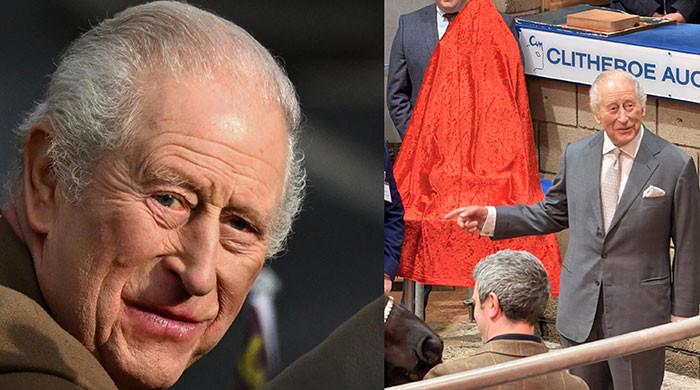
King Charles silent on Epstein question as crowd shouts ‘kick him out’

0
King Charles silent on Epstein question as crowd shouts 'kick him out'

King Charles silent on Epstein question as crowd shouts ‘kick him out’

King Charles found himself in the spotlight again for an unexpected reason during his visit to Clitheroe as he continued his tour connecting with local farmers and business owners. 

The trip, meant to highlight rural initiatives, was briefly interrupted when a member of the public shouted questions about the King’s brother, Andrew Mountbatten-Windsor, and his links to convicted sex offender Jeffrey Epstein.

The heckler, positioned behind the gathered crowd at the town’s train station, demanded: “How long have you known about Andrew and Epstein?” 

The moment sparked a quick response from royalist onlookers, who loudly urged him to “Shut up” and called for his removal. 

He was also asked whether his family would assist with the Epstein investigation, but he offered no comment.

Another bystander stepped in, escorting the man away as cheers and applause followed from the crowd.

This marks the second public confrontation the monarch has faced in less than a week, following a similar disruption during a visit to Essex. 

Despite the distractions, King Charles remained focused on his engagements, meeting representatives from Field Nurses.

King Charles meets shire horses

The King also met shire horses Thunder and Regal during visit to 700 year old Samlesbury Hall in Preston.

Camila Mendes finally reveals wedding plans with fiancé Rudy Mancuso

0
Camila Mendes finally reveals wedding plans with fiancé Rudy Mancuso

Camila Mendes finally reveals wedding plans with fiancé Rudy Mancuso

Riverdale star Camila Mendes is all set to tie the knot with Rudy Mancuso.

After getting engaged to her boyfriend Rudy Mancuso in October 2025, the actress has spoken about their wedding plans.

Speaking with People Magazine at the premiere of her upcoming comedy Idiotka, Mendes revealed that she’s still learning about her vision for the wedding ceremony.

She admitted, “I’ve never been somebody who’s like, had a big vision for my wedding, so I’m just still learning what my wedding persona or personality is.”

“So I’m still getting into it, but I think we know the venue, so that’s something,” Mendes added.

Mendes was proposed by her now-fiancé Mancuso on October 24, with insiders revealing at the time that the musician pulled off the surprise for the actress.

The source said, “She thought she was going to a birthday party for producing partner Rachel Matthews, but it was a surprise engagement party instead.”

“Rudy proposed to her in front of their family and friends,” the source added.

Furthermore, Camila Mendes and Rudy Mancuso were still celebrating around 11 pm them at Glen Powell’s “tracksuit and tequila-themed birthday party.”

Access Denied

0
Access Denied


Access Denied

You don’t have permission to access “http://food.ndtv.com/weight-loss/dates-or-jaggery-which-natural-sweetener-is-better-for-weight-loss-10936801” on this server.

Reference #18.660f1502.1770649540.1f38808f

https://errors.edgesuite.net/18.660f1502.1770649540.1f38808f

Brain training reduces dementia risk by 25%, finds study

0
Brain training reduces dementia risk by 25%, finds study

Pensioners play dominoes at a seniors centre during the International Day of Older Persons in Ronda, near Malaga. — Reuters/File

Researchers announced on Monday that a randomised controlled trial — considered the gold standard for medical research — has finally identified something capable of significantly lowering people’s risk of developing dementia.

And rather than an expensive drug, it was a cheap and simple brain-training exercise that was found to decrease dementia rates by a quarter, according to the study.

“For the first time, this is a gold-standard study that’s given us an idea of what we can do to reduce risk for developing dementia,” study co-author Marilyn Albert of Johns Hopkins University in the United States told AFP.

Although there are a vast amount of brain-training games and apps which claim to fight off cognitive decline, there has been little high-quality, long-term research proving their effectiveness.

The US team of researchers warned that their study — which only found one specific type of training made a difference — does not mean that all brain-training games are effective.

Their trial, called ACTIVE, began in the late 1990s.

More than 2,800 participants aged 65 or older were randomly assigned one of three different types of brain training — speed, memory, or reasoning — or were part of a control group.

First, the participants did an hour-long training session twice a week for five weeks. One and three years later, they did four booster sessions. In total, there were fewer than 24 hours of training.

During follow ups after five, 10 and most recently 20 years, the speed training was always “disproportionately beneficial”, Albert said.

After two decades, Medicare records showed that the people who did the speed-training and booster sessions had a 25% reduced risk of getting dementia.

The researchers were surprised to find that the other two types of training did not make a statistically significant difference.

The speed training exercise involves clicking on cars and road signs that pop up in different areas of a computer screen.

‘Extraordinarily important’

So why did speed training have such an impact? Albert said the researchers could only guess.

“We assume that this training affected something about connectivity in the brain,” Albert said.

One important difference was that it adapted to the abilities of the person, so became easier or more difficult as needed.

When asked about the study’s limitations, Albert said “there aren’t very many”. One quarter of the participants were from minorities, suggesting that the results should apply to everyone.

Discovering the exact mechanism for why speed training worked could help researchers develop a new, more effective exercise in the future, Albert said.

But the finding is already “extraordinarily important”, she emphasised, pointing out that reducing dementia among 25% of the US population could save $100 billion in patient care.

There have been numerous previous studies suggesting that people who have a healthier lifestyle have a lower risk of dementia. However, this research has been observational, which means it cannot directly demonstrate cause and effect — unlike randomised controlled trials.

Dementia affects 57 million people and is the seventh leading cause of death globally, according to the World Health Organisation.

The speed training task is called “Double Decision” and is available via the brain-training app BrainHQ.

The study was published in the journal Alzheimer’s and Dementia: Translational Research & Clinical Research.

Multan Sultans sold for record Rs2.45bn ahead of PSL 11

0
Multan Sultans sold for record Rs2.45bn ahead of PSL 11

PCB chief Mohsin Naqvi (second from right) hands the celebratory key to the winning bidder of the auction for Pakistan Super League (PSL) franchise Multan Sultans in Lahore, Punjab, February 9, 2026. — Screengrab via YouTube/Geo News
  • PCB had set base price of franchise at Rs1.82bn.
  • PCB chief says some doubted team could fetch Rs1bn.
  • Mohsin Naqvi vows to make PSL global event.

The Pakistan Super League (PSL) franchise Multan Sultans was sold for a staggering Rs2.45 billion at an auction conducted by the Pakistan Cricket Board (PCB) on Monday.

Walee Technologies bought the rights for the franchise for Rs2.45 billion in a star-studded auction held in Lahore.

The auction began with the recitation of the Holy Quran, followed by the national anthem.

PSL CEO Salman Naseer welcomed the five qualified bidders before Pakistan Cricket Board (PCB) Chairman Mohsin Naqvi officially inaugurated the auction by hammering the gong.

Later, moderator Sidra Iqbal listed down the rules for the auction, while auctioneer Fakhre Alam revealed the base price of the franchise to be Rs1.82 billion.

Soon after the base price was announced, the interested parties engaged in a bidding war until the winning bidder made their return with a staggering bid of Rs 2.45 billion, which proved decisive.

The representatives of winning bidder then received the celebratory key to the franchise from the PCB chairman, following which they revealed changing the city name from Multan to Rawalpindi.

Among the five qualified bidders was former owner of the franchise Ali Tareen, who decided against renewing the decade-long ownership contract following the landmark 10th edition of the marquee league.

Consequently, the PCB temporarily assumed control of the franchise, and its chairman had announced that the cricket board would oversee the matters of the former champions for the PSL 11, scheduled to run from March 26 to May 3.

However, the cricket board later reversed its decision and announced to auction the Sultans.

Consequently, the PCB formally invited bids for the ownership rights of the franchise by issuing an advertisement to attract interested parties last month.

The deadline for the submission of documents for technical proposals was set for January 30. The cricket board received six proposals, out of which five were shortlisted.

‘Increase in value’

Addressing a presser alongside the new owners after the auction, the PCB chief lauded the success of the auction, saying months of preparation was behind it.

“Our aim was to take the team to the highest possible price,” he added.

He added that Prime Minister Shehbaz Sharif had also called him during the auction. “He [PM Shehbaz] was happy to see how we are moving towards success.”

Naqvi recalled that some critics had questioned whether the team could even reach a Rs1 billion valuation.

“They can see now. When effort is made, results follow,” he said.

Reflecting on the vision of former PCB chairman Najam Sethi, he said, “The dream he had has increased in value, and international players are coming to Pakistan.”

The PCB chief stated that the cricket board’s goal is to make the PSL not just Pakistan’s flagship tournament, but a global event.

China rejects US claims of secret nuclear tests

0
China rejects US claims of secret nuclear tests

This undated photo shows flag of the United States and China. — AFP/File
  • Beijing urges Washington to stop irresponsible actions.
  • US proposed three-way talks with Russia and China.
  • China rejected disarmament negotiations “at this stage”.

China on Monday denied US allegations it had conducted secret nuclear explosive tests, calling them “outright lies” and accusing Washington of making excuses to start up its own trials.

At the UN Conference on Disarmament in Geneva on Friday, Thomas DiNanno, US under secretary of state for arms control accused China of conducting the tests, including one on 22nd June 2020, and of preparing for more tests with massive yields.

“The US allegations are completely groundless and are outright lies. China firmly opposes the US attempt to fabricate excuses for its own restarting of nuclear tests,” China’s ministry of foreign affairs said in a statement to AFP on Monday.

It also urged the United States to “immediately stop its irresponsible actions”.

US President Donald Trump said in October that Washington would start testing nuclear weapons “on an equal basis” with Moscow and Beijing, but without elaborating or explaining what kind of nuclear testing he wanted to resume.

DiNanno’s comments came as he was presenting a new US plan calling for three-way talks with Russia and China to set new limits on nuclear weapons, after the expiration of New START — the last treaty between top nuclear powers Washington and Moscow, which expired last Thursday.

China has already rejected joining disarmament negotiations “at this stage”.

Bank Tricks 90-Year-Old Into Buying Insurance Policy That Will Mature In 2124, Deducts Rs 4 Lakh

0
Bank Tricks 90-Year-Old Into Buying Insurance Policy That Will Mature In 2124, Deducts Rs 4 Lakh

Last Updated:

Over time, Rs 2 lakh was deducted annually from the eldery man’s account, taking the total premium paid to Rs 4 lakh, a substantial portion of his life savings

The policy was then issued with the daughter listed as the "life assured", while the premiums continued to be paid from Iyer's account. (AI Image)

The policy was then issued with the daughter listed as the “life assured”, while the premiums continued to be paid from Iyer’s account. (AI Image)

Blindly trusting a bank employee or an insurance agent can sometimes come at a heavy cost. A recent incident involving a 90-year-old customer raised serious questions about alleged mis-selling, ethical conduct, and the protection of senior citizens in financial services, after a life insurance policy with a maturity year of 2124 was reportedly sold in his name. Following outrage on social media, the bank has now assured the family that the money will be returned.

Venkatachalam V Iyer, 90, a long-time customer of Canara Bank’s Nagpur branch, was allegedly persuaded by the branch manager to purchase a life insurance policy with an annual premium of Rs 2 lakh. The policy was finalised last February, and the first premium was debited directly from his savings account. The matter came to light when he later received an alert about the next premium payment and informed his family, who then began examining the documents.

According to Saketh R, who identified Iyer as his wife’s grandfather and shared the case publicly on social media, the elderly man had been banking with the same branch for decades and trusted the manager deeply. He alleged that this trust was misused and that Iyer, due to his age and limited financial awareness, agreed to the policy without fully understanding what he was signing up for.

The family claims the manager described the policy as “very important” and “urgent”, creating pressure to sign. Over time, Rs 2 lakh was deducted annually from Iyer’s account, taking the total premium paid to Rs 4 lakh, a substantial portion of his life savings.

The most shocking detail, according to the family, was that the policy was set to mature in 2124, nearly a century later, effectively offering benefits the elderly man would never live to see. The structure of the policy has also raised questions. Since issuing insurance directly in the name of a 90-year-old would not typically be possible, the manager had allegedly earlier advised Iyer to open a joint account with his daughter. The policy was then issued with the daughter listed as the “life assured”, while the premiums continued to be paid from Iyer’s account.

Saketh further alleged that documents were filled out by bank staff and signatures obtained from Iyer despite his frail condition, claiming he was “too old to even write”. He suggested the arrangement may have been structured to bypass age restrictions, possibly to meet sales targets, with little regard for the elderly customer’s financial well-being.

The case triggered strong reactions online, with many users pointing out that the maximum entry age for such insurance plans is typically around 80. Several called it a clear instance of mis-selling and advised the family to escalate the matter to regulators, including the RBI and IRDAI, if not resolved.

After the post went viral, senior bank officials, including the regional head and branch manager, visited Iyer and assured the family that the issue would be resolved promptly and the money refunded within a week.

In its public response on social media, Canara Bank apologised for the inconvenience and said the matter would be forwarded to the concerned team, while also requesting that personal details not be shared on public platforms. However, the response did not directly address the allegations of mis-selling or explain how an age-inappropriate policy was approved, leaving larger concerns about oversight, accountability, and safeguards for senior citizens unanswered.

Click here to add News18 as your preferred news source on Google.

Follow News18 on Google. Join the fun, play games on News18. Stay updated with all the latest business news, including market trends, stock updates, tax, IPO, banking finance, real estate, savings and investments. To Get in-depth analysis, expert opinions, and real-time updates. Also Download the News18 App to stay updated.
News business Bank Tricks 90-Year-Old Into Buying Insurance Policy That Will Mature In 2124, Deducts Rs 4 Lakh
Disclaimer: Comments reflect users’ views, not News18’s. Please keep discussions respectful and constructive. Abusive, defamatory, or illegal comments will be removed. News18 may disable any comment at its discretion. By posting, you agree to our Terms of Use and Privacy Policy.

Read More