The Government needs a series of major reforms to arrest business closures and decline on the high street – including cutting costs, overhauling business rates and ending late payments, according an influential committee.
A reported by Parliament’s Business and Trade Committee found that small business across the UK are now operating under pressures similar to, and in some cases worse than those experienced during the Covid-19 pandemic.
Liam Byrne, chair of the committee, said a “more coherent and ambitious plan” is needed to support businesses.
The fresh report by the committee found that current pressure are “cumulative, structural and self-reinforcing”.
It added that the level of current pressures mean there is a risk of accelerating business closures and the Government undermining its growth agenda without action.
It highlighted late payments as a specific issue which needs attention, pointing towards evidence from Sage indicating that UK small businesses were owed £112 billion in unpaid invoices by the end of 2024.
Nearly half of all invoices are paid late, even with payment terms of 60 to 90 days now routine in sectors such as construction, it added.
The report also drew attention to a pattern of closures on UK high streets, after the committee heard evidence that business rates, retail crime and energy costs are disproportionately affecting bricks-and-mortar businesses.
Mr Byrne said: “SMEs are facing late payments, rising energy costs, increasing crime, a complex tax system and barriers to growth that are compounding rather than easing.
“These pressures are not isolated; together they pose a real risk to business viability, high streets and economic growth.
“High streets do not die by accident.
“If the Government is serious about growth, it must set out a more coherent and ambitious plan for the businesses that make up so much of the UK economy.”
A Government spokesperson said: “Small businesses are the lifeblood of our communities and while we know they are facing a difficult time, we are determined to make the UK the best place for them to thrive.
“That’s why we are supporting them with a £4.3 billion support package to cap big business rate bill hikes and by taking action through our Modern Industrial Strategy and Small Business Plan, and we will also publish a new High Streets Strategy later this year to reinvigorate our communities.”
Shadow business secretary Andrew Griffith said: “Today’s report from the Business and Trade Select Committee confirms what high street businesses already know: business rates, retail crime and energy costs are pushing bricks and mortar shops to the brink.
“Labour’s answer is higher taxes and more regulation.”
The first Instagram, TikTok and Facebook posts by members of the public promoting weight-loss jabs have been banned by the advertising regulator.
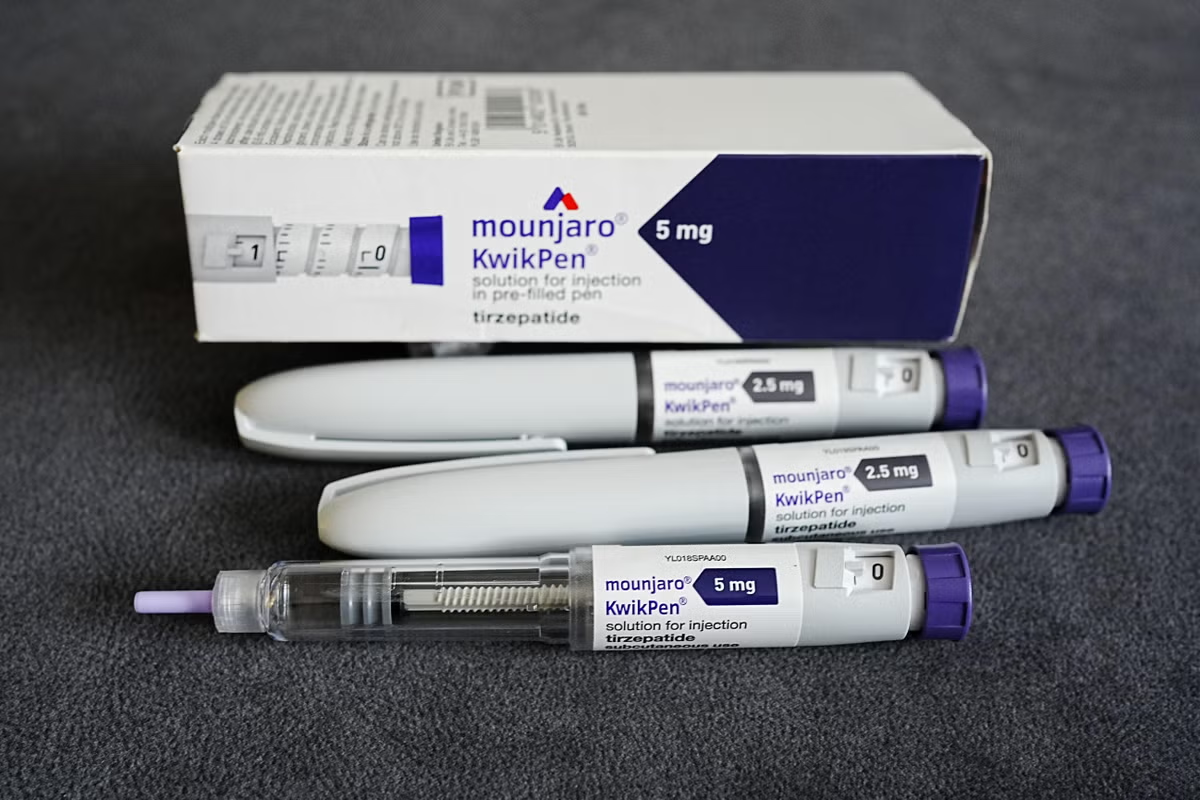
The posts used discount codes and referral links to advertise the injections, including Mounjaro, for the online pharmacies Voy, Zava, MedExpress and the online prescribing service UK Meds Direct, the Advertising Standards Authority (ASA) said.
Weight-loss injections are a prescription-only medicine and therefore cannot be advertised to the public.
Affiliate or referral schemes typically allow individuals to share links or discount codes and give them a reward or other benefit if someone else uses them.
The ASA warned that, in practice, this could mean members of the public promoting prescription-only medicines to friends, family, followers and the public, sometimes without realising that their posts may be ads or that strict rules apply to them.
The regulator said its rulings made clear that both brands and individuals are responsible for sticking to advertising rules, and that posts that include affiliate or referral schemes can still count as ads, even if they appear on personal social media accounts.
The banned posts promoted the medicines by naming them directly, using related hashtags, showing images of injection pens or encouraging followers to start their own weight-loss ‘journey’, alongside offering discounts or incentives.
The ASA ruled that they were advertising prescription-only medicines because they were public posts.
It also found that although the companies had not directly asked for the posts to be made, they did control how their affiliate and referral schemes worked.
This meant they were also responsible for making sure the advertising rules were followed.
The ASA warned that weight-loss prescription drugs were powerful medicines that should be used only under the supervision of a qualified medical professional, adding: “Promoting them irresponsibly and illegally can put people at serious risk, which is why this is a priority area for us.”
Catherine Drewett, investigations manager at the ASA, said: “Today’s rulings send a clear message that affiliate marketing is not a loophole and that promoting prescription medicines through social media, whether as a brand, influencer or customer, is against the law and our rules.
“We’ll continue take swift action in this area to make sure the rules are followed and that people are protected from harmful and irresponsible ads.”
A spokeswoman for Voy said: “The posts referenced in the ruling were made independently by customers of our service back in 2024 as part of a referral scheme for our weight-loss programme.
“These posts were first brought to our attention in June 2025, and since we have strengthened our controls around referral activity and influencer engagement. Clinical decisions — including whether medication is suitable — are always made privately between patients and qualified clinicians, and no influencers or referrers play any role in diagnosis, prescribing or medical advice.”
Zava said: “We are committed to being a responsible and compliant healthcare organisation that follows regulation and guidance from the ASA.
“While we were disappointed by the ruling, we note that we had no commercial or affiliate relationship with the social media users who created the posts in question, and as a business we do not have oversight or control over content shared independently by members of the public on their own social media channels.”
Julian Beach, interim executive director of healthcare quality and access at the Medicines and Healthcare products Regulatory Agency (MHRA), said: “We welcome today’s rulings from the ASA. Prescription-only weight-loss medicines carry real risks and must only be prescribed following a proper clinical assessment.
“The promotion of these medicines through affiliate schemes and social media circumvents important safeguards that exist to protect patients.
“We will continue to work closely with the ASA and General Pharmaceutical Council (GPhC) to take action against those who break the rules and put people’s health at risk.”
Dionne Spence, chief enforcement officer at the GPhC, said: “These rulings from the ASA send a clear message that online providers are responsible for making sure that advertising rules are followed, including when working with individuals through affiliate or referral schemes.
“We welcome the action taken by the ASA and we have taken action to follow up with the pharmacies registered with us.”
Ariana Grande shares hilarious idea for her biopic
Ariana Grande has made it clear that if a film about her life ever happens, it won’t be anything like a traditional Hollywood biopic.
Speaking to Backstage in a light-hearted video interview shared on Instagram on 9 February, the Wicked star admitted she isn’t keen on the idea of a standard retelling of her life story.
In fact, she joked that such a project should be titled Scrap This and Don’t Watch It.”
Still, she couldn’t resist pitching one very specific, tongue-in-cheek concept.
“A tiny mouse with subtitles the whole time,” Ariana joked when asked who should play her. “I would like that, actually.”
She went on to explain that the only version she’d consider would be “a tiny, beautiful short film with mice reenacting my whole life with little, tiny subtitles at the bottom,” adding that it’s the only approach she finds appealing.
While the 32-year-old singer and actress is clearly not rushing towards a biopic, she has been reflecting having officially said goodbye to Wicked and her role as Glinda.
She told Backstage that it feels right to place the experience “in a beautiful book on the shelf next to the other L. Frank Baum books that I collect,” saying it’s time to “turn the page and to thankfully and proudly, gratefully let go.”
The role marked a return to acting for Grande after a long break.
Now, with Oz behind her, Grande says she’s still processing everything she’s achieved.
Despite the effort and preparation she put in, the moment still feels surreal. “I know I did the work so that they could,” she said, “but I still feel as curious and inspired as…the first day I got here.”
For now, any on-screen version of Ariana Grande’s life appears safely confined to her imagination — preferably starring a mouse, complete with subtitles.
Duke coach Jon Scheyer said Monday that a team staffer injured during a court-storming after a last-second loss at rival North Carolina is OK but had a bloody lip and was caught up under fans.
“After the game, what happened was I came back in the locker room and I see he’s got a bloody lip and he’s disheveled, and he didn’t know what happened. He got trampled on the floor,” Scheyer said during the Atlantic Coast Conference’s coaches media call. “That was my main concern after the game.
“He’s doing better. He’s fine, ready to move on.”
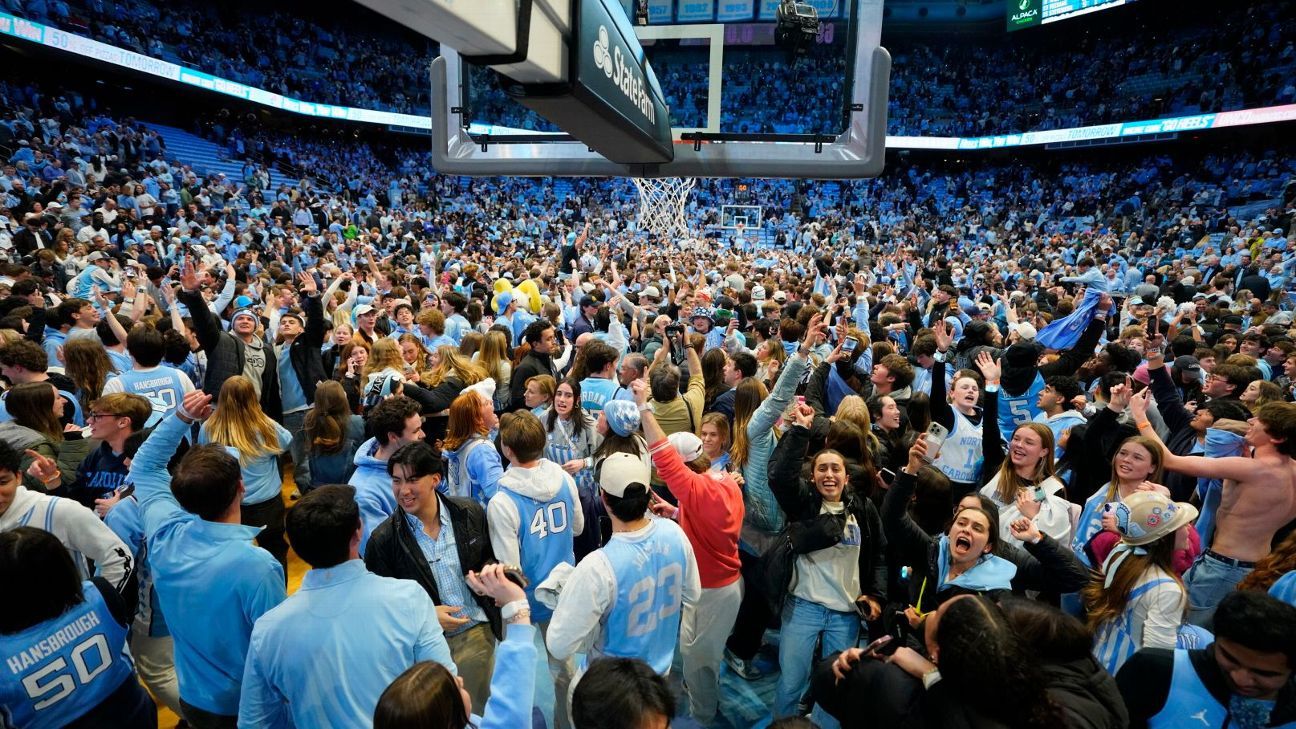
The fourth-ranked Blue Devils lost 71-68 to the now-No. 11 Tar Heels on Seth Trimble‘s 3-pointer with 0.4 seconds left Saturday night. Fans rushed the Smith Center court, thinking time had expired, before an official review determined time needed to be added.
Security staffers cleared the court for a final play, then fans stormed again when time expired.
Afterward, Scheyer said staff members were “punched in the face” amid the chaotic moments, which included video of at least one fan throwing what appeared to be a bottle at the Blue Devils. A Duke spokesperson later said one person was injured, but didn’t release additional details, citing privacy concerns.
Scheyer clarified Monday that only one person was struck.
“One of our guys, he got hit in the face, got trampled,” Scheyer said. “Looked like he had been in a complete brawl after the game. He’s doing better now, but that should never happen.”
Tar Heels coach Hubert Davis said Monday that he has spoken with Scheyer but didn’t elaborate further. North Carolina athletic director Bubba Cunningham spoke to reporters Saturday night, apologizing to Scheyer and referencing one injury.
The ACC, which in July announced a fine structure for schools when fans rush fields or courts, fined UNC $50,000 on Sunday.
“We accept the ACC’s fine for having unauthorized people on the court before Duke and the officials could completely clear the floor on Saturday,” UNC said in a statement. “The video we have reviewed confirms we followed our protocols to get Duke’s players and bench personnel and the game officials off the floor safely.
“We will continue to review our protocols to provide the highest measures of safety in the event fans rush the court. We consider this matter closed and look forward to the rest of the season.”
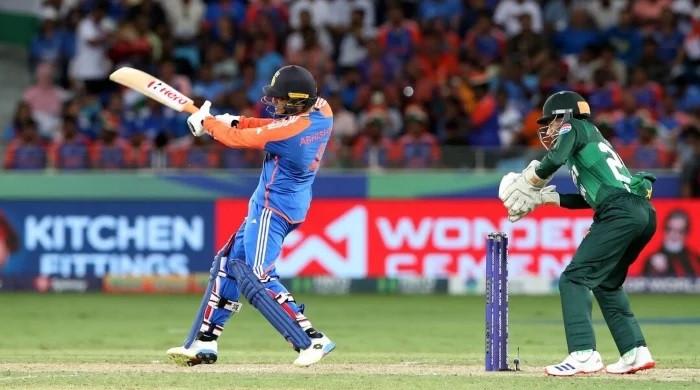
Pakistan’s Mohammad Haris and India’s Abhishek Sharma in action during the Asia Cup Group Stage clash at the Dubai International Cricket Stadium, Dubai, United Arab Emirates, September 14, 2025. — Reuters
India on Tuesday said facing a “quality” Pakistan side in Colombo will be “a challenge,” after authorities in Islamabad instructed the national team to play the scheduled ICC Men’s T20 World Cup match on February 15.
The federal government late Monday ended a week-long stand-off by rescinding its order for the cricket team to boycott the clash.
“It’s great that the game is back on, we kind of never changed the preparation,” said India assistant coach Ryan ten Doeschate.
India will face a second Group A match against Namibia on Thursday in New Delhi before flying to Sri Lanka.
It means a quick turnaround for Sunday’s match, the biggest and most lucrative clash in world cricket.
“It’s going to be a challenge going to Colombo, where Pakistan have been for the last two weeks,” added Ten Doeschate.
“We are delighted to have another chance to play against a quality side in the first phase of the tournament. “We are fully focused on just bringing our best game to that fixture.”
Pakistan warmed up for the clash in perfect fashion with a second win of the tournament in Colombo on Tuesday, by 32 runs against the USA.
Opener Sahibzada Farhan, who top scored with 73, said: “The match is on and we are in a confident mood.”
The last time the teams met, at last year’s T20 Asian Cup, India beat Pakistan three times on their way to lifting the trophy in Dubai.
“This time it will be different, and we will give a strong performance,” said Farhan. “We lost all three matches, including the final to India in the Asia Cup, but they were not one-sided.”
Pakistan’s decision to go ahead with the match was hailed on Tuesday as an outbreak of “good sense” and “good for cricket”.
A frantic weekend of negotiations saw International Cricket Council (ICC) and Bangladesh Cricket Board (BCB) chiefs fly to Lahore on Sunday for talks with the Pakistan Cricket Board (PCB).
The governments of Bangladesh and Sri Lanka both wrote to the Islamabad government on Monday, urging it to change its stance and allow the game to go ahead.
‘Spirit of cricket’
After “multilateral discussions, as well as the request of friendly countries, the Government of Pakistan hereby directs the Pakistan National Cricket Team to take the field on February 15”, the Islamabad government said on its official X account late Monday night.
The decision had been taken with the aim of “protecting the spirit of cricket”, it added.
Former India cricketer Madan Lal told AFP on Tuesday that it was “good for cricket”. “We want strong teams to play so that the charm of the World Cup is not lost,” he added.
Sri Lanka, who will host the match, which generates multi-millions of dollars in advertising, broadcast rights, sponsorship and tourism, also praised the decision.
Sri Lankan President Anura Kumara Dissanayake, in a social media post, thanked Pakistan’s Prime Minister Shehbaz Sharif for “ensuring the game we all love goes on”.
Veteran Indian journalist Pradeep Magazine told AFP, “good sense has prevailed on all sides”. Financial considerations would have been taken into account, he added.
“Everyone realised that losing the revenue from an India-Pakistan match would have been a loss-loss situation for all ICC member nations.”
Acrimonious build-up
The 20-team tournament has been overshadowed by an acrimonious political build-up. Bangladesh, who refused to play in India citing security concerns, were replaced by Scotland.
As a protest, Islamabad ordered the national team not to face co-hosts India in the Group A fixture.
Pakistan, who edged out the Netherlands in the tournament opener on Saturday, would have conceded two points if they had forfeited the match.
Pakistan will play all their T20 World Cup matches in Sri Lanka as part of an ICC deal that ensures the two nations only meet on neutral territory.
India captain Suryakumar Yadav said on Friday, before their opening win against the USA, that his team would travel to Colombo for the clash, whether the game was on or not.
“We haven’t said no to playing them,” Suryakumar said. “Our flights are booked, and we are going to Colombo.”
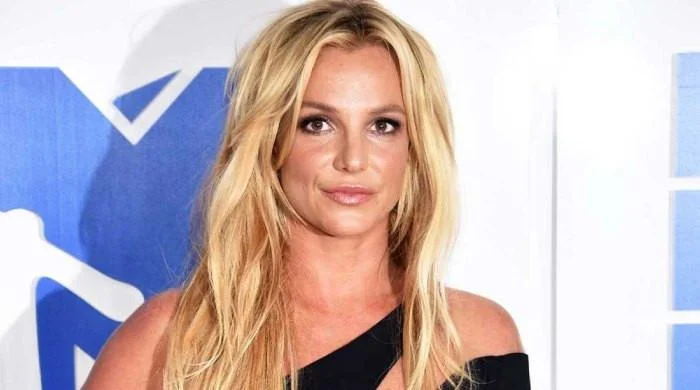
Britney Spears no longer owns her music catalogue after selling the rights to Primary Wave, marking another major moment in the pop star’s long and closely watched career.
The deal, first reported by TMZ and later confirmed by multiple outlets, sees Primary Wave acquire Spears’ ownership share of her catalogue, which includes many of the songs that defined late-1990s and 2000s pop.
While the exact terms have not been disclosed and remain under strict non-disclosure agreements, sources familiar with the agreement estimate the price to be in the low nine figures, placing it in a similar range to Justin Bieber’s reported $200 million catalogue sale in 2023.
The agreement was reportedly signed on December 30.
Representatives for both Spears and Primary Wave have declined to comment publicly on the transaction.
Among the songs now controlled by Primary Wave are global hits such as …Baby One More Time, Oops!… I Did It Again, (You Drive Me) Crazy, Lucky, Toxic, Stronger, Womanizer, Gimme More, Circus, I’m a Slave 4 U, Overprotected, Piece of Me, Till the World Ends and Everytime, along with dozens of other tracks spanning her career.
Spears holds songwriting credits on nearly 40 songs in her catalogue, including fan favourites like Everytime, Work Bitch! and Me Against the Music, although many of her biggest singles were written by collaborators.
Primary Wave is an independent music publisher and rights management company whose catalogue already includes major names such as Bob Marley, Prince, Whitney Houston, Stevie Nicks, Ray Charles, Aerosmith, Def Leppard, Olivia Newton-John, Smokey Robinson and Boy George, among many others.
The company also runs a talent management arm representing artists including Melissa Etheridge, Cypress Hill and Fantasia.
While details remain limited, industry sources suggest the deal likely includes Spears’ artist royalties and publishing interests, though it is considered highly unlikely that her name and likeness rights were part of the sale.
Such rights would typically command a significantly higher valuation than what has been reported.
The sale places Spears among a growing list of high-profile artists who have cashed in on their catalogues in recent years, including Bruce Springsteen, Bob Dylan, Shakira, Neil Young and KISS.
For rights holders like Primary Wave, such acquisitions offer long-term opportunities across film, television, advertising and stage productions.
Those possibilities already exist for Spears’ music.
A biopic based on her bestselling memoir, The Woman in Me, is currently in development at Universal Pictures, following the book’s release in 2023.
Her songs have also been adapted for the Broadway jukebox musical Once Upon a One More Time, which premiered the same year.
Spears has largely stepped away from the music industry in recent years.
She has not released a studio album since 2016’s Glory and last performed live in October 2018, closing out her Piece of Me tour at the Formula One Grand Prix in Austin, Texas.
Plans for a second Las Vegas residency, titled Domination, were cancelled in 2019, and she has not returned to the stage since.
After being released from her 13-year conservatorship in 2021, Spears has maintained a relatively low public profile, though she remains active on social media.
With the catalogue sale now complete, ownership of one of pop music’s most recognisable bodies of work has formally passed into new hands, even as Spears herself continues to define her relationship with fame, music and life on her own terms.
A researcher works in the lab at the Moderna Inc. headquarters in Cambridge, Massachusetts, US, on Tuesday, March 26, 2024.
Adam Glanzman | Bloomberg | Getty Images
The Food and Drug Administration has refused to start a review of Moderna‘s application for its experimental flu shot, the company announced Tuesday, in another sign of the Trump administration’s influence on tightening vaccine regulations in the U.S.
The company’s stock fell roughly 7% in after-hours trading Tuesday.
Moderna said the move is inconsistent with previous feedback from the agency from before it submitted the application and started phase three trials on the shot, called mRNA-1010. The drugmaker said it has requested a meeting with the FDA to “understand the path forward.”
Moderna noted that the agency did not identify any specific safety or efficacy issues with the vaccine, but instead objected to the study design, despite previously approving it. The company added that the move won’t impact its 2026 financial guidance.
Moderna’s jab showed positive phase three data last year, meeting all of the trial goals. At the time, Moderna said the stand-alone flu shot was key to its efforts to advance a combination vaccine targeting both influenza and Covid-19.
The announcement follows sweeping changes to U.S. immunization policy over the past year under Health and Human Services Secretary Robert F. Kennedy Jr., a prominent vaccine skeptic.
Moderna on Tuesday specifically pointed to the FDA’s top vaccine regulator, Vinay Prasad, who returned to the agency in August after being ousted. Prasad, who heads the agency’s Center for Biologics Evaluation and Research, or CBER, has been vocal about tightening regulations for vaccines and recently linked child deaths to Covid shots.
In a letter signed by Prasad on Feb. 3, he said the sole reason why the FDA refused to review the application was because of how the clinical trial on the shot was designed.
The agency specifically took issue with Moderna’s decision to compare its product to a standard, approved flu shot, arguing that it “does not reflect the best-available standard of care.” As a result, the FDA said the study did not meet its definition of an “adequate and well-controlled” trial.
Moderna disputes that reasoning, noting that FDA rules and guidance do not actually require trials to use the most advanced or highest-dose vaccine as a comparator in clinical studies.
“This decision by CBER, which did not identify any safety or efficacy concerns with our product, does not further our shared goal of enhancing America’s leadership in developing innovative medicines,” Moderna CEO Stéphane Bancel said in a release. “It should not be controversial to conduct a comprehensive review of a flu vaccine submission that uses an FDA-approved vaccine as a comparator in a study that was discussed and agreed on with CBER prior to starting.”
Moderna said it expects the earliest approval for its flu shot to be in late 2026 or late 2027, pending regulatory reviews in the U.S., Europe, Canada and Australia.
The FDA said it does not comment on regulatory communications to individual sponsors.
2026 Ford Mustang Dark Horse SC on display during the Media Preview of the 2026 Chicago Auto Show at McCormick Place on February 6, 2026, in Chicago, Illinois.
Jacek Boczarski | Anadolu | Getty Images
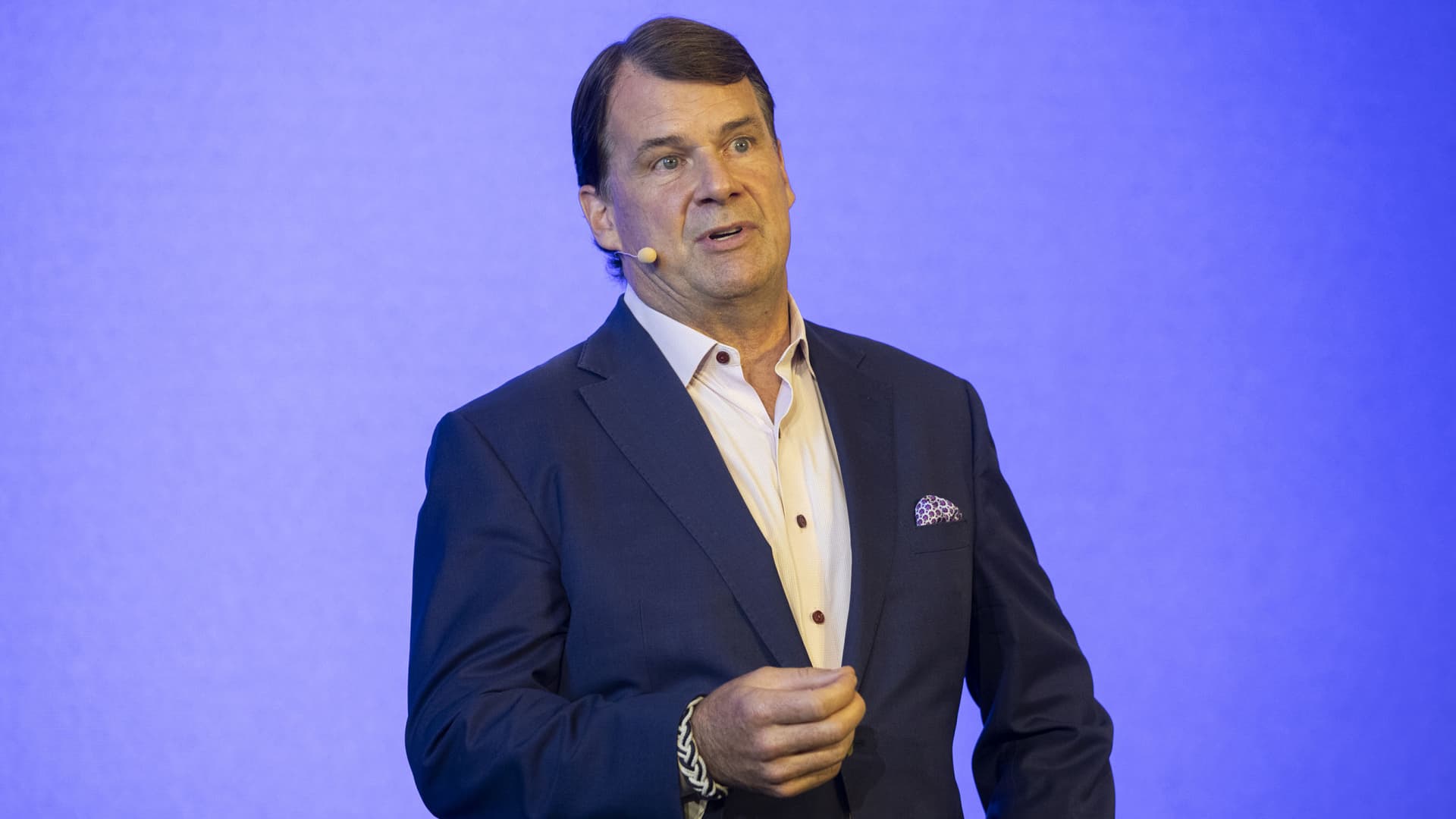
DETROIT – Ford Motor reported its largest quarterly earnings miss in four years in its fourth-quarter results released Tuesday, while guiding for 2026 to be a rebound year for the automaker.
Ford’s 2026 guidance includes adjusted EBIT of between $8 billion and $10 billion, up from $6.8 billion last year; adjusted free cash flow of between $5 billion and $6 billion, up from $3.5 billion in 2025; and capital expenditures of $9.5 billion to $10.5 billion, up from $8.8 billion.
Here’s how the company performed in the fourth quarter compared with average estimates compiled by LSEG:
Earnings per share: 13 cents adjusted vs. 19 cents expected
Automotive revenue: $42.4 billion vs. $41.83 billion expected
The EPS coming in 32% below consensus was the company’s first quarterly miss since 2024 and its worst since a 42% difference when reporting its 2021 fourth-quarter results, according to LSEG.
The earnings miss was largely due to unexpected tariff costs of roughly $900 million related to credits for auto parts not taking effect as early as expected, the company said. Ford, as of Dec. 15, had confirmed $7.7 billion in earnings before interest and taxes for the fourth quarter, but the additional costs dropped that to $6.8 billion.
Ford CFO Sherry House said the lower-than-expected earnings were also related to additional impacts from fires at a Novelis aluminum supplier plant last year in New York, which now isn’t expected to be fully operational until the middle of this year. The plant supplies Ford’s lucrative F-Series pickup trucks.
“We will see a billion-dollar benefit roughly in 2026; however, this year, due to the Novelis impact, we’re going to have tariffs increasing in order to secure aluminum that is roughly the same amount of that savings,” House told reporters.
Ford’s net tariff impact is expected to be roughly flat year-over-year at $2 billion in 2026, she said. The Novelis fire had an impact of $2 billion during the second half of the year for Ford, she added.
House and Ford CEO Jim Farley said the company’s 2025 results continue to demonstrate the company’s underlying business is improving despite the special items impacting results.
The company’s 2025 revenue was a record $187.3 billion, up 1% from $185 billion a year earlier. That includes $45.9 billion during the fourth quarter, down 5% from a year before.
On a business unit level, the automaker’s traditional and fleet operations are expected to offset an expected $4 billion to $4.5 billion in losses this year for its “Model e” electric vehicle unit. Pre-tax earnings from its “Ford Pro” fleet business are expected to be between $6.5 billion to $7.5 billion, followed by $4 billion to $4.5 billion for its traditional “Blue” business.
On an unadjusted basis, the company’s net loss of $8.2 billion last year was its largest since the Great Recession in 2008, according to FactSet. That included $15.5 billion in special charges during the fourth quarter largely related to a pre-announced pullback in its all-electric vehicle plans.
Automakers commonly exclude “special items” or one-time charges from their adjusted financial results to provide investors with a clearer picture of their core, ongoing business operations.
Ford reported a fourth-quarter net loss of $11.1 billion, or a loss of $2.77 per share, compared with net income of $1.8 billion, or 45 cents per share, in the same period in 2024. Adjusted for the one-time charges, the company reported earnings of 13 cents per share.
‘Harry Potter’ series star Lox Pratt ‘won’t spoil’ Draco Malfoy ‘too much’
Slytherin fans can expect a deeper look at Draco Malfoy in HBO’s upcoming Harry Potter series, with the character set to get far more attention than in previous adaptations.
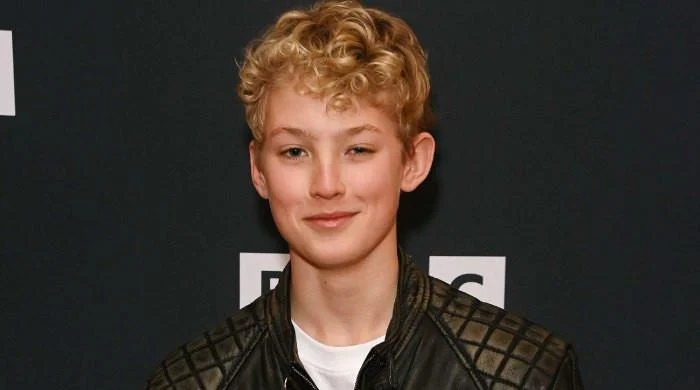
That promise comes directly from Lox Pratt, the 14-year-old actor stepping into the role, who says viewers will see sides of Draco that were never fully explored on screen before.
As filming continues, Pratt explained that the new series allows the story to move beyond Harry Potter’s point of view.
Speaking to 1883 Magazine in an interview published on Feb. 6, he explained that the new adaptation allows viewers to experience far more of the story than the books did, noting that the novels largely follow events from Harry’s point of view.
While that approach also shaped the films and worked well, he said the showrunners, Francesca Gardiner and Mark Mylod, have been clear in interviews that the series opens up the world much more, giving audiences a broader perspective on what’s happening beyond Harry’s immediate experience.
One of the biggest changes, according to Pratt, is the added focus on Draco’s home life and upbringing.
While Tom Felton’s portrayal in the films made Draco a memorable antagonist, Pratt believes the character often came across as one-dimensional on screen.
“You get to see Draco at home. I won’t spoil too much about that, but there are some brilliant scenes at home where you start to get an insight into how he is,” he said.
“Because in the films, Draco is sort of 2D; he is the sneery villain. I feel like there’s so much more—you need to understand why.”
The series will also dig further into Draco’s relationship with his father, Lucius Malfoy, helping explain how and why he grows into one of the story’s key antagonists.
Pratt said he is thankful for the chance to explore those layers more freely.
“You see little glints of it in the film with Lucius and stuff. I think [the series] is really brilliant. I can’t wait to bring it to the screen,” he added.
HBO first announced the television adaptation of J.K. Rowling’s Harry Potter books in April 2023. Alongside Pratt, the cast includes Dominic McLaughlin as Harry Potter, Arabella Stanton as Hermione Granger and Alastair Stout as Ron Weasley.
The series also brings a major name into the wizarding world, with seven-time Emmy winner John Lithgow cast as Albus Dumbledore.
With its expanded format and fresh cast, the HBO series is shaping up to revisit familiar characters from new angles.
For Draco Malfoy, that means more than just sneers and schoolyard rivalry, offering fans a closer look at what made him who he is, without, as Pratt promises, spoiling too much.
Based in Liverpool, Beth Lindop is ESPN’s Liverpool correspondent and also covers the WSL and UWCL.
Multiple Authors
For 10 second-half minutes at Anfield, it was almost as if no time had passed at all. As the home supporters cheered and swirled their scarves in the air in homage to Dominik Szoboszlai‘s sublime free kick against Manchester City, it was like the Liverpool of last season had returned, intent on reminding the watching world of their status as Premier League champions.
By the time the full-time whistle blew, however, the only celebrations were coming from the away end as the travelling City fans revelled in their team’s first league double over Liverpool since 1937, courtesy of late goals from Bernardo Silva and Erling Haaland. It was a sight much more in keeping with the story of the Reds’ sorry campaign.
Liverpool’s 2-1 defeat to Pep Guardiola’s side was their eighth loss of the season in the top flight. They have now won just six of their last 20 league matches and face an uphill battle to qualify for next season’s UEFA Champions League, with five points separating them from fourth-placed Manchester United.
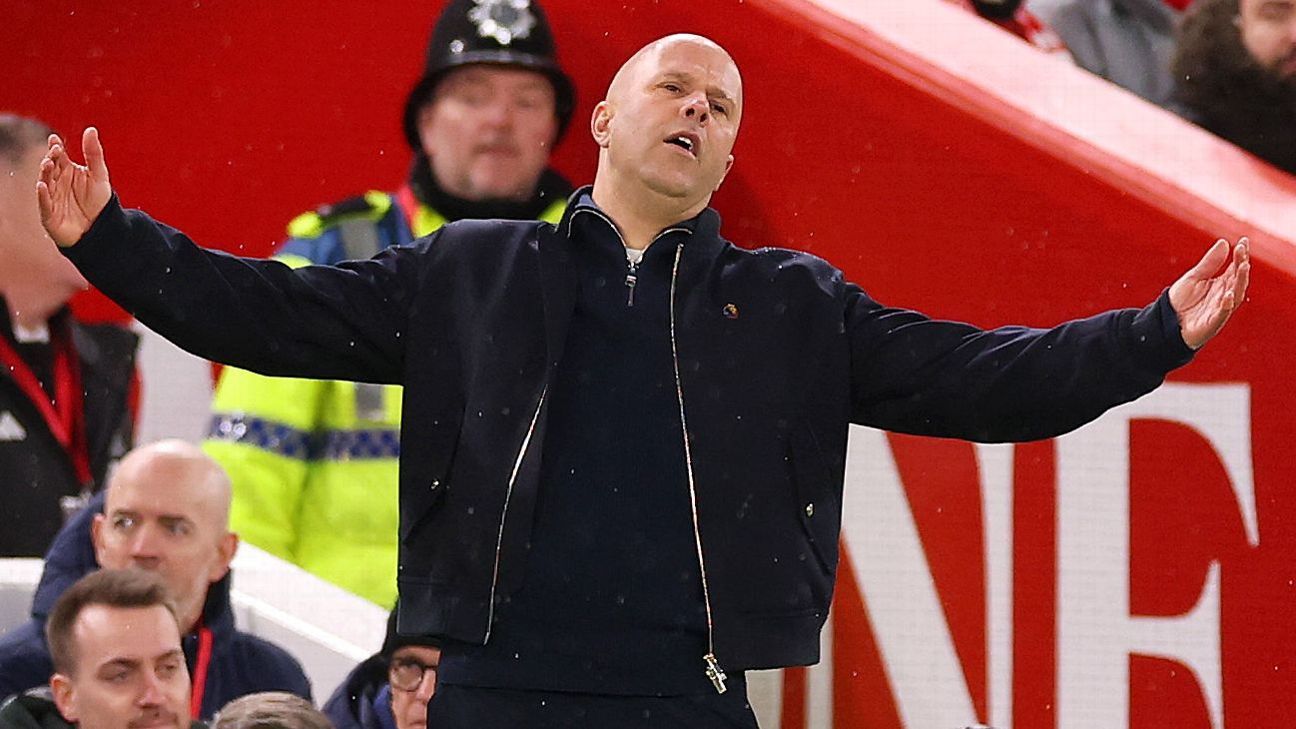
There are mitigating factors behind that dismal form but, for head coach Arne Slot, there can be no escaping the fact that the numbers do not make for pleasant reading. Perhaps the biggest worry for the Dutchman, though, is that the culture of unerring conviction and fealty cultivated by his predecessor Jürgen Klopp is now under serious threat.
Following his appointment in 2015, Klopp recognized the disillusionment within the Liverpool fanbase and called for supporters to change from “doubters to believers.” At times this season, it has felt as though those reserves of belief — both on the pitch and in the stands — have emptied.
Arguably Slot’s toughest challenge now is getting fans back onside. But is it already too late for him to turn the tide?
Alarming drop-off puts Champions League hopes in danger
When Liverpool beat Merseyside rivals Everton back in September, they made it five wins from five in the Premier League. At that point, off the back of a record-breaking summer spending spree, the champions were billed as the overwhelming favorites to defend their crown, even if their habit of winning games late prompted questions about the sustainability of their success.
Those queries have ultimately been proved prophetic, with Liverpool now closer to the relegation zone (16 points) than they are to league leaders Arsenal (17 points). For a team that won the title by a 10-point margin last term, it has been an alarming drop-off.
Over the past 20 games, Slot’s side have picked up fewer points than 11 Premier League teams, including Fulham, Brighton & Hove Albion and Everton. In the same timeframe, they have earned just three points more than Nottingham Forest and four more than West Ham United — both of whom are at serious risk of relegation.
Sunday’s late collapse against City means Liverpool have dropped eight points in stoppage time this season; the most by any team in the league. That propensity for finishing games poorly would perhaps not be so costly if the Reds were fast starters, but they have scored just three goals inside the first half-hour of league games all season, with two of those coming in the same match (the 2-1 win over Everton in September).
play
1:27
Leboeuf backs VAR decision after ‘clear mistake’ from Szoboszlai
Frank Leboeuf and Craig Burley believe VAR made the right call to disallow Manchester City’s goal and award Liverpool’s Dominik Szoboszlai a red card in their dramatic Premier League clash.
It was the same story against City, who dominated the first half before Liverpool came to life after the break and deservedly took the lead through Szoboszlai in the 74th minute. When Silva equalized 10 minutes later, though, the sense of deflation inside Anfield was palpable and, when goalkeeper Alisson Becker needlessly brought down Matheus Nunes to hand City a penalty in stoppage time, some fans had already started heading for the exits.
In many ways, the game served as a microcosm of Liverpool’s season. Individual errors, insufficient squad depth and controversial officiating — City’s Marc Guéhi escaped a red card for a last-man challenge on Mohamed Salah before Szoboszlai was dismissed for pulling back Haaland when clean through on goal — all played a part.
But while some of those factors were beyond Slot’s control, he is at least partly culpable for Liverpool’s inability to sustain and exert their dominance, both in individual games and across the season as a whole.
Lack of depth hurting Liverpool despite summer spending spree
One of Liverpool’s most profound issues this season was magnified even before a ball was kicked against City. When the team sheets were circulated at Anfield, the disparity in the quality of the two benches was glaring, with Curtis Jones and Andy Robertson the only Liverpool substitutes to have started four or more league games this season.
Considering Liverpool spent close to £450 million in the summer, their squad does not look equipped for the rigors of a Premier League season. However, it should also be noted that the Reds’ recruitment drive was partly financed by player exits, with the club having recouped a guaranteed £258.5 million (rising to £294.5 million with add-ons) during Slot’s tenure.
As a result, Liverpool’s squad depth is arguably weaker than it was last season, with star men Hugo Ekitike and Florian Wirtz among those struggling to maintain the required intensity for a full 90 minutes.
Those struggles have been compounded by a host of serious injuries to key players, including striker Alexander Isak, who himself accounts for £125 million of Liverpool’s extensive summer outlay. At the other end of the pitch, Giovanni Leoni and Conor Bradley are both out for the season with knee injuries, while Joe Gomez and Jeremie Frimpong are also sidelined.
With so few options, the decision not to furnish Slot with any January signings seems illogical, particularly when established players such as Salah, Cody Gakpo and Alexis Mac Allister are failing to replicate last season’s scintillating form.
For all of Liverpool’s physical deficiencies this term, it is also clear that psychological frailties haven’t helped their cause. It is disingenuous to assess the current state of play at Anfield without acknowledging the tragedy Slot and his players are having to navigate.
The impact of the death of Diogo Jota last summer is unquantifiable, and it should certainly not be used as a blanket excuse for all of Liverpool’s troubles. That said, comments from vice-captain Robertson after Scotland‘s World Cup qualification in November were reflective of the emotional turmoil Slot’s squad have had to endure in recent months, while former Liverpool goalkeeper Caoimhín Kelleher spoke candidly last week about some of the challenges his old teammates are continuing to face.
“I find it a bit strange and a bit difficult when I hear people speaking about the players at Liverpool and the performances, because I don’t think this season is even important from a football aspect for them,” Kelleher. who joined Brentford in the summer, told The Independent. “It’s a very difficult time for them, a difficult season, with circumstances that people probably aren’t taking into account too much.”
Still, football at the elite level is a ruthless beast, with patience and sympathy often in short supply. For all of the extenuating circumstances, Slot will know it is what he does next — not what he has done before — that will determine his standing in the eyes of some supporters.
Slot haunted by ghosts of managers past and future
When managers find themselves under pressure, talk often turns to them having lost the dressing room. But losing the backing of the fanbase can be equally as damaging when it comes to a coach’s long-term job security.
After the defeat to City, a number of supporters did stay behind to applaud Slot and his players as they left the pitch, and the Dutchman is yet to be subjected to the same level of in-person animosity directed at, for example, Tottenham Hotspur boss Thomas Frank, who is also enduring a turbulent campaign in North London.
Twice at Anfield this season — following the 4-1 defeat to PSV Eindhoven and the 1-1 draw with Burnley — a minority of fans have booed at the final whistle, but the levels of discontent inside the stadium are yet to match the groundswell of hostility aimed at Slot on social media.
In December, a BBC Sport investigation showed that Slot — alongside then-Manchester United boss Ruben Amorim — was the most common target of online abuse in the men’s top flight. That level of vitriol has only intensified in recent weeks. Sources have told ESPN the feeling inside Anfield is that some of the criticism directed at the manager has been personal and unfair.
Slot remains a title-winning coach and has retained the support of the Liverpool hierarchy, even if the Champions League humbling at the hands of PSV in November did ring some alarm bells internally. The decision last week to publish an in-house roundtable featuring Slot in conversation with sporting director Richard Hughes and CEO Billy Hogan has been interpreted in some quarters as a public endorsement of the Dutchman, while Liverpool under owners Fenway Sports Group (FSG) have rarely been trigger-happy when it comes to making big decisions about the club’s future.
Even so, there can be no denying that faith within the fanbase is wavering, with many of Liverpool’s performances this season having done little to quell the growing sense of apathy in the stands.
Klopp’s superpower during his nine years on Merseyside was his ability to harness the atmosphere of Anfield to bend games to his team’s will. That Liverpool have already lost five games at home this season suggests that the buy-in from supporters is perhaps not quite as emphatic nor as unconditional as it was under Slot’s predecessor.
Indeed, Klopp’s untouchable status continues to pose further problems for Slot, whose more reserved, straight-talking character has been difficult for some fans to reconcile with. Add to the fact that former Liverpool midfielder Xabi Alonso is now available following his departure from Real Madrid and it is hard not to feel as if Slot is being haunted by the ghosts of managers both past and future.
“That is what you have to accept if you are a manager that is not winning enough games,” the Liverpool boss said last month when asked about fan criticism. “Even if you have won something there is still room for criticism, which to a certain extent is normal because we are in a new season and I was the first to say to the players, ‘We have to forget last season.’
“I think it is fair to judge me on this season and not on last season.”
For Slot, the weight of that judgment seems to be growing heavier by the week. If he is unable to quickly restore belief at Anfield, the burden could soon be too weighty to shrug off.