Home Blog Page 2601

Novo Nordisk faces a defining year in the obesity drug market. It’s off to a dramatic start

0
Novo Nordisk faces a defining year in the obesity drug market. It’s off to a dramatic start

Maziar Mike Doustdar, CEO of Novo Nordisk, speaks in the Oval Office during an event about weight-loss drugs at the White House in Washington, DC on November 6, 2025.

Andrew Caballero-Reynolds | Afp | Getty Images

Novo Nordisk entered 2026 with the momentum of a historic year in more ways than one – but recent weeks have delivered more drama than most companies might expect over a decade.

The Danish drugmaker kicked off the year with the explosive launch of the first-ever GLP-1 pill for obesity. Its recent challenges have centered around protecting its market share in the blockbuster weight loss drug market, all while its stock price swings wildly.

This week, Novo sued upstart telehealth provider Hims & Hers for alleged patent infringement and received its own warning from the U.S. Food and Drug Administration for what the agency says is misleading claims in advertising. That all followed a 2026 outlook that disappointed investors and stood in stark contrast to its chief rival, Eli Lilly

While Lilly guided to 2026 sales growth of 25%, Novo forecast that sales and profits could decline as much as 13% this year

“Enough has occurred in the past week to occupy a few volumes,” said Deutsche Bank analyst Emmanuel Papadakis on Tuesday, as he — like many of his Wall Street peers — lowered his price target on the stock following the gloomy outlook.

The rapid news flow has given investors whiplash. So far in February, U.S.-listed Novo shares have traded across a spread ranging from $43.24 to $64.16, shedding as much as 14% in a single day only to gain 10% back in a later session. 

Stock Chart IconStock chart icon

Novo Nordisk U.S.-listed shares over the last month.

The latest developments add to a thorny situation for Novo as it risks being edged out by Lilly and the growing number of people taking cheaper compounded versions of semaglutide, which are unapproved copycats of Novo’s Wegovy jab.

CEO Mike Doustdar, who took the reins in August after the former CEO was ousted over misjudging the U.S. market and challenges there, has a plan to steer the company through what’s been described as a “show me” year. 

His agenda is extensive: cracking down on those compounded knock-offs, sustaining strong demand for its newly launched obesity pill, building prescription volumes in the U.S. and bringing new, next-generation obesity and diabetes treatments to market.  

In an interview with CNBC on Wednesday, Doustdar acknowledged the challenges ahead but said 2026 “is also a year of growth in many ways.” 

“We will have more patients this year than ever before, we will produce more than last year and years before that,” he said. 

Novo Nordisk CEO on Medicare coverage, new obesity pill, U.S. pricing pressure

Doustdar said around 246,000 patients are currently on the company’s Wegovy pill, which launched at the beginning of January and is already outpacing the early rollouts of existing GLP-1 injections.

“This, of course, tells me that while the investors are feeling a bit of a headwind on the pricing side and the whole business as you’re alluding to, they are hopefully getting convinced that over a period of time that would wash out and that growth will come,” Doustdar said. 

The compounding issue

Novo has repeatedly cited compounding pharmacies as a key reason for its slowing sales growth. The company estimates 1.5 million Americans are currently taking the copycat weight loss drugs offered by Hims & Hers, as well as some wellness clinics and compounding pharmacies. 

Telehealth firms like Hims have profited massively from selling so-called compounded versions of injectable semaglutide under a regulatory loophole that allows other companies to sell copycats of the drugs if the branded medicines are in short supply. While branded semaglutide injections are no longer in short supply after a notable demand spike, the companies have continued to mass market cheaper versions directly to consumers, raising legal questions. 

“We understand why compounding, mass compounding, got started. It was on the back of a shortage. We really don’t understand why it continued,” Doustdar told CNBC on Wednesday, noting that Novo’s opposition has nothing to do with medically necessary compounding for individual cases. 

Hims last week announced plans to sell a compounded version of Novo’s newly launched Wegovy pill for roughly $100 less than Novo sells the branded version for, though it quickly backed down after Novo said it would sue over patent infringement and the FDA announced a broader crackdown on compounding. The agency also said it had referred Hims to the Department of Justice over potential violations. 

The Hers website arranged on a laptop in New York, US, on Wednesday, Feb. 12, 2025.

Gabby Jones | Bloomberg | Getty Images

Novo moved to sue Hims on Monday over compounded versions of both injectable and oral semaglutide, adding to more than 130 lawsuits the drugmaker has filed against pharmacies, wellness clinics and other firms unlawfully marketing those copycats. 

“The news last Thursday about the pill… was seen as kind of the last straw for many people,” Rothschild & Co Redburn analyst Simon Baker told CNBC. 

From the point of view of U.S. regulators, removing cheaper drugs from the market at a time when the Trump administration has made lower drug prices for Americans a priority might not have been an easy sell, Baker said. 

But, “when we got the move on the pill, there was a realization that this has just gone a little bit too far,” he added. “You can’t have people launching knock-off versions of pills five weeks after the brand gets launched.”

“That would destroy the industry.”

If Novo can get the compounding issue under control, the company can potentially win back some market share and turn things around for sales projections, said BMO Capital Markets analyst Evan Seigerman. 

Doustdar called it “a very strong signal” that the government acknowledged the compounding fight with Hims and “articulated that very publicly. We welcome that.” 

Of course, a government crackdown on compounding wouldn’t clear the way for Novo alone. 

Lilly’s obesity drug Zepbound already enjoys significant market share, and the company is preparing to launch its own oral version. 

The market share race

A combination image shows an injection pen of Zepbound, Eli Lilly’s weight loss drug, and boxes of Wegovy, made by Novo Nordisk.

Hollie Adams | Reuters

The battle for U.S. market share could amount to a must-win for Novo — the weight loss segment accounted for more than half of its sales in 2025.

Lilly is estimated to have around 60% of the branded GLP-1 market globally, while Novo has about 39%. Novo has also highlighted a gap in the “preference share” for Wegovy versus Lilly’s injections. 

Lilly’s obesity drug Zepbound has shown more pronounced weight loss than Wegovy and has become the preferred medicine among patients and prescribers, despite launching years after Novo’s drugs. 

In the U.S., Novo estimates that between 7 and 8 patients out of 10 go to Lilly.

Meanwhile, in the compounding market, the share of copycats for Novo’s drug far outweighs that of Lilly’s.

“It’s a curious question as to why in the branded market, Lilly has a much bigger share than Novo but in the compounded market, there’s a lot more of Novo’s molecule than there’s of Lilly’s,” Baker noted. “We don’t know the answer.”

Novo is banking on the Wegovy pill to help with its eroding market share and says it’s already reaching entirely new patients. Doustdar has said that 88% of people on the pill are taking the lowest starter dose of the drug, signaling that many patients have been waiting on oral options. 

Lilly is expected to launch its rival weight loss pill, orforglipron, in the second quarter of 2026. Investors are closely watching how that will pan out, especially as Novo has lost its first-mover advantage before. 

“They’re putting a lot of muscle behind the marketing of [Wegovy pill], including now a reinvigorated direct-to-consumer channel, which they were a little bit late to arrive at,” TD Cowen analyst Michael Nedelcovych told CNBC. “That seems to be paying dividends.”

Still life of the new Wegovy semaglutide tablets on a white background. Its a prescription medicine used with a reduced calorie diet and .and physical activity.

Michael Siluk | Universal Images Group | Getty Images

Doustdar touted the pill’s efficacy, which is on par with the Wegovy injection and superior to Lilly’s oral drug based on separate clinical trials. The Wegovy pill showed around 16.6% weight loss on average compared to roughly 12.4% on average with Lilly’s oral drug. 

“If you use these two numbers, basically you have a 40% difference between the efficacy of these pills,” he said. “I think this is going to be a very main, main selling point of the pill.”

When Lilly eventually launches orforglipron, its primary marketing point will likely be aimed at convincing customers that the Wegovy pill is inconvenient because of certain food restrictions. That makes Novo’s head start extra important as it offers them a chance to lay the groundwork and convince people of the contrary.

Novo contends that those dietary requirements won’t hinder uptake. But Leerink Partners analyst David Risinger told CNBC last week that it could help Lilly’s pill eventually generate greater sales globally.

Still, while sales of both companies’ drugs may soar, prices are coming down across the board.

U.S. pricing headwinds

The GLP-1 market is facing broad price erosion following landmark “most favored nation” deals between companies and the Trump administration. It’s unclear how much of the price decline can be offset by volume increases.

“No matter how well we do initially to catch up with the price decrease … of course mathematically, [it] takes a bit of time,” Doustdar said, adding the company is “very hopeful” and “working day and night to accelerate those volume uptakes.” 

Analysts largely believe Novo is being intentionally cautious with its sales projections, baking in the expected pricing pressures. 

“There are a number of pushes and pulls in 2026, some have quite high visibility, some have lower visibility… I think Novo have added in the things of high visibility more than the things of low visibility,” said Baker.

Where there’s higher visibility is where pricing is coming down, generics in Canada and a few other markets, and restrictions on Medicaid for some of their drugs, Baker said: “They’ve got these negatives in quite fully.”

“Given the problems they had last year, they don’t want to overpromise and underdeliver,” he said. 

Novo’s guidance likely doesn’t include any reduction in the volume of compounded drugs on the market, as the FDA’s announcement of its “decisive steps” to restrict GLP-1 compounding came after the guidance was released. 

But the price sensitivity of consumers for weight loss drugs remains a big unknown, which makes greater volumes and more access points important. 

Novo is anticipating Medicare coverage for weight loss treatments, expected to begin later this year, to open up a 15 million-patient opportunity, Doustdar told CNBC. 

Around 67 million Americans are covered by Medicare, but “when you take a look at specifically our products and the target group, I think around 15 million people would be a good number to target,” Doustdar said. Though he said Medicare access to obesity treatments will open up gradually. 

Next-generation treatments

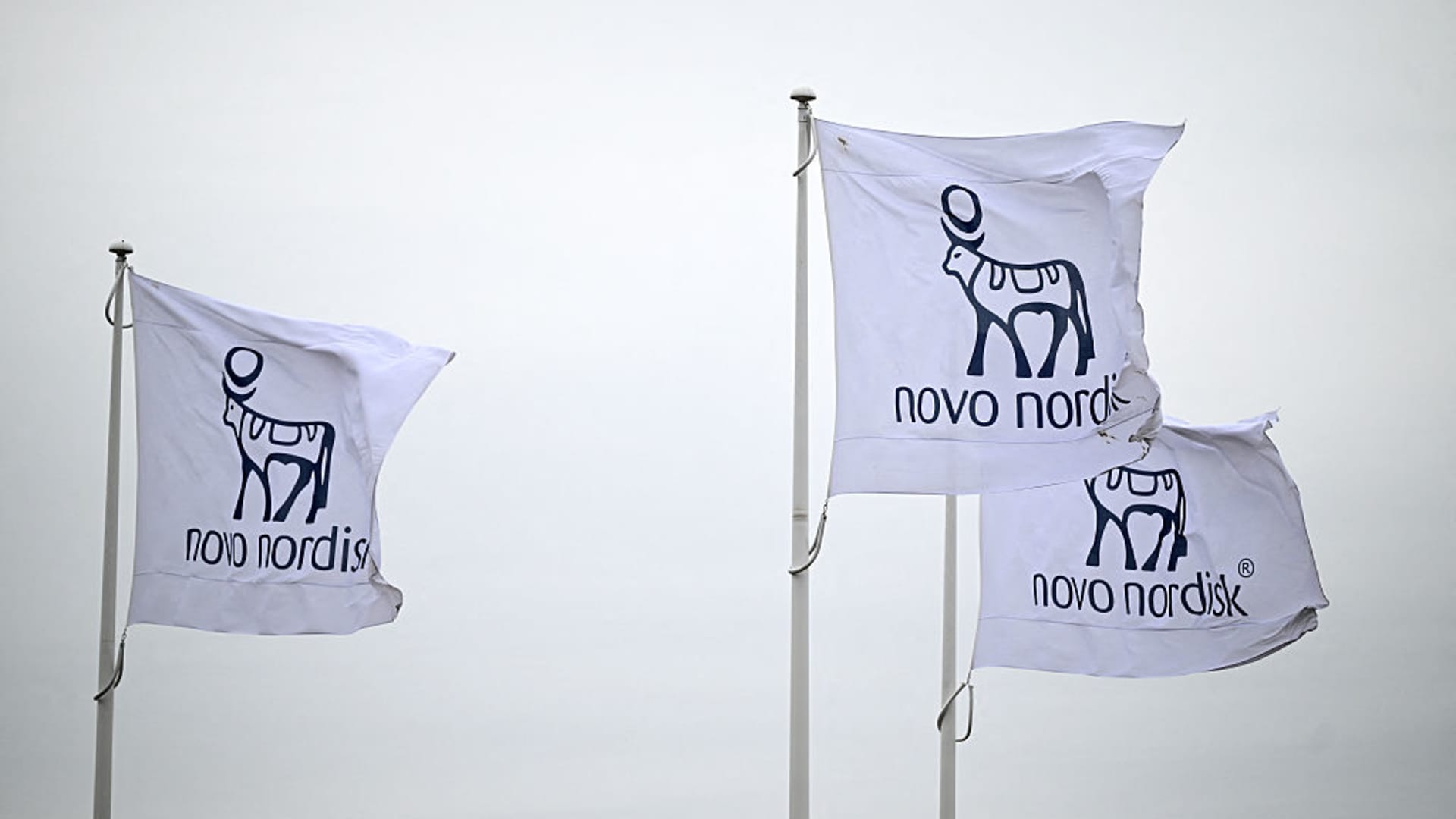
Flags with the logo of Novo Nordisk flutter next to the company’s factory in Hillerod on Nov. 12, 2025.

Sergei Gapon | AFP | Getty Images

Novo is also pinning its hopes on other drugs in its pipeline to help it claw back market share. That includes a higher dose – 7.2 milligrams – of Wegovy, which is waiting for FDA approval and could make the drug a stronger competitor to Zepbound. 

Doustdar said that higher dose helps patients lose around 21% of their weight, which is “very much on par” with the highest dose of Zepbound. Wegovy, under its approved doses, has shown around 15% weight loss on average in clinical trials. 

“When that comes to the market, my thought, my wish, my hope is that people will realize, OK, now we have two products with similar efficacy,” Doustdar said. 

He added that “hopefully will also change the dynamic as we go forward,” referring to the market’s increasing preference for Zepbound.

BMO’s Seigerman said it’s difficult to say whether that will be the case, as Zepbound is already entrenched as the best product in the injectable market.  

Later this year, Novo expects its next-generation treatment called CagriSema to enter the market. That experimental weekly injection combines semaglutide with cagrilintide, which mimics another gut hormone called amylin. 

Novo Nordisk has defended CagriSema’s trial results, which disappointed investors, coming in under the expected 25% weight loss on average. 

On Wednesday, Doustdar said the company was “penalized quite harshly by the stock market” for those results, which showed around 23% weight loss. But he said the drug would be “one of the best products out there” if it were available today. 

To assess the real efficacy of the drug, “you need to look at all the data together,” he added, pointing to three upcoming phase three trials for the drug, including one study that pits CagriSema against Zepbound. 

When asked whether Novo needs to further diversify away from obesity like competitors, Doustdar argued that the company doesn’t see obesity or diabetes as a single, monolithic disease and sees more opportunity in developing multiple, specialized therapies within the category.

While the world labels millions of patients simply as “obese,” he said the underlying biology and severity of the condition vary widely – from someone who needs to lose a modest amount of weight to someone with severe complications like fatty liver disease requiring a transplant. 

And as the market matures, Novo’s sales are still growing year-on-year on a constant currency basis, albeit at a slower pace than before. Only time will tell when, or if, that will change.
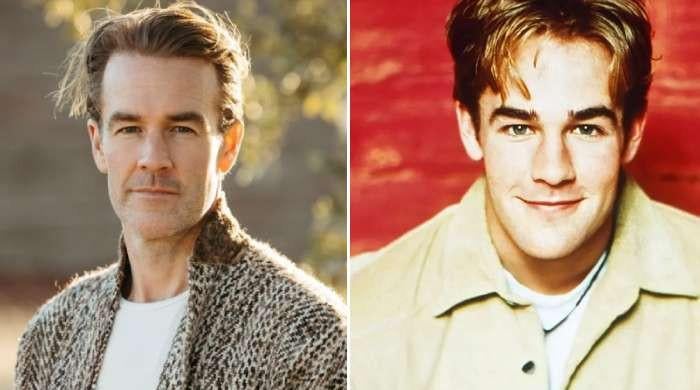
James Van Der Beek dies at 48 after cancer battle

0
James Van Der Beek dies at 48 after cancer battle

James Van Der Beek has died at 48 following his battle with stage 3 colorectal cancer.

His wife Kimberly Van Der Beek confirmed the news on Instagram Wednesday, February 11. The Dawson’s Creek and Varsity Blues star spent his final months focused on family, faith and raising awareness about early screening.

“Our beloved James David Van Der Beek passed peacefully this morning,” Kimberly wrote. “He met his final days with courage, faith, and grace. There is much to share regarding his wishes, love for humanity and the sacredness of time. Those days will come. For now we ask for peaceful privacy as we grieve our loving husband, father, son, brother, and friend.”

Van Der Beek, a father of six, first revealed his diagnosis exclusively to People magazine in November 2024. At the time, he said he was prioritising his health and the time he had with Kimberly and their children: daughters Olivia, Annabel, Emilia and Gwendolyn, and sons Joshua and Jeremiah.

Even while undergoing treatment, he pushed for awareness. “I’ve learned a lot,” he told Business Insider. “If I can save anyone from having to go through this, that’s magic.”

Just months ago in September, he made a surprise virtual appearance at a Dawson’s Creek reunion charity event after illness forced him to miss the live show. Castmates Michelle Williams, Katie Holmes, Joshua Jackson and Busy Philipps reunited for a table read, with Lin-Manuel Miranda stepping in for him.

The event doubled as a fundraiser for F Cancer and a tribute to the actor. 

James Van Der Beek, “Dawson’s Creek” star, dies at 48 after cancer diagnosis

0
James Van Der Beek, "Dawson's Creek" star, dies at 48 after cancer diagnosis

James Van Der Beek, star of “Dawson’s Creek” and “Varsity Blues,” has died at age 48, according to a post from his wife on social media. 

Van Der Beek announced in November 2024 that he had been diagnosed with colorectal cancer. His cause of death was not shared. 

“Our beloved James David Van Der Beek passed peacefully this morning,” his wife Kimberly wrote on Instagram. “He met his final days with courage, faith, and grace. There is much to share regarding his wishes, love for humanity and the sacredness of time. Those days will come. For now we ask for peaceful privacy as we grieve our loving husband, father, son, brother, and friend.”

Van Der Beek told People magazine in 2024 that he was “feeling good” despite the diagnosis. He did not provide other details of the disease and said he was “taking steps to resolve it,” but did not specify what treatment he received. In November 2025, he said he was auctioning items from his career to help pay for treatment. 

Van Der Beek rose to fame as the titular Dawson Leery on “Dawson’s Creek,” which ran from 1998 to 2003. In 1999, he landed the lead in the film “Varsity Blues.” He continued to appear regularly in movies and television, including playing a fictionalized version of himself in “Don’t Trust the B—- in Apartment 23” in 2012. 

Van Der Beek was married to actress Heather McComb from 2003 to 2009. In 2010, he married business consultant Kimberly Brook. They share six children. Van Der Beek said his wife suffered multiple miscarriages

Colorectal cancer has become a leading cause of cancer-related deaths for Americans under the age of 50, and cases have been rising in that age group in recent years. According to the American Cancer Society, symptoms may include blood in the stool, changes in bowel habits, abdominal pain, bloated stomach, unexplained weight loss, vomiting and fatigue. 

This is a developing story and will be updated.

King Charles shares inspirational message ahead of reception at Windsor

0
King Charles shares inspirational message ahead of reception at Windsor

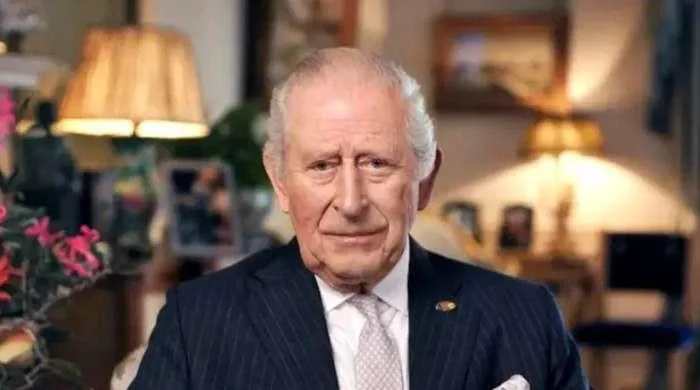
The King prepares to host the Carers’ Reception at Windsor Castle 

King Charles is paying tribute to the quiet heroes of society.

Ahead of the Carers’ Reception at Windsor Castle on Wednesday, February 11, the 77-year-old monarch shared a heartfelt message honouring those who devote their lives to caring for others.

“I have seen the patience required when the vulnerable person you care for is in distress,” His Majesty began. “I have witnessed the tears held at bay when an elderly loved-one no longer recognises your face. I have observed the gentle humour and camaraderie of colleagues that can lighten the heaviest of days. Above all, I have been moved, time and again, by the resilience of those who give so much of themselves while asking for so little in return.”

The King then addressed carers directly. “So to those who provide care – whether you wear a uniform or simply the clothes you felt able to pull on in the morning – please know that the great love you show in small ways every day is an example and an inspiration to us all. It is our duty, in return, to ensure it is never taken for granted nor forgotten.”

The accompanying pictures showed the King and Queen meeting care providers throughout the years.

The reception, which will be held later this evening at Windsor Castle, will celebrate carers from across the UK, recognising the compassion, strength and sacrifice that often go unseen but never unvalued.

U.K. police consult criminal prosecutors about Andrew-Epstein allegations

0
U.K. police consult criminal prosecutors about Andrew-Epstein allegations

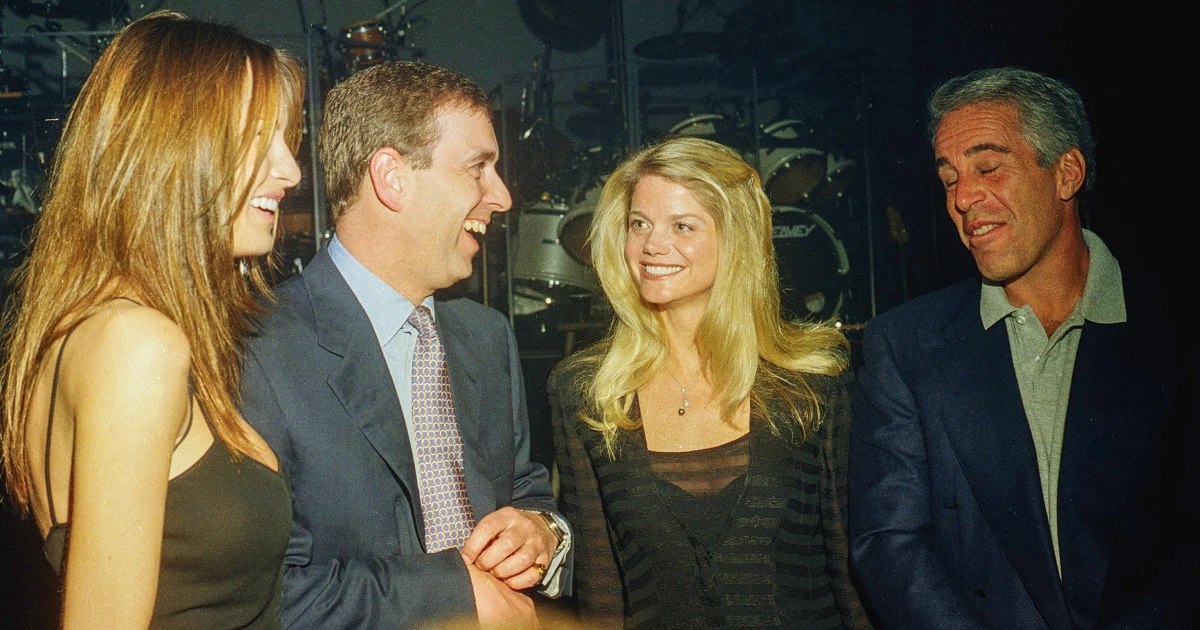
LONDON — British police said Wednesday they had spoken with criminal prosecutors as part of an ongoing assessment of allegations that former Prince Andrew shared confidential documents with the late convicted sex offender Jeffrey Epstein.

“Thames Valley Police is leading the ongoing assessment of allegations relating to misconduct in public office,” the force’s Assistant Chief Constable Oliver Wright said in a statement. “This specifically relates to documents within the United States Department of Justice’s Epstein Files.”

As part of the assessment, he said investigators had “engaged in discussions with Specialist Crown Prosecutors” from the Crown Prosecution Service, the independent body responsible for prosecuting criminal cases in the U.K.

“During an assessment phase, information is evaluated to determine whether a criminal offence is suspected and whether a full investigation is required,” he said in the statement.

The recent release by the Justice Department of millions of documents related to Epstein has brought further criticism to the beleaguered royal, now known as Andrew Mountbatten-Windsor after he was stripped of his titles last year.

NBC News has reached out to Mountbatten-Windsor’s spokesperson for comment on the latest police statement.

After police said Monday they were assessing the claims, a Buckingham Palace spokesperson said in a statement that King Charles III, Mountbatten-Windsor’s older brother, was “ready to support” police if they approached him.

Charles “has made clear, in words and through unprecedented actions, his profound concern at allegations which continue to come to light in respect of Mr. Mountbatten-Windsor’s conduct,” the spokesperson said. “Their Majesties’ thoughts and sympathies have been, and remain with, the victims of any and all forms of abuse.”

Prince William and his wife, Kate, the Princess of Wales, also spoke out on Monday. A Kensington Palace spokesperson told journalists they “have been deeply concerned by the continuing revelations,” and their thoughts remained “focused on the victims.”

At the center of the latest controversy is an email exchange from Nov. 30, 2010, when Mountbatten-Windsor was a U.K. trade envoy. Seen by NBC News, the documents from the latest release of Epstein files appear to show the former prince sending Epstein reports on his visits to Southeast Asia and information about investment opportunities in Afghanistan.

Trade envoys are usually barred from sharing sensitive or commercial documents under confidentiality rules. Andrew, Queen Elizabeth II’s second son, was the United Kingdom’s special representative for international trade and investment from 2001 to 2011.

The U.K. Department for Business and Trade told NBC News on Monday that it was ready to help police assess the allegations.

Mountbatten-Windsor has been weathering a storm of controversy for years over his ties with Epstein.

One of the most prominent survivors of Epstein’s sexual abuse, Virginia Roberts Giuffre, alleged that the financier trafficked her to his powerful friends, including Andrew, against whom she filed a lawsuit in 2021 alleging that the former prince sexually abused her when she was 17.

Mountbatten-Windsor, who has always denied any wrongdoing in connection to his affiliation with Epstein, reached a legal settlement with Giuffre for an undisclosed amount in 2022.

Roblox child safety warning after Nebraska kidnapping case

0
YouTube lets parents limit or block Shorts for teens

NEWYou can now listen to Fox News articles!

What starts as a game can quietly turn into something much more serious. Parents across the country are paying closer attention after a Nebraska man was charged with kidnapping two sisters, ages 12 and 14. 

According to authorities, he first connected with the girls on Roblox and later continued the conversations on Snapchat.

Law enforcement says the suspect built trust with the girls online over time before traveling from Nebraska to Florida to meet them in person. Even though the girls left willingly, investigators classified the case as an abduction because of their age. That distinction matters and highlights how grooming can distort a child’s sense of safety and choice.

The case is a sobering reminder of how online grooming works and why social gaming platforms deserve closer scrutiny from families.

5 PHONE SAFETY TIPS EVERY PARENT SHOULD KNOW

Investigators say the suspect first contacted the girls through Roblox, showing how social gaming platforms can quietly become communication hubs. (Thomas Fuller/SOPA Images/LightRocket via Getty Images)

Sign up for my FREE CyberGuy Report 
Get my best tech tips, urgent security alerts and exclusive deals delivered straight to your inbox. Plus, you’ll get instant access to my Ultimate Scam Survival Guide — free when you join my CYBERGUY.COM newsletter.

What Roblox and Snapchat really are

To understand how this happened, parents need to understand what these platforms actually do.

Roblox explained for parents and caregivers

Roblox is an online gaming platform where users create digital characters and play games made by other players. It is popular with children and preteens, which is why many parents see it as harmless fun. What often gets overlooked is that Roblox is also a social platform. Kids can chat inside games, send direct messages and sometimes use voice chat. These conversations can happen with people they have never met in real life.

According to investigators, communication in this case began on Roblox as early as the summer of 2025. That long timeline reinforces a key reality about grooming. It is rarely sudden. It is built slowly through repeated contact that starts to feel normal to a child.

Snapchat explained for parents and caregivers

Snapchat is a messaging app widely used by teens and young users. It allows people to send photos, videos and messages that usually disappear after they are viewed. That disappearing feature is a major concern. Once conversations move to Snapchat, messages become private and harder for parents to monitor.

Investigators say communication continued on Snapchat after trust had already been established elsewhere. In many grooming cases, moving from a public or semi-public platform to private messaging is a turning point. 

Snapchat does include safety features designed to limit unwanted contact, especially for teens. But those protections are most effective before trust is established elsewhere. Once a child has already bonded with someone on another platform, private messaging apps can accelerate grooming quickly. Snapchat also offers a parental tool called Family Center that provides limited visibility into teen interactions, but many families do not activate it until after a problem arises.

How online grooming typically works

Grooming rarely happens all at once. It is a gradual process built on time, attention and emotional manipulation. It often starts with shared interests and casual conversation. Trust grows slowly. The relationship begins to feel familiar. Then secrecy enters the picture.

Authorities in this case said family members later noticed unusual behavior, including gifts and food deliveries showing up at the house. Investigators described this as part of the grooming process. Unexpected gifts tied to online contacts are a serious red flag, even when they seem harmless. Another common warning sign is secrecy. Requests like do not tell your parents or this is just between us are intentional. They isolate a child and make intervention harder.

Another warning sign is sudden contact from someone outside a child’s normal geographic or social circle, especially when paired with urgency, flattery or offers of gifts.

Why this matters for every family

Technology changes fast. Kids adapt even faster. Parents often assume platforms are watching closely enough to catch problems early.  Both Roblox and Snapchat say they are cooperating with law enforcement and have safety measures in place. But cooperation after harm occurs is not the same as prevention before trust is built. Authorities stress that no platform can replace parental vigilance. No system is perfect. The most effective protection is awareness, conversation and involvement.

“We are investigating this deeply troubling incident and will fully support law enforcement,” Matt Kaufman, Roblox’s chief safety officer, told CyberGuy. “Roblox has robust safety policies to protect users that go beyond many other platforms and advanced safeguards that monitor for harmful content and communications. 

“We have filters designed to block the sharing of personal information, don’t allow user-to-user image or video sharing and recently rolled out age checks globally to limit kids and teens to chatting with others their age by default. While no system is perfect, our commitment to safety never ends, and we continue to strengthen protections to keep users safe.”

A Snap company spokesperson provided CyberGuy with the following statement:

Woman looking through her iPad.

Law enforcement described the case as an abduction, even though the girls left willingly, highlighting how online grooming can distort a child’s sense of safety. (CyberGuy.com)

“Our hearts go out to the family affected by this tragic incident, and we are grateful to the law enforcement professionals who worked tirelessly in the rescue efforts. The exploitation of children is an abhorrent crime, and we are committed to combating it. We work closely with law enforcement to support their investigations, including during this incident, and to prevent such heinous activity on our platform and help bring criminals to justice. 

“While no single safety feature or policy can eliminate every potential threat online or in the world around us, we continuously adapt our strategies as criminals evolve their tactics. We’ve built safeguards, launched safety tutorials, partnered with experts and continue to invest in features and tools that support the safety, privacy and well-being of all Snapchatters.”

What parents can do right now to protect their kids

There are clear steps parents and grandparents can take today. These actions combine common sense conversations with practical tech controls.

1) Lock down chat features

Disable direct messaging and voice chat with strangers. Allow communication only with approved friends. This is one of the most important steps parents can take.

On Roblox:

  • Open Roblox and log into your child’s account.
  • Go to Settings and select Privacy.
  • Set Who can chat with me to Friends or No one.
  • Set Who can message me to Friends or No one.
  • Turn off voice chat unless you are actively supervising.

Check these settings regularly. Platform updates can reset defaults.

EVEN THE FUTURE KING DISCOVERS SMARTPHONES ARE A ROYAL PAIN FOR KIDS AND PARENTS

On Snapchat:

  • Open Snapchat and tap your child’s profile icon.
  • Tap Settings, then Privacy Controls, then Privacy Controls.
  • Set Contact Me to Friends.
  • Set View My Story to Friends or Custom.
  • Turn off Quick Add to reduce contact from strangers.

2) Turn on parental controls and activity reports

Built-in tools help parents spot changes without reading every message. They are designed to provide visibility and early warning signs.

On Roblox:

  • Open Settings and select Parental Controls.
  • Create a parent PIN so changes require approval.
  • Set monthly spending limits.
  • Review account activity and friend lists together.

On Snapchat:

  • Enable Family Center from the parent’s Snapchat account.
  • Add your child to see who they interact with most often.
  • Watch for new friends added quickly or late at night.
  • Look for sudden changes in usage patterns.

3) Set a no secrets rule

Make it clear that anyone asking for secrecy online is crossing a line. Kids should feel safe coming to you without fear of punishment.

4) Keep devices out of bedrooms

Shared family spaces reduce risk and increase visibility. Late-night and private screen time often create conditions in which grooming escalates. Law enforcement noted that devices had been removed earlier in the day in this case, a reminder that rules alone are not enough without ongoing conversation and awareness.

5) Talk openly about grooming

Explain that grooming is a slow manipulation that can take weeks or months. When kids understand how it works, they are more likely to recognize red flags.

6) Watch for platform switching

Be alert if conversations suddenly move from a game to another app like Snapchat. That shift is often intentional and deserves immediate attention.

High school students using their smart phones in a hallway

High school students using their smartphones in a hallway (iStock)

7) Trust instincts and act early

If something feels off, pause the account, block the contact and report the behavior. Acting early is always better than waiting.

Take my quiz: How safe is your online security?

Think your devices and data are truly protected? Take this quick quiz to see where your digital habits stand. From passwords to Wi-Fi settings, you’ll get a personalized breakdown of what you’re doing right and what needs improvement. Take my Quiz here: Cyberguy.com.  

Kurt’s key takeaways

This case is a wake-up call. Gaming platforms are no longer just games. They are social spaces where real relationships can form, for better or worse. Parental controls help. Open conversations matter more. Staying involved gives kids the confidence to ask for help before a situation turns dangerous.

Is it time for platforms, not parents alone, to take more responsibility for keeping kids safe online? Let us know by writing to us at Cyberguy.com.

CLICK HERE TO DOWNLOAD THE FOX NEWS APP

Sign up for my FREE CyberGuy Report 
Get my best tech tips, urgent security alerts and exclusive deals delivered straight to your inbox. Plus, you’ll get instant access to my Ultimate Scam Survival Guide — free when you join my CYBERGUY.COM newsletter.

Copyright 2026 CyberGuy.com. All rights reserved.

UN chief blasted as ‘abjectly tone-deaf’ over message to Iran marking revolution anniversary

0
UN chief blasted as ‘abjectly tone-deaf’ over message to Iran marking revolution anniversary

NEWYou can now listen to Fox News articles!

UNITED NATIONS: U.N. Secretary-General António Guterres sent a congratulatory message to Iran marking the anniversary of the 1979 Islamic revolution, a move that drew sharp criticism from anti-regime Iranian voices and human rights advocates.

In a letter addressed to Iranian President Masoud Pezeshkian, Guterres “extended his warmest congratulations on the National Day of the Islamic Republic of Iran,” describing such anniversaries as an opportunity to reflect on a country’s path and contributions to the international community, according to Iranian state and regional reporting published Wednesday.

The message comes weeks after the U.N.’s top human rights body condemned Iran over abuses tied to a violent crackdown on anti-government protests and mandated further investigation into alleged violations, with some reports citing casualty figures that could reach 30,000, pending verification.

RUBIO REVOKES IRANIAN OFFICIALS’ US TRAVEL PRIVILEGES OVER DEADLY PROTEST CRACKDOWN KILLING THOUSANDS

U.N. Secretary-General António Guterres speaks at the 55th session of the Human Rights Council in Geneva, Switzerland, on Feb. 26, 2024. (Salvatore Di Nolfi/Keystone via AP)

Furthermore, according to the NGO U.N. Watch, Iran’s foreign minister, Abbas Araghchi, is expected to address the U.N. Human Rights Council on Feb. 23.

Against that backdrop, critics said the secretary-general’s congratulatory message risked sending a conflicting signal.

“The U.N. secretary-general’s congratulatory message is not merely diplomatic routine — it is abjectly tone-deaf,” said Iran analyst Banafsheh Zand. “At a time when the Iranian people continue to endure executions, repression and systemic abuse at the hands of the Islamic Republic, offering formal congratulations to the architects of that suffering reads as a moral failure.”

Zand added that such gestures “erode [the U.N.’s] credibility and deepen the wound for those still fighting for freedom inside Iran.”

Andrew Ghalili, policy director at the National Union for Democracy in Iran (NUFDI), said the message amounted to legitimizing a repressive system.

AMBASSADOR MIKE WALTZ LAYS OUT ‘AMERICA FIRST’ VISION FOR US LEADERSHIP AT THE UN

Burning cars line a street in Tehran as thick smoke rises during unrest.

Cars burn in a street during a protest over the collapse of the currency’s value in Tehran, Iran, Jan. 8, 2026. (Stringer/WANA (West Asia News Agency) via Reuters)

“The United Nations is legitimizing a regime built on repression, executions and the systematic destruction of basic freedoms,” Ghalili said. “Offering celebratory recognition to the Islamic Republic on the anniversary of its revolution ignores the bloodshed, the repression of protesters and the ongoing hostage-taking of innocent people.”

Human rights groups have repeatedly warned that impunity has enabled ongoing abuses in Iran, urging U.N. member states to pursue accountability for what they describe as systemic violations and mass killings of protesters.

Stéphane Dujarric, spokesperson for the secretary-general, told Fox News Digital during a press briefing that the message to Tehran was part of a long-standing U.N. protocol.

IRAN’S TOP DIPLOMAT SAYS NATION’S POWER LIES IN DEFYING PRESSURE: ‘NO TO THE GREAT POWERS’

Iranian foreign minister speaks at a podium during a diplomatic press conference.

Iranian Foreign Minister Abbas Araghchi holds a joint press conference with Turkish Foreign Minister Hakan Fidan in Istanbul, Turkey, on Jan. 30, 2026. (Arif Hudaverdi Yaman/Anadolu via Getty Images)

“The letter that came out from the secretary-general is a standard letter. Every year, each member state gets the exact same letter… congratulating them on the national holiday and conveying best wishes to the people of that country.”

The spokesperson added that similar letters were sent the same day to other countries marking national holidays and “should not be interpreted… as an endorsement of whatever policies may be put in place by the government.” He said the message “doesn’t change the secretary-general’s view” on Iran, noting Guterres has previously spoken out against the crackdown and violence.

On reports that Iran’s foreign minister is expected to address the Human Rights Council later this month, the spokesperson said the matter falls under the council’s authority.

CLICK HERE TO DOWNLOAD THE FOX NEWS APP

“That’s a decision of the Human Rights Council,” he said. “This is a membership organization. Every member state has a right to address legislative bodies… It’s not within the secretariat’s authority to bar member states from addressing a legislative body.”

Syracuse AD John Wildhack to retire after 10 years

0
Syracuse's John Wildhack: College football needs wholesale changes

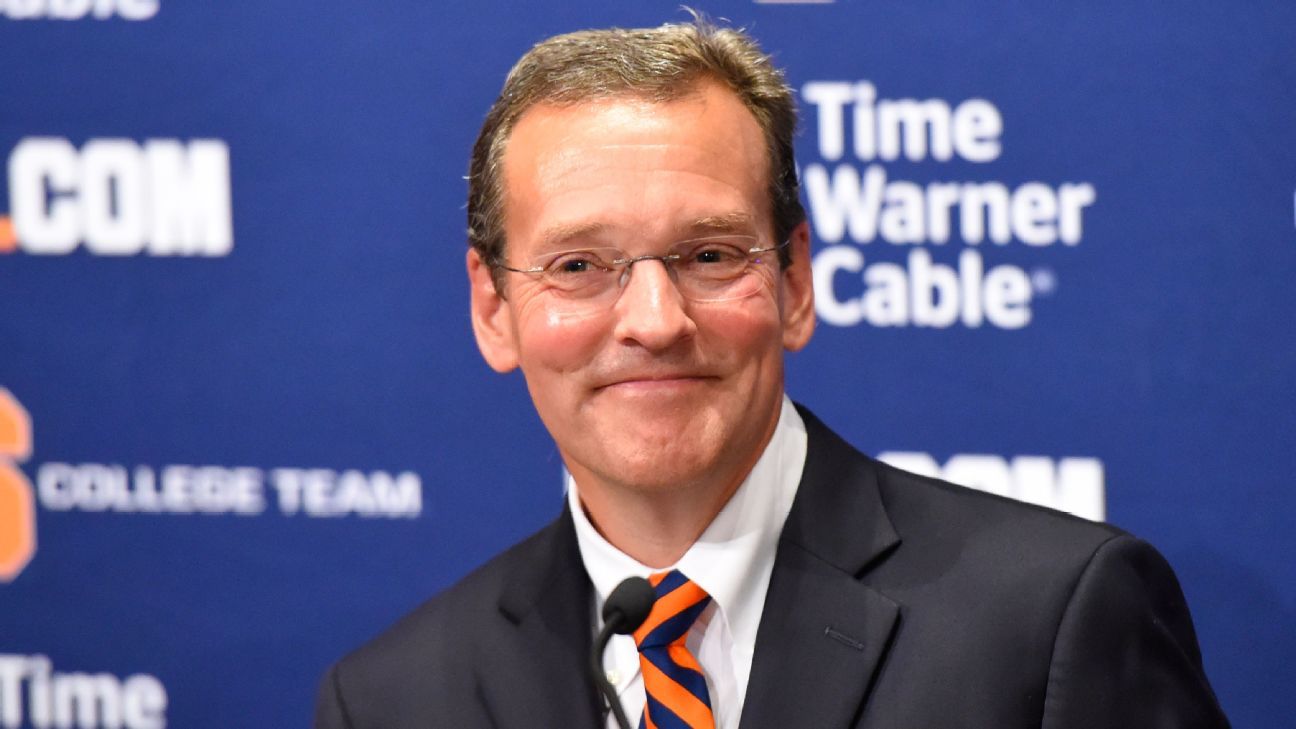
Syracuse athletic director John Wildhack is retiring, as he’s planning to leave the school on July 1.

He exits the job after a decade in charge, leaving Syracuse without an athletic director or a chancellor and with the basketball program struggling in the post-Jim Boeheim era.

Wildhack came to Syracuse in 2016 after a long tenure as an ESPN executive in the wake of Mark Coyle’s sudden departure for Minnesota after less than a year on the job.

Wildhack’s time at the school has been mixed, as the football program proved inconsistent and the basketball program fumbled the exit of Hall of Fame coach Boeheim and has since faded from national relevancy. Syracuse hasn’t been at the forefront of the changing landscape of college sports, which has left it a step behind on the field.

Wildhack’s achievements at Syracuse included an overhaul and modernization of the JMA Wireless Dome and an NCAA men’s soccer national title in 2022.

Wildhack’s retirement and the departure of chancellor Kent Syverud for Michigan leaves Syracuse’s athletic department at an interesting crossroads as it faces multiple critical concurrent decisions.

Basketball coach Adrian Autry is 47-42 through his three seasons as Boeheim’s replacement, with a 22-29 record in ACC play and no NCAA bids. The question looming over Syracuse’s search will be whether they can bring in someone in time to come in and make a decision on Autry’s future with nearly a month remaining in the season.

Wildhack hired Fran Brown in football and promoted Autry to replace Boeheim, an awkward transition after Boeheim had missed the NCAA tournament in his final two seasons. Brown’s hire yielded a 10-win season in 2024 but a 2025 season that saw eight straight losses after an injury to quarterback Steve Angelli in a win at Clemson.

As for the basketball program, they reached the NCAA tournament three times in Wildhack’s decade in charge. Per ESPN Research, Syracuse basketball won 55.8% of its games during his tenure and just 48.6% of games in conference.

The prior 10 years before Wildhack, Syracuse won 73.7% of its basketball games and won 65.7% of conference games, an era that spanned both the ACC and Big East.

Syracuse hasn’t reached the NCAA tournament in basketball since 2021 and hasn’t had a first-round pick since 2017 (Tyler Lydon) and a draft pick since 2020 (Elijah Hughes). Lydon’s selection in 2017 marked Syracuse’s sixth straight season with a first-round NBA draft pick.

Wildhack spent more than three decades at ESPN, rising to the title of executive vice president for programming and production. At ESPN, he produced the network’s first live college football game in 1984 and first NFL game in 1987.

How the largest health-care education company in U.S. is addressing a growing jobs gap

0
How the largest health-care education company in U.S. is addressing a growing jobs gap

When Steve Beard took on the role of CEO at higher education firm Adtalem Global Education in 2021, the company was undergoing a significant strategic shift. It had identified gaps in the health-care workforce pipeline, which were expected to grow. That led Adtalem to exit its other education business units and focus solely on health-care education. 

In that moment, Beard said the company could have changed its name, allowing it to “claim a different positioning.” However, as it looked at the increasingly fragile health-care workforce, it wanted to ensure it was a critical part of solving that problem before it planted a new flag. 

Last week, Adtalem announced it would be changing its name to Covista, which Beard said reflects what the company has done so far, but also what it sees ahead. 

“97,000 students, 385,000 alumni, and 24,000 health-care students graduated every year,” Beard said. “We’re only getting started; there’s a tremendous opportunity to continue to extend this platform, to grow the scale of these institutions, to bring even more day-one-ready talent to U.S. health care, but also to have a more definitive voice in the role that plays in care delivery in the U.S.” 

Those student numbers position Covista as a critical player on the health-care landscape in the U.S. The 24,000 health-care professionals that graduate every year from its schools is more than any institution and represents roughly 10% of America’s nurses. Covista also educates twice as many MDs as any MD-granting school in the U.S. and is the No. 1 provider of doctors of veterinary medicine to the U.S., according to its data. 

Covista’s health-care ambitions

Beard said the company worked through several ideas of how a new name could help tell the story. “I’m not a marketer by training, I don’t come out of a creative background, so it was fascinating to watch the naming process come together,” said Beard, adding that discussions varied from the science of using real words versus made-up words, the ways that certain consonants and vowels create an emotional response when spoken, and how different words would be interpreted by different languages and cultures. 

With Covista, Beard said the made-up word suggests two things: Co, implying the idea of community and sharing, and vista, “the idea of creating a shared vision for the future around health care and around access to these careers for folks who have historically been locked out of them.” 

But there was a message from naming advisors that Beard said stuck out to him. “[They] continued to remind us every step along the way that a brand is only as important as what’s inside it,” he said. “It’s a promise, and it’s only as valuable as to the extent to which folks believe that promise has been delivered.” 

A name change isn’t entirely new ground for the broader organization. In 2017, DeVry Education Group changed its name to Adtalem Global Education to  “represent all institutions in the group,” according to a SEC filing. At the time, the company’s business came from three different education focuses: medical and health care, professional education, and technology and business. That name change also came several months after Adtalem settled lawsuits with both the FTC and the Education Department over charges related to DeVry’s post-graduate job and salary claims. Adtalem sold DeVry in 2018.

The schools that make up Covista won’t be changing their names, but Beard said this renaming moment will allow them to “connect to a vision at the enterprise level that’s just much broader and much bigger” than what each school could aspire to on its own. 

“It’s about setting the aspiration even higher than it’s ever been, giving our folks the permission to think bigger about what they can accomplish individually, and to think bigger about what we can accomplish collectively,” Beard said. 

Dealing with major job market challenges

That includes Covista playing a leading role in some of the challenges the health-care industry is facing. Last year, the company announced a partnership with Google Cloud to launch an AI credentials program designed to teach health-care students and practicing clinicians how to best use the technology in their roles. Covista also launched a new impact program aimed to build and sustain the health-care workforce, including working with partners to promote health-care career exploration and expand mental health and wellbeing support for health-care workers.

In the latest nonfarm payroll report from the Labor Department covering the national jobs market, health-care positions again led gains among sectors. Beard said as he looks out at the health-care landscape, the opportunities for Covista have him excited.

“I remain optimistic about it, if for no other reason than acknowledging that the demographic trends in American society are such that we’re going to have to rely more and more on the health-care system,” Beard said. “We’ve got an aging population, we’ve got many more people that need to rely on this system for care and quality of life, and that creates the kind of necessity around innovation.”

However, the scarcity of the clinical workforce and the implications on quality of care are challenges that are only growing more acute within health care.

There are more than 8.4 million open health-care jobs in the U.S., Covista data suggests, representing more than two job openings for every unemployed health-care worker. That is putting added stress on the system and the workers within it: 73% of health-care executives and 76% of clinicians say staffing shortages compromise the quality of care they can provide, according to a Covista poll fielded by Gallup of more than 1,300 clinicians and 160 health-care executives.

The survey was conducted as part of its rebrand, and Beard said it highlights that this is not just a staffing issue, but a patient care crisis.

“We’ve talked a lot about the chronic workforce challenges, the asymmetry between supply and demand,” he said. “What does it mean for the quality of care? What does it mean for satisfaction amongst clinical professionals, how they feel about their career, and their intention to stay in those careers? What do people think about the role of technology in solving this challenge?”

Not surprisingly, Beard said the data suggests that while those shortages are impacting health-care providers across the country, the problem is particularly vexing in rural communities. It also varies by medical discipline, with roles like radiation therapists and cardiovascular technicians being particularly difficult to fill.

Covista has tried to help solve some of those issues through partnerships between its institutions and employers, which provide tuition support and clinical training opportunities for students, who in return, commit to joining the employer’s workforce after graduation. One such program, between Chamberlin University and Midwest health system SSM Health, is projected to produce more than 400 new nurses annually. 

“We think that model, which we intend to replicate in other markets where we can actually manufacture new demand for entry into these professions, is one way we get after some of these chronic workforce shortages where they’re most acute,” Beard said. 

However, there have been some challenges to the for-profit college industry that could impact the number of students who enter these programs. As part of the One Big Beautiful Bill Act, the Trump administration put limits on federal student loans for graduate degrees. It also removed nursing degrees from the professional degree designation, meaning it will have a $100,000 total borrowing limit compared to $200,000 for degrees in other medical fields or law, for example. 

“There’s real concern on the part of the administration that folks are over-borrowing, maybe they’re taking on too much debt, and we share those concerns,” Beard said. “But what we know from experience is that when you’re taking to market programs where there’s a high earning premium on that investment, that indebtedness becomes a high-value investment that delivers a handsome return.” 

Beard said that while these changes will have “some disparate impacts across higher education,” he believes “the intention behind the policy is sound.” 

Trump administration policy shifts, and cuts in federal health care spending, are leading to growing concerns around the health of the broader hospital system across the country. While Beard acknowledged those realities, he also said he continues to focus on the needs of an aging population already with a gap in care. 

“We continue to be optimistic that just the sheer magnitude of the need, particularly as our population ages, will bring common sense solutions to some of the funding and insurance dynamics, and will also elevate the appetite for the kinds of innovations that allow the healthcare workforce to have an even more positive impact on the people they care for every day,” he said.

Who missed out? Leading international stars go unsold in Pakistan’s first PSL auction

0
Who missed out? Leading international stars go unsold in Pakistan's first PSL auction

This collage of pictures shows Brisbane Heat’s Usman Khawaja (left) and England’s Jason Roy. — AFP/Reuters/File. 

LAHORE: England batters Dawid Malan and Jason Roy, along with Australia’s Usman Khawaja, are among the notable names that went unsold at the first-ever player auction for the 11th edition of the Pakistan Super League (PSL).  

The event was held at the Expo Centre in the provincial capital on Wednesday, when the franchises bypassed several established international stars as they restructured their squads with the international and domestic cricket stars under a new bidding format ahead of the tournament’s 11th edition, scheduled from March 26 to May 3.

The prominent overseas names, including England’s Reece Topley, Australia’s rising T20 sensation Jake Fraser-McGurk, experienced New Zealand all-rounder James Neesham and South Africa’s Rassie van der Dussen, Tony de Zorzi and Keshav Maharaj, also went unsold.

Several sought-after T20 specialists such as Chris Jordan, Tymal Mills, Alzarri Joseph and Shahnawaz Dahani were overlooked, while Bangladesh stars Shakib Al Hasan and Mehidy Hasan Miraz, along with Sri Lanka’s Dinesh Chandimal and Charith Asalanka, similarly did not go under the hammer.

Among the notable Pakistani players who remained unsold were Hussain Talat, Danish Aziz, Mohammad Zeeshan, Zahid Mehmood, Musa Khan and Rohail Nazir, alongside emerging players, including Mohammad Huraira, Mubasir Khan and Pakistan U19 men’s cricket team’s captain Farhan Yousaf.

List of unsold players at PSL 11 player auction:

Usman Khawaja, Jake Fraser-McGurk, Jimmy Neesham, Rassie van der Dussen, Dawid Malan, Jason Roy, Reece Topley, Chris Jordan, Tymal Mills, Alzarri Joseph, Shahnawaz Dahani, Shakib Al Hasan, Mehidy Hasan Miraz, Dinesh Chandimal, Charith Asalanka, Hussain Talat, Danish Aziz, Mohammad Zeeshan, Zahid Mehmood, Musa Khan, Rohail Nazir, Mohammad Huraira, Mubasir Khan, Evin Lewis, Brandon King, Moises Henriques, Keshav Maharaj, Imran Tahir and Saad Ali.