Bangladesh began voting on Thursday in its first national election since the deadly 2024 uprising that toppled Sheikh Hasina, with people queued at polling stations across the country amid expectations of tight electoral race.
Leading prime ministerial hopeful Tarique Rahman, 60, is confident his Bangladesh Nationalist Party (BNP) can regain power – but he faces a stiff challenge from the Muslim-majority country’s largest Islamist party, Jamaat-e-Islami.
Jamaat chief Shafiqur Rahman, 67, has mounted a disciplined grassroots campaign, and, if victorious, the former political prisoner could lead the first Islamist-led government in constitutionally secular Bangladesh.
Opinion polls vary widely, though most give the BNP the lead – with some suggesting a knife-edge race.
“The significance of this day is far-reaching,” interim leader Muhammad Yunus, who will step down after the polls, said ahead of the vote in the country of 170 million people.
“It will determine the future direction of the country, the character of its democracy, its durability, and the fate of the next generation.”
The 85-year-old Nobel Peace Prize winner has led the South Asian nation since Sheikh Hasina’s 15-year rule ended with her ouster in August 2024. His administration has barred her Awami League from contesting the polls.
Hasina, 78, was sentenced to death in absentia for crimes against humanity for the bloody crackdown on protesters during her final months in power, and remains in hiding in neighbouring India.
‘Crucial test’
Yunus has also championed a sweeping democratic reform charter to overhaul what he called a “completely broken” system of government and to prevent a return to one-party rule.
On Thursday, the 127 million voters will also decide in a referendum whether to endorse proposals for prime-ministerial term limits, a new upper house of parliament, stronger presidential powers and greater judicial independence.
Voters will elect 300 lawmakers directly, with a further 50 women chosen from party lists.
More than 300,000 security personnel have been deployed for the polls, which open at 7:30 am (0130 GMT), with counting by hand to begin after they close at 4:30 pm.
Results in past elections trickled in hours later – though counting this time also includes referendum ballots.
“The crucial test for Bangladesh now will be to ensure the election is conducted fairly and impartially, and for all parties to then accept the result,” said Thomas Kean, an analyst with the International Crisis Group.
“If that happens, it will be the strongest evidence yet that Bangladesh has indeed embarked on a period of democratic renewal.”
‘Just and inclusive’
The next government will inherit a battered economy in the world’s second-largest garment exporter, alongside delicate relations with neighbouring India.
The BNP’s Rahman – whose late parents both led the country – told AFP that his first priority, if elected, would be restoring security and stability. But he warned the challenges ahead were immense.
“The economy has been destroyed,” he said. “There are a huge number of unemployed. We need to create businesses for these young people to have jobs.”
But his Islamist political rivals, who have campaigned on a platform of justice and ending corruption, sense their biggest opportunity in decades.
“We want to build a country of unity with everyone on board,” Jamaat leader Rahman said in his closing campaign speech. “It will be a country where nobody gets the driving seat because of their family background.”
Around 10 percent of Bangladesh’s population are non-Muslim, most of them Hindu.
In his final address to the nation before voting, Yunus urged citizens to honour the “sacrifice” of the 2024 uprising and to put the “national interest above personal and party” agendas.
“Victory is part of democracy; defeat is also an inevitable part,” he said. “Please dedicate yourselves to building a new, just, and inclusive Bangladesh.”
A Florida man faces seven felony charges after being arrested last weekend following a road rage incident, according to authorities.
Blackie Alvarez, 33, of Bonifay, Florida, was arrested after allegedly pointing a handgun at another driver during a road rage confrontation, according to the Walton County Sheriff’s Office.
At around 1 p.m. on Feb. 8, police responded to a report of a man pointing a firearm at drivers while traveling north on U.S. 331 in DeFuniak Springs.
Blackie Alvarez, 33, was arrested after allegedly pointing a handgun at another driver during a road rage incident in Florida, authorities said.(Walton County Sheriff’s Office)
Police located the white Ford Explorer, and the driver — later identified as Alvarez — exited the vehicle and removed a black handgun from his waistband, which he placed on top of the vehicle.
Two metal knuckles were also found in Alvarez’s pockets, police said.
Investigators said Alvarez began speeding and honking at the victims, who told deputies that Alvarez sped around them before coming to a complete stop in front of their vehicle, where he allegedly pulled out a firearm and pointed it at them.
Alvarez refused to speak with investigators, police said.
Blackie Alvarez faces multiple felony charges after authorities say he pointed a handgun at another driver during a road rage confrontation.(Walton County Sheriff’s Office)
Alvarez was charged with two felony counts of false imprisonment, two felony counts of aggravated assault with a deadly weapon, one felony count of possession of a firearm by a convicted felon, two counts of unlawful carry of a concealed weapon and driving without a license.
Alvarez also had an outstanding warrant in Bay County, Florida, for failure to pay child support.
A Florida man was charged with multiple felony weapons offenses following an alleged road rage incident on Feb. 8, according to the Walton County Sheriff’s Office.(Walton County Sheriff’s Office)
He was taken into custody and held on a $235,000 bond, police said.
‘Single’ Zayn Malik shares whether he wants more kids
Zayn Malik, who is already a father to a daughter, revealed that he wants to welcome more children in the future.
During an appearance on the latest episode of Alex Cooper’s Call Her Daddy podcast, the former One Direction member said he isn’t opposed to having more kids in the future, but he needs his daughter Kai’s approval before he does anything.
When Alex asked Zayn whether he wants to welcome more kids in the future, the Die For Me singer replied, “I do. Yeah.”
“It’s not something that, like, I’m actively trying to pursue, but, yeah, for sure, I would like more kids,” he continued. “Obviously, Khai would have to approve too because she’s got the highest opinion, you know?”
“But yeah, never say never,” added Zayn.
For those unversed, Zayn already shares a 5-year-old daughter with ex-girlfriend Gigi Hadid.
Revealing how his daughter helps bring out his inner child, the Night Changes hitmaker said, “She’s just kind of brought a lot of things back for me, like how much I enjoy doing them things, you know? During the day, watching cartoons, things like that, like watching films and just enjoying kiddie stuff with her.
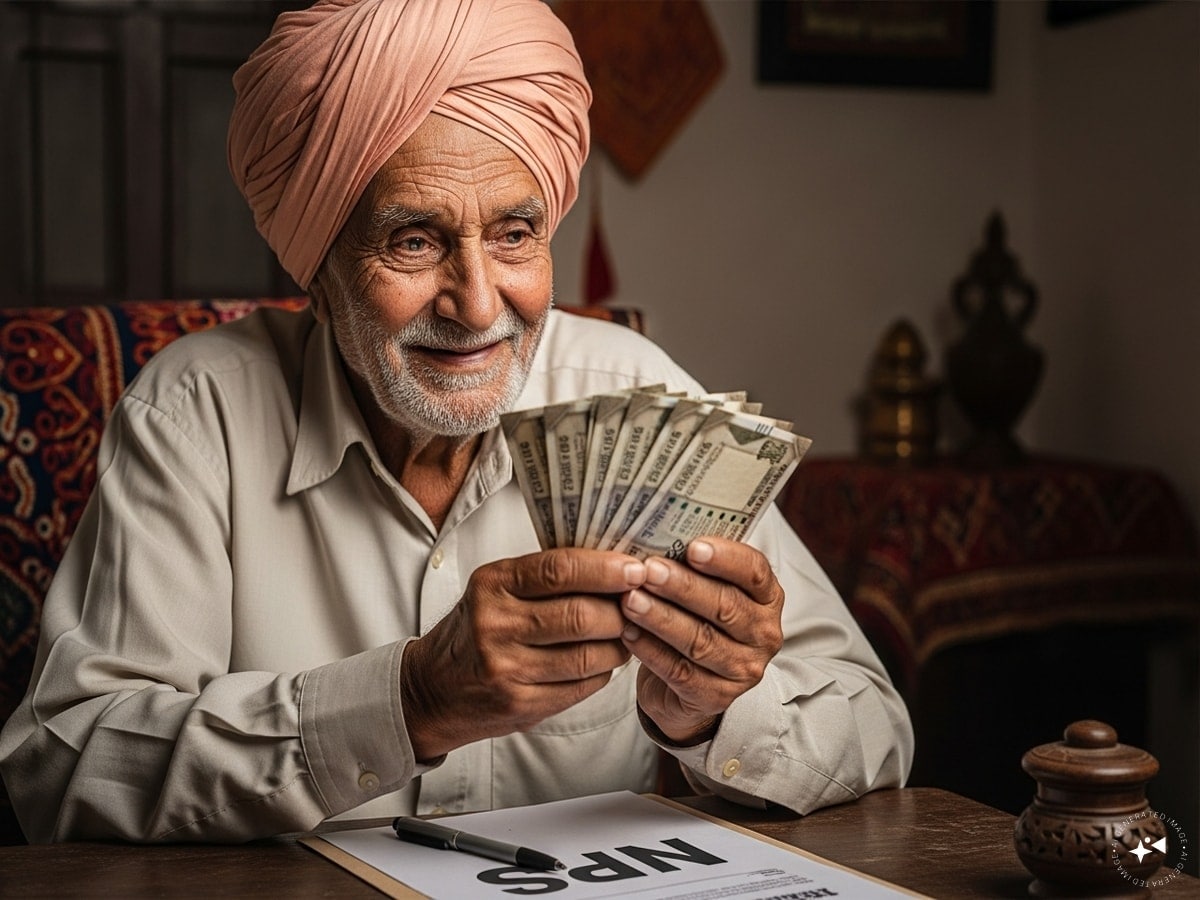
There is welcome news for those investing in the National Pension System (NPS). In December 2025, the Pension Fund Regulatory and Development Authority (PFRDA) introduced significant changes to the withdrawal rules. Under certain conditions, subscribers can now withdraw 100% of their accumulated corpus. The earlier regulations were more restrictive, but the revised rules offer greater ease, particularly for those with smaller balances. The changes are especially beneficial for non-government subscribers.
At retirement, on reaching the age of 60 or later, if the total corpus in an NPS account is Rs 8 lakh or less, the subscriber may withdraw the entire amount as a lump sum. There is no obligation to purchase an annuity. Previously, this limit was Rs 5 lakh, but it has now been increased to Rs 8 lakh. If the corpus exceeds Rs 8 lakh but is up to Rs 12 lakh, a larger lump sum may be withdrawn, subject to certain conditions. Where the corpus exceeds Rs 12 lakh, up to 80% can be taken as a lump sum, while at least 20% must be invested in an annuity. These revised norms provide greater flexibility at retirement.
The rules differ slightly in the case of premature exit, meaning withdrawal before maturity. If the mandatory five-year lock-in period has been completed and the corpus is Rs 5 lakh or less, the entire amount may be withdrawn as a lump sum. If the corpus exceeds Rs 5 lakh, up to 20% may be taken as a lump sum, and the remaining 80% must be used to purchase an annuity. While these provisions largely existed earlier, the increase in limits for smaller corpus amounts offers additional relief.
In the unfortunate event of a subscriber’s death, the nominee or legal heir is entitled to receive 100% of the corpus as a lump sum, irrespective of the amount. There is no requirement to purchase an annuity. This provision has always applied and continues unchanged, ensuring immediate financial support to the family.
Individuals who enrol in NPS before the age of 60 may opt for a normal exit at 60. Those joining after 60 are permitted to exit after three years. The maximum exit age has now been extended to 85, allowing subscribers to continue investing and withdrawing until that age, a positive step for those with longer life expectancy.
Overall, the revised rules simplify NPS withdrawals. Subscribers with smaller funds can now access their entire savings, while those with larger corpuses enjoy increased flexibility in lump sum withdrawals. Lump sum withdrawals qualify for tax benefits, provided the rules are followed, whereas the monthly pension received through an annuity remains taxable.
Through these reforms, the PFRDA aims to ensure financial security after retirement while granting subscribers greater autonomy to plan according to their needs. The new rules have been effective since December 2025. NPS investors are advised to review their corpus and plan their retirement strategy accordingly.
With these changes, NPS has become more flexible and accessible as a retirement savings instrument. Those with smaller balances can now withdraw their funds without undue constraints, a reassuring development for Indians planning their financial future. Understanding the revised rules will help ensure a secure and comfortable retirement.
Beyond its verdict, drama lays bare silent cost women pay when they refuse to shrink themselves to be believed
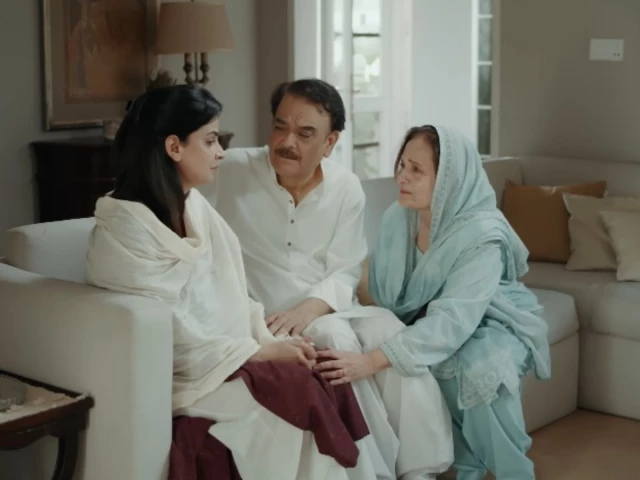
For years, I watched Pakistani dramas simply for entertainment — but Case No. 9 forced me to confront what silence truly costs us. The hit drama produced by Abdullah Kadwani and Asad Qureshi concluded on January 8 on a hopeful note, with protagonist Seher Moazaam (Saba Qamar) winning her sexual assault lawsuit against Kamran Haider (Faysal Quraishi). The final episode delivered long-awaited justice, as the perpetrator was sentenced, while also shedding light on the legal and societal obstacles rape survivors face in Pakistan.
Yet beyond its powerful ending, the drama offers something deeper.
What the drama ultimately reminds us is the immense resilience women in Pakistan must carry — even when they are educated, accomplished, and outspoken. Speaking the truth is rarely enough. Despite their ambition and resilience, women are still denied the freedom to exist without judgment or backlash. Praised by some and ridiculed by others, every act of courage comes with a price.
Seher is not introduced as fragile. She is the head of sales and marketing at a leading company. She’s an unapologetic divorcee, she is articulate, professionally ambitious, and socially active. She attends dinner, networks comfortably, and exists in mixed places with ease. Her independence is not portrayed as rebellion — it is simply who she is.
And that is precisely why her story feels so important.
When trauma strikes, Seher collapses, as any person would. But she also chooses to fight. She files a case and pursues justice against Kamran. What the drama carefully illustrates, however, is that for a woman like Seher, proving that a crime occurred is not the only battle — she must also prove that she deserves to be believed.
One of the drama’s most unsettling realities is that even Seher’s own parents initially discourage her from reporting the assault. For a modern, educated, financially independent woman, the first barrier to justice emerges within her own home. Their fear of scandal and reputational damage reflects a generational anxiety that still polices women’s choices in moments when they need support the most. The message is painfully clear: education and independence do not automatically translate into unquestioned autonomy.
She does not fit the stereotypical image of the “ideal” victim. She was not cloistered, naive, or visibly fearful of men. She was confident, social, and professionally successful. And so, the courtroom — much like society — begins to dissect her choices instead of the crime itself.
The interrogation feels familiar:
Why did she go to his house? Why stay that long? Why attend dinners with him before? Why not tell more people she felt uncomfortable? Why report it late? Why destroy the evidence? Why didn’t an educated woman know how rape reporting works?
Notice the pattern. The burden shifts from examining the violence to examining the victim. The more independent Seher seems, the more credibility she begins to lose. The show does not frame this as her failure — instead, it exposes how deeply ingrained these patterns of doubt are.
Importantly, Case No. 9 does not undermine Seher’s strength. It does not punish her for being modern or ambitious. Rather, the drama portrays the exhausting reality that women like Seher face: even resilience is scrutinised. Even freedom becomes suspicious.
There is a cost of being brave — not because bravery is flawed, but because society is still learning how to process women who occupy space unapologetically.
In the end, Case No. 9 gives its protagonist justice but it also does something more meaningful. It acknowledges that for women who are educated and socially available, the fight is often twofold: surviving the crime and surviving the scrutiny.
Perhaps that is the drama’s quiet triumph. It celebrates resilience and also highlights why freedom for women in Pakistan still comes with conditions. And in doing so, it does not criticize society from a distance; it invites us to reflect on how we respond when a woman refuses to shrink herself to be believed.
If Case No. 9 leaves us with anything, it is this: justice is powerful, but empathy is transformative. And maybe that is where real change begins.
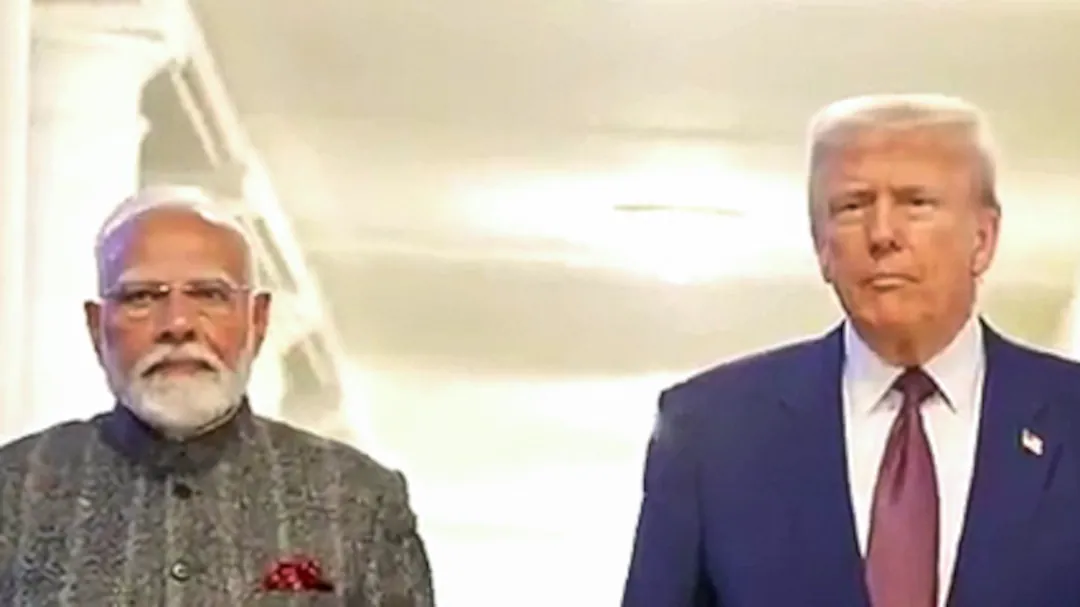
You don’t have permission to access “http://www.ndtvprofit.com/world/us-president-trump-hails-trade-deal-with-india-as-historic-10992154” on this server.
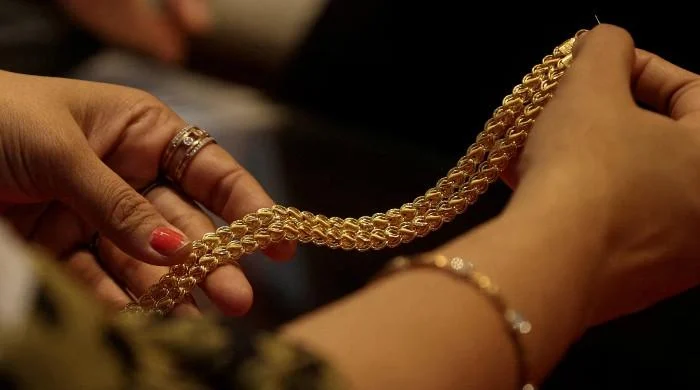
Representational image shows a customer holding a gold chain at a jewellery store in Mumbai, India, January 30, 2026. — Reuters
The remarkable surge in gold prices over the past two years is no longer just a financial headline; it has become a powerful indicator of how deeply uncertainty has penetrated the global and domestic economic situation.
Across international trading floors and local bazaars in Pakistan, gold has once again reclaimed its historic role as the ultimate safe-haven asset. In early 2026, international bullion prices crossed the symbolic threshold of $5,000 per ounce, compared to nearly $2,300 in 2023, reflecting an increase of more than 120% in less than three years.
In 2025 alone, gold recorded an extraordinary gain of around 64%, the strongest annual rise since the late 1970s. This rally has continued into 2026 as investors, central banks and households alike retreat from risky assets and search for protection against geopolitical turmoil, monetary uncertainty and economic fragility.
What makes this episode particularly significant is that the rise in gold is not driven by a single crisis, but by a convergence of global disruptions that have altered investor psychology. Wars and geopolitical tensions remain central. The prolonged Russia-Ukraine conflict continues to disrupt energy markets and global supply chains, while instability in the Middle East has revived concerns over oil routes, regional security and broader escalation risks.
Strategic rivalry among major powers has intensified, weakening diplomatic cooperation and increasing military expenditures worldwide. Each of these developments injects uncertainty into markets. Historically, when geopolitical risks increase, capital shifts away from equities and currencies toward assets that preserve purchasing power, and gold becomes the primary beneficiary of that shift.
At the same time, the global economy is experiencing a period of structural stress. Growth in advanced economies has slowed, debt levels have risen, and financial systems remain sensitive to shocks. Although inflation has moderated in some regions, it remains stubborn due to fragmented supply chains, climate-related disruptions to food and energy production and the economic costs of geopolitical realignments.
Central banks therefore face a complex policy dilemma: tightening too much risks recession, while easing too quickly may revive inflation. Markets increasingly expect interest-rate cuts in the US and Europe, and when interest rates fall, the opportunity cost of holding non-yielding assets like gold declines. As bond yields weaken and currencies fluctuate, gold becomes relatively more attractive, reinforcing demand from institutional and retail investors.
Another powerful factor behind gold’s ascent is the changing behaviour of central banks themselves. Over the past three years, central banks have emerged as some of the largest buyers of gold in the world. Global central-bank purchases have exceeded 1,000 tons annually, marking the highest accumulation in decades.
This shift reflects deeper strategic concerns about over-reliance on the US dollar, exposure to sanctions, and geopolitical fragmentation of the international financial system. Emerging economies in particular are diversifying reserves to reduce vulnerability to external shocks. As official demand rises alongside private investment through gold-backed exchange-traded funds, the global supply-demand balance tightens, exerting sustained upward pressure on prices.
Trade disruptions and economic nationalism have also reshaped investor expectations. The world trading system is no longer governed purely by efficiency and openness. Tariff disputes, industrial policy interventions, strategic decoupling and reshoring initiatives are redefining how countries interact economically. These shifts weaken confidence in long-term global growth. Investors now perceive uncertainty as structural rather than temporary.
In such an environment, gold becomes more than a crisis hedge; it becomes insurance against systemic instability. The metal’s rally therefore reflects not optimism, but caution about the durability of the existing global economic order.
These global forces transmit directly into Pakistan’s gold market, often with magnified intensity. Pakistan is largely a price taker in bullion, importing global price movements into its domestic economy. When international gold prices rise, local rates adjust almost instantly. However, Pakistan’s own macroeconomic vulnerabilities amplify the impact. Over recent months, gold prices in Pakistan have crossed unprecedented thresholds. One tola of 24-karat gold has climbed beyond Rs500,000, compared with around Rs180,000 in 2022 and roughly Rs300,000 in early 2024. In simple terms, gold prices have almost tripled within three years, transforming what was once a common household asset into an increasingly expensive investment.
Currency depreciation also plays a crucial role in this transmission mechanism. Since gold is priced globally in US dollars, any weakening of the Pakistani rupee immediately raises its local cost. Pakistan’s rupee has remained under pressure due to external debt servicing, trade deficits, limited foreign-exchange reserves and reliance on external financing. Even when global gold prices pause temporarily, rupee volatility ensures that domestic prices continue to rise. Pakistani consumers therefore experience a double shock: global price hikes combined with a fragile local currency.
The implications extend beyond the bullion market itself. Rising gold prices influence savings behaviour, portfolio allocation and even inflation expectations. If households increasingly park wealth in gold rather than in productive sectors such as business investment, manufacturing or capital markets, long-term growth may weaken.
Capital that could finance innovation and employment becomes locked in idle assets. At the same time, higher gold prices may encourage speculative trading, informal hoarding and distortions in household financial planning. Policymakers therefore face the challenge of restoring confidence in financial stability so that gold demand reflects choice rather than fear.
There are also implications for Pakistan’s external sector. Higher gold prices increase the value of imports, potentially widening the trade deficit if demand remains strong. At a time when Pakistan is already managing external financing constraints, any additional pressure on the balance of payments becomes costly. Moreover, volatility in gold prices can transmit into expectations about currency stability, influencing broader perceptions of economic health.
Looking ahead, gold’s trajectory will depend on both global and domestic developments. Internationally, if geopolitical tensions persist, trade fragmentation deepens and monetary policy remains uncertain, gold is likely to remain elevated. Some global forecasts already suggest prices could test $6,000 per ounce if conflicts widen or financial conditions deteriorate further. Domestically, any additional rupee depreciation, resurgence of inflation, or weakening of growth prospects would translate these global pressures into even higher local prices in Pakistan.
Yet gold’s rise should also be interpreted as a warning signal. It reflects a world where investors prioritise safety over productivity, protection over expansion. For Pakistan, the glitter of rising gold prices masks deeper structural challenges related to currency stability, inflation management, export competitiveness and investor confidence. Gold may shine brightly in markets, but its glow reflects caution rather than comfort.
Ultimately, the surge in gold prices tells a larger story about the global economy and Pakistan’s place within it. It is a story shaped by geopolitical friction, fragile growth, nervous investors and households seeking stability in uncertain times.
In Pakistan, gold’s increasing value symbolises both protection and pressure, protection for savers, pressure for consumers and policymakers alike. Until global tensions ease and domestic fundamentals strengthen, gold will remain not merely a commodity, but a mirror of the risks shaping international finance and Pakistan’s economic future.
The writer is affiliated with the Sustainable Development Policy Institute (SDPI), Islamabad and holds a PhD in Applied Economics. He can be reached at: [email protected]. The views expressed are solely his own and do not necessarily reflect the position of the institute.
Disclaimer: The viewpoints expressed in this piece are the writer’s own and don’t necessarily reflect Geo.tv’s editorial policy.
Candace Parker and Elena Delle Donne, both former WNBA MVPs and champions, headline the finalists for the Naismith Memorial Basketball Hall of Fame Class of 2026 announced Wednesday.
Parker is the only player in WNBA history to win championships with three franchises (the Los Angeles Sparks, Chicago Sky and Las Vegas Aces). One of the first true positionless basketball players, Parker was a phenom at every level — winning the dunk contest at the McDonald’s All American Game in high school, two national championships at Tennessee, two Olympic Gold medals and two WNBA MVP awards.
She’s still the only player in WNBA history to win Rookie of the Year and MVP in the same season (2008).
Delle Donne is also a two-time league MVP (2015 and 2019) who became the first WNBA player to shoot 50% from the field, 40% from 3 and 90% on free throws. She led the Washington Mystics to their first championship in 2019, cementing her legacy as one of the greatest pure shooters the game has seen.
Two members of the LA Clippers‘ “Lob City” era were also named as finalists. Six-time All-Star Blake Griffin turned around the fortunes of the beleaguered franchise with an electric, high-flying style, punctuated by his win in the 2011 slam dunk contest in which he jumped over a Kia automobile.
Griffin grew into a far more complete player over his 14 seasons in the league, finishing his career with more than 14,000 points and 3,000 assists.
Doc Rivers, who coached many of those Lob City teams, was also selected as a finalist. Rivers, whose 1,114 (and counting) career coaching wins rank eighth on the all-time list, led the Boston Celtics to an NBA championship in 2008. He is the current coach of the Milwaukee Bucks.
A’mare Stoudemire is a finalist again. Stoudemire averaged 18.9 points and 7.8 rebounds in 846 career games over 14 seasons for Phoenix, New York, Dallas and Miami, the first eight of which were for the Suns.
The 6-foot-10 forward/center was a six-time All-Star and an All-NBA first-team selection in 2006-07, forming one-half of a formidable pick-and-roll duo in Phoenix with point guard Steve Nash.
Stoudemire was also named the 2003 NBA Rookie of the Year after entering the league directly from high school.
Other player finalists include Kevin Johnson, Buck Williams and Marques Johnson. Official Joey Crawford is a finalist, as is Tal Brody, who helped shape Maccabi Tel Aviv basketball, and Mike D’Antoni, in the contributor category.
Other coaches besides Rivers include Gonzaga‘s Mark Few, Houston‘s Kelvin Sampson and the late Jerry Welsh, who coached Potsdam in upstate New York to NCAA Division III titles in 1981 and 1986. They’re joined by legendary high school basketball coach Gary McKnight and Dick Motta, one of the winningest coaches in NBA history.
The 1996 gold medal-winning U.S. women’s national team will also be considered for induction, as will Jennifer Azzi, who was a member of that Atlanta Games team and is a finalist again as an individual. Accompanying her as a women’s committee finalist is Chamique Holdsclaw.
Molly Bolin-Kazmerm, the first player signed by the Women’s Professional Basketball League, is a returning finalist nominated by the women’s veterans committee.
Former Serbian professional player and longtime coach Dušan Ivković, already a FIBA Hall of Famer, is once again a finalist from the international committee.
The final Class of 2026 will be announced during the NCAA Final Four weekend in April, with the formal enshrinement ceremonies scheduled for August in Springfield, Massachusetts.
Indian benchmark indices Sensex and Nifty are set for a muted start on Thursday, tracking mixed global signals
Stock Market Today.
Sensex Today: Equity markets opened on a weak note on Thursday, weighed down by heavy selling in information technology (IT) stocks.
In early trade, the BSE Sensex slipped 265 points, or 0.31 per cent, to 83,963, while the Nifty50 declined 81 points, or 0.31 per cent, to 25,873.
Broader markets also mirrored the weakness, with the Nifty MidCap index falling 0.46 per cent and the Nifty SmallCap index dropping 0.68 per cent.
On the sectoral front, IT stocks bore the brunt of the sell-off, with the Nifty IT index plunging 2.87 per cent, emerging as the worst-performing sector.
Global Cues
Asian markets traded higher on Thursday, led by Japan. The Nikkei 225 surged past the 58,000 mark for the first time, extending its post-election rally amid improving confidence in domestic political stability and the ruling government’s economic policies.
At last check, Japan’s Nikkei 225 was up 0.5 per cent, South Korea’s KOSPI gained 1.9 per cent, and Australia’s S&P/ASX 200 advanced 0.6 per cent.
In the US, major indices ended slightly lower on Wednesday as investors assessed a flurry of corporate earnings and a stronger-than-expected January jobs report. The S&P 500 finished flat, while the Nasdaq Composite slipped 0.16 per cent and the Dow Jones Industrial Average declined 0.13 per cent.
Newsbusinessmarkets Stock Market Updates: Sensex Falls 265 Points, Nifty Near 25,850; Nifty IT Tanks 3%
Disclaimer: Comments reflect users’ views, not News18’s. Please keep discussions respectful and constructive. Abusive, defamatory, or illegal comments will be removed. News18 may disable any comment at its discretion. By posting, you agree to our Terms of Use and Privacy Policy.