Fox News senior national correspondent Rich Edson and podcast host Emily Austin discuss the FIFA World Cup 2026, highlighting how foreign visitors are embracing American culture and hospitality. Austin shares viral videos of fans exploring US cities, trying American food, and celebrating together. This interaction generates positive buzz, reminding Americans of their nation’s amazing qualities and dispelling media-driven misconceptions.
NEWYou can now listen to Fox News articles!
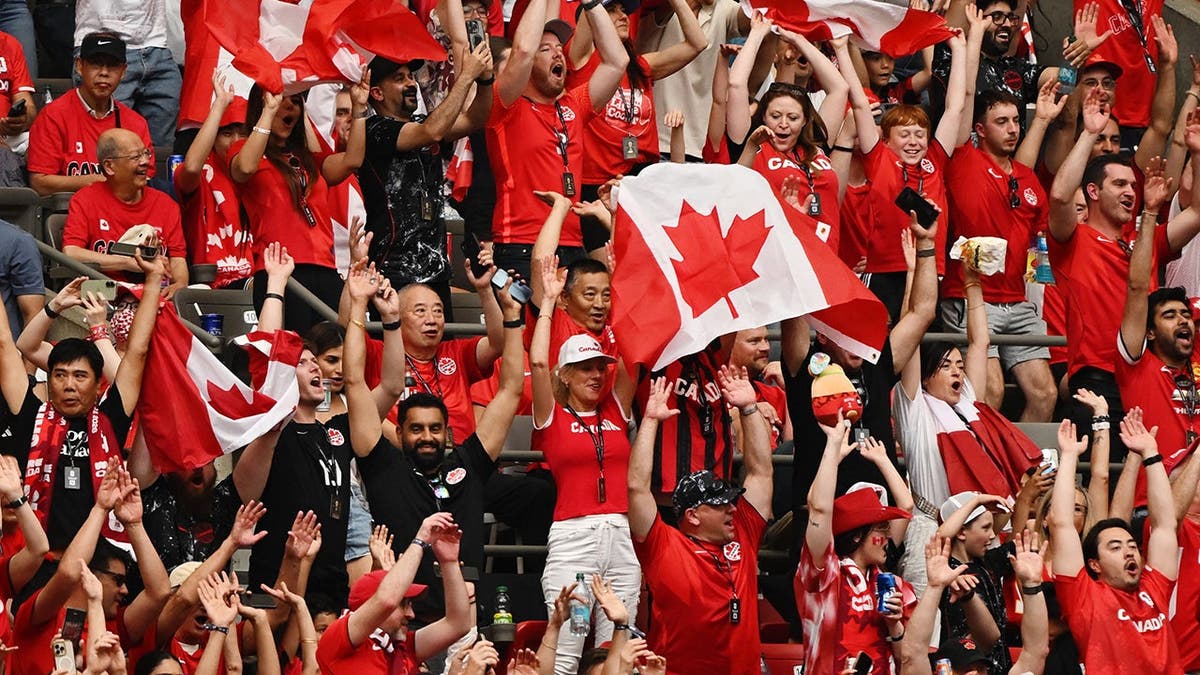
Canada entered Sunday’s Round of 32 match as a significant favorite to advance to the Round of 16 with a win over South Africa. But it wasn’t as easy for the Canadians as the odds might have indicated.
The two teams entered second-half stoppage time locked in a 0-0 draw. But Canada managed to score the winner in the 92nd minute. A cross into the box by the Canadians landed directly on the head of a South African defender, but the header bounced right to the chest of Canadian midfielder Stephen Eustáquio.
Canada players celebrate after winning their 2026 World Cup Round of 32 match against South Africa at Los Angeles Stadium.(Patrick T. Fallon/AFP)
Eustáquio settled the ball onto his right foot and then made no mistake, ripping a shot into the lower-left corner of the net, past South African goalkeeper Ronwen Williams.
Canada generated the better chances throughout, putting seven shots on goal to South Africa’s one and holding a 1.32-0.13 edge in expected goals, but the Canadians couldn’t break through until Eustáquio’s late winner.
Canada is serving as one of three co-hosts of the 2026 World Cup, along with the United States and Mexico. The Canadians played all three of their group matches on home soil, but defeated South Africa at Los Angeles Stadium on Sunday in Inglewood, Calif.
Canada won a knockout stage game at the World Cup for the first time ever.(Anne-Marie Sorvin/Imagn Images)
Canada was forced to play away from home after losing to Switzerland in its group-stage finale, which left it second in Group B.
Canada will next face the winner of Netherlands vs. Morocco in Houston on July 4.
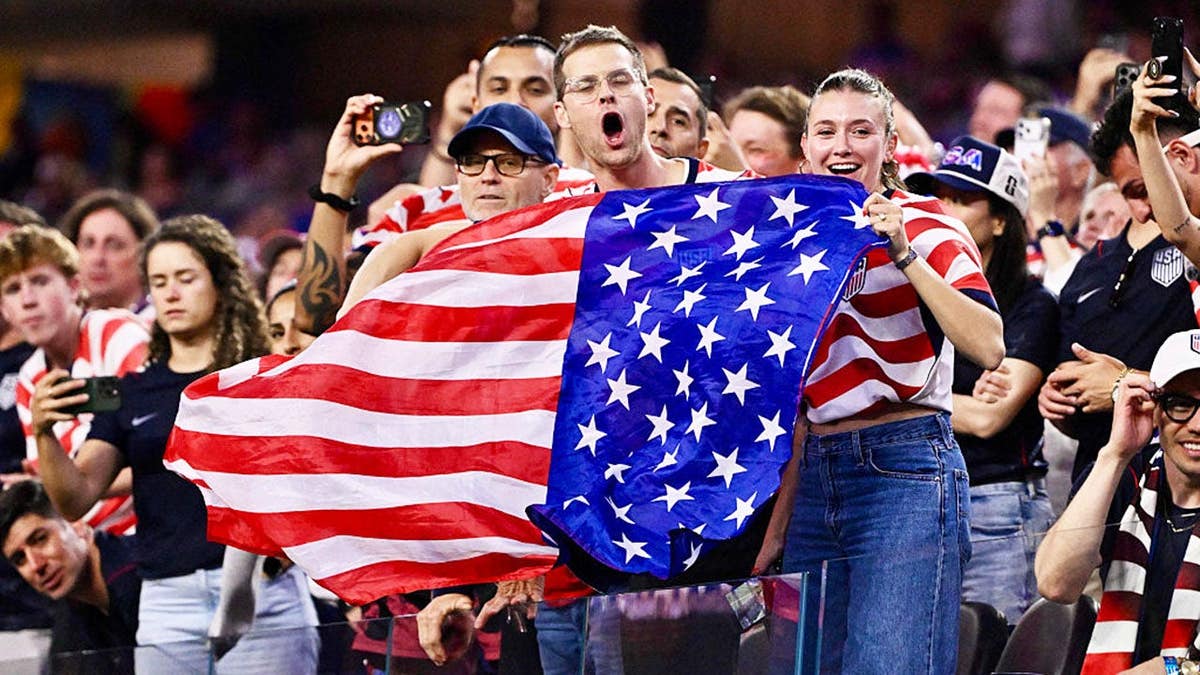
Bosnia and Herzegovina, the third-place team from Group B, faces the United States on Wednesday, July 1, at San Francisco Bay Area Stadium in Santa Clara, California. Unlike Canada, the United States won its group.
Team USA takes on Bosnia and Herzegovina in the Round of 32 on Wednesday night.(Keith Birmingham/Pasadena Star-News)
Team USA is a heavy favorite to defeat Bosnia (-700 at DraftKings) and advance to the Round of 16. Should the United States take care of business, it would face the winner of Belgium vs. Senegal on July 6.
Canada survived its scare. Now, the United States gets its chance to join its fellow North American co-host in the Round of 16.
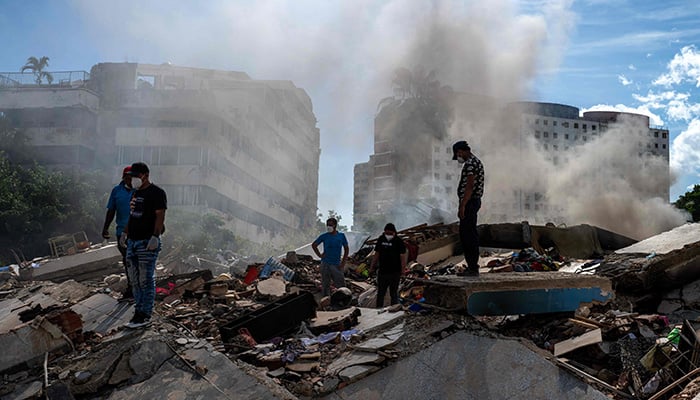
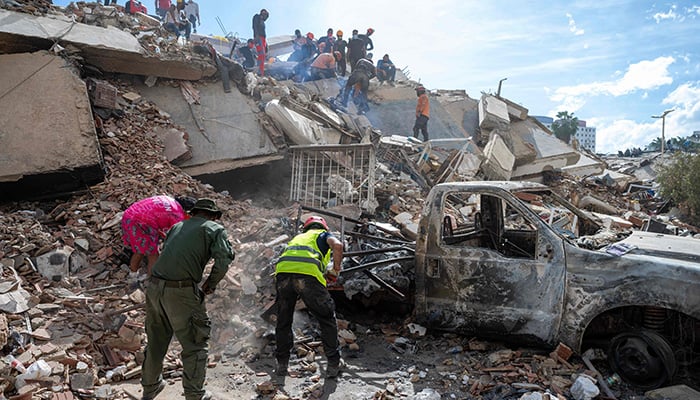
Rescuers and volunteers search for survivors in La Guaira, La Guaira state, Venezuela, on June 28, 2026, following twin earthquakes. — AFP
Tens of thousands remain missing across quake-hit regions.
Rescuers pull 33 survivors from collapsed buildings.
International aid arrives with supplies, dogs and rescuers.
A man and his teen son were found alive Sunday under the rubble in Venezuela four days after powerful twin earthquakes rocked the country, as the death toll hit 1,450 and hopes of such rescues dwindled.
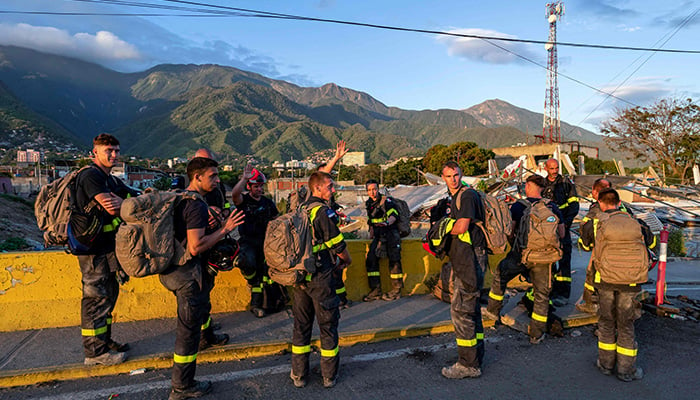
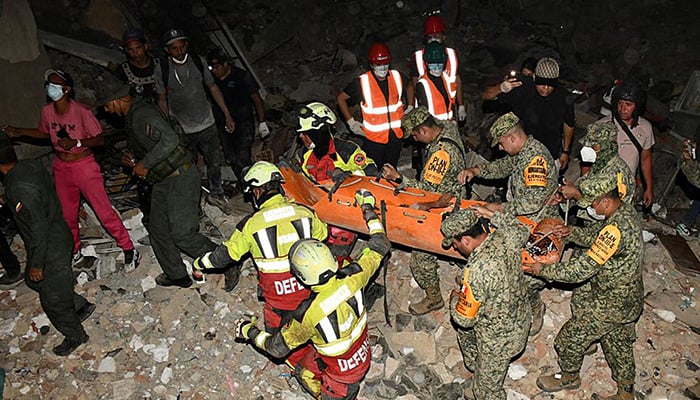
AFP journalists saw French and American rescue teams carry the son and his father down from a mountain of debris on stretchers, both visibly exhausted and in shock, in the devasted coastal town of Caraballeda, about 40 kilometers north of Caracas.
Tens of thousands of people were still reported missing, in a South American country already mired in economic crisis and political limbo after US forces captured former president Nicolas Maduro in January.
Millions more people were feared to lack sanitation and other basic needs after one of Latin America’s most devastating earthquake disasters.
Rescue teams from the United States, Mexico and elsewhere scrambled to save people as desperate residents dug by hand for relatives trapped in the pancaked layers and rubble of collapsed apartments.
Some 774 buildings were badly damaged in back-to-back quakes of magnitude 7.2 and 7.5 that struck on Wednesday evening, including 189 buildings that have totally collapsed, National Assembly President Jorge Rodriguez said Sunday.
Members of the French Civil Security Training and Intervention Regiment (UIISC 7) attend an area affected by building collapses in La Guaira state, Venezuela, on June 28, 2026, following earthquakes. — AFP
In one of the worst-hit areas, the coastal city of La Guaira, Hector Aguilera came to search for four family members buried in the rubble. Two other relatives were rescued.
“We don’t have the support to get our family out — we can’t do it alone. They are buried there: we know they are dead, but here we are,” he said.
“We have no hope left; all I have are memories.”
Experts say the first 72 hours after natural disasters — a period which has now passed in Venezuela — are the narrow window for finding the living. After that the search usually becomes one of recovering bodies.
In the San Bernardino neighborhood of Caracas, volunteer rescuers clambered over a collapsed building, using drills to break up concrete and forming lines to remove rubble by hand.
In Chacao, another area of the capital, large electronic screens on a building usually used for advertising were showing the faces of missing people in a bid to help find them.
On Sunday, Rodriguez reported 1,450 dead — a toll expected to rise — with 3,150 people injured.
‘Source of hope’
Interim Venezuelan President Delcy Rodriguez said Saturday that rescuers had pulled 33 people from the ruins.
Rescuers and volunteers search for survivors on the rubble of a collapsed building in La Guaira state, Venezuela, on June 28, 2026, following earthquakes. — AFP
US helicopters ferried in aid, but hope had been running out for more people to be pulled out alive.
A Salvadoran rescue worker who declined to give his name put it this way: “At this point, they are probably dead bodies. Thanks to God maybe we can find people still alive.”
An 11-year-old boy was rescued from the rubble Saturday in Caraballeda, north of Caracas, Rodriguez said.
“Every life is a source of hope for Venezuela,” she said in an X post accompanied by a video of the rescue.
Facing public outrage at the response by local officials, Rodriguez thanked other countries for the outpouring of aid.
A handout photo released by the Mexican Army shows the rescue of a nine year old boy in an area struck by twin earthquakes in La Guaira state, Venezuela, on June 28, 2026. — AFP
Twenty-four nations have sent 521 tons of supplies, 86 units with dogs trained to locate people trapped beneath the rubble and more than 2,700 search-and-rescue personnel, she said.
The United States said Saturday that one runway at Simon Bolivar International Airport, which serves the capital, was partially functioning to receive US military planes, while a naval ship had arrived off the coast. The US has also sent a 250-strong disaster response team.
Economic impact
The UN migration agency said that based on population and damage data, up to 6.76 million people could be affected, and would require shelter, water, sanitation, healthcare and essential relief items.
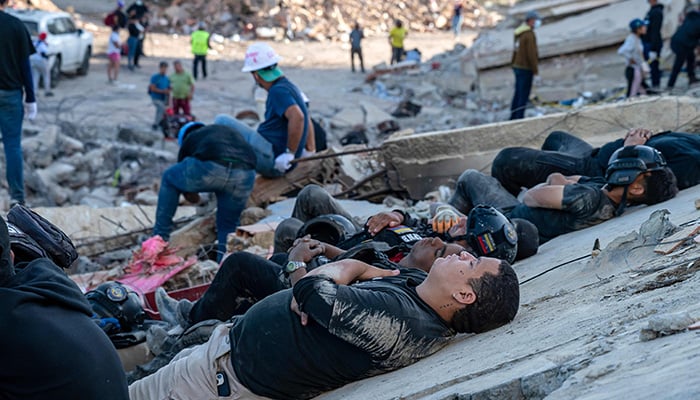
Rescuers and volunteers rest on the rubble of collapsed buildings in Caraballeda, La Guaira state, Venezuela, on June 28, 2026, following earthquakes. — AFP
Venezuela’s worst earthquakes in more than a century have come after the oil-rich country endured more than a decade of economic collapse.
The crisis has hollowed out hospitals and public services, driving millions to leave the country.
The United Nations estimated $6.7 billion in physical damage from Wednesday’s earthquakes — equivalent to 6% Venezuela’s GDP.
The government has restricted access to La Guaira state, deployed the military to the area and required volunteers to obtain a safe-entry pass.
Anger among those impatiently waiting to volunteer surged as they stood by for passes outside a concert hall in Caracas.
“You need a permit to save lives — just imagine,” complained Carlos Itriago, 27.
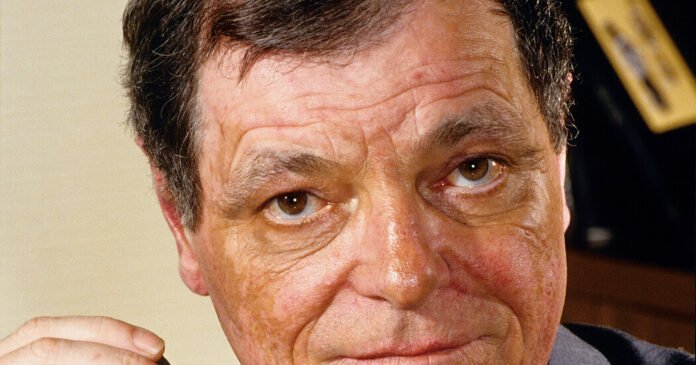
Philippe Stern, who inherited one of the world’s leading luxury watch brands, Patek Philippe, and overcame an existential threat to Swiss watchmaking from cheaper, more accurate quartz watches in the 1970s, died on June 14. He was 88.
The Geneva-based Patek Philippe, where Mr. Stern was president from 1993 to 2009, announced his death. No details were provided about the place or cause.
As the third generation of his family to run Patek Philippe, Mr. Stern introduced new models that pushed the technical boundaries of mechanical watchmaking. He also marketed $40,000 handmade watches as a status symbol — a Mercedes-Benz for the wrist — and helped stimulate a market of passionate collectors who pursued their quarry across enthusiast magazines and websites.
Mr. Stern “was the guardian of a vision that helped shape the entire contemporary watchmaking industry,” according to one of those websites, Italian Watch Spotter, after his death.
In Swiss watchmaking, the 1970s became known for “the quartz crisis,” which followed the 1969 introduction by the Japanese company Seiko of the first electronic wristwatch to use a quartz crystal oscillator to keep time.
These watches were significantly more accurate than mechanical timepieces produced by heritage Swiss firms, whose products were threatened overnight with obsolescence. As Japanese and American quartz-crystal watches dominated the market, employment in Swiss watchmaking fell disastrously from 1970 to the late ’80s.
The brands that survived moved to the luxury end of the business, promoting craftsmanship and an aura of prestige in a mechanical watch costing thousands of dollars. Mr. Stern, who became general manager of Patek Philippe in 1977, was a principal architect of this reinvention.
That year, he oversaw the introduction of the 240 Caliber, a new design for the inner mechanics of a watch. It packed 152 parts into an ultrathin package that included a self-winding feature driven by a 22-carat gold rotor.
The design “repositioned the automatic watch as an object of elegance rather than mere function, competing with quartz not on precision but on refinement,” according to the website SJX Watches. “It remains one of the most influential movement architectures in postwar horology.”
The company’s identity was embodied in an advertising slogan rolled out in 1996: “You never actually own a Patek Philippe. You merely look after it for the next generation.”
Mr. Stern also promoted the Nautilus, first sold in 1976 and still Patek Philippe’s most famous model. It is a thick sports watch in steel that costs as much as some gold watches. The rounded octagonal shape, resembling the porthole of an ocean liner, was said to have been inspired by Mr. Stern’s passion for sailing.
“When the Nautilus was introduced, the watch industry was confronted with the quartz crisis,” Nicholas Foulkes, author of “Patek Philippe: The Authorized Biography,” told The New York Times in 2019. “Philippe Stern had an incredible vision that mechanical watches would come back.”
Another milestone — more symbolic rather than commercial — was the nine-year development of Caliber 89 to mark the company’s 150th anniversary in 1989. The Caliber 89 is a pocket watch with 24 hands and 33 complications, or functions beyond simple timekeeping. They included a daily display of sunrise and sunset, and a star chart whose hands display the path of Altair, a star after which Mr. Stern named a series of racing yachts.
Only four examples of Caliber 89 were originally made; one sold at auction for $5 million in 2004. Its accuracy — within a second a day — “cannot compare to a quartz watch,” Mr. Stern told The New York Times in 1989. “But the value of the piece is that it is mechanical. Precision is not the most important thing. The tradition of watchmaking is.”
Philippe Stern was born in 1938 in Geneva to Henri Félix Stern and Henriette (Delessert) Stern.
Philippe Stern is the namesake of Adrien Philippe, who joined with Antoni Patek in the watchmaking business in 1845.
Mr. Stern’s grandfather, Charles Stern, and his great-uncle, Jean Stern, who had a business supplying Patek Philippe with watch dials, rescued the firm from insolvency in 1932 during the Great Depression and became the new owners. The company has been privately held ever since, one of the few remaining independent Swiss watchmakers.
In 2014, Forbes estimated the Stern family collectively had a net worth of around $3 billion.
Mr. Stern began his career working for Patek Philippe’s distributor in the United States in 1963. He returned to Geneva three years later, soon rising to general director.
In 2009, he passed the presidency to his son, Thierry, who survives him, as does a daughter, Christine Shrestha-Stern. Complete information about survivors was not immediately available.
Philippe Stern was an avid sportsman. As a young man, he was a member of the Swiss national ski team. As a sailor, he was a multiple winner of the Bol d’Or du Léman Regatta, a 100-mile race the length of Lake Geneva and back. After winning the race three times, in 1980, 1982 and 1984, he was allowed to keep the winner’s trophy permanently.
Mr. Stern also supported his wife, Gerdi, in her passion for sled dog racing, a North American sport embraced in the 1980s by the Swiss. Mr. Stern accompanied his wife and her team of “16 or 18” dogs to races, including the world championships.
Fox News anchor Shannon Bream covers the escalating conflict in the Middle East as Trey Yingst reports from Tel Aviv. The U.S. carried out strikes against Iranian missile and drone storage locations after Iran targeted shipping in the Strait of Hormuz. Additionally, Iran launched drones toward Kuwait and Bahrain, while Israel conducted strikes against Hezbollah in Lebanon. These events coincide with a diplomatic framework agreement between Israel and Lebanon.
NEWYou can now listen to Fox News articles!
A “new normal” of heightened risk and uncertain regulation is impacting the Strait of Hormuz, shipping firm Hapag-Lloyd warned Sunday, as military strikes escalated and conflicting routing directives plunged the waterway into operational chaos.
The remarks from the German shipping giant also came as Tehran “simultaneously” began moving millions of barrels of crude oil from Kharg Island for the first time in days, according to maritime intelligence firm Windward AI.
“At Kharg, the T-Jetty and Western Terminal loaded simultaneously for the first time in days; the East Waiting Area holds 28 tankers, 27 dark, signaling the Iranian crude export cycle restarting,” Windward AI said in a post on X.
The outbound cargo consists of an estimated 4.12 million barrels of wet cargo, including crude oil and other liquid hydrocarbons. Of that total, about 3.91 million barrels are crude oil, analytics firm Vortexa said.
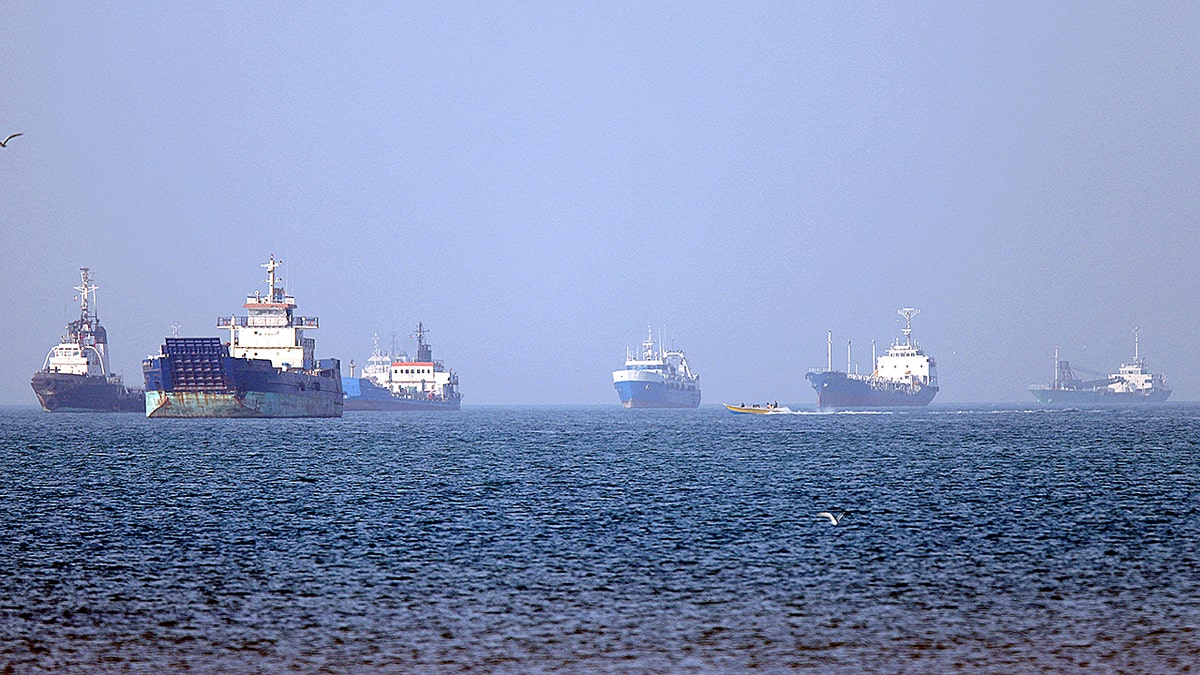
Commercial cargo vessels and crude oil tankers are anchored in the Gulf of Oman off the coast of Muscat, Oman, as they prepare to transit through the Strait of Hormuz, a critical global trade corridor.(Shady Alassar/Anadolu)
“We have to acknowledge that this is for some months the new normal in the Persian Gulf region,” Hapag-Lloyd AG spokesperson Hanja Maria Richter told Fox News Digital.
“The situation has been fluid for us since the beginning of the conflict,” she said before adding that constant vigilance has become essential to operating in the region.
“We have been making and still make regular risk and situation assessments with our security partners, all relevant authorities and our people on shore and, of course, on the vessels,” Richter said.
“It is a region in conflict, so we consider this with every single ship we move in the region and assess the risks for every vessel and its crew individually.”
USS George H.W. Bush transits the Arabian Sea as U.S. forces enforce a naval blockade against Iran and support Project Freedom in the Strait of Hormuz, according to U.S. Central Command.(CENTCOM)
Richter’s remarks came as U.S. Central Command (CENTCOM) launched airstrikes against Iranian targets, including Qeshm Island on June 26 after a vessel was struck in the strait.
This prompted Iran’s Islamic Revolutionary Guard Corps (IRGC) to retaliate by targeting U.S. military sites in Kuwait and Bahrain.
Adding to the strike risk is a tug-of-war over control of the transit lanes.
Lloyd’s List described the fracturing of the waterway as a “confused, two-tier system now operating in the strait, which remains split between the Iran-controlled northern route and a U.S.-protected southern ‘highway,’ with the pre-war routes rendered unusable because of the risk of mines, separating them.”
Iran is responsible for managing and fully reopening maritime traffic through the Strait of Hormuz under recent understandings, Iranian Foreign Minister Abbas Araghchi said Sunday, according to Iran International.
Ships are anchored in the Strait of Hormuz off Bandar Abbas in southern Iran on May 4. A report on May 15 said a ship was seized off the coast of the United Arab Emirates and is being brought to Iranian waters.(Amirhossein Khorgooei/ISNA/AFP via Getty Images)
Iranian state television said that passage through the Strait of Hormuz demands coordination with the IRGC.
Hapag-Lloyd pushed back against any future attempts to weaponize or monetize passage through the critical global chokepoint.
“It would be fundamentally wrong to impose fees for passage through international waters,” Richter said.
“Fees for infrastructure such as the Suez Canal or the Panama Canal are a different matter, as they reflect major infrastructure investments. That is not the case with the Strait of Hormuz.”
While thousands of crew members remain caught by conflicting naval directives, Hapag-Lloyd said it had successfully navigated the initial bottleneck.
“Good news is that we were able to have all Hapag-Lloyd vessels that were affected by the temporary closure of the Strait of Hormuz and had been waiting in the Persian Gulf depart safely from the Gulf,” Richter noted before adding that “the safety of our crews is our highest priority.”
Emma Bussey is a breaking news writer for Fox News Digital. Before joining Fox, she worked at The Telegraph with the U.S. overnight team, across desks including foreign, politics, news, sport and culture.
Fox News’ Todd Piro covers a devastating plane crash in Missouri, resulting in the deaths of 11 skydivers and their pilot. The incident occurred near Kansas City after takeoff, with families tragically witnessing the fiery scene. The FAA and NTSB are investigating, suspecting power issues were a factor, though no intentional act is indicated.
NEWYou can now listen to Fox News articles!
A plane carrying participants in a skydiving activity crashed shortly after takeoff in northeastern France on Sunday, killing all 11 people aboard, authorities said.
The Meurthe-et-Moselle Prefecture said on X that the aircraft crashed after departing from Nancy-Essey Airport, prompting officials to activate the department’s operational command center.
The Associated Press reported the victims included five parachuting instructors, five novice jumpers preparing for tandem skydives and the pilot.
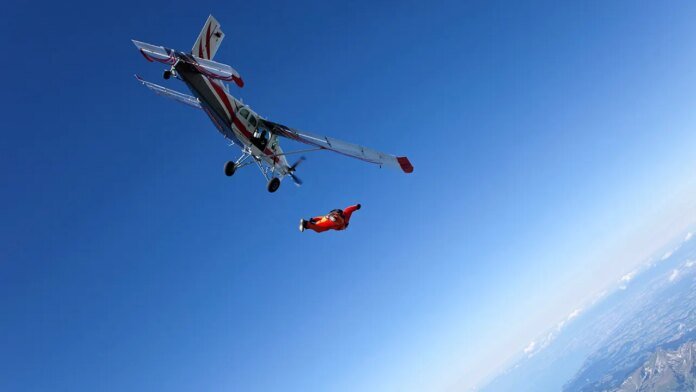
A skydiver exits a single-engine aircraft during a jump in an undated file photo. Authorities said 11 people were killed after a skydiving plane crashed shortly after takeoff in northeastern France on Sunday.(iStock)
Prefect Yves Séguy told reporters the aircraft suffered a malfunction and “fell almost vertically,” narrowly missing a populated area.
“Had it occurred just a few dozen meters away, the accident could have caused collateral casualties,” Séguy said.
Flight tracking data from Flightradar24 showed the single-engine Pilatus PC-6 banked left shortly after takeoff before crashing less than a minute later near residential homes, about 300 yards from the runway.
Interior Minister Laurent Nunez said he traveled to the crash site with Transport Minister Philippe Tabarot, where they met with local officials and emergency responders.
Nunez wrote on X that he felt “immense emotion” while meeting with local officials and praised the coordinated response of firefighters, emergency personnel, police, gendarmerie and civil security teams.
He said a medico-psychological emergency unit was activated shortly after the crash to support victims’ loved ones and those who witnessed the tragedy. Some family members waiting at the airport witnessed the crash, according to officials.
Nunez added that the investigation, directed by the Paris prosecutor’s office and assigned to the Air Transport Gendarmerie’s investigative unit, will determine the cause of the crash.
Tabarot described the incident as a “terrible tragedy” and extended his condolences to the victims’ families before traveling to the scene alongside Nunez.
In a later post on X, Tabarot said investigators from France’s Bureau d’Enquêtes et d’Analyses had visited the crash site and opened an investigation to determine the precise circumstances of the accident. He also described the crash as France’s deadliest aviation accident involving a skydiving flight in about 30 years.
The parachutists were preparing for tandem jumps, in which novice participants are harnessed to experienced instructors for the descent.
French broadcaster BFM-TV spoke with a local resident who said he heard what sounded like the aircraft’s engine stopping before a loud impact. When he reached the crash site, he said there were no signs of life.
In that crash, the aircraft was carrying 11 skydivers and a pilot. Many of the passengers were preparing for tandem jumps and were inexperienced first-time skydivers, officials said. Some family members waiting at the airport also witnessed the crash.
The Associated Press contributed to this report.
Greg Wehner is a reporter for Fox News Digital covering U.S. news and crime, with a focus on breaking developments, law enforcement, public safety and major stories shaping communities across the country.
On the women’s side, Swiatek hasn’t looked to be in top form — and it feels wide open at the All England Club. Could Aryna Sabalenka win her first major title on grass? Or will an American such as Jessica Pegula, Coco Gauff or Madison Keys take advantage of the opportunity?
Chris Eubanks: My pick to win the women’s draw is Sabalenka. She’s No. 1 in the world. She’s been the most consistent player on tour for the past couple of years. And she’s made some changes to her game over the last year that I think will shine brightly on the grass.
When she brought in Max Mirnyi, she wanted to improve her transition game. It’s been about a year, and I think she has become much more comfortable transitioning to the net and finishing points off. That will be hugely important on the grass, and a Wimbledon title is one of the few things in the sport that she hasn’t been able to do. You got to think that lifting the trophy here is high on her priority list and she has a great opportunity to do that here.
D’Arcy Maine: This is tough. There isn’t an obvious choice here, and none of the recent front-runners have had runaway success on grass thus far this season. Swiatek lost in the opening round of her lone tuneup event on the surface in Bad Homburg. Sabalenka had a catastrophic collapse at Roland Garros in the quarterfinals and got bageled in the deciding set of the semifinals at the Berlin Open. Elena Rybakina, arguably one of the best players on grass in recent years, went 1-2 in her two tournaments on the surface. Mirra Andreeva, the newly crowned French Open champion, lost her only match on grass. As did Gauff, who has never advanced past the fourth round at the All England Club.
So all this to say: feeling confident about a prediction here might be next to impossible. I am — reluctantly — picking Sabalenka, largely based on her proven consistency at majors and because she might have a chip on her shoulder after Paris. But truly, it’s anyone’s guess here.
Bill Connelly: Well, I can’t be any more wrong than I was with my French Open picks, so let’s take a swing and go with Pegula. Her Wimbledon history is not great — she’s just 8-6 all time there, and four of those wins came in one run (2023) — but she has such a good grass-court game, and one of these years, her success on German grass could translate to the grass at the All England Club.
Her draw is pretty good (landing in the same quarter as Gauff, who has an even worse recent Wimbledon track record) and perhaps a bit of a favor since Tennis Abstract gives her the second-best odds of reaching the semis, behind only Sabalenka (46.1%), who she just beat on grass. This feels like a solid “If not now, then when?” situation for the 32-year-old.
Simon Cambers: Pass. OK, but you’re going to need to forgive me if I get this horribly wrong. This is the most open women’s singles at Wimbledon in recent memory, a feeling replicated by the odds, which has world No.1 Sabalenka a very vulnerable 4-1 favorite. While the Belarusian has had a couple of worrying defeats of late, defending champion Swiatek has a horrible draw in Week 1, and Rybakina and Gauff have both dropped off. Any of them are capable of playing well but the two players in form on grass are Pegula and Madison Keys. Of those two, Keys has the grass-court résumé, and if she can stay healthy, she could spring a shock.
Who is your men’s pick to win the title?
Eubanks: Sinner. His early round exit in Roland Garros was a massive shock to the tennis world but I don’t think we’ll see that in back-to-back Grand Slams. Before RG, Sinner was so dominant on tour that players were struggling to take sets off him. He won every big title that led into RG. Yes, the loss was disappointing, but I think that the mental exhaustion and fatigue of his dominance leading up to RG had to have played a part. Now that he’s had a little time off, I tend to think he’s recharged and ready to go and I’ll be looking for him to continue that dominance that we saw before Paris.
Maine: Even after his implosion at Roland Garros, Sinner still feels like the clear favorite to win the title. He is without his fiercest rival in Alcaraz and will likely be wanting to do everything he can to avenge his (still shocking) early exit in Paris. He has a relatively easy path into the second week, and while Daniil Medvedev could potentially play spoiler in the quarterfinals (he beat him in the same round in 2024) and Djokovic could await in the semifinals, this feels like his title to win.
Of course, as the French Open proved, Sinner’s most formidable foe might just be the elements. While London has been experiencing its own heat wave leading into the tournament, the temperatures are expected to be cooler in the first week (mostly in the high 70s) and should likely not be a factor for Sinner. They are expected to climb again in the second week, which could make things interesting, but one would have to think he and his team are doing everything they can to proactively address the issue, and he will at least be in a better position to handle it if necessary.
Connelly: We know what can happen to him in hotter conditions, but it still feels like a massive risk to pick anyone other than Sinner to win a tournament he enters. Novak Djokovic is at his most dangerous on grass, and a number of Americans — Taylor Fritz, Ben Shelton, Frances Tiafoe, Tommy Paul — have honed solid grass-court games through the years. But it’s still Sinner vs. the field (and his body).
Cambers: With no Alcaraz, the path would seem clear for Sinner to repeat his triumph of 12 months ago. It all depends on whether the Italian has recovered, physically and mentally, from the issues that affected him last month in Paris, when he wilted in the heat. He’ll certainly be glad of relatively cooler conditions for Week 1, and there’s no reason to think he won’t prosper.
Djokovic has a good draw, on paper, but is in the same half as Sinner. In the other half, perhaps Ben Shelton could come through. The American won Stuttgart and his great serve makes him even more dangerous on grass. If it’s not Sinner, then Shelton could go close.
Pamela Maldonado: Iga Swiatek (+750). The question is less about who has the best odds and more about whose path matches the demands of major grass-court matches. Swiatek’s draw is pretty manageable by Wimbledon standards. Her projected path doesn’t have her facing a true power server until deep in the tournament, and her movement and return game are good enough on grass. At her price, Swiatek’s draw minimizes her biggest weakness, which is finishing points quickly on this surface.
Andre Snellings: Any American woman (+240). Wimbledon tends to be wide open on the women’s side; there has been a unique champion every season since Serena Williams won two straight in 2015 and 2016. As such, I really like this prop because it lets you bet on several players who have a legitimate chance to win. Last year’s French Open champion, Coco Gauff (+1100), Jessica Pegula (+1200), last year’s Australian Open champion, Madison Keys (+1400), last year’s Wimbledon runner-up, Amanda Anisimova (+1300), and Emma Navarro (+6000) all have cases to be made. Even Williams (+3500) — in her return to singles after years away from competition — contributes to this group of American contenders and falls under this umbrella prop in her attempt to get to 24 Grand Slam singles titles.
Who is your men’s pick to win?
Maldonado: Novak Djokovic (+600). He has the most important thing at Wimbledon: a draw that allows him to be himself because he doesn’t have to play elite players immediately. He avoids a true title contender until the semifinal, and if Novak gets to a Wimbledon semi … history says you want exposure.
Snellings: Jannik Sinner (-165). Sinner is the odds-on favorite to defend his Wimbledon title with Carlos Alcaraz still sidelined. His second-round loss at the French Open last month was shocking and has been tied to his physical reaction to the extreme heat at that tournament. Sinner was checked out medically and has only played an exhibition since that loss, but he looked good in defeating Cam Norrie 6-3, 6-3 during a heat wave in that match. I look for him to return to form, and when he is in form, Sinner is a level above the current competition with Alcaraz away.
What’s another bet that stands out on the women’s side?
Maldonado: Elena Rybakina (+600). She’s a former Wimbledon champion, has arguably the best serve in women’s tennis outside Sabalenka, has flat groundstrokes that penetrate grass, is comfortable winning short points and doesn’t have to adapt her game to the surface because her game was essentially built for it. She’s a bit off-rhythm as of late, but WTA volatility says don’t put too much weight on that.
Snellings: Aryna Sabalenka to reach the semifinal (+180). Sabalenka is the favorite to win the tournament at +350, but you get more than half the juice of a win at plus money for her to make the semifinals. While Sabalenka has some big names in her quarter, her main competition has not had success reaching the Wimbledon semifinals. Mirra Andreeva (+350) is fresh off winning her first major at the French Open, but grass is a very different surface than clay, and Andreeva has never been past the quarterfinal at Wimbledon. Neither has Karolina Muchova (+650), who has not been past the first round at Wimbledon since 2021. Sabalenka has participated in three WImbledons since 2019, and she has made the semifinal every time.
What’s another bet that stands out on the men’s side?
Maldonado: Round 1: Marin Cilic +4.5 games vs. Daniil Medvedev. Cilic is an outstanding grass-court performer. Big-serving veterans on grass can create a lot of competitive losses. Medvedev might have the better current overall form, but Cilic’s serve is still good to force at least for a tiebreak or a four-set match if not even win. The veteran serve will make Medvedev sweat every game.
Snellings: Taylor Fritz to make the semifinal (+350). Fritz is the sixth seed at Wimbledon, and he is in the same quarter with No. 2 Alexander Zverev (+200 to win the quarter), Jack Draper (+550) and Francis Tiafoe (+650). Fritz has dominated his head-to-head clashes with Zverev of late, winning seven straight matchups including their most recent meeting this month on grass in the semifinals of the Halle Open. Fritz also won their only grass matchup at a major, at Wimbledon 2024 in the round of 16. Fritz’s big serve and surprising mobility given his size serve him well on grass. He made the Wimbledon final last year and has been in at least the quarterfinals in three of the past four years.
Who’s your favorite long shot bet to win the women’s title?
Maldonado:Naomi Osaka 30-1. If you want a degenerate “what if” lottery ticket, Osaka is it. Four years ago, she would be the favorite. Grass rewards her first-strike style, her current form is stellar making the Homburg Final, her serve is back and her percentage of first serve points is 80-plus, which is a magic number on grass. Osaka can fail to be the better tennis player in her matches, but if she’s the better server, that can get her far.
Snellings:Donna Vekic to win (+4000). Vekic enters Wimbledon on a high note after having won the Queen’s Club Championship on grass in the leadup to the major. Vekic has made six finals on grass in her career and made the semifinal at Wimbledon in 2024. Her game seems to be peaking at an opportune time, particularly with many of the favorites having patchy results on grass this season.
Who’s your favorite long shot bet to win the men’s title?
Maldonado: Taylor Fritz (+2000). I expect him to get past Jack Draper in the first-round popcorn match, which could be the clash of the tournament. It won’t be easy, but if Fritz does survive, he has the elite serve, comfortable winning tiebreaks, has proven ability to win ugly and has no obvious weakness that gets amplified on grass. Fritz wins matches where the margins are tiny, and for a long shot, that bodes well. Beat Draper, beat potentially Tiafoe/Cerundolo and suddenly, you’re holding a semifinal ticket on arguably the best server remaining in the bottom half.
Snellings: Francis Tiafoe (+4000). Tiafoe has a history of putting together surprising runs in majors. He made the quarterfinals of the French Open last year, and in the three years before that, he made the semifinals at the US Open twice. In fact, he has made at least the quarterfinal in every major except Wimbledon, where his best result was a fourth-round finish in 2022. But Tiafoe is playing particularly well on grass this season with a 7-1 record, including winning the championship at Halle by defeating Taylor Fritz in the final. When his game is locked in, Tiafoe can be a tough out on any surface.
Mitchel Musso regrets working in ‘Hannah Montana’ after years?
Mitchel Musso recently admitted that he lost many opportunities because of his Hannah Montana contract with Disney.
The 34-year-old American actor and singer appeared on the Wednesday, June 24 episode of The Joe Vulpis Podcast, where he opened up about passing up different offers while Hannah Montana was airing on Disney Channel from March 25, 2006, to January 16, 2011.
Musso, who played Oliver Oken, the best friend of titular character Hannah Montana (played by Miley Cyrus), said all the actors sacrificed lucrative jobs because of the show.
He said, “I don’t know if you could have done anything bigger than Hannah [Montana] when Hannah was on, right? That was bigger than life.”
“So, I’m sure there were things that were offered to my agency, but it was impossible to do it because we were so locked in with Disney. If it wasn’t a DCOM — a Disney Channel Original Movie — then…we couldn’t do it,” the Pair of Kings star shared.
Vulpis asked him to share his most treasured memory from the set of Hannah Montana, to which Musso said the bond he made with his co-stars, especially Cyrus and Emily Osment, is something he will cherish forever.
“It was the cast. Like this is our middle school, high school, college. This was our [formative years]. We graduated a class of three. It was just me, Miley, and Emily, right? So, it was everything to us,” he quipped.
Alannah Keyser breaks silence after ‘Love Island USA’ removal
Love Island USA bombshell Alannah Keyser is speaking out after her abrupt exit from the reality dating show.
In a TikTok posted on Saturday, June 27, Alannah addressed a resurfaced video of herself singing along to a Roddy Ricch song containing a racial slur, while also disputing screenshots that circulated online.
“Hi everyone, I’m coming on here to address some things that have been circulated online,” Keyser began.
“I do want to begin by addressing the video of me singing along to a Roddy Ricch song that contains a racial slur. I’m sorry to whoever has seen that video and has been offended by it. That was never my intention,” she said.
“The video is from six years ago and that word is just not in my vocabulary anymore.”
The 21-year old admitted the backlash was difficult to process.
“When I first found out everything that was going on, it really broke my heart,” she said, adding, “But this has definitely been a learning lesson for me. And it sucks that I didn’t get a chance to really show my personality and who I am.”
Peacock confirmed Alannah’s departure during the June 25 episode.
According to the network, the resurfaced video and online posts only became public after she had entered the villa and therefore were not available during the show’s pre-filming vetting process.
Keyser’s removal comes after another contestant, Vasana Montgomery, was also kicked off over a similar controversy.
The Princess of Wales has shared an inspiring new photograph of herself smiling on a mountainside after completing Britain’s gruelling National Three Peaks Challenge on Sunday.
The Princess opened up about her own cancer journey in one of her most personal messages yet.
Dressed in hiking gear and surrounded by breathtaking scenery, Kate looked happy and determined as she reflected on the physical and emotional journey that inspired her latest challenge.
The future Queen revealed she undertook the demanding trek not only to test herself, but to “explore life beyond diagnosis” and raise awareness of the lasting impact cancer has on patients and their families.
In a heartfelt Instagram caption, the Princess spoke candidly about how cancer affects every part of a person’s life-not just physically, but emotionally, psychologically and spiritually.
Sharing her own experience, she explained that recovery requires far more than medical treatment alone, saying she wanted to shine a light on the importance of holistic healthcare and the support patients need long after diagnosis.
Her challenge was completed in aid of The Royal Marsden Cancer Charity, the hospital where Kate received treatment and of which she and Prince William are Joint Patrons.
Funds raised will help expand access to complementary therapies alongside clinical care and support research into integrating holistic care into cancer treatment across the UK.
The Princess successfully climbed the highest peaks in Scotland, England and Wales-Ben Nevis, Scafell Pike and Yr Wyddfa (Snowdon) within 24 hours.
Covering around 23 miles with more than 10,000 feet of ascent, the remarkable endurance challenge is considered one of Britain’s toughest outdoor feats.
She completed the trek with support from Mountain Rescue before being greeted at the finish by Prince William, Prince George, Princess Charlotte, Prince Louis and members of the Middleton family.
In recent months she has visited cancer centres, met patients, and repeatedly shared the importance of supporting not only those living with cancer but also the loved ones who walk the journey beside them.
Her latest message ends with a powerful reminder that resonates with countless families: “Please know you are not alone.”
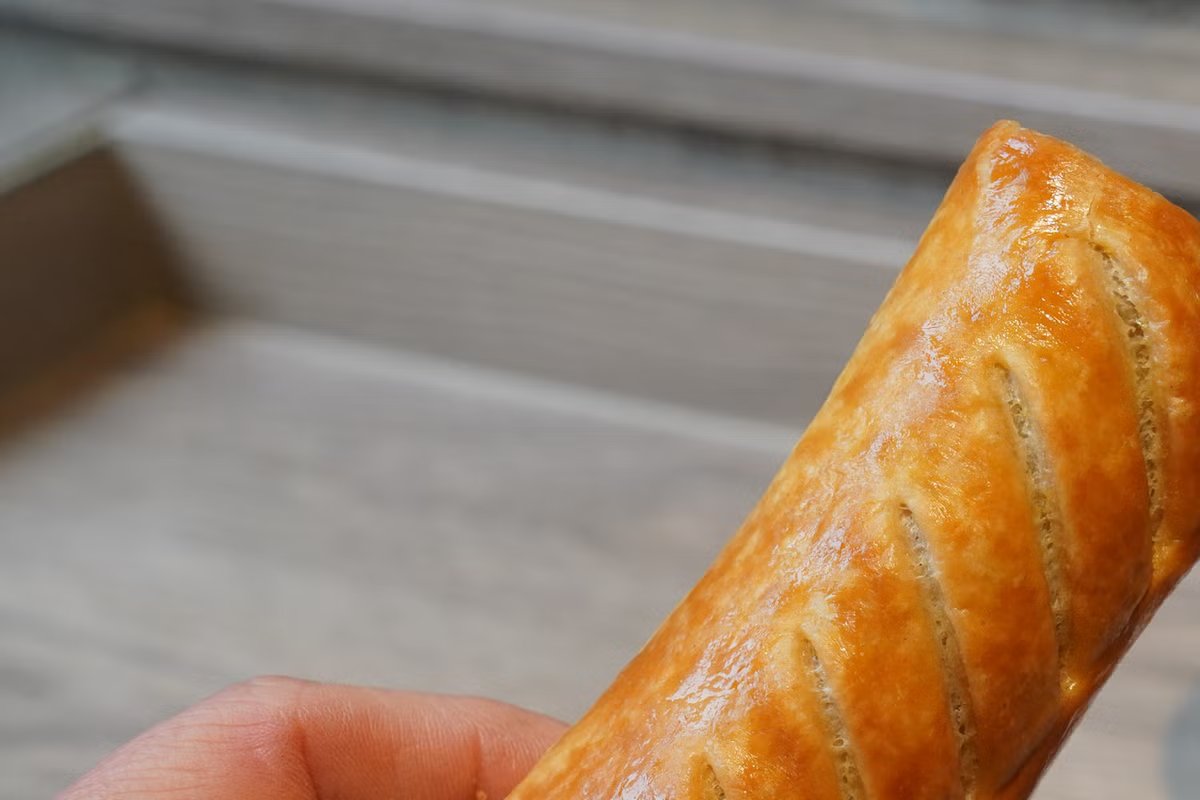
The humble sausage toll could be set for a modern makeover.
Scientists are working on a way to make one of Britain’s favourite snacks healthier without ruining its distinctive flaky pastry.
An estimated 10-15 million sausage rolls are sold in the UK each week, but a single one can contain more than 60% of an adult’s recommended daily saturated fat intake.
Now, researchers at Heriot-Watt University in Edinburgh are developing a new way to make their layered pastry, stating this could “significantly” cut the amount of saturated fat.
If successful, the team has said the process could be applied to a range of popular pastries to make them healthier.
Scientists are working on a way to make one of Britain´s favourite snacks healthier (PA)
Professor Stephen Euston, from Heriot-Watt’s School of Engineering and Physical Sciences, said: “We want to lower the level of saturated fat while keeping the taste and texture that people love.
“We’re focused on sausage rolls, but this also applies to other baked goods that contain laminated pastry such as croissants, Danish pastries and sweet or savoury turnovers.
“Reducing the saturated fat content of these ubiquitous snacks could have a very positive impact on the nation’s health and waistlines.”
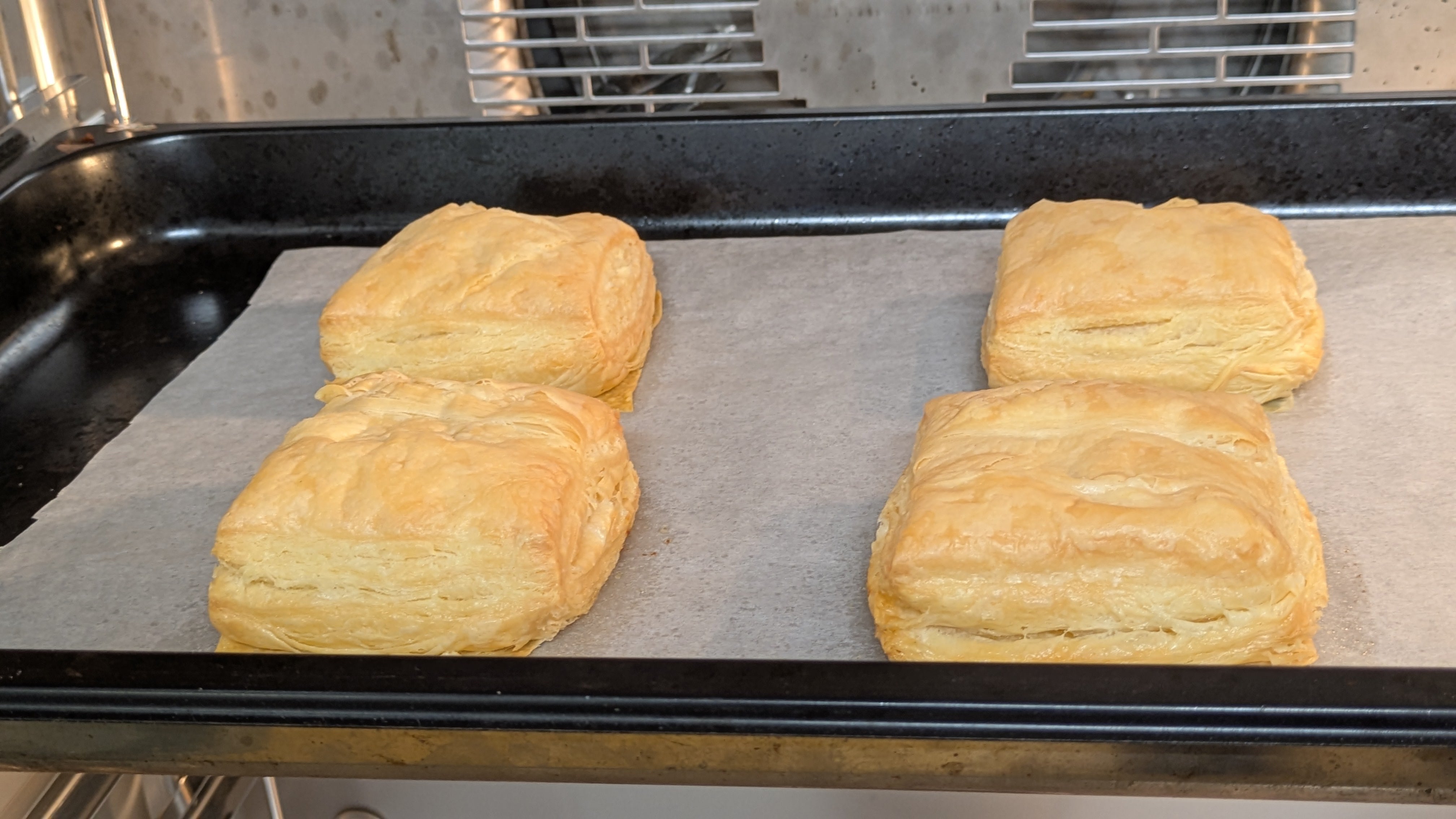
The puff pastry used in sausage rolls and other baked goods relies on fat for its distinctive flaky texture.
The team is hoping to find a way to replace the solid fats currently used with healthier liquid oils like sunflower or rapeseed, which are lower in saturated fat.
This involves using a process called oleogelation to turn them into a “solid-like fat”.
The team hopes this will mimic the behaviour of traditional fats, and deliver the same flaky texture.
“Making flaky pastry is surprisingly complicated,” Prof Euston explained.
“The fat is not just there for flavour; it plays a crucial structural role in the pastry.
“You need the fat sitting between the layers of dough so that when the pastry bakes, steam forces those layers apart and gives you that flaky texture people expect.
“Simply replacing the fat with a healthier oil doesn’t work, because liquid oils lack the structure needed to separate the pastry layers.”
Now researchers at Heriot-Watt University in Edinburgh are developing a new way to make their layered pastry, saying this could ‘significantly’ cut the amount of saturated fat (PA)
The team said they are focusing on oils from crops that can be grown in the UK, in order to minimise the impact of the approach on the environment.
As well as potential health benefits, Professor Euston said the research could benefit bakers as well.
Traditional laminated pastry often has to be chilled repeatedly during production so that the fat layers do not melt as the dough is folded.
Prof Euston said: “We are hoping our oleogels will stay stable at higher temperatures, which means manufacturers may not have to chill the pastry as much.
“If we are lucky, they might not need to chill it at all.”
The 10-month project is seeing researchers at Heriot-Watt working with industry collaborators New Food Innovation and AB Mauri.
The team has been funded by the UK Research and Innovation Engineering and Physical Sciences Research Council (UKRI EPSRC), with the aim of moving their modified pastry from the lab into the kitchen, and putting its taste to the test with real people.
Dr Andrew Bourne, UKRI ESPRC’s executive director for innovation and partnerships, said: “UKRI EPSRC’s Impact Acceleration Awards use public funding to turn promising research into practical solutions, and this project does exactly that.
“By taking innovative food science out of the lab into the kitchen and testing it with everyday consumers, it has the potential to make the nation’s favourite snacks healthier and make a genuine difference to our health and wellbeing.”
Alongside pastry, the researchers are also exploring whether the same technology could reduce saturated fat in vegan cheese alternatives.