Home Blog Page 139

Quote of the day by Michio Kaku: “The brain weighs only three pounds, yet it is…”

0
Quote of the day by Michio Kaku: "The brain weighs only three pounds, yet it is…"

Hold a three-pound weight in your hand. It isn’t much. A small bag of flour, maybe a chubby kitten. And yet, according to the physicist Michio Kaku, you’re holding the rough weight of the most complicated thing in our entire solar system. The brain weighs only three pounds, he wrote, yet it is the most complex object in the solar system. Think about what that’s actually claiming. Not the most complex thing on your street, or in your city, or even on Earth. In the whole solar system. More intricate than the sun, the storms of Jupiter, the rings of Saturn, anything out there. That staggering little organ is sitting inside your skull right now, reading these words, and quietly being more complex than entire planets.

Quote of the day by Michio Kaku

“The brain weighs only three pounds, yet it is the most complex object in the solar system.”

Who is Michio Kaku

Michio Kaku is an American theoretical physicist and one of the best-known science communicators alive. Born in California in 1947, he helped co-found a branch of physics called string field theory, and he teaches at the City College of New York.But most people know him from outside the lecture hall. He’s written a run of bestselling books, like Hyperspace, Physics of the Impossible and The Future of the Mind, and he turns up regularly on television and radio explaining big, strange ideas in plain language. He has a rare gift for making the deepest puzzles in science sound exciting rather than intimidating, which is exactly what he’s doing in this line about the brain.

What makes the brain so complex

The quote comes from his 2014 book The Future of the Mind, and the claim isn’t just poetry. It rests on some genuinely astonishing numbers. Your brain holds something like 86 billion nerve cells, and each one connects to thousands of others, adding up to trillions of links. The result is a web so vast that scientists still can’t fully map it.What makes it stranger is how little power it draws. Kaku liked to point out that your brain runs on roughly 20 watts, less than a dim light bulb. To copy what it does, he said, you’d need a supercomputer the size of a city block and a power station to feed it. Three pounds of soft tissue, sipping the energy of a light bulb, doing what no machine on Earth can match.

What is the meaning of the quote by Michio Kaku

On the surface, the quote is simply marvelling at the brain. But there’s a deeper point tucked inside it, about complexity and size.We tend to assume big things are impressive and small things are not. A giant planet feels grander than a lump of tissue you could hold in one hand. Kaku flips that around. The most complex object we know of in our corner of the universe isn’t enormous at all. It’s small, soft, and folded inside every human head. Complexity, he’s reminding us, has nothing to do with size. The richest, most intricate thing for millions of miles might be the very thing you’re using to read this sentence.

Why this quote is relevant

It’s easy to feel small and unremarkable. We’re tiny specks on one planet, circling an ordinary star, in a galaxy of billions more. Kaku’s line quietly turns that around. The thing doing the feeling, the brain, is itself the most extraordinary object in the neighbourhood.There’s something grounding in that. You don’t have to achieve anything special to be carrying around a real marvel. It’s already there, humming away, whenever you recognise a face, picture tomorrow, or wonder about the stars. In an age that keeps telling us to upgrade ourselves, it’s worth remembering that the most advanced technology any of us owns is the one we were born with.

How to apply this quote in daily life

This one is less a to-do list and more a shift in how you see yourself. Still, it cashes out in a few ways.

  • Treat your brain like the rare instrument it is. Sleep, food, movement and rest aren’t luxuries. They’re basic upkeep for the most complex object in the solar system.
  • Feed it new things. A brain this intricate is built to learn. Curiosity, new skills and fresh problems are what keep it lively, at any age.
  • Go easier on yourself. If your mind wanders, forgets or tires, remember it’s juggling trillions of connections in real time. A little patience is fair.
  • Pause to feel the wonder. Every so often, notice that the thing reading this is the most complicated object we’ve found anywhere nearby. That’s worth a moment of awe.

Other famous quotes by Michio Kaku

  • “Physicists are made of atoms. A physicist is an attempt by an atom to understand itself.”
  • “All kids are born geniuses, but are crushed by society.”
  • “Impossible is relative.”
  • “We have learned more about the brain in the last fifteen years than in all prior human history, and the mind, once considered out of reach, is finally assuming center stage.”

There’s a lovely twist hidden in the quote. The most complex object in the solar system is also the object trying to understand the solar system. The brain is both the mystery and the thing working to solve it. So the next time you feel ordinary, remember what’s sitting behind your eyes. Three pounds of the most remarkable matter we have ever found.
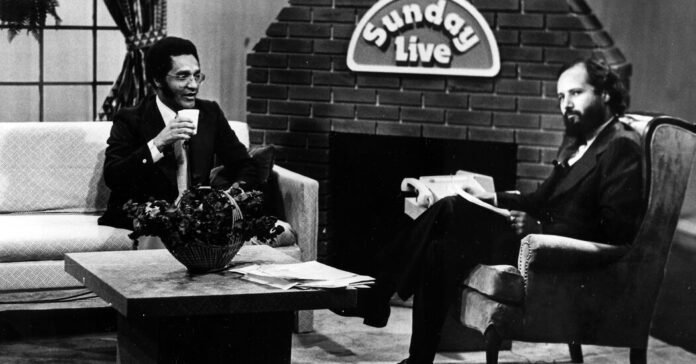
Tony Brown, Host of Public Affairs Show Aimed at Black Audiences, Dies at 93

0
Tony Brown, Host of Public Affairs Show Aimed at Black Audiences, Dies at 93

William Anthony Brown was born in Charleston, W.Va., on April 11, 1933, the youngest of five children of Royal and Katherine Brown. His father left before he was born, he told The Times in 1995, and from the age of 2 months, he was raised by Elizabeth Sanford and her daughter, Mabel Holmes, two women who weren’t relatives but were concerned about his welfare. (He referred to them as “angels” in the dedication to his 1995 book, “Black Lies, White Lies: The Truth According to Tony Brown.”) By the time he was 12, they had died and he was once again living with his mother.

A complete list of Mr. Brown’s survivors was not immediately available.

In school, he excelled in English and drama, and struggled to overcome his shyness by reading the works of Shakespeare on a local radio broadcast. He enlisted in the Army in 1953 and then studied at Wayne State University in Detroit, receiving a bachelor’s degree in sociology in 1959 and later a master’s degree in psychiatric social work.

In June 1963, Mr. Brown helped organize a march in Detroit led by the Rev. Dr. Martin Luther King Jr. that some regarded as a dress rehearsal for the March on Washington two months later. The same year, he began working for The Detroit Courier, a predominantly Black newspaper, eventually serving as its drama critic and city editor.

In 1968, he moved to Detroit’s public television station, where he worked as a programmer and produced the station’s first show for African Americans, “Colored People’s Time.” When William Greaves, a host and executive producer of “Black Journal,” left in 1970 to make films, Mr. Brown was brought in to replace him. At the time, there were only a few nationally broadcast shows aimed at Black audiences.

When the show was renamed “Tony Brown’s Journal” in 1977, Mr. Brown made a deal with PepsiCo to sponsor it, and it was syndicated on commercial television for some 19 years, at one point appearing on 80 stations.

Mr. Brown served as the first dean of the Howard University School of Communications from 1971 to 1974, until holding both jobs proved onerous. For a while, he also wrote a weekly column syndicated in 130 newspapers and hosted a call-in radio show four times a week on WLIB-AM.

EPFO Update: How To Check PF Balance, Interest Credit And Employer Contributions

0
EPFO Update: How To Check PF Balance, Interest Credit And Employer Contributions

The Employees’ Provident Fund Organisation (EPFO) calculates and deposits interest on EPF balances annually. However, the crediting process typically takes place in the following financial year after the Centre approves the interest rate proposed by the EPFO’s Central Board of Trustees (CBT). 

Interest rate for FY 2025-26 stands at 8.25%. The long-awaited EPF interest payout is expected to reach subscribers’ accounts in the coming weeks, according to reports. Here’s how account holders can track the credit and ensure the interest amount has been successfully deposited.

Checking Your EPF Passbook For The Latest Interest Credit

  • To find out whether the EPF interest has been added, sign in to the Unified Member Portal using your credentials and access your passbook. 

  • A passbook entry stating ‘Interest updated up to 31/03/2026’ indicates that the interest for the 2025-26 financial year has been successfully credited.

ALSO READ | Government Ratifies 8.25% EPF Interest Rate For FY’26, To Be Credited This Month

How To Monitor Your EPF Balance And Employer Deposits

Employees can keep track of employer contributions by regularly checking their EPF passbook. Regulations mandate that employers deposit contributions within 15 days after the relevant month ends. Once the payment is made and recorded, it may take around a week before the details appear in the passbook.

The EPFO sends a confirmation message to the registered mobile number after the contribution is credited. For a detailed view of monthly transactions and account balances, members can log in to the EPFO portal or use the UMANG app.

Steps To Verify EPF Deposits Online

  • Access the EPFO passbook website and enter your login credentials, including your UAN and password.

  • Complete the captcha verification process.

  • Choose the relevant Member ID linked to your account.

  • Check the passbook, where employee and employer contributions are listed separately, along with EPS allocations.

  • Scan the monthly entries to confirm that contributions have been credited consistently over time.

In cases where an employer withholds EPF deposits despite making deductions from an employee’s monthly salary, the employee can formally report the issue. The EPFiGMS portal serves as the designated platform for resolving such provident fund-related grievances.

ALSO READ | EPFO 3.0 Update: PF Withdrawals Via UPI And ATM Soon – Check Limits, Timeline and Key Changes


Essential Business Intelligence,
Sharp Market Insights,
Practical Personal Finance Advice, Daily Fuel, Gold and Silver Prices and Latest Stories — On NDTV Profit.


‘Supergirl’ fails to knock down 2026 box office juggernaut

0
‘Supergirl’ fails to knock down 2026 box office juggernaut

‘Supergirl’ fails to knock down 2026 box office juggernaut 

Supergirl flew into theatres, but the new DC film did not fly high enough to beat a towering movie: Toy Story 5.

The superhero movie ranked second at the box office, raking in $18 million from 3,602 cinemas.

This opening will help the DC movie — made on a $170 million budget — reach $59 million by the end of the opening weekend, according to Variety.

Though Supergirl is far behind her cousin Superman, whose debut film soared past $120 million in its initial weekend.

Yet, what is currently dominating in cinemas is Disney and Pixar’s Toy Story 5.

For its second straight weekend, the animated film is dominating the box office.

The movie is on track to reach up to $80 million, bringing the film’s domestic total to almost $300 million.

Not to mention, the Toy Story 5 opening weekend drew in $160 million, making it the biggest domestic opening of 2026.

‘Supergirl ending’

In the ending of Supergirl, Milly Alcock – the actress who portrayed the superhero Kara Zor-El – made a shocking decision.

Spoiler Alert!

She stopped Ruthye from killing the villain Krem of Yellow Hills – who murdered Ruthye’s parents – and she paid heed.

But as she is turning away, Kara puts Krem on the sword.

Alcock explained, “For me, it was kind of the only choice. She’s protecting Ruthye from becoming even further traumatised in having to deal with all of these massive, conflicting emotions, and she’s trying to teach her how to not do as she does, basically.”

She continued, “Not to run away from all the pain and know that that pain has to be fixed internally, as opposed to externally through drinking or hurting people or hurting yourself.”

“It’s the right thing to do in this twisted way. She’s seen so many people suffer,” Alcock concluded.

England knock champions New Zealand out of Women’s T20 World Cup | The Express Tribune

0
tribune


LONDON:

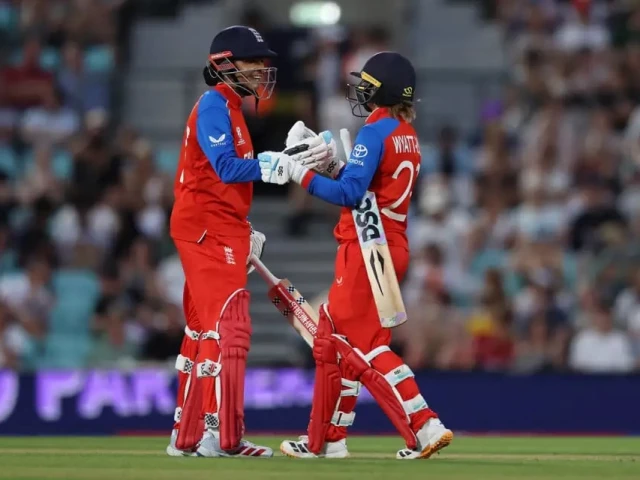
England hammered New Zealand by nine wickets on Saturday to end the defending champions’ involvement at this year’s Women’s T20 World Cup.

New Zealand knew they had to beat England, already into the semi-finals, to reach the knockout phase after being handed a lifeline by Ireland ending their long wait for a T20 World Cup win with victory over the West Indies earlier in the day.

England made light of a target of 163 by equalling the highest successful run chase in Women’s T20 World Cup history with 16 balls to spare at the Oval.

Danni Wyatt-Hodge (89 not out) and Sophia Dunkley (49 not out) shared a partnership of 128 as tournament hosts England made it five wins out of five at this edition.

The line-up for next week’s semi-finals will be confirmed following the outcome of Sunday’s heavyweight Group A clash between Australia and India.

But England’s win saw the West Indies into the last four as Group B runners-up.

It also signalled the end of New Zealand greats Sophie Devine, Suzie Bates and Lea Tahuhu’s international careers after the trio had previously announced they would retire after the World Cup.

Wyatt-Hodge set a new record for most runs at a single Women’s T20 World Cup, her current tally of 282 surpassing the 219 posted by Australia’s Beth Mooney in 2020.

“T20 cricket can be fickle, you’ve got to start again every time but I knew it was a beauty of a pitch and I loved batting out there with Dunks,” Wyatt-Hodge, 35, told the BBC.

Devine, 36, could only manage 30 on Saturday and the 38-year-old Bates was run out for 19 in a total of 163-6, while Tahuhu’s 2.2 wicketless overs cost 22 runs.

“I came into this side as a kid and the three of them mentored me, and taught me so much,” said New Zealand captain Melie Kerr. “I feel very grateful to have had so much time with them.”

In Bristol, Ireland beat West Indies — the 2016 champions — by six wickets as they finally won a T20 World Cup match.

Ireland had lost all 21 of their previous games over five T20 World Cups but went into this match buoyed by a first win over 2016 champions the West Indies when the teams last met in Dublin earlier this month.

After Ireland restricted the West Indies to 128-7, Orla Prendergast led the chase with a superb 63 off 44 balls before Rebecca Stokell’s unbeaten 16 saw them home.

“There’s so much relief to finally have that win and so much happiness,”Prendergast, the player of the match, told Sky Sports.

Victory capped a memorable weekend for Ireland after the men’s side beat T20 world champions India in the first of a two-match series in Belfast on Friday — their first win over the cricket superpower in any format.

Ravindra leads New Zealand rally in England finale | The Express Tribune

0
photo afp


NOTTINGHAM:

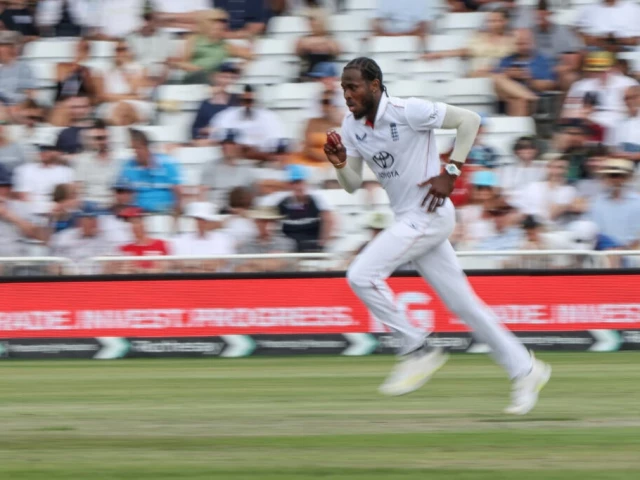
Rachin Ravindra’s unbeaten fifty revived New Zealand after Jofra Archer’s double strike had given England renewed hope of victory in the third and deciding Test at Trent Bridge on Saturday.

New Zealand, with the three-match series up for grabs at 1-1, were faltering at 12-2 in their second innings following fast bowler Archer’s two wickets after tea on the third day.

But at stumps they had recovered to 120-3, a significant overall lead of 204 runs, with a previously good pitch now showing signs of uneven bounce after being ‘baked’ for three days in soaring heat.

Ravindra was 60 not out, his second fifty of the series.

The 26-year-old left-hander received good support from Daryl Mitchell (26 not out) in an unbroken stand of 69.

“We always knew that new ball period was going to be tough work but credit to Rachin and Daryl they played really well after that,” New Zealand concussion substitute Zak Foulkes, who earlier Saturday returned fine figures of 3-35 in just 15.2 overs, told reporters.

“Hopefully they can carry on in the morning (Sunday).”

England are on a run of six defeats in their last eight Tests and anything other than a win in Nottingham could spell trouble for managing director Rob Key and coach Brendon McCullum.

The due, already under pressure following England’s woeful 4-1 Ashes series loss in Australia, have also faced further flak for their handling of recent curfew breaches by skipper Ben Stokes and teammate Gus Atkinson.

England left-arm spinner Shoaib Bashir admitted a wearing pitch would be a worry when it came to a fourth-innings run-chase.

‘Pressure and excitement’

“We’ve got unbelievable cricketers in this team but we want it to be as little as possible with this wicket deteriorating,” he said.

Bashir, whose nine wicketless overs Saturday cost just 28 runs added: “We’re human, we’re obviously going to feel pressure but there’s a lot of excitement going into these next two days as well.”

New Zealand’s early batting Saturday was a far cry from their first-innings, as skipper Tom Latham and fellow opener Devon Conway, who made 151 and 157 respectively in a total of 438, fell for four and five second time around.

Latham was lbw to a fine Archer ball that angled in and cut away.

Conway, one of a quartet of left-handers in the top four, was then struck on the helmet by an Archer delivery that lifted awkwardly off a good length.

Three balls later he was out to a similarly brutish delivery that climbed sharply off the splice before flying to Joe Root at first slip, with Archer returning impressive close figures of 2-14 in seven overs.

New Zealand were 51-3 when Henry Nicholls fell for 16.

But Ravindra stylishly went to fifty by whipping returning England captain Stokes through midwicket for a seventh four in 81 balls faced.

‘Stay boring’

Earlier, Nathan Smith took 4-91 and Foulkes two key wickets as an injury-hit New Zealand dismissed England for 354 to lead by 84 runs on first innings.

Foulkes, New Zealand’s first concussion substitute in Test cricket after replacing Blair Tickner on Friday, captured the prize scalps of Stokes (15) and Harry Brook (58).

England lost three wickets for 11 runs at the start of Saturday’s play as their overnight 223-2 became 234-5.

Root (21) and Jacob Bethell (74) were both unable to add to their Friday scores, with wicket-keeper Tom Latham again crowding the batsmen for room by standing up to the stumps.

“We just tried to stay boring for as long as possible and tried to dry up the runs,” said Foulkes, 24.

The double strike was just what New Zealand needed after coming into this match without injured seamer Matt Henry, who took 11 wickets at the Oval, and in-form towering paceman Kyle Jamieson, rested as a fitness precaution even before Tickner was sidelined.

Stokes was back after being omitted from England’s 253-run defeat in the second Test at the Oval for breaking a midnight curfew, alongside Atkinson, while celebrating at a London nightclub following the first-Test win over New Zealand.


‘Silicon Valley of North India’: Ashwini Vaishnaw sees Jewar emerging as chip manufacturing hub

0
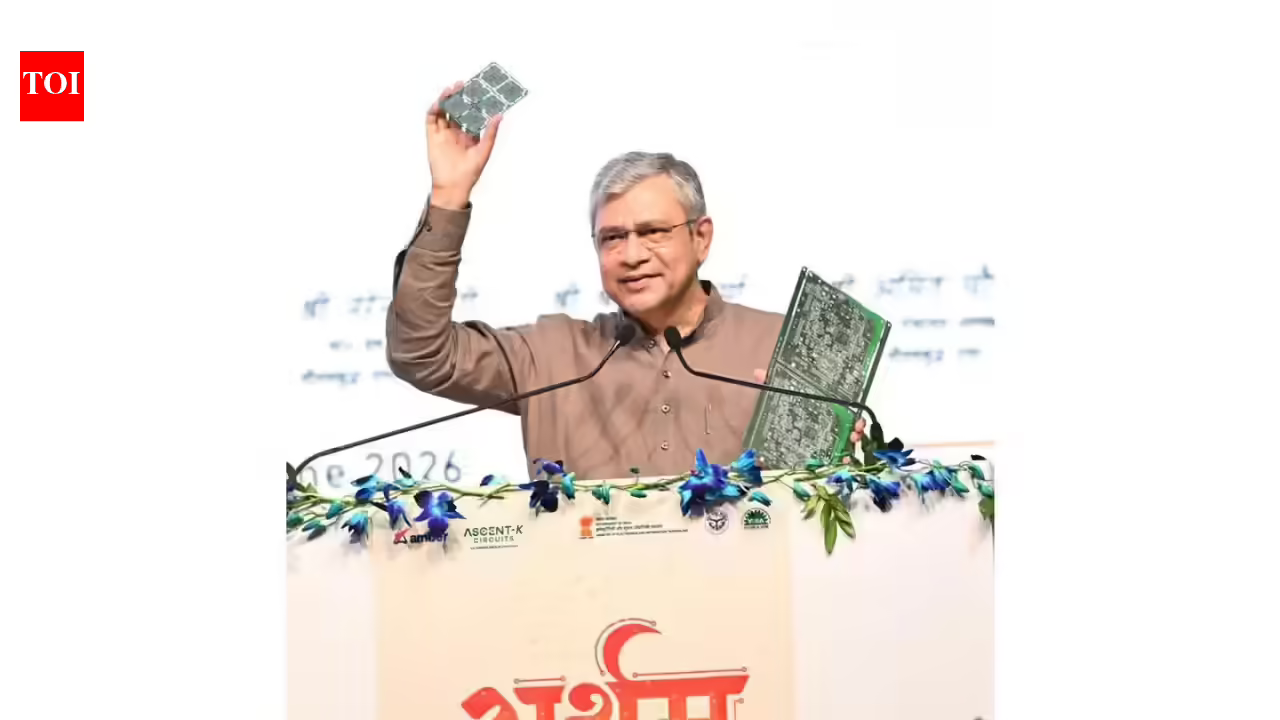
'Silicon Valley of North India': Ashwini Vaishnaw sees Jewar emerging as chip manufacturing hub

Vaishnaw said investments worth thousands of crores flowing into the Yamuna City region would help make Jewar the “Silicon Valley of North India”.

Two electronics manufacturing projects involving a combined investment of about Rs 6,750 crore are expected to generate around 3,000 jobs and help transform Jewar into one of India’s leading electronics and semiconductor manufacturing hubs, Union Electronics and Information Technology Minister Ashwini Vaishnaw said on Saturday.Vaishnaw made the remarks after jointly laying the foundation stones for the projects with Uttar Pradesh Chief Minister Yogi Adityanath in Yamuna City, Jewar.The projects include a Rs 3,250-crore investment by ASCENT-K Circuit, a joint venture with South Korea’s KCC, to manufacture advanced high-density and multi-layer printed circuit boards (PCBs), and a Rs 3,500-crore facility by Amber Enterprises for manufacturing HVAC components and PCB assemblies.Highlighting India’s growing domestic electronics manufacturing capabilities, Vaishnaw said the country was moving beyond assembling electronic products to manufacturing their core components.“We are moving from assembly to deep manufacturing. The advanced multi-layer PCBs being built here, some with 20 to 22 layers, are the backbone of modern technology. What we once imported, we will now ‘Make in India’ for the world,” he said.The minister said India had been importing PCBs worth nearly Rs 40,000 crore every year and domestic production would significantly reduce import dependence.“Every PCB manufactured here will save foreign exchange, strengthen the rupee and improve India’s balance of payments,” he said.

Jewar ‘poised to emerge’ as electronics hub

Vaishnaw said investments worth thousands of crores flowing into the Yamuna City region would help make Jewar the “Silicon Valley of North India”.“Jewar is poised to emerge as one of India’s leading hubs for electronics and semiconductor manufacturing. It will save billions in foreign exchange for the country and redefine India’s economic landscape,” he said.He credited Chief Minister Yogi Adityanath for creating an ecosystem that had enabled Prime Minister Narendra Modi’s vision of expanding electronics manufacturing in Uttar Pradesh.“I would like to thank Chief Minister Yogi Adityanath for providing the vision that has brought the Prime Minister’s electronics manufacturing initiative to Jewar,” he said.Vaishnaw also highlighted the region’s rapidly expanding infrastructure, saying the operational Noida International Airport, connectivity through the Delhi-Mumbai Industrial Corridor (DMIC) and the proposed Delhi-Lucknow-Varanasi bullet train project were making Jewar an increasingly attractive destination for global investors.

UK announces expansion of refugee sponsorship scheme

0

A person holds a water bottle whilst walking near Big Ben and the Houses of Parliament, in London, Britain, June 23, 2026. — Reuters
  • Community groups gain powers to sponsor refugees.
  • Trusted varsities to join expanded sponsorship scheme.
  • Sponsorship scheme would be “capped”: Home Office.

The UK interior ministry has announced it will create new legal routes for asylum seekers, including allowing community organisations to sponsor refugees based on a similar system in Canada.

The system will come into place later this year, Home Secretary Shabana Mahmood said late Friday, with organisations and some “trusted” universities able to sponsor refugees and first arrivals expected in autumn 2027.

A route for employers to sponsor refugees is also expected to open next year, the Home Office said in a press release.

Immigration and asylum are thorny issues in the UK, where the hard-right Reform UK party has rapidly grown in popularity, riding a wave of anti-immigrant sentiment.

Keir Starmer, who stepped down as prime minister this week but will remain in power until his successor is chosen, has tried to appear tough on immigration since coming into power two years ago.

His government will next week introduce legislation in parliament tightening asylum rules, including making it easier to deport failed asylum seekers and restricting family reunion for refugees to immediate family members.

The immigration policies of his likely successor Andy Burnham — who could replace Starmer as early as July — remain unclear, though he has acknowledged migration concerns in his recent campaign to become an MP.

It is also uncertain whether Mahmood, the straight-talking face of Starmer’s immigration crackdown, will remain in her post under the next prime minister.

“I will open new legal routes for genuine refugees, while closing loopholes that have been too often abused,” Mahmood said in a statement.

The new sponsorship scheme will “operate at a much higher capacity” than the UK Resettlement Scheme, which brought around 800 people in the year ending September 2025.

The Home Office did not detail how many refugees could benefit from the scheme, but said it would be “capped”.

Previous sponsorship schemes have been targeted at countries, including resettlement for refugees from Syria or Afghanistan.

Earlier this year, Mahmood faced criticism from charities and within her own party over tough regulations, including making refugee status temporary and banning education visas for some countries, including Afghanistan, Myanmar and Sudan.

Cape Verde’s World Cup success isn’t just for them — it’s for every soccer fan to enjoy

0
Cape Verde's World Cup success isn't just for them -- it's for every soccer fan to enjoy

HOUSTON — It’s a wonder of soccer that a 0-0 draw between teams ranked 59th and 64th in the FIFA world rankings could set off celebrations not only inside NRG Stadium (and a big drum party in a strip mall across the street) but also in Massachusetts, Rotterdam and a small island nation off the coast of West Africa.

The celebrations were for Cape Verde, which became the smallest nation to ever qualify for the FIFA World Cup knockout rounds Friday night. Their 0-0 draw with Saudi Arabia clinched second place in Group H, ahead of Uruguay and Saudi Arabia; what started as a fun story with their 0-0 draw against Spain — a result that made 40-year-old goalkeeper Vozinha an overnight sensation — will continue with an elimination match against Lionel Messi and Argentina.

“I don’t think any of us dreamed of this,” Vozinha said after Friday’s match. “But we know we have a lot of quality. Qualifying for the next round today is extremely rewarding for us. It’s a dream for any player to play against Argentina and against Messi.”

After their match ended, Cape Verde’s players huddled around a phone to make sure Spain saw off their 1-0 win over Uruguay. “I almost wanted to cry,” midfielder Deroy Duarte said. “It was so emotional. Everybody was just waiting and praying and hoping that the result was good. It was a very special moment. [Something] I’ve never felt on the pitch. And I hope we can feel the same feeling in the next game.”

An underdog’s underdog

A country with the population of Fresno, California [around 530,000], Cape Verde is a true underdog’s underdog: The players on their 26-man roster were employed by 26 different club teams in 14 different countries last season. Seven played in Portugal, which makes sense since the country was a Portuguese colony until 1975, and the country’s official language remains Portuguese.

Of the 2,970 total minutes their players have recorded in the World Cup, only 256 were played by guys employed by one of the top 100 clubs in the world (per Opta): 166 from left back Sidny Cabral (Benfica) and 90 from left winger Willy Semedo (Omonia Nicosia).

Vozinha is a free agent after playing in the Portuguese second division last year, and Duarte, Friday’s man of the match, plays for Ludogorets Razgrad in Bulgaria. Other key contributors play in the UAE (Al Bataeh’s Diney), Ireland (Shamrock Rovers’ Pico), Turkey (Idgir’s Ryan Mendes), Netherlands (PEC Zwolle’s Jamiro Monteiro) and Israel (Maccabi Tel Aviv’s Hélio Varela).

Cape Verde won its independence from Portugal in 1975 and didn’t join FIFA until 1986. But the quality of the national team has steadily improved for most of 20 years, and while a number of players on the roster weren’t born in the country, there is also pride in the diaspora.

“We love our country,” Vozinha said. “We have a lot of passion. We grew up facing many hardships. Our parents and grandparents sacrificed a great deal so that we could be educated. And we learned how to value things. I think we’ve shown the resilience of the Cape Verdean people.”

Duarte added: “Obviously, we also have Cape Verdeans outside of the country, but we’re a small country, small population, but we have a big heart.”

The Blue Sharks advanced with draws in three straight matches, but each result was a different type of achievement. The draw with Spain was a test of fortitude — Spain attempted 27 shots, but Cape Verde blocked eight of them, and Vozinha saved another seven. The post helped, too, on an effort from Ferran Torres late in the first half, but that was the only shot Spain attempted that was worth over 0.2 xG. Cape Verde kept the box clean without fouling and held on for an historic result.

The 2-2 draw with Uruguay, on the other hand, was a test of resilience. Cape Verde took an early lead, but when Maxi Araújo tied things up, their body language plummeted. It seemed guaranteed that they would allow another goal, and they did exactly that just before halftime. Saved by the halftime whistle, however, they rebounded. They tied the score with Helio Varela’s fast-break goal in the 61st minute, and for the half they attempted 10 shots (0.83 xG) and allowed just six (0.41). If someone was going to find a winner in that game, it looked far more likely to be Cape Verde.

The deciding 0-0 draw against Saudi Arabia tested their nerves. When Spain took the lead on Uruguay late in the first half — therefore moving Cape Verde into second place in Group H — the score was announced inside the stadium. And almost immediately, Saudi Arabia put together a string of threats. If they had scored, they would have taken second place instead. But Cape Verde held out until halftime and put together an excellent second-half performance, nearly scoring on a couple of different late counterattacks. Saudi Arabia never showed the urgency the moment required, but Abdullah Al Hamddan did put a solid shot on target in the second minute of stoppage time. Regardless, the draw stood, and Cape Verde advanced.

“We didn’t come here just to hold onto a draw,” Vozinha said afterward. “In the second half, from the moment we came back onto the field, we always tried to win the match. We knew it wouldn’t be easy, [as] Saudi Arabia is also a team with a lot of quality. We tried everything to score, but we couldn’t.”

Regardless, they held their nerve.

play

0:39

Cape Verde send fans wild as they reach World Cup knockouts

The wonder of an expanded World Cup

You can be as cynical as you want about why FIFA chose to expand the World Cup from 32 to 48 teams. It’s been an all-time heist from a financial perspective. But that’s always been the trade-off with FIFA and the game of soccer. It’s like a pact: It gets to be as shameless as it wants in the hunt for more and more money, but it also agrees to share the game (and the riches) with more and more countries. Meanwhile, we get an endless string of new characters to learn about and new stories to devour. Whatever FIFA does, it still can’t ruin the game itself.

World Cup expansion was meant for a country such as Cape Verde, which has been on the cusp of Africa’s top tier for quite a while. They finished second in their group to Cameroon in 2010 World Cup qualification, second to Tunisia in 2014 and second to Nigeria in 2022.

They’ve reached the quarterfinals of the African Cup of Nations three times in 13 years, too. Africa had five bids to divvy out for a 32-team World Cup, but that nearly doubled, to nine, when expansion came. Granted, Cape Verde were so good in qualification (23 points in 10 matches) that they might have qualified with just five bids this time. But expansion offered opportunities to the Cape Verdes, Curaçaos and Jordans of the world, and they all created memorable moments. They inspired others, too.

“Everything that’s happened is very rewarding,” Vozinha said. “We’re here to create memories and role models for the younger generation. And who knows? From now on, we’ll have Cape Verdean role models, Cape Verdean footballers that children can look at and say, ‘One day I want to be like [defender] Stopira, like [midfielder] Ryan Mendes, or like other Cape Verde players.’ That’s incredibly rewarding.”

Are the stakes lower for a lot of these group stage matches now that we’re letting in more teams? Has there been less jeopardy in the group stage because 32 of 48 teams advance to the knockouts? Absolutely.

But the world knows about Cape Verde now, too. It knows about Curaçao. (The pride of even a scoreless Curaçao draw with Ecuador was incredible to witness. A couple of journalists in the press box pounded the tables at the final whistle, yelling, “Curaçao! Curaçao! Smallest nation in the world!”) The world knows something else about Congo DR beyond war or Ebola. This event connects the world and makes it smaller and prouder. It reminds us that everyone everywhere cares about the same things we care about. You can abhor FIFA and still admit that.

“We’ve seen [in] the other games also against Uruguay and Spain, that we received a lot of support from different people from different countries,” Duarte said. “It’s just what football brings. Football brings people close to each other. And I think this is also something Cape Verdean: We like to receive people, we like to act like they are ours. This is typical Cape Verdean, and that makes us proud.”

The big nations win the World Cup, but the small nations make it. France or Spain or England or Argentina will probably take this thing home, but the celebrations from Ecuador, Congo DR and, of course, Cape Verde, have defined it thus far. We’re richer for having them there. Cape Verde’s run will likely end at the feet of Messi and Argentina next week, but hey, you never know, right?

“Obviously, this is a special moment, special game,” Duarte said. “But still, the ball is round, [and] you can see [that] when we played against Spain, Uruguay, we draw. So why not?

“The joy that came out is something I’ve never felt before on the pitch. I hope to feel it again against Argentina.”

Meet the voice behind your favorite cartoon characters

0
Meet the voice behind your favorite cartoon characters

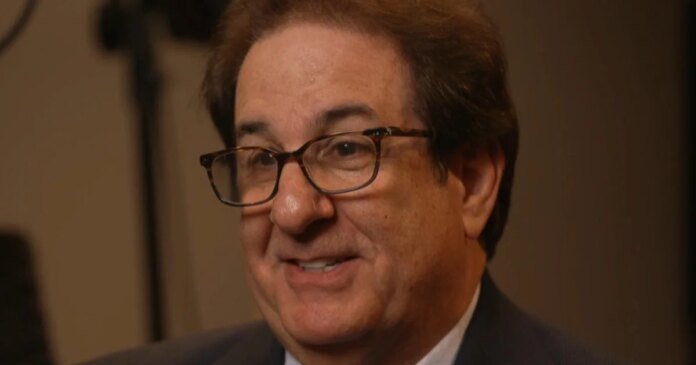
Jeff Bergman, who voices nearly all of the modern Looney Tunes cast, sits down with “CBS Saturday Morning” to talk about stepping in for Don Rickles as Mr. Potato Head in “Toy Story 5.”