‘Supergirl’ fails to knock down 2026 box office juggernaut
Supergirl flew into theatres, but the new DC film did not fly high enough to beat a towering movie: Toy Story 5.
The superhero movie ranked second at the box office, raking in $18 million from 3,602 cinemas.
This opening will help the DC movie — made on a $170 million budget — reach $59 million by the end of the opening weekend, according to Variety.
Though Supergirl is far behind her cousin Superman, whose debut film soared past $120 million in its initial weekend.
Yet, what is currently dominating in cinemas is Disney and Pixar’s Toy Story 5.
For its second straight weekend, the animated film is dominating the box office.
The movie is on track to reach up to $80 million, bringing the film’s domestic total to almost $300 million.
Not to mention, the Toy Story 5 opening weekend drew in $160 million, making it the biggest domestic opening of 2026.
‘Supergirl ending’
In the ending of Supergirl, Milly Alcock – the actress who portrayed the superhero Kara Zor-El – made a shocking decision.
Spoiler Alert!
She stopped Ruthye from killing the villain Krem of Yellow Hills – who murdered Ruthye’s parents – and she paid heed.
But as she is turning away, Kara puts Krem on the sword.
Alcock explained, “For me, it was kind of the only choice. She’s protecting Ruthye from becoming even further traumatised in having to deal with all of these massive, conflicting emotions, and she’s trying to teach her how to not do as she does, basically.”
She continued, “Not to run away from all the pain and know that that pain has to be fixed internally, as opposed to externally through drinking or hurting people or hurting yourself.”
“It’s the right thing to do in this twisted way. She’s seen so many people suffer,” Alcock concluded.
England hammered New Zealand by nine wickets on Saturday to end the defending champions’ involvement at this year’s Women’s T20 World Cup.
New Zealand knew they had to beat England, already into the semi-finals, to reach the knockout phase after being handed a lifeline by Ireland ending their long wait for a T20 World Cup win with victory over the West Indies earlier in the day.
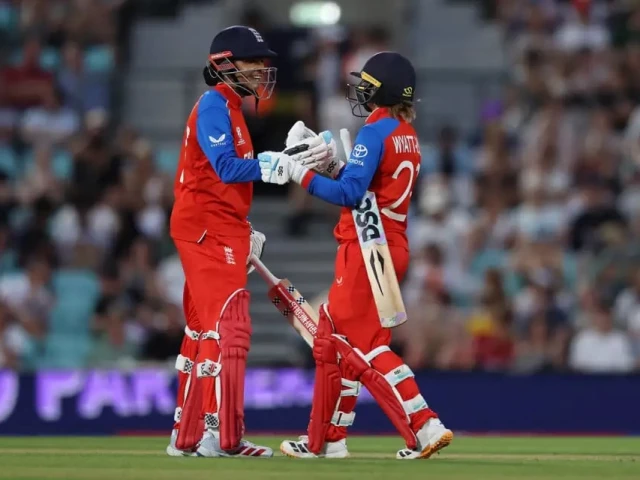
England made light of a target of 163 by equalling the highest successful run chase in Women’s T20 World Cup history with 16 balls to spare at the Oval.
Danni Wyatt-Hodge (89 not out) and Sophia Dunkley (49 not out) shared a partnership of 128 as tournament hosts England made it five wins out of five at this edition.
The line-up for next week’s semi-finals will be confirmed following the outcome of Sunday’s heavyweight Group A clash between Australia and India.
But England’s win saw the West Indies into the last four as Group B runners-up.
It also signalled the end of New Zealand greats Sophie Devine, Suzie Bates and Lea Tahuhu’s international careers after the trio had previously announced they would retire after the World Cup.
Wyatt-Hodge set a new record for most runs at a single Women’s T20 World Cup, her current tally of 282 surpassing the 219 posted by Australia’s Beth Mooney in 2020.
“T20 cricket can be fickle, you’ve got to start again every time but I knew it was a beauty of a pitch and I loved batting out there with Dunks,” Wyatt-Hodge, 35, told the BBC.
Devine, 36, could only manage 30 on Saturday and the 38-year-old Bates was run out for 19 in a total of 163-6, while Tahuhu’s 2.2 wicketless overs cost 22 runs.
“I came into this side as a kid and the three of them mentored me, and taught me so much,” said New Zealand captain Melie Kerr. “I feel very grateful to have had so much time with them.”
In Bristol, Ireland beat West Indies — the 2016 champions — by six wickets as they finally won a T20 World Cup match.
Ireland had lost all 21 of their previous games over five T20 World Cups but went into this match buoyed by a first win over 2016 champions the West Indies when the teams last met in Dublin earlier this month.
After Ireland restricted the West Indies to 128-7, Orla Prendergast led the chase with a superb 63 off 44 balls before Rebecca Stokell’s unbeaten 16 saw them home.
“There’s so much relief to finally have that win and so much happiness,”Prendergast, the player of the match, told Sky Sports.
Victory capped a memorable weekend for Ireland after the men’s side beat T20 world champions India in the first of a two-match series in Belfast on Friday — their first win over the cricket superpower in any format.
Rachin Ravindra’s unbeaten fifty revived New Zealand after Jofra Archer’s double strike had given England renewed hope of victory in the third and deciding Test at Trent Bridge on Saturday.
New Zealand, with the three-match series up for grabs at 1-1, were faltering at 12-2 in their second innings following fast bowler Archer’s two wickets after tea on the third day.
But at stumps they had recovered to 120-3, a significant overall lead of 204 runs, with a previously good pitch now showing signs of uneven bounce after being ‘baked’ for three days in soaring heat.
Ravindra was 60 not out, his second fifty of the series.
The 26-year-old left-hander received good support from Daryl Mitchell (26 not out) in an unbroken stand of 69.
“We always knew that new ball period was going to be tough work but credit to Rachin and Daryl they played really well after that,” New Zealand concussion substitute Zak Foulkes, who earlier Saturday returned fine figures of 3-35 in just 15.2 overs, told reporters.
“Hopefully they can carry on in the morning (Sunday).”
England are on a run of six defeats in their last eight Tests and anything other than a win in Nottingham could spell trouble for managing director Rob Key and coach Brendon McCullum.
The due, already under pressure following England’s woeful 4-1 Ashes series loss in Australia, have also faced further flak for their handling of recent curfew breaches by skipper Ben Stokes and teammate Gus Atkinson.
England left-arm spinner Shoaib Bashir admitted a wearing pitch would be a worry when it came to a fourth-innings run-chase.
‘Pressure and excitement’
“We’ve got unbelievable cricketers in this team but we want it to be as little as possible with this wicket deteriorating,” he said.
Bashir, whose nine wicketless overs Saturday cost just 28 runs added: “We’re human, we’re obviously going to feel pressure but there’s a lot of excitement going into these next two days as well.”
New Zealand’s early batting Saturday was a far cry from their first-innings, as skipper Tom Latham and fellow opener Devon Conway, who made 151 and 157 respectively in a total of 438, fell for four and five second time around.
Latham was lbw to a fine Archer ball that angled in and cut away.
Conway, one of a quartet of left-handers in the top four, was then struck on the helmet by an Archer delivery that lifted awkwardly off a good length.
Three balls later he was out to a similarly brutish delivery that climbed sharply off the splice before flying to Joe Root at first slip, with Archer returning impressive close figures of 2-14 in seven overs.
New Zealand were 51-3 when Henry Nicholls fell for 16.
But Ravindra stylishly went to fifty by whipping returning England captain Stokes through midwicket for a seventh four in 81 balls faced.
‘Stay boring’
Earlier, Nathan Smith took 4-91 and Foulkes two key wickets as an injury-hit New Zealand dismissed England for 354 to lead by 84 runs on first innings.
Foulkes, New Zealand’s first concussion substitute in Test cricket after replacing Blair Tickner on Friday, captured the prize scalps of Stokes (15) and Harry Brook (58).
England lost three wickets for 11 runs at the start of Saturday’s play as their overnight 223-2 became 234-5.
Root (21) and Jacob Bethell (74) were both unable to add to their Friday scores, with wicket-keeper Tom Latham again crowding the batsmen for room by standing up to the stumps.
“We just tried to stay boring for as long as possible and tried to dry up the runs,” said Foulkes, 24.
The double strike was just what New Zealand needed after coming into this match without injured seamer Matt Henry, who took 11 wickets at the Oval, and in-form towering paceman Kyle Jamieson, rested as a fitness precaution even before Tickner was sidelined.
Stokes was back after being omitted from England’s 253-run defeat in the second Test at the Oval for breaking a midnight curfew, alongside Atkinson, while celebrating at a London nightclub following the first-Test win over New Zealand.
Vaishnaw said investments worth thousands of crores flowing into the Yamuna City region would help make Jewar the “Silicon Valley of North India”.
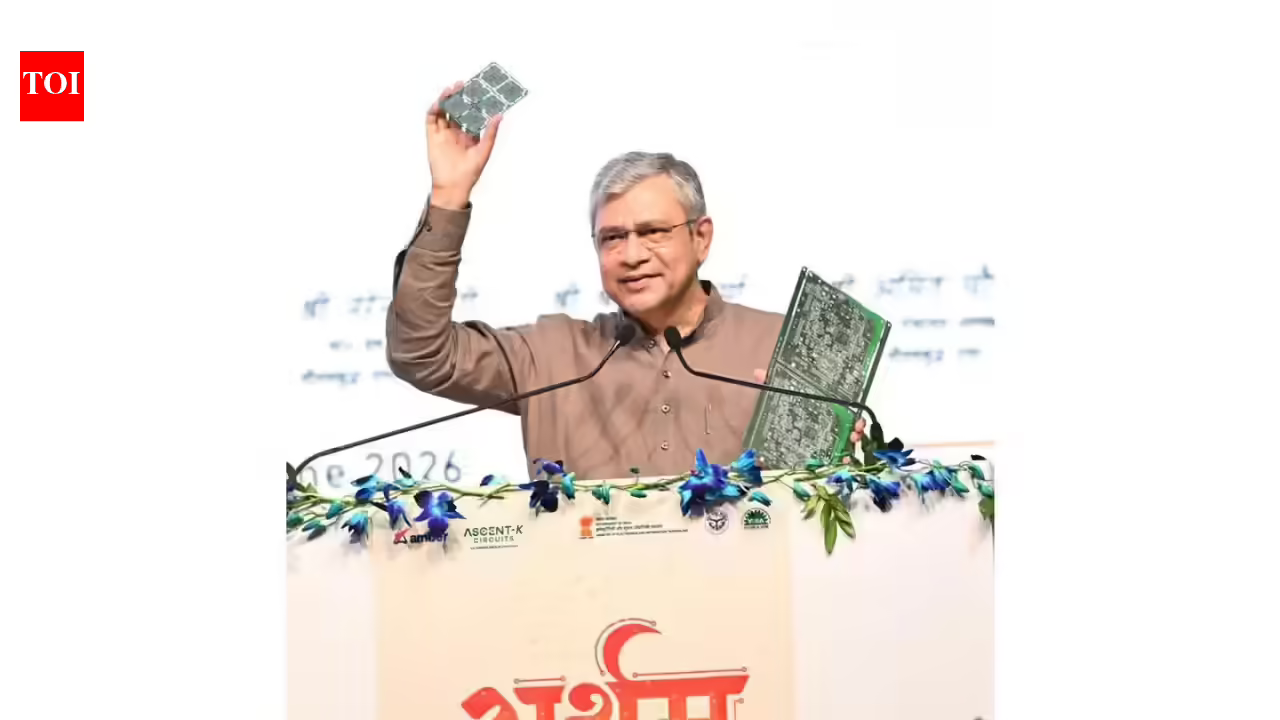
Two electronics manufacturing projects involving a combined investment of about Rs 6,750 crore are expected to generate around 3,000 jobs and help transform Jewar into one of India’s leading electronics and semiconductor manufacturing hubs, Union Electronics and Information Technology Minister Ashwini Vaishnaw said on Saturday.Vaishnaw made the remarks after jointly laying the foundation stones for the projects with Uttar Pradesh Chief Minister Yogi Adityanath in Yamuna City, Jewar.The projects include a Rs 3,250-crore investment by ASCENT-K Circuit, a joint venture with South Korea’s KCC, to manufacture advanced high-density and multi-layer printed circuit boards (PCBs), and a Rs 3,500-crore facility by Amber Enterprises for manufacturing HVAC components and PCB assemblies.Highlighting India’s growing domestic electronics manufacturing capabilities, Vaishnaw said the country was moving beyond assembling electronic products to manufacturing their core components.“We are moving from assembly to deep manufacturing. The advanced multi-layer PCBs being built here, some with 20 to 22 layers, are the backbone of modern technology. What we once imported, we will now ‘Make in India’ for the world,” he said.The minister said India had been importing PCBs worth nearly Rs 40,000 crore every year and domestic production would significantly reduce import dependence.“Every PCB manufactured here will save foreign exchange, strengthen the rupee and improve India’s balance of payments,” he said.
Jewar ‘poised to emerge’ as electronics hub
Vaishnaw said investments worth thousands of crores flowing into the Yamuna City region would help make Jewar the “Silicon Valley of North India”.“Jewar is poised to emerge as one of India’s leading hubs for electronics and semiconductor manufacturing. It will save billions in foreign exchange for the country and redefine India’s economic landscape,” he said.He credited Chief Minister Yogi Adityanath for creating an ecosystem that had enabled Prime Minister Narendra Modi’s vision of expanding electronics manufacturing in Uttar Pradesh.“I would like to thank Chief Minister Yogi Adityanath for providing the vision that has brought the Prime Minister’s electronics manufacturing initiative to Jewar,” he said.Vaishnaw also highlighted the region’s rapidly expanding infrastructure, saying the operational Noida International Airport, connectivity through the Delhi-Mumbai Industrial Corridor (DMIC) and the proposed Delhi-Lucknow-Varanasi bullet train project were making Jewar an increasingly attractive destination for global investors.
A person holds a water bottle whilst walking near Big Ben and the Houses of Parliament, in London, Britain, June 23, 2026. — Reuters
Community groups gain powers to sponsor refugees.
Trusted varsities to join expanded sponsorship scheme.
Sponsorship scheme would be “capped”: Home Office.
The UK interior ministry has announced it will create new legal routes for asylum seekers, including allowing community organisations to sponsor refugees based on a similar system in Canada.
The system will come into place later this year, Home Secretary Shabana Mahmood said late Friday, with organisations and some “trusted” universities able to sponsor refugees and first arrivals expected in autumn 2027.
A route for employers to sponsor refugees is also expected to open next year, the Home Office said in a press release.
Immigration and asylum are thorny issues in the UK, where the hard-right Reform UK party has rapidly grown in popularity, riding a wave of anti-immigrant sentiment.
Keir Starmer, who stepped down as prime minister this week but will remain in power until his successor is chosen, has tried to appear tough on immigration since coming into power two years ago.
His government will next week introduce legislation in parliament tightening asylum rules, including making it easier to deport failed asylum seekers and restricting family reunion for refugees to immediate family members.
The immigration policies of his likely successor Andy Burnham — who could replace Starmer as early as July — remain unclear, though he has acknowledged migration concerns in his recent campaign to become an MP.
It is also uncertain whether Mahmood, the straight-talking face of Starmer’s immigration crackdown, will remain in her post under the next prime minister.
“I will open new legal routes for genuine refugees, while closing loopholes that have been too often abused,” Mahmood said in a statement.
The new sponsorship scheme will “operate at a much higher capacity” than the UK Resettlement Scheme, which brought around 800 people in the year ending September 2025.
The Home Office did not detail how many refugees could benefit from the scheme, but said it would be “capped”.
Previous sponsorship schemes have been targeted at countries, including resettlement for refugees from Syria or Afghanistan.
Earlier this year, Mahmood faced criticism from charities and within her own party over tough regulations, including making refugee status temporary and banning education visas for some countries, including Afghanistan, Myanmar and Sudan.
Bill Connelly is a writer for ESPN. He covers college football, soccer and tennis. He has been at ESPN since 2019.
Multiple Authors
HOUSTON — It’s a wonder of soccer that a 0-0 draw between teams ranked 59th and 64th in the FIFA world rankings could set off celebrations not only inside NRG Stadium (and a big drum party in a strip mall across the street) but also in Massachusetts, Rotterdam and a small island nation off the coast of West Africa.
The celebrations were for Cape Verde, which became the smallest nation to ever qualify for the FIFA World Cup knockout rounds Friday night. Their 0-0 draw with Saudi Arabia clinched second place in Group H, ahead of Uruguay and Saudi Arabia; what started as a fun story with their 0-0 draw against Spain — a result that made 40-year-old goalkeeper Vozinha an overnight sensation — will continue with an elimination match against Lionel Messi and Argentina.
“I don’t think any of us dreamed of this,” Vozinha said after Friday’s match. “But we know we have a lot of quality. Qualifying for the next round today is extremely rewarding for us. It’s a dream for any player to play against Argentina and against Messi.”
After their match ended, Cape Verde’s players huddled around a phone to make sure Spain saw off their 1-0 win over Uruguay. “I almost wanted to cry,” midfielder Deroy Duarte said. “It was so emotional. Everybody was just waiting and praying and hoping that the result was good. It was a very special moment. [Something] I’ve never felt on the pitch. And I hope we can feel the same feeling in the next game.”
A country with the population of Fresno, California [around 530,000], Cape Verde is a true underdog’s underdog: The players on their 26-man roster were employed by 26 different club teams in 14 different countries last season. Seven played in Portugal, which makes sense since the country was a Portuguese colony until 1975, and the country’s official language remains Portuguese.
Of the 2,970 total minutes their players have recorded in the World Cup, only 256 were played by guys employed by one of the top 100 clubs in the world (per Opta): 166 from left back Sidny Cabral (Benfica) and 90 from left winger Willy Semedo (Omonia Nicosia).
Vozinha is a free agent after playing in the Portuguese second division last year, and Duarte, Friday’s man of the match, plays for Ludogorets Razgrad in Bulgaria. Other key contributors play in the UAE (Al Bataeh’s Diney), Ireland (Shamrock Rovers’ Pico), Turkey (Idgir’s Ryan Mendes), Netherlands (PEC Zwolle’s Jamiro Monteiro) and Israel (Maccabi Tel Aviv’s Hélio Varela).
Cape Verde won its independence from Portugal in 1975 and didn’t join FIFA until 1986. But the quality of the national team has steadily improved for most of 20 years, and while a number of players on the roster weren’t born in the country, there is also pride in the diaspora.
“We love our country,” Vozinha said. “We have a lot of passion. We grew up facing many hardships. Our parents and grandparents sacrificed a great deal so that we could be educated. And we learned how to value things. I think we’ve shown the resilience of the Cape Verdean people.”
Duarte added: “Obviously, we also have Cape Verdeans outside of the country, but we’re a small country, small population, but we have a big heart.”
The Blue Sharks advanced with draws in three straight matches, but each result was a different type of achievement. The draw with Spain was a test of fortitude — Spain attempted 27 shots, but Cape Verde blocked eight of them, and Vozinha saved another seven. The post helped, too, on an effort from Ferran Torres late in the first half, but that was the only shot Spain attempted that was worth over 0.2 xG. Cape Verde kept the box clean without fouling and held on for an historic result.
The 2-2 draw with Uruguay, on the other hand, was a test of resilience. Cape Verde took an early lead, but when Maxi Araújo tied things up, their body language plummeted. It seemed guaranteed that they would allow another goal, and they did exactly that just before halftime. Saved by the halftime whistle, however, they rebounded. They tied the score with Helio Varela’s fast-break goal in the 61st minute, and for the half they attempted 10 shots (0.83 xG) and allowed just six (0.41). If someone was going to find a winner in that game, it looked far more likely to be Cape Verde.
The deciding 0-0 draw against Saudi Arabia tested their nerves. When Spain took the lead on Uruguay late in the first half — therefore moving Cape Verde into second place in Group H — the score was announced inside the stadium. And almost immediately, Saudi Arabia put together a string of threats. If they had scored, they would have taken second place instead. But Cape Verde held out until halftime and put together an excellent second-half performance, nearly scoring on a couple of different late counterattacks. Saudi Arabia never showed the urgency the moment required, but Abdullah Al Hamddan did put a solid shot on target in the second minute of stoppage time. Regardless, the draw stood, and Cape Verde advanced.
“We didn’t come here just to hold onto a draw,” Vozinha said afterward. “In the second half, from the moment we came back onto the field, we always tried to win the match. We knew it wouldn’t be easy, [as] Saudi Arabia is also a team with a lot of quality. We tried everything to score, but we couldn’t.”
Regardless, they held their nerve.
play
0:39
Cape Verde send fans wild as they reach World Cup knockouts
The wonder of an expanded World Cup
You can be as cynical as you want about why FIFA chose to expand the World Cup from 32 to 48 teams. It’s been an all-time heist from a financial perspective. But that’s always been the trade-off with FIFA and the game of soccer. It’s like a pact: It gets to be as shameless as it wants in the hunt for more and more money, but it also agrees to share the game (and the riches) with more and more countries. Meanwhile, we get an endless string of new characters to learn about and new stories to devour. Whatever FIFA does, it still can’t ruin the game itself.
World Cup expansion was meant for a country such as Cape Verde, which has been on the cusp of Africa’s top tier for quite a while. They finished second in their group to Cameroon in 2010 World Cup qualification, second to Tunisia in 2014 and second to Nigeria in 2022.
They’ve reached the quarterfinals of the African Cup of Nations three times in 13 years, too. Africa had five bids to divvy out for a 32-team World Cup, but that nearly doubled, to nine, when expansion came. Granted, Cape Verde were so good in qualification (23 points in 10 matches) that they might have qualified with just five bids this time. But expansion offered opportunities to the Cape Verdes, Curaçaos and Jordans of the world, and they all created memorable moments. They inspired others, too.
“Everything that’s happened is very rewarding,” Vozinha said. “We’re here to create memories and role models for the younger generation. And who knows? From now on, we’ll have Cape Verdean role models, Cape Verdean footballers that children can look at and say, ‘One day I want to be like [defender] Stopira, like [midfielder] Ryan Mendes, or like other Cape Verde players.’ That’s incredibly rewarding.”
Are the stakes lower for a lot of these group stage matches now that we’re letting in more teams? Has there been less jeopardy in the group stage because 32 of 48 teams advance to the knockouts? Absolutely.
But the world knows about Cape Verde now, too. It knows about Curaçao. (The pride of even a scoreless Curaçao draw with Ecuador was incredible to witness. A couple of journalists in the press box pounded the tables at the final whistle, yelling, “Curaçao! Curaçao! Smallest nation in the world!”) The world knows something else about Congo DR beyond war or Ebola. This event connects the world and makes it smaller and prouder. It reminds us that everyone everywhere cares about the same things we care about. You can abhor FIFA and still admit that.
“We’ve seen [in] the other games also against Uruguay and Spain, that we received a lot of support from different people from different countries,” Duarte said. “It’s just what football brings. Football brings people close to each other. And I think this is also something Cape Verdean: We like to receive people, we like to act like they are ours. This is typical Cape Verdean, and that makes us proud.”
The big nations win the World Cup, but the small nations make it. France or Spain or England or Argentina will probably take this thing home, but the celebrations from Ecuador, Congo DR and, of course, Cape Verde, have defined it thus far. We’re richer for having them there. Cape Verde’s run will likely end at the feet of Messi and Argentina next week, but hey, you never know, right?
“Obviously, this is a special moment, special game,” Duarte said. “But still, the ball is round, [and] you can see [that] when we played against Spain, Uruguay, we draw. So why not?
“The joy that came out is something I’ve never felt before on the pitch. I hope to feel it again against Argentina.”
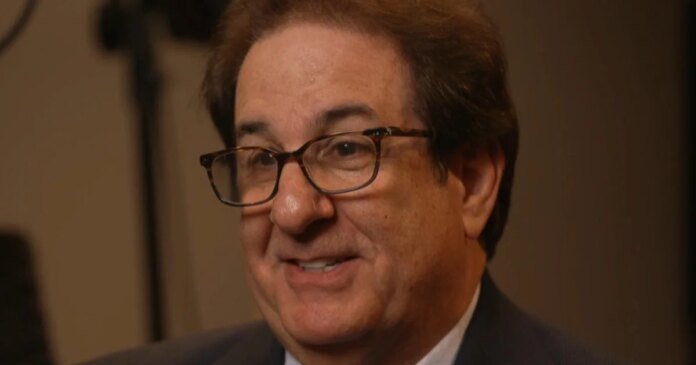
Jeff Bergman, who voices nearly all of the modern Looney Tunes cast, sits down with “CBS Saturday Morning” to talk about stepping in for Don Rickles as Mr. Potato Head in “Toy Story 5.”
One year on, exchange sealing paralyses trade, sends negative signals to foreign investors
KARACHI:
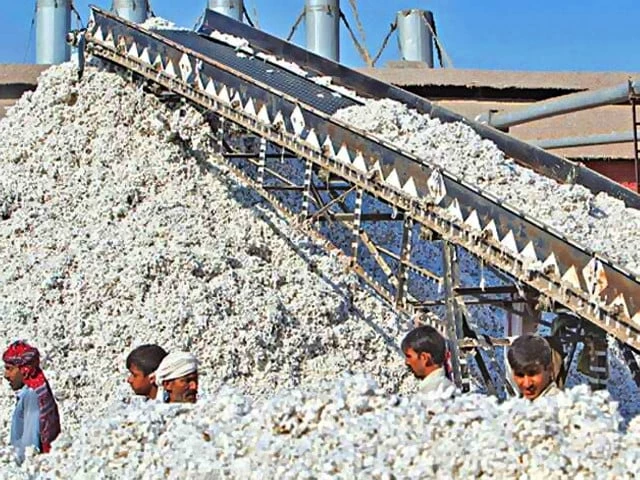
The Karachi Chamber of Commerce and Industry (KCCI), while expressing deep concern over the continued sealing and forceful occupation of the historic Cotton Exchange building, has stated that it has inflicted severe damage on Pakistan’s cotton trade, disrupted hundreds of businesses and created an atmosphere of uncertainty that threatens the country’s exports and investment climate.
In a statement issued on Saturday, KCCI President Rehan Hanif said that the chamber was receiving an overwhelming number of complaints from its member firms, which had been directly affected by the abrupt closure of the Cotton Exchange. A total of 209 commercial offices, many of which had been operating since the creation of Pakistan in 1947, have been rendered dysfunctional overnight. These offices comprise importers, exporters, cotton brokers, traders, commission agents, textile-related businesses and numerous enterprises associated with Pakistan’s cotton value chain.
The sudden sealing has not only brought their commercial activities to a standstill but has also caused enormous financial losses, contractual complications and reputational damage.
The KCCI president noted that the Cotton Exchange, where the Karachi Cotton Association (KCA) also operated, had historically remained the backbone of Pakistan’s organised cotton marketing system and played an indispensable role in bringing together growers, ginners, textile manufacturers, exporters, brokers and other stakeholders under a transparent trading framework.
Hanif noted that historical records clearly indicated that the land upon which the Cotton Exchange building was standing was originally leased in 1883, while the Karachi Cotton Association formally acquired the property through a registered conveyance deed in 1936, with the lease subsequently renewed until 2081.
He also expressed concern over the reported non-compliance with the Sindh High Court’s order dated June 18, 2026, which had allowed the Karachi Cotton Association to continue its business activities from the Cotton Exchange building until final adjudication of the matter. He urged the authorities concerned to ensure immediate implementation of the court’s directives and uphold the rule of law.
LCCI calls for easier finance, policy consistency as number of SME borrowers grows
LAHORE:
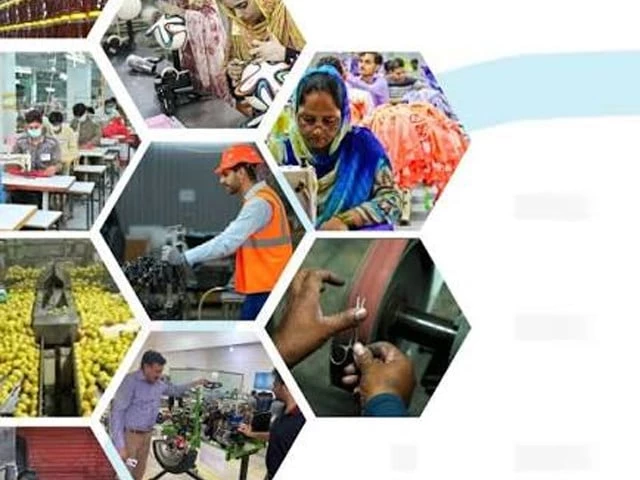
Small and medium enterprise (SME) financing in Pakistan surged 46% to Rs853.94 billion in the year ending March 31, 2026, according to data from the State Bank of Pakistan (SBP), as the government marked World MSME Day on June 27.
The number of SME borrowers increased from 203,139 to 312,355 during the same period, registering growth of 53.7%, Special Assistant to the Prime Minister Haroon Akhtar Khan said in a message on the occasion.
The figures were released during a seminar organised by the Lahore Chamber of Commerce and Industry (LCCI) in collaboration with the Small and Medium Enterprises Development Authority (SMEDA) to mark World MSME Day.
LCCI President Faheemur Rehman Saigol said SMEs are the backbone of economies across the world and possess enormous potential to generate employment, reduce poverty, promote local industrialisation and accelerate economic activity in Pakistan.
He said millions of people are associated with the MSME sector directly and indirectly, making its growth synonymous with the growth of the national economy.
However, despite their immense importance, MSMEs continue to face multiple challenges, including limited access to bank financing, lack of modern technology, high energy costs, excessive cost of doing business, marketing constraints and difficulties in accessing international export markets.
Saigol stressed the need for greater institutional support, policy consistency and easier access to finance to enable MSMEs to realise their full potential.
Pakistan Virtual Assets Regulatory Authority (PVARA) Chairman and Minister of State Bilal Bin Saqib has said that the principles of the financial system are being redefined, and Pakistan intends to play its role in shaping them. He noted that the financial system is increasingly becoming automated through software and blockchain, and software does not recognise borders.
“We have always viewed money as something under the exclusive authority of the state,” he said, according to a statement issued by PVARA on Saturday. Saqib presented this position on the main stage at the Point Zero Forum 2026 held in Zurich – a major gathering of the world’s central bankers, regulators and financial leaders. Addressing the forum, he reiterated that the principles of the financial system are being redefined and that Pakistan aims to contribute to their formation.
He said the financial system is rapidly becoming automated through software and blockchain, and software does not adhere to geographical boundaries. “We have always understood money as something controlled solely by the state – one flag, one border, one currency. That era is now ending,” he said. Delivering this message in a room filled with individuals who have managed the global financial system for generations was significant.
Saqib spoke as a representative of one of the world’s largest digital asset markets. He also participated in a panel moderated by Central Banking Publications, alongside Deputy Governor of the South African Reserve Bank Dr Mampho Modise. The session examined where tokenised money is already in use, the barriers preventing its large-scale adoption, and how regulators, banks and technology providers can create interoperability between central bank digital currencies (CBDCs), stablecoins and tokenised systems.
His stance was unequivocal: in countries where millions are already using digital assets, the question is no longer whether to allow them, but whether to maintain sovereignty over them or leave them to others.
“Pakistan is adopting a Pakistan-first strategy on digital assets,” he said. “Our position is that developing economies must help define the principles of tokenised finance rather than passively inheriting frameworks created elsewhere. The countries that succeed will be those that can openly acknowledge reality: this has already happened, our people are already here.” “Our responsibility is not to stop economic innovation, but to manage it better,” he added.
Beyond the main stage, Saqib participated in several high-level, invitation-only sessions, placing Pakistan in direct dialogue with central bankers and financial leaders from Singapore, Japan, the Philippines, the Gulf region and Europe. Major global banks and leading digital asset institutions were also present.
These discussions focused on a key challenge facing developing economies today: how to benefit from dollar-denominated tokenised money without compromising monetary sovereignty, control over payment systems or visibility over financial flows. Pakistan ranks among the world’s largest digital asset markets. According to Chainalysis’ 2025 Global Crypto Adoption Index, Pakistan ranks third globally in grassroots crypto adoption, behind only India and the United States. Contributing factors include a young, mobile-first population, one of the world’s largest freelance economies, over $38 billion in annual remittances, and the growing use of stablecoins as a hedge against inflation.
Pakistan did not adopt digital assets as a result of regulation; it adopted them first and is now developing regulations accordingly.
Now in its fifth year, the Point Zero Forum is an annual policy and technology gathering organised by the Global Finance and Technology Network and the State Secretariat for International Finance of Switzerland, in collaboration with the BIS Innovation Hub, the Monetary Authority of Singapore and the Swiss National Bank. The 2026 edition was held at Kongresshaus Zurich, with participation from over 2,000 central bankers, regulators, policymakers and industry leaders. PVARA is the federal authority responsible for licensing and supervising virtual asset service providers in Pakistan.