






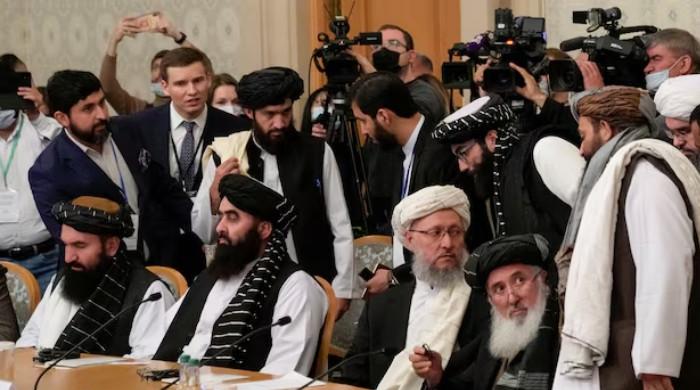
Four years into their rule in Afghanistan, the Afghan Taliban regime has reportedly been rocked by internal rifts, with key leaders pitted against each other.
The Taliban declared the war in Afghanistan was over after they took control of the presidential palace in Kabul on August 15, 2021, and the United States withdrew its forces from the war-ravaged country.
However, rifts have emerged within the Afghan Taliban ranks, with Supreme Leader Hibatullah Akhundzada warning that internal disagreements could bring them all down.
The BBC, citing an audio leak it obtained, reported that Akhundzada had voiced his concerns over division within the Taliban ranks.
In the leaked clip, purportedly from one of his speeches at a religious seminary in Kandahar in January 2025, Akhundzada can be heard warning that “the emirate will collapse and end” as a result of the ongoing divisions.
The publication, citing insiders, stated that the Afghan Taliban have been divided into two distinct groups: the Kandahar group and another based in the capital Kabul.
The Kandahar group remains loyal to Akhundzada, who is operating from his base in Kandahar, where leaders loyal to him control every aspect of the Afghan society.
The group includes Afghanistan Prime Minister Mohammad Hassan Akhund, Chief Justice Abdul Hakim Haqqani and Higher Education Minister Neda Mohammad Nadim.
The group is working towards the Taliban supreme leader’s vision of a strict Emirate that is isolated from the modern world.
The second group, comprising powerful Taliban members, is largely based in Kabul and advocates for engagement with the outside and allows girls and women access to education.
Afghanistan Deputy Prime Minister Abdul Ghani Baradar, Interior Minister Sirajuddin Haqqani, and Defence Minister Mohammad Yaqood Mujahid make up the Kabul group.
The BBC, citing a Taliban insider, described the situation as “the Kandahar house versus Kabul”.
According to the publication, the conflict between the two groups became evident in September last year, following the Taliban supreme leader’s directive to suspend internet and mobile phone services.
However, the services were restored three days later without any explanation given by the Afghan Taliban regime.
Citing Taliban insiders, BBC reported that the Kabul group went against Akhundzada’s orders and restored the services, an act described as “nothing short of a rebellion”.
The publication stated that the group restored the services as the move directly threatened officials’ privileges and financial resources.
Meanwhile, the Taliban supreme leader reportedly moved key departments to Kandahar — including distribution of weapons, which had been previously managed by Haqqani and Yaqoob, who are members of the Kabul group.
The group has recently struggled to secure meetings with Akhundzada, with Kabul-based ministers reportedly told to travel to Kandahar only if they receive an official invitation, the report said.
The situation appears contained as of early 2026, though underlying tensions persist.
Afghan Taliban regime spokespersons have downplayed the disagreement as a mere difference of opinion; however, the ideological rift continues through public statements.