





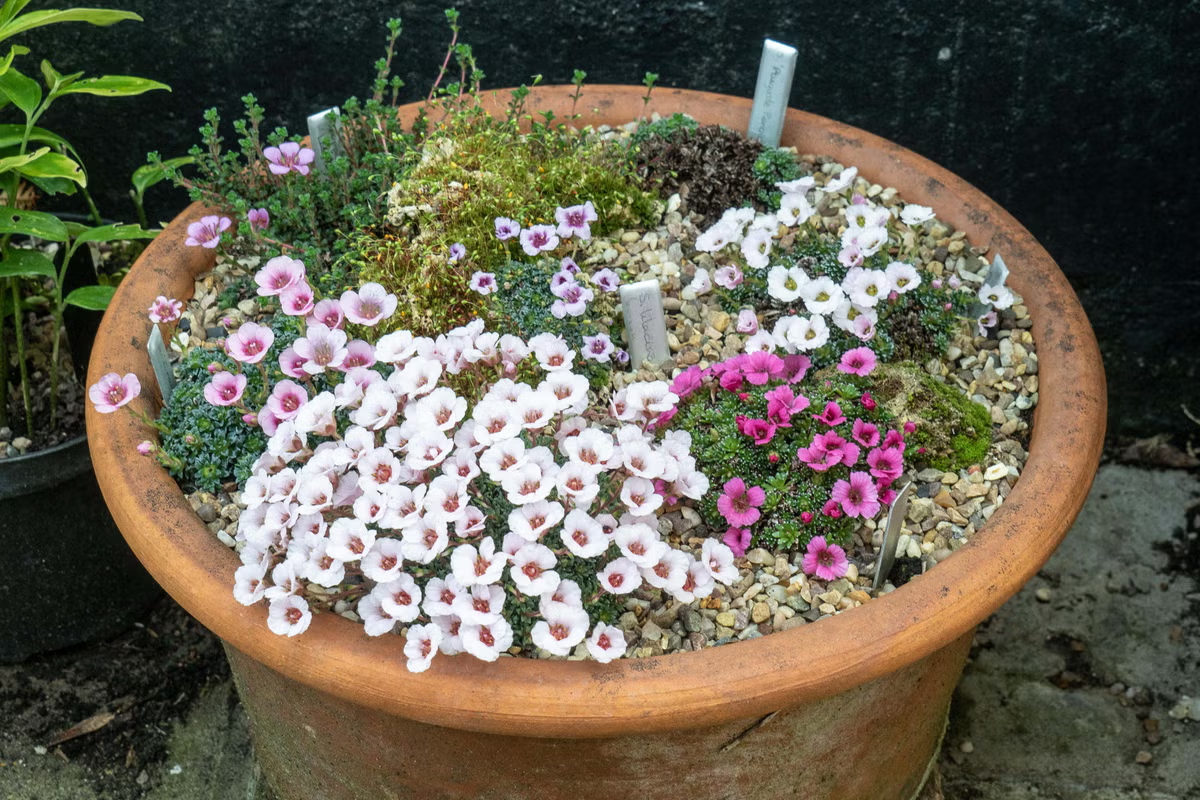
If you’re bored with pansies and primroses for spring containers, there’s an easy alternative if you go for alpine candidates.
Alpines – from succulent sempervivums to pretty saxifrages – come into their own in spring and early summer, clothing pots in interesting flowers and foliage and best of all, most are cold hardy, coming from cool, mountainous regions.
The peak time for alpines is after the first spring bulbs start coming up, until mid-May.
But where do you start?
Create a good match
Whether you are using an alpine rock, a terracotta pan or an old Belfast sink, create a cohesive look, matching the rock or container with the top dressing, to give it more of a natural landscape, suggests Lauren Fear, alpine horticulturist at RHS Harlow Carr.
“If you want a traditional look for your container, you may pick one up at a salvage yard. There are lots of reclamation yards where you can buy troughs which are 7ft long if you want.
“Garden centres will probably offer composite and plastic containers which may not be quite as heavy,” she says.
Limestone chippings, black pebbles and even coloured glass chippings can bring an alpine trough to life.
Raise your containers
“Make sure you set your containers on bricks or another prop to the height you’d like to view, because a lot of troughs don’t have feet and you don’t want your drainage holes to be sitting on the floor,” she advises.
Take care with potting medium
“We use a very specific potting medium but for someone at home buying bags, use 50% John Innes No. 2 (peat-free) and 50% horticultural grit for plants in a sunny spot,” she suggests.
In the summer, feed the troughs with a well diluted feed if some of them were planted much earlier and the compost isn’t as fresh as it once was.
“Don’t make the feed too rich because alpine plants grow in scree slops, so it’s usually a low nutrient environment up there,” says Fear.
Choose good plant partners
Different alpines demand different light and heat conditions, she says.
If your alpine trough is going to be on a sunny side, you’ll need plants which are going to take the heat, such as Pulsatilla vulgaris (Pasque flower).
“Sempervivums are pretty bomb-proof, such as Sempervivum arachnoideum (cobweb houseleek) or ‘Engle’s’, and silver saxifrages are very hardy. Buy them small and their amazing silver rosettes just spread. Then they get huge flowers cascading out of them usually in white with pink speckles.”
For more shady areas with a woodland feel, underplant the alpines with small, delicate bulbs like snowdrops and dwarf narcissi. You could also try acis, an autumn-flowering bulb which bears little white pagoda flowers and will extend the season.
“Put them into these troughs with rocks around them, tight and congested, and they do better,” she says.
Other shade candidates include Saxifraga callosa or paniculata, plus ‘Silver Maid’. Hepaticas also do well in troughs in a shady area.
Think about plant size
“When you make up the troughs, put rock in to create strata and little miniature landscapes. The plants need to be small because they want to establish themselves rather than filling the trough with one litre plants.
“It is personal preference but I would always put the smaller things at the front-facing side and larger plants at the back. As long as it’s a plant that will stay small and tight and won’t overtake everything else, you’ll be ok.
“There are some really nice tight campanulas and you can have more cushion-type plants like armeria, sea thrift, which has tight needle-like leaves and pretty pom-pom flowers in bright pink.”
Try plants which have scent, such as small creeping thyme, and plants with interesting leaves such as miniature hostas. Campanula ‘Dickson’s Gold’ has an ivy-like leaf which is pretty.
“If you want to increase height, go for miniature rhododendrons or miniature pines and create a small landscape. Some people put little model characters in there to look like a little landscape.”
How much watering and feed do they need?
“It depend on the time of year, so in a very wet period in winter you don’t need to water them at all, but during the summer potentially once a week or maybe once every two weeks.”
What problems might you encounter?
“As with most plants, if they get too wet – apart from bog plants – they can start to rot.”
Botrytis (grey mould) can hit them, so check plants regularly and pick off any affected leaves, she advises.
“Don’t place alpine troughs under dripping trees or anywhere they get constant drip off a roof. They need to be slightly more out in the open. If your trough is under a lean-to (protected from the wet), you will need to water it a bit more in the winter.”