








Last Updated:
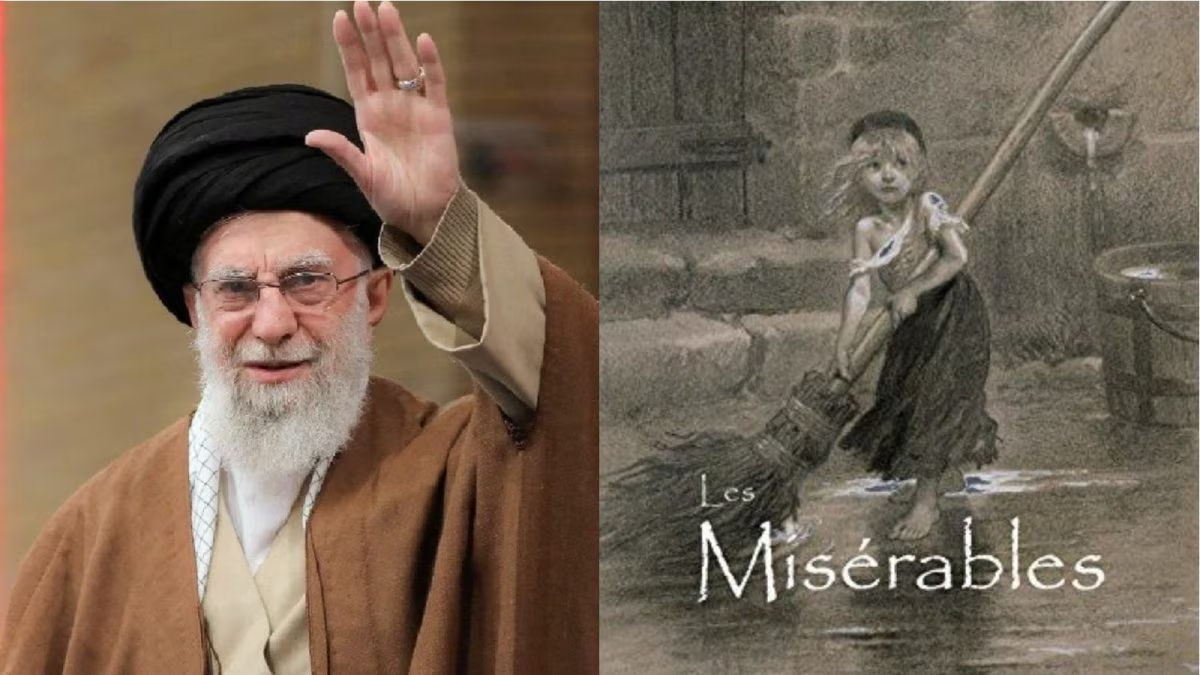
As the Iran-Israel conflict dominates global headlines, an interesting cultural detail resurfaces: Iran’s Supreme Leader once called Les Misérables the greatest novel ever.




Amid Iran-Israel War, The Classic Novel Ali Khamenei Once Called ‘The Greatest Ever Written’ Is Back In Focus
Among the many details discussed about Ayatollah Ali Khamenei, one has surfaced repeatedly over the years – his admiration for Les Misérables.
Before he died in the US-Israel military strikes, the Iranian leader often described Victor Hugo’s 19th-century novel as the greatest work of fiction he had read. He read it in Persian, through a translation by Hossein Gholi Mostaan, and even recommended it publicly to students and followers.
That preference stands out. Khamenei was widely viewed through the lens of politics and ideology. Yet the book he returned to was not a religious text or a political manifesto – it was a story about a former convict trying to rebuild his life.
What Les Misérables Is About: Law, Mercy And Redemption
At the centre of Hugo’s novel is Jean Valjean. Imprisoned for stealing bread, he spends 19 years in hard labour. When released, he faces rejection at nearly every turn. It is an act of mercy from a bishop that alters his path. From that point on, the story turns on a question – can a person change?
The tension between strict law and moral grace runs throughout the book. Inspector Javert represents rigid legality. Valjean becomes the counterpoint – someone shaped by suffering but not fixed by it. Hugo suggests that justice without compassion can harden into cruelty.
For a cleric operating within a system where religion and state authority are closely linked, those themes would not have been abstract. Concepts such as justice, endurance, sacrifice and redemption sit at the core of Shia theology and political thought in Iran.
Les Misérables also portrays society as a contest between oppression and resistance. Its characters move through revolution, poverty and social unrest. Suffering is constant. So is perseverance.
Khamenei’s own political life unfolded against revolution, war and prolonged sanctions. In that sense, Hugo’s narrative of endurance may have felt familiar rather than distant. There is another layer. The novel questions power even as it explores morality. It does not present authority as inherently virtuous. That tension gives Khamenei’s admiration a degree of complexity. Readers are often drawn to stories that echo their internal beliefs. Leaders are no exception. A book centred on redemption, moral duty and historical struggle would naturally resonate with someone who framed politics in similar terms.
March 06, 2026, 22:04 IST