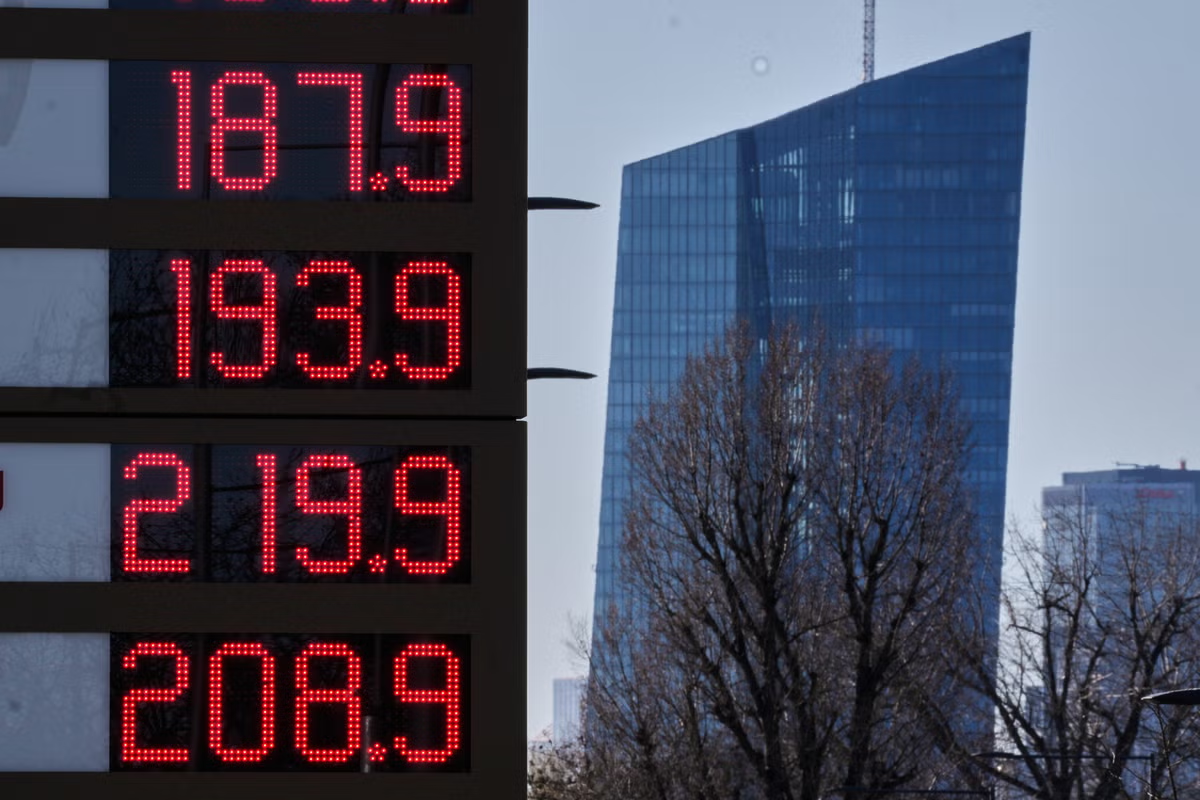









Oil markets skyrocketed beyond the $100 mark on Monday as Middle East conflict continues to intensify, fueling fears about energy supplies disruption and shipping routes across the region. Brent crude, the global benchmark, climbed past $118 a barrel. US benchmark West Texas Intermediate followed a similar trajectory as the light, sweet crude grade jumped 30% higher than its previous close of $90.90 on Friday.At 0230 GMT, WTI crude climbed 30.04% to $118.21 per barrel before paring some of its gains, while Brent crude was trading 27.54% higher at $118.22.The latest spike came after an already volatile week for oil markets. Last week, US crude prices had surged 36% while Brent rose 28%, as the conflict, now entering its tenth day, began drawing in regions central to the production and transportation of oil and gas from the Persian Gulf.
Roughly 15 million barrels of crude oil move through the Strait of Hormuz every day, accounting for about one-fifth of global oil supply, according to independent research firm Rystad Energy. However, the threat of Iranian missile and drone attacks has nearly halted tanker traffic through the narrow waterway. The strait, bordered to the north by Iran, is a critical route for shipments from Saudi Arabia, Kuwait, Iraq, Qatar, Bahrain, the United Arab Emirates and Iran.Export constraints have begun to affect production levels in the region. Iraq, Kuwait and the UAE have reduced oil output as storage facilities fill up due to limited export capacity. At the same time, strikes targeting energy infrastructure have intensified supply concerns, with Iran, Israel and the United States attacking oil and gas facilities since the conflict began.The last time Brent and US crude futures traded near the current levels was in 2022, following Russia’s invasion of Ukraine.Natural gas prices have also moved higher during the conflict, although the gains have been more modest compared to oil. Late Sunday, natural gas was trading at around $3.33 per 1,000 cubic feet, about 4.6% above its Friday closing price of $3.19, after rising roughly 11% during the previous week.Oil’s rise has also begun to show up in fuel prices. In the United States, the average price for a gallon of regular gasoline reached $3.45 on Sunday, about 47 cents higher than a week earlier, according to the AAA motor club. Diesel prices climbed to roughly $4.60 per gallon, up around 83 cents over the same period.Meanwhile, crude oil is also a key ingredient in many everyday consumer goods, including detergents, biscuits, toothpaste, paints and packaging materials. Petroleum-based derivatives are widely used in products such as soaps, shampoos, creams, hair oils, as well as in plastic bottles and tubes. In India, these inputs account for over 25% of production costs for FMCG companies and nearly 40% for paint manufacturers. As a result, if crude oil prices continue to rise, the cost of these daily-use products could increase further.Some analysts and investors have further cautioned that if oil prices remain above $100 a barrel for a prolonged period, the global economy could struggle to absorb the impact.