





Last Updated:
Goa is not only for those who can drive. With a little planning, curiosity, and a willingness to lean on local knowledge, it becomes a place that welcomes exploration in any form.




Six days in Goa as a solo traveller: where to stay and where to eat.
Having grown up in landlocked Lucknow, beaches became more fantastical than frequent. Summer vacations were spent loitering around Nainital, and winters meant taking a trip to Nani’s house in Unnao. Goa, especially, was a teenage dream that seemed just a little out of reach. But then came my 20s- curious and roaring.
The first time I went to Goa was to celebrate my 23rd birthday with my parents. But as I sat alone on the soft sands of Candolim beach at midnight- with a candle-lit brownie and three dogs at my feet- and sang ‘happy birthday’, I fell in love with my little slice of unexpected quietude; I knew I had to come back.
The fantasy of a Goan December is almost too hard to resist. The light has a confidence to it, golden and unhurried, as if the sun itself has decided to linger. Mornings begin with the smell of salt and coffee, afternoons hum with church bells, and nights dissolve into music drifting across palm-lined beaches. You can feel the state’s celebratory pulse- Christmas decorations hanging from windows, fairy lights tangled in trees and laughter spilling from beach shacks.
Goa doesn’t perform for your approval. It welcomes you as you are with a kind of emotional generosity. It doesn’t ask you to be anything other than who you are. It is this generosity that makes Goa an ideal destination for solo travel, including North Goa. Unfortunately, North Goa’s gentleness is often lost in the face of its extrovertedness.
I reached North Goa on December 1, 2025, as I was: a solo traveller who didn’t know how to drive. It sounds bizarre, I know. How does one travel around in Goa without exhausting all their budget on the taxi mafia? Roaring and curious, I decided to find out.
December 1
I had pre-booked my cab from the airport on the Goa Miles app, and the fare was Rs 1100, equivalent to Uber charges for a Noida-IGI Airport journey at night. A local taxi would easily charge close to Rs 3000. I checked into Staymaster Veridian in Calangute. Even on a solo trip, I like to have people around, and I like the convenience of connectivity, making Calangute an ideal choice. Veridian is an apartment hotel where I had a cosy 2 BHK flat all to myself. It was a sanctuary in a busy pincode.
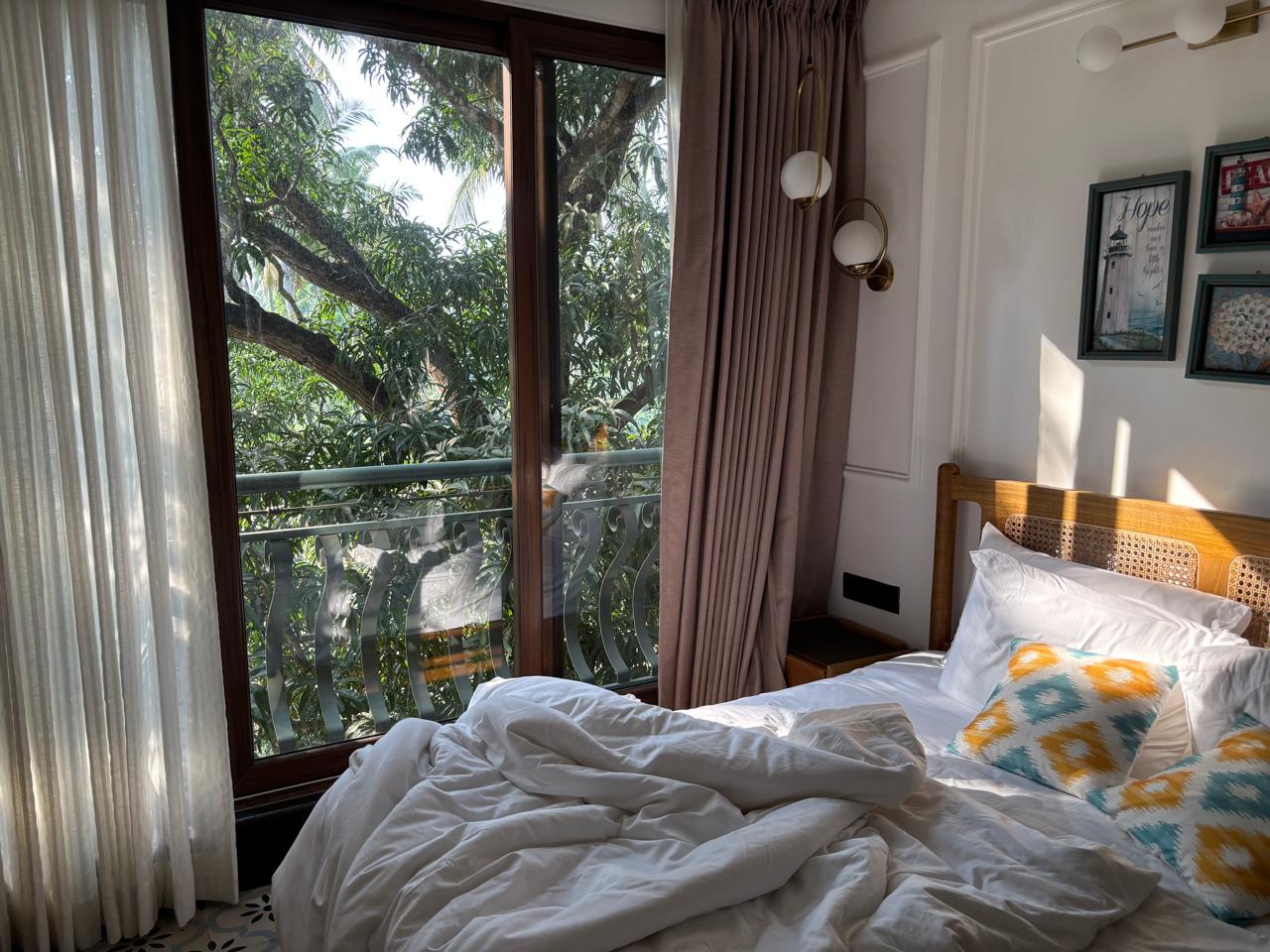
My apartment was situated right off the main road, ensuring that I had both connectivity and peace. The road to the apartment itself set the tone- the sun set, nestled amid the tall trees surrounding old homes and a chapel. Then came Veridian. From the plush blue sofa to the pink high chairs, Veridian never let me forget that I was on vacation. In signature Goan style, the kitchenette and the pool were adorned with beautiful tiles. But it was the serene bedroom with the marshmallow-like mattress that had my heart.
I stepped outside my haven at dusk. As a journalist, I tend to overhear interesting conversations, and my neighbours at Veridian caught my ear. They were headed to Panjim, so was I. After a little chat, the women and I decided to become friends, and they offered me a scooty ride to Joseph’s Bar. The bar is a popular Goan institution, and I often succumb to history.
From the outside, Joseph’s Bar looks almost deliberately ordinary. Step inside, though, and you enter a living archive of Goan evenings. The air is thick with history, feni, laughter, and a flirty old man handing out roses to women. While this flirtation is welcomed by many tourists, its almost mandatory nature made me uncomfortable. It was seen as offensive when I refused to put my rose in my hair like the other, more “friendly” women in the bar.
Quinta Cantina came to my rescue. Sitting at the foot of the Fontainhas, this feni and agave bar brimmed with belongingness. The bar pays tribute to Goa’s layered identity and Mexico’s soulful distilling traditions. The terracotta-hued walls invite you to indulge in conversations while the shelves lined with garrafoes quietly remind you that this is a place where history and skill are served with ice.
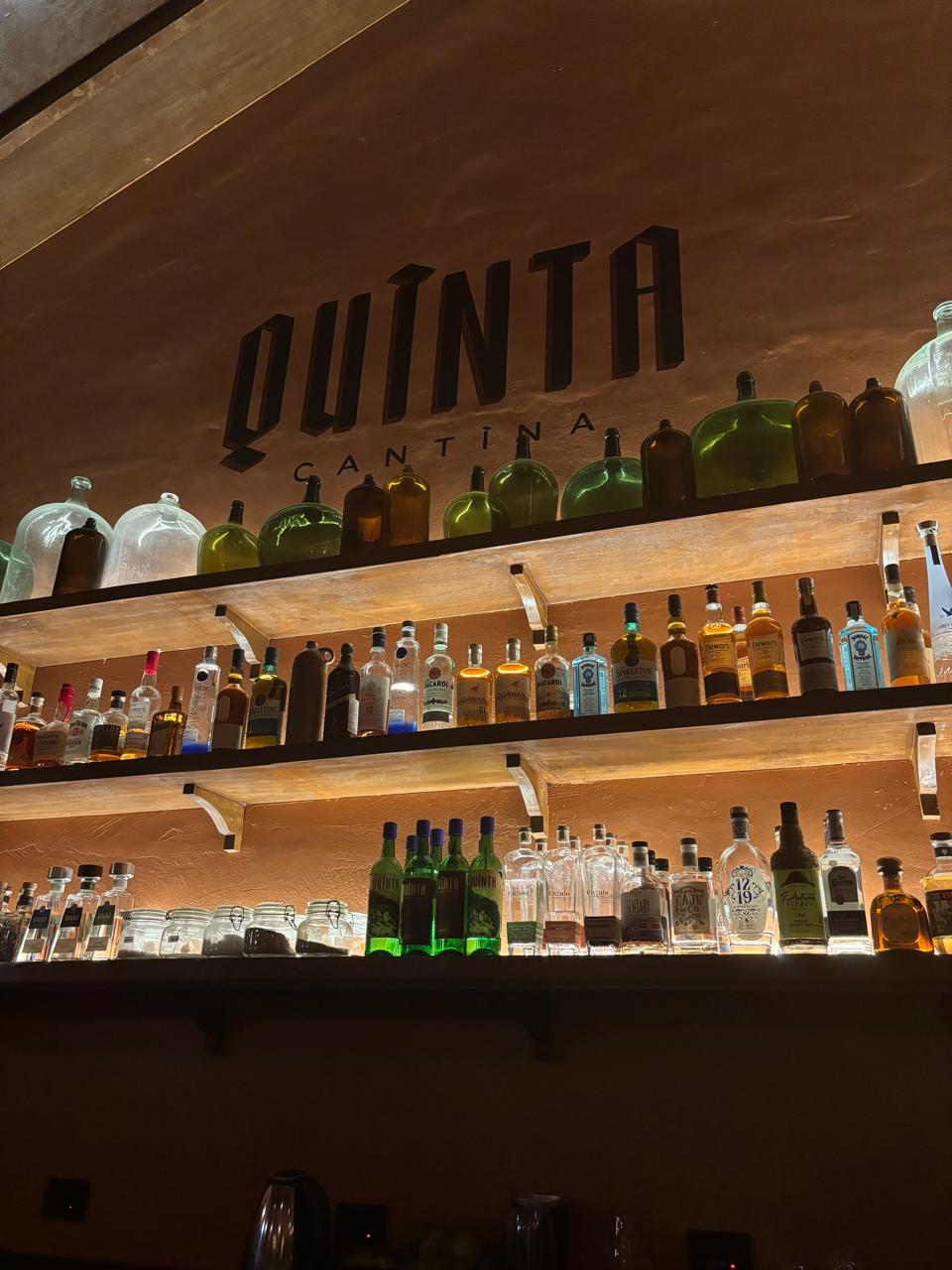
I took a seat at the long bar and explained my preferences to the mixologist, who eventually became a friend as the conversations unfolded. I was recommended a Taco Mix- a delicious concoction of tequila, mezcal, basil, coriander, pineapple, agave, chilli and citrus. Not only did I finish my drink in quick, greedy gulps, but I also lingered around to watch the staff paint Christmas decorations on their windows. At Quinta Cantina, I was unhurried and taught how to respect the local spirits. I was also given enough food recommendations to last the entire trip.
After a late dinner and a short walk along the Mandovi riverbank, I decided to head home. I hailed a local cab, and this marked my first encounter with the ‘taxi mafia’. I was told that a ride from Panjim to Calangute would cost Rs 600, and when I showed my apartment’s location to the driver, he insisted that it was in Candolim and that the ride would cost Rs 800 instead. After explaining to him that I wasn’t going to be conned and that I knew the difference between Calangute and Candolim, I reached home to the comfort of Veridian’s bed.
December 2
The floor-to-ceiling windows at Veridian offered a picturesque view of an old Goan home with a jungle-like backyard. Dodging the thicket, the soft sun fell on my belly as I enjoyed my slow morning with breakfast in bed. After a dip in the cool pool and a hot shower, I was ready for watersports on Anjuna Beach. A cab ride via Goa Miles cost me Rs 280 (for between 6 and 7 kms), saving me some extra money for a longer speedboat ride.
At Anjuna, it dawned on me that while my trip was primarily about exploring Goa as a non-driver, it was also becoming about the people I was meeting. My two speedboat pilots were unexpectedly kind. While they encouraged me to venture into the water and let go of my inhibitions, they also treated me like their own and promised to be available should I need any help in my travel.
“Don’t worry, you have two brothers here now. Take my number, and if you are ever stuck somewhere or feel unsafe, call me. We have cars that we give out as taxis. We will come and pick you up at no cost,” one of them told me with a reassuring smile. And just a few minutes later, their unexpected kindness came to my rescue.
During my last visit to Goa, I had prawns balchao at Slow Tide, and I fell in love. Slow Tide is a 30-minute walk from where my pilots had dropped me off. With no local transport in sight, I decided to turn on my phone flashlight and walk through the winding streets. I heard two scooty horns from behind me and the deep voice of a man saying, “Madam, wait.” Of course, I assumed the worst and hurried my steps.
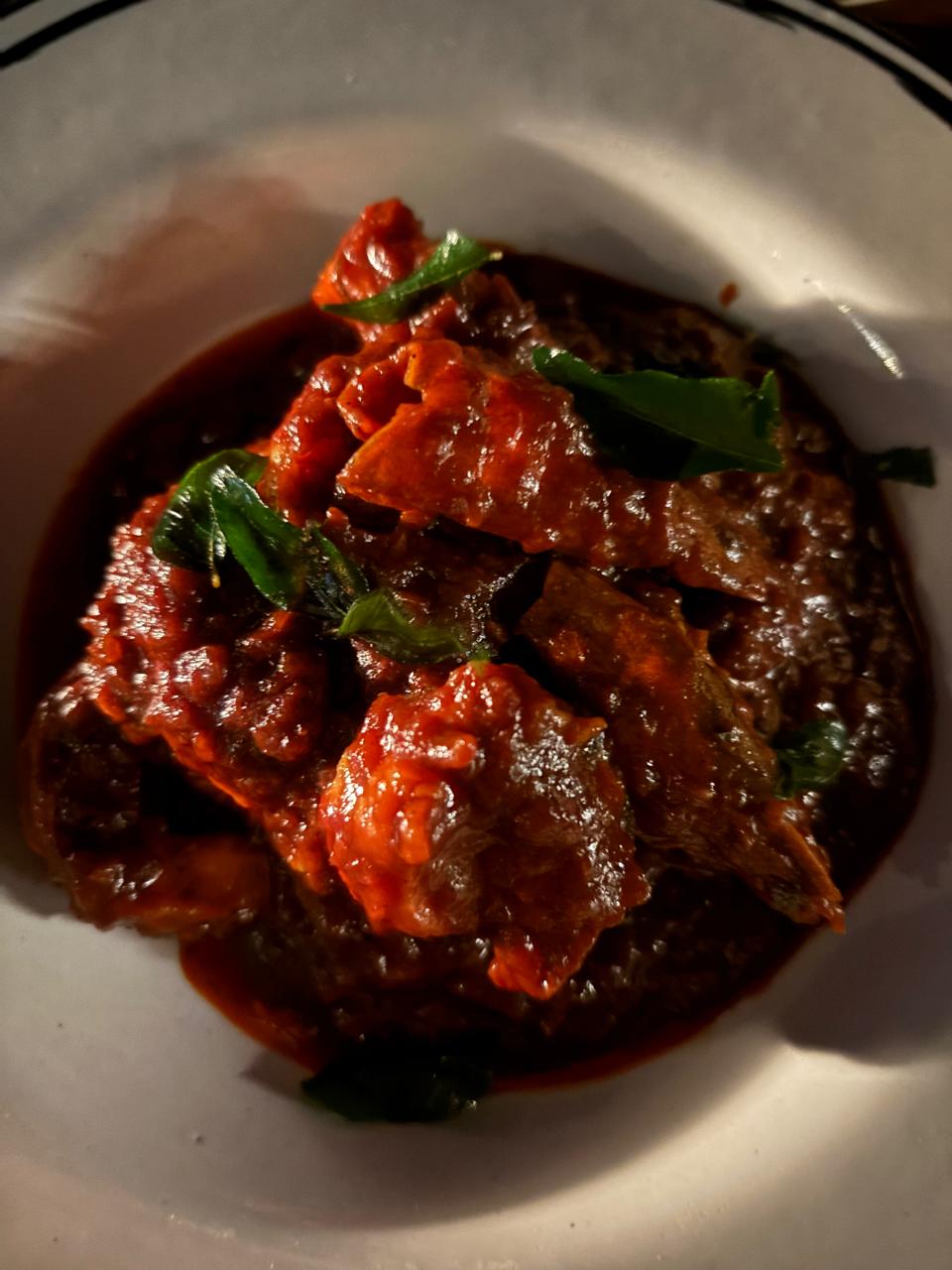
As the men caught up to me, I recognised the familiar faces of my pilots. One of my ‘brothers’ told me that they assumed I was lost and looking for the parking lot. When I explained to them that I was heading to Slow Tide, they offered to drop me off on their scooty. While I do not recommend hitchhiking, I had spent enough time with these men out at sea, and so, five minutes later, I was reunited with my balchao, tearing apart poi bread with fingers still salty from the sea. Another Rs 274 and I was back to the comfort of Veridian with a full heart and a fuller belly.
December 3
Then came my favourite day. I spent my morning lounging by my apartment’s tree-lined pool, intently listening to the birds chirping around me. I swam a few laps in the freshly-filled water and decided that’s what I wanted to do all day, except in the sea. My apartment was located a short walk away from the Calangute bus stand. I took a local bus to Mandrem, and the ticket was priced at Rs 40. Understanding the local bus routes can be a little daunting, but ask nicely and the locals will readily help.
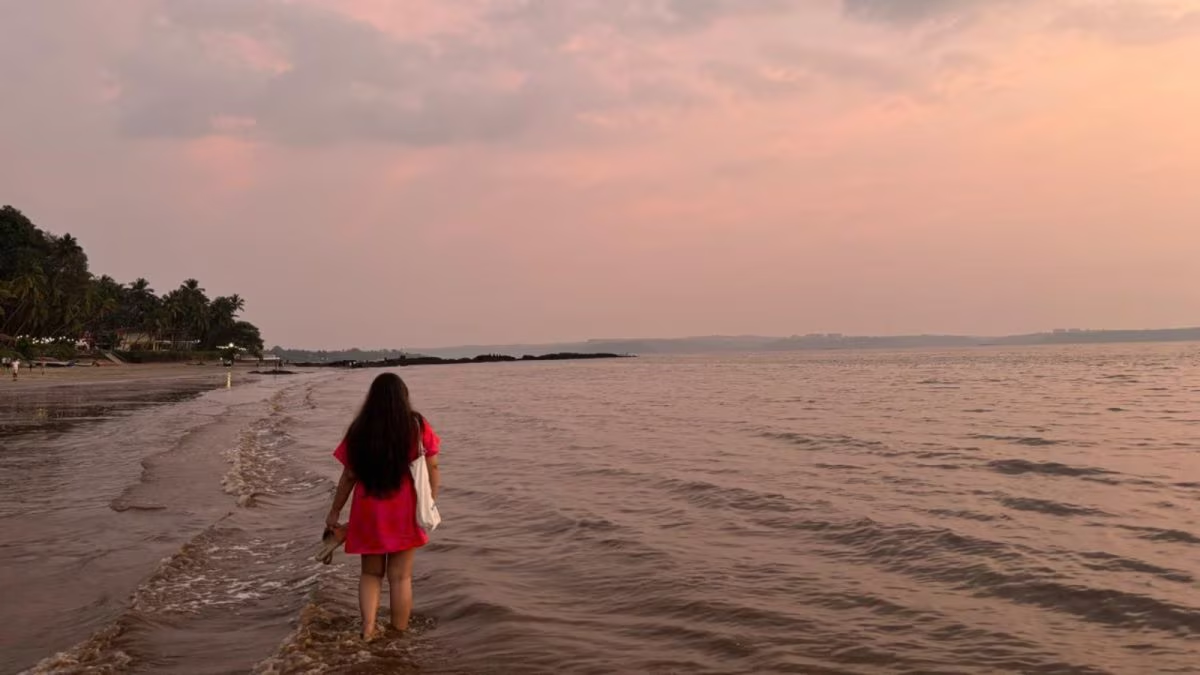
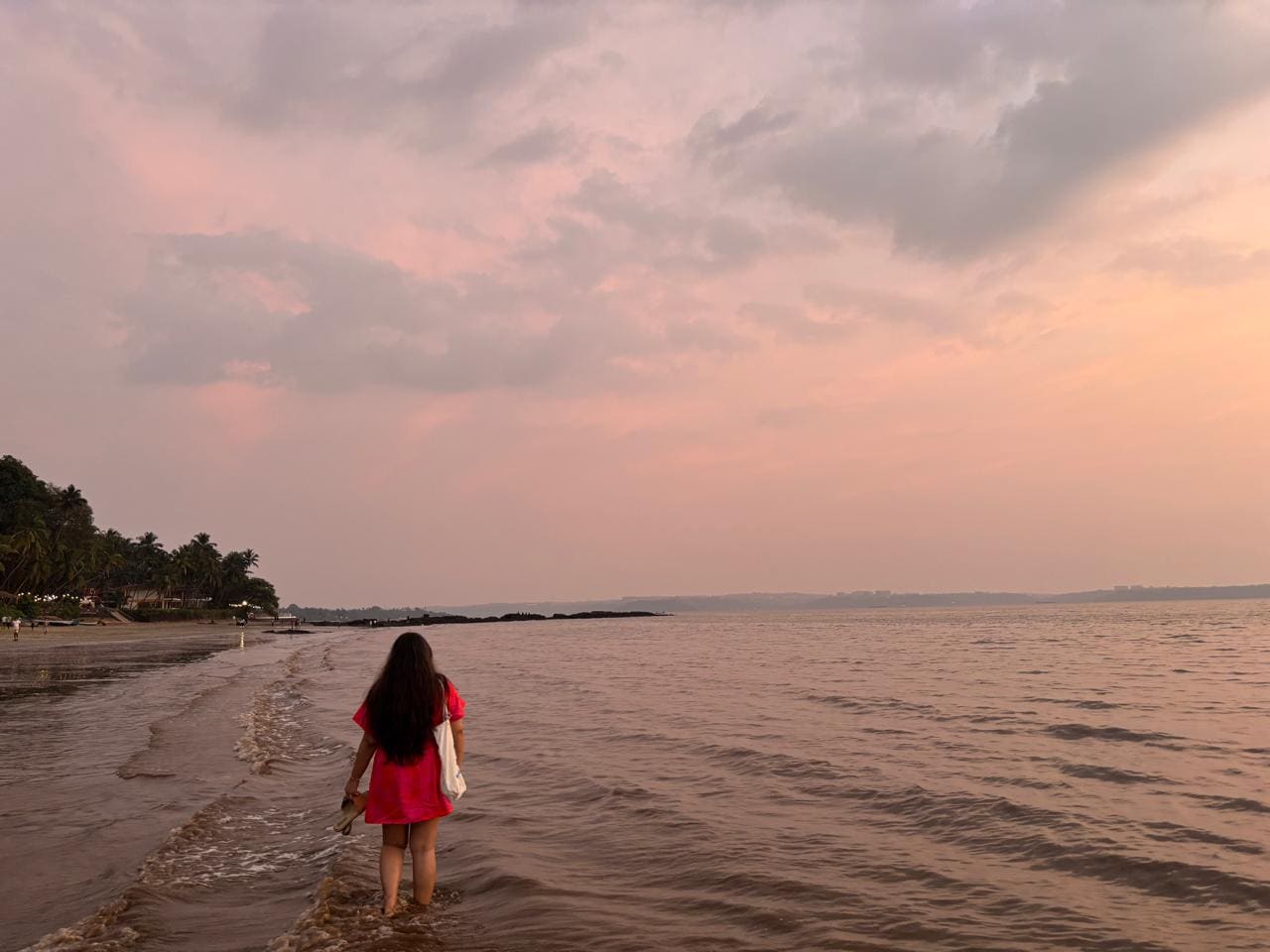
I reached the beach in the afternoon and spent two hours swimming in the salt water. The waters at Mandrem were calm till the evening. From afar, the sea looked almost shy—long, flat stretches of water broken by soft, rhythmic waves. Stepping in, the water greeted me gently, not with a jolt but with gradual permission. Each step forward felt negotiated. Ankles. Calves. Knees.
Swimming at Mandrem was an exercise in trust. The waves were steady but not aggressive, rolling in with a patient certainty that made me feel held rather than challenged. As I waded deeper and finally let myself float, the noise of land fell away. Just breath, water, and the low, constant hush of the tide. Another hour was spent sitting by the water, making flowers in the wet sand. As the sun set, I couldn’t help but take one last dip. Coming back to shore felt like returning from a long thought.
On the beach, I witnessed a drum circle for the first time. The drum circle had formed without spectacle. No stage, no announcements. Just a loose constellation of people sitting in the sand—locals, travellers, strangers who looked like they’d met five minutes ago but trusted each other anyway. Bongos, frame drums, shakers, and even bare hands on overturned buckets made music, but the instruments felt secondary.
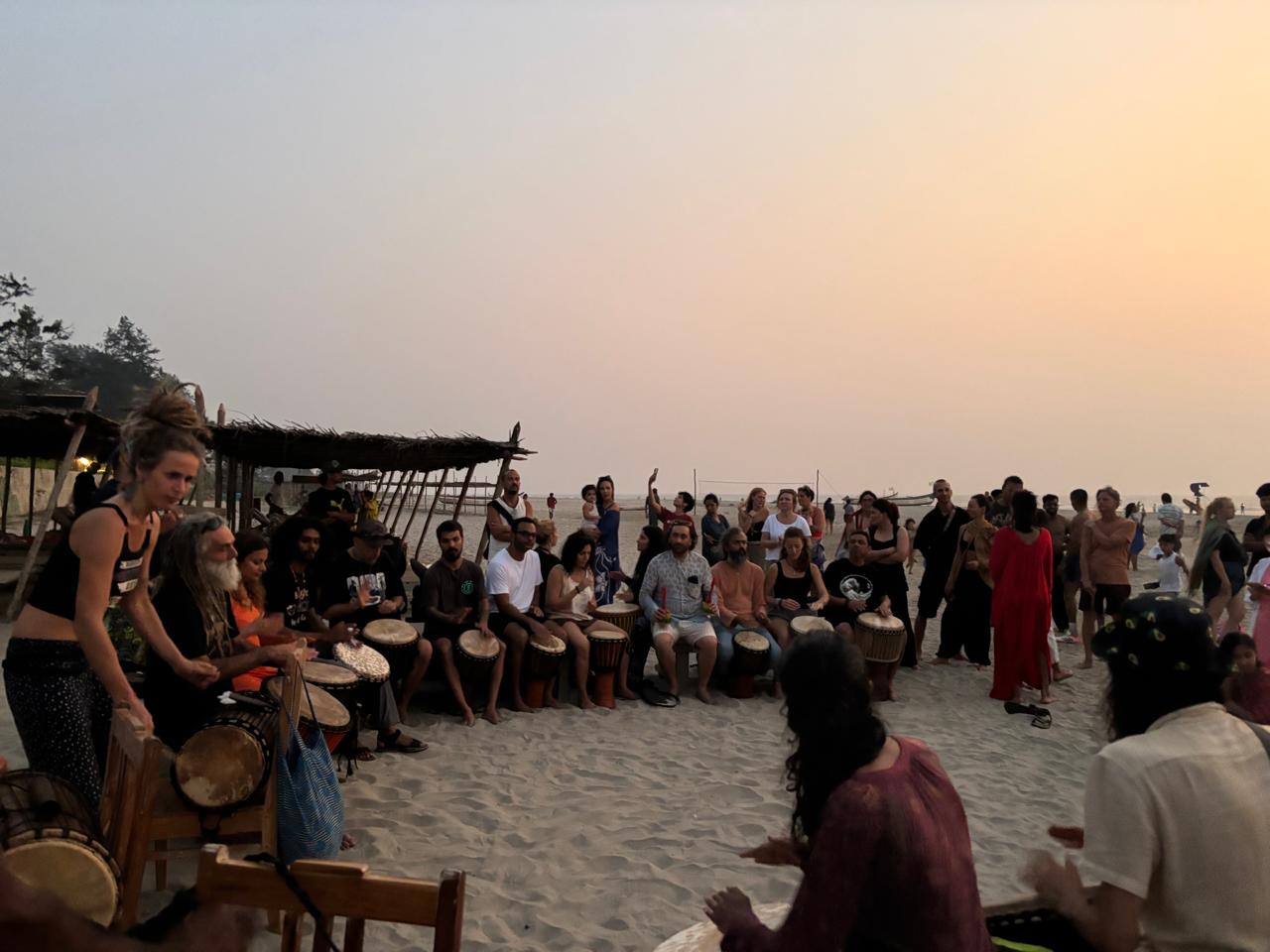
As the tempo rose and fell, bodies responded instinctively. A woman stood up and began to sway without feeling conscious. A child tapped along with a seriousness that suggested this was important work. A man who looked like he’d arrived sceptical, slowly leaned forward, palms finding the drum as if guided there. Participation felt optional but irresistible. In spirit, there was something deeply Goan about the moment.
During this celebration of letting go of one’s inhibitions, I made friends with fellow travellers and locals who were soon to return to Calangute. The last bus back to Calangute was to depart at 9:30 pm, but a feast at Prana with my new friends seemed more exciting. We devoured giant, juicy prawns with wasabi mayo, virgin pina coladas and some chorizo poi, as we shared our life stories.
It is said that solo travel often reveals the distance between who you are in your head and who you are when no one is watching. In Goa, that distance softened as I allowed myself to be consumed by this spirit of community. Who you are when no one is watching should be cautious, but it’s okay to let your hair down sometimes, if your instincts allow.
December 4
My decision to spend the mornings at Veridian with breakfast in bed every day wasn’t a pre-decided strategy. I always succumbed to the luxurious mattress, and nearby cafes always delivered hot and hearty food. This morning was no exception, but unlike the other activity-filled afternoons and evenings, this day was only spent gorging on delicious meals.
I took a walk to the bus stand and reached Panjim for Rs 40. The first stop was Bombil. The Kingfish Thali arrived first, unapologetic in its abundance. The fish was generous, fried just enough to hold its shape while yielding easily to touch. There’s something ceremonial about a Goan thali, with the way rice forms the centre and how accompaniments orbit it with quiet purpose.
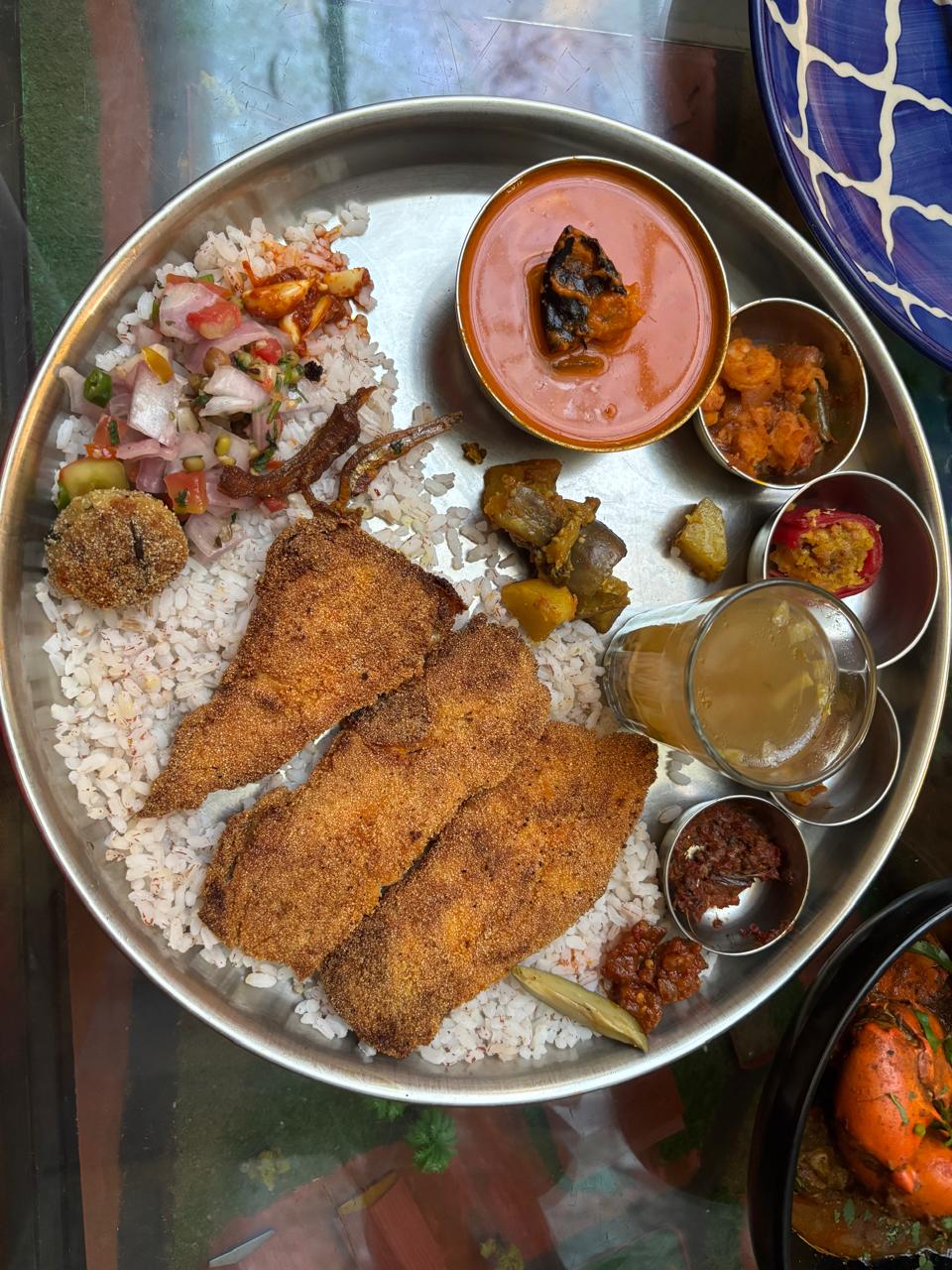
The Chonak Thali followed, earthier and chewier. The masala clung lovingly, infused with vinegary sharpness and slow-cooked intent. This wasn’t a dish you rushed. It asked you to pause, to chew properly, to acknowledge the labour behind the flavour. Between bites, the Kokum Mojito arrived tart, pink, and brilliant.
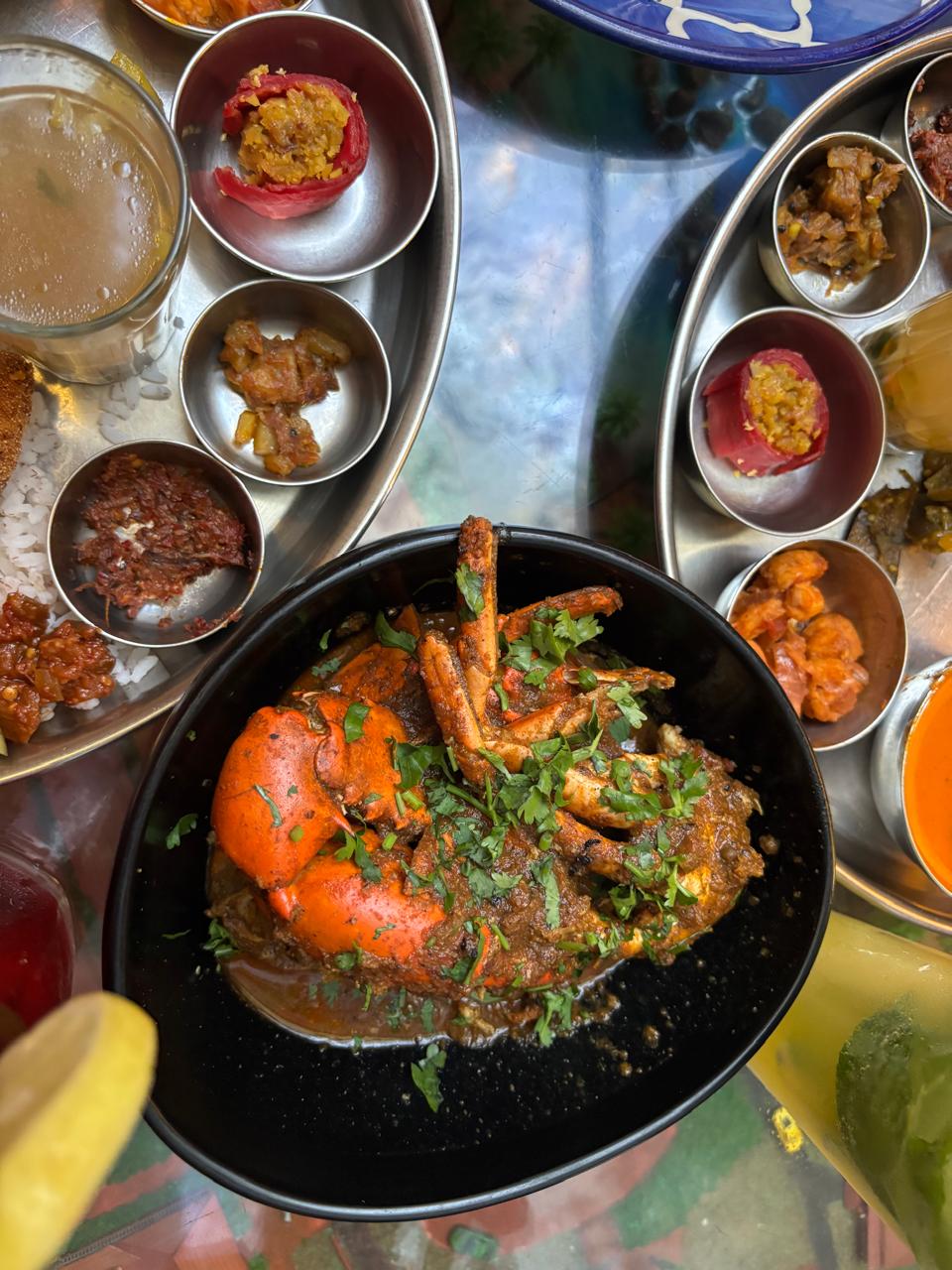
Then came the Crab Xec Xec—messy, fragrant, glorious and served without apology for the work it demands. The masala was coarse and aromatic, thick with coconut, garlic, onion, and spice that bloomed rather than burned. Cracking into the crab felt ritualistic- fingers slick with gravy, concentration absolute. This was not food for polite company. This was food for surrender. Each morsel carried sweetness and struggle, and felt like a reward earned through effort.
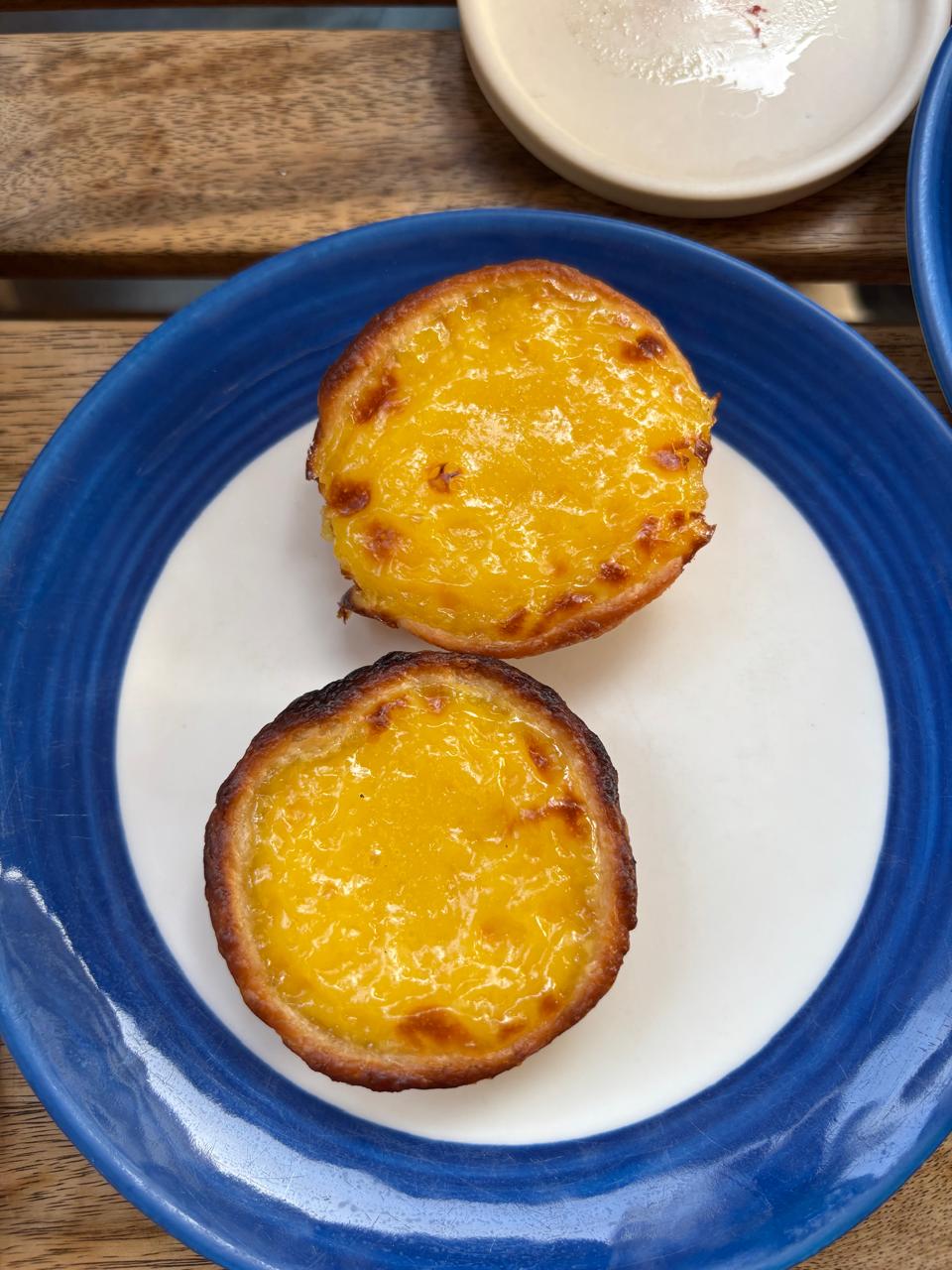
You would think that I’d have stopped after eating the sea. But they say that we have a separate stomach for desserts, and they are right. I soon reached Padaria Prazeres, where I indulged in sour cherry financier, cherry jam tart and my favourite, pasteis de nata. It arrived modestly on a plate—small and golden. A custard tart with a blistered top, edges browned just enough.
The first bite was an experience I will never forget. The pastry shattered delicately, flakes scattering with the faintest resistance, giving way to custard that was silky, warm, and perfectly balanced. Sweet, but not indulgent. Rich, but restrained. There was vanilla and an echo of egg, milk and careful heat. A dessert that trusts simplicity more than excess. There’s something comforting about food that simply asks to be eaten while warm.
After days of saving cab money, I spent Rs 490 to reach Saligao. The expensive cab foreshadowed the fancy evening I was to have. But I would do it again, and again, and again for a meal at The Second House. I ordered the seabass ceviche almost casually, unaware that it would become one of those rare meals that slip past appetite and lodge themselves in memory.
The dish looked delicate when it arrived. Translucent slices of seabass were arranged with restraint, dressed lightly with no excess garnish to distract you. Just fish, citrus, herbs, and the quiet promise that everything on the plate belonged there. It felt like an invitation rather than a presentation. The first bite reset something in me.
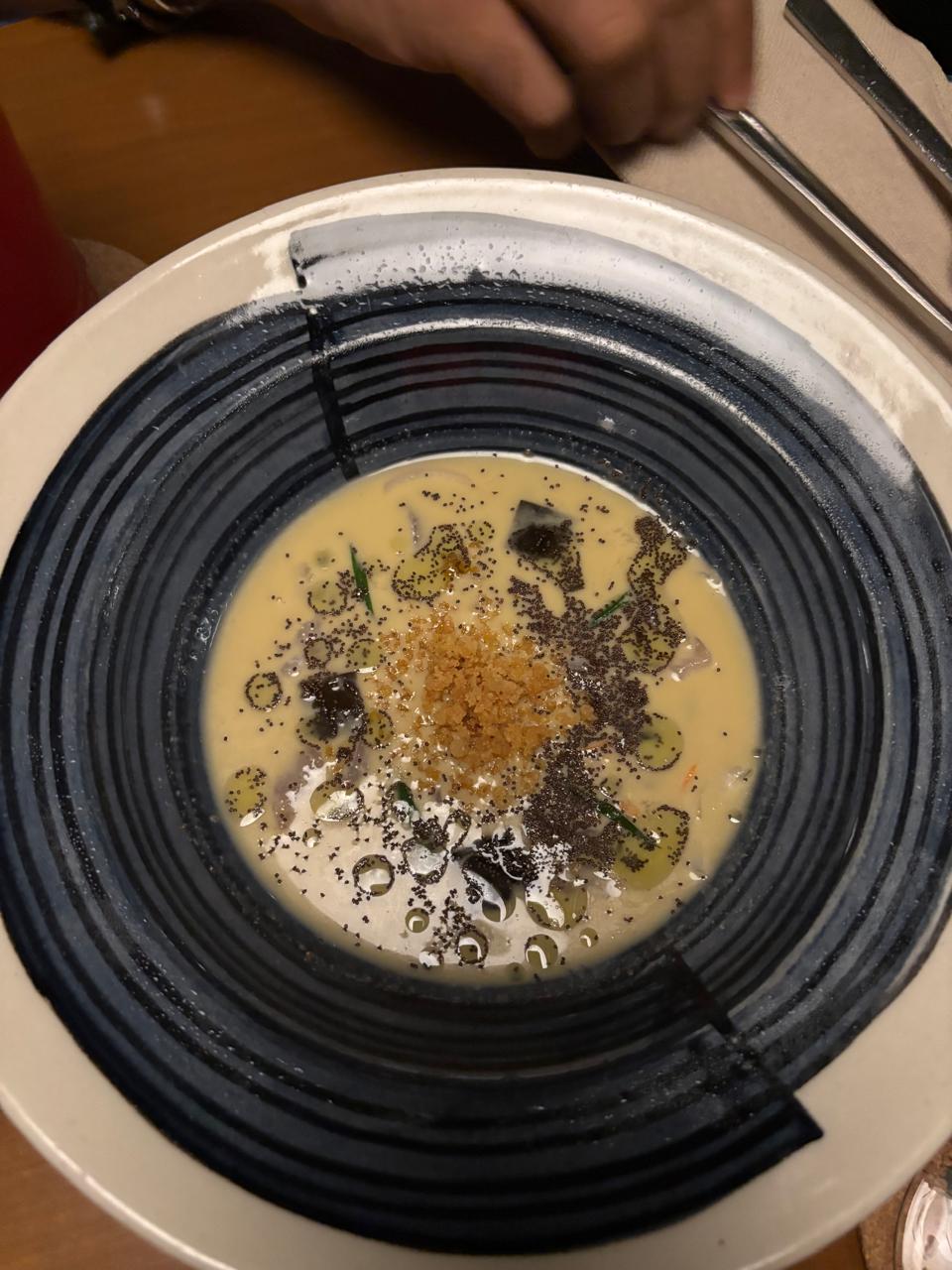
The seabass was fresh, carrying the cool clarity of the sea without any of its aggression. The citrus didn’t dominate; it lifted. Acid sharpened the edges just enough to wake the palate, while salt anchored the flavour, keeping it grounded. There was heat somewhere in the background, subtle and well-behaved, and herbs that felt ‘green’ rather than decorative.
This was coastal food speaking across oceans, finding common ground between Latin technique and Indian proximity to the sea. The dish didn’t try to localise itself aggressively, nor did it cling to purity for its own sake. It existed comfortably where it was, just as I felt while eating ceviche in Goa. I knew I would remember this meal right as I took my first bite. It was among the best dishes I had in 2025.
For Rs 250, I returned to Calangute with my peaceful apartment patiently waiting for me. Every time I travelled to and from my apartment, I was reminded of why it was the perfect choice for my stay. Each day that I saved money on travel, I spent it later on thrilling adventures and decadent food.
December 5
I wanted to take it easy and indulge in the comforts of my apartment. I took a walk around the area, mapping Calangute on foot. I noticed the details: the way Portuguese balconies lean toward the street like curious old men, the blue-and-white azulejo tiles cooling the walls of quiet homes, the red laterite soil staining the sides of my slippers. Goa wears its history proudly and unmistakably, with colonial churches standing calmly beside temples, Latin crosses sharing space with marigolds and incense. Nothing here feels like it’s trying to dominate; it all coexists.
My evening was spent exploring the bougainvillaea-lined streets of Assagao and then venturing to Vagator for Rs 300. I decided to camp at Hideaway for the night. Hideaway felt less like a bar and more like a pause carved out of the evening. Warm light pooled around wooden tables, brushing against plants and old walls that seemed to hold stories. The bar itself was an anchor—confident and attentive without intrusion. Drinks arrived with care, and cocktails were thoughtful.
Here, I met a local I had befriended earlier at the drum circle, and we headed to the Little Vagator beach to dip our feet in the cold sea. On our way back to Calangute, we craved for a sweet treat and got ourselves a serradurra from a food truck. The first spoonful dissolved almost immediately. It was cold, soft and faintly sweet. Whipped cream gave way to finely crushed biscuits that added texture. The contrast was subtle but exact: smooth against grain, air against structure.
December 6
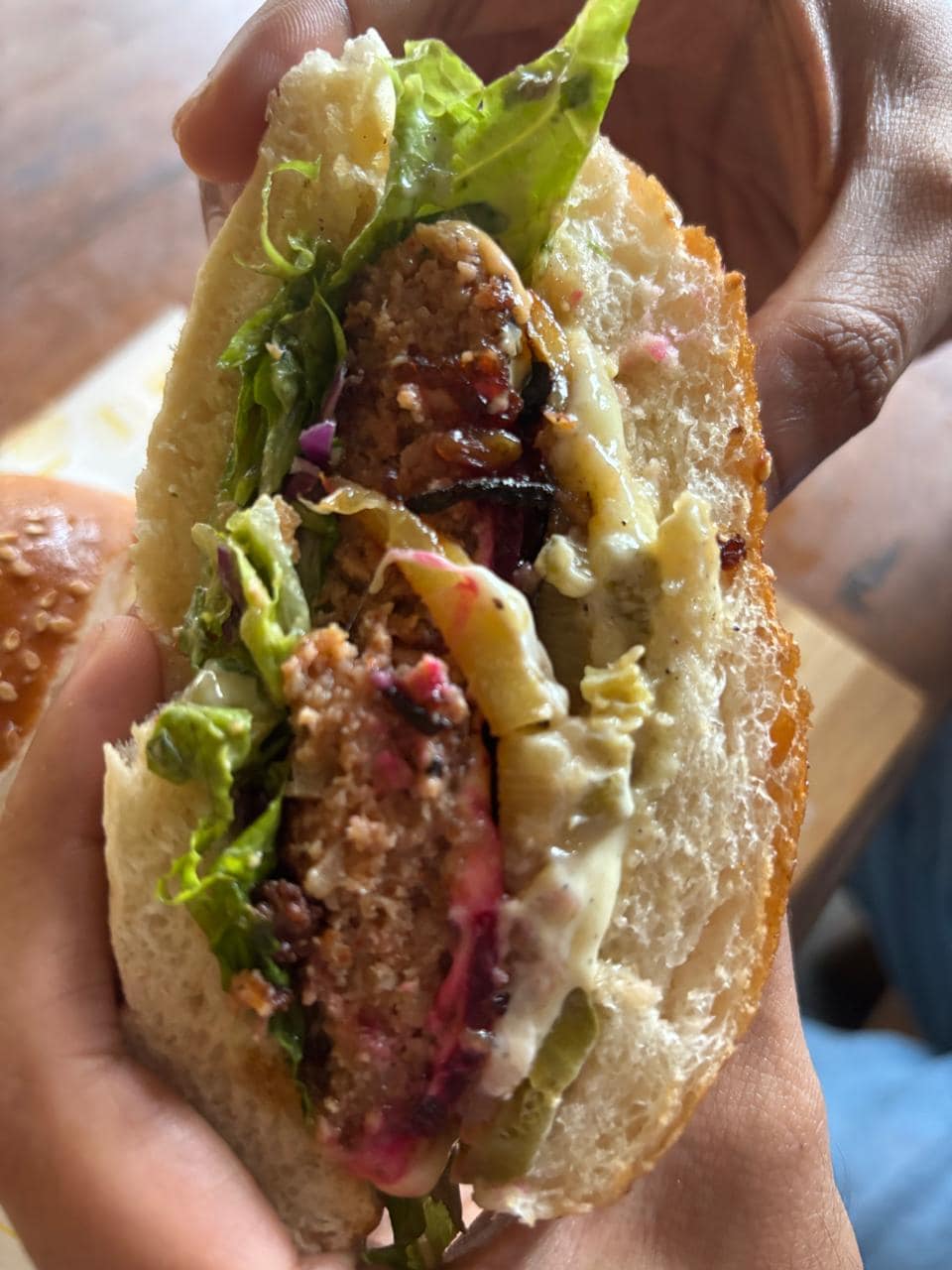
I woke up with a scattered mind, hurriedly packing for the airport. The kind folks at Veridian had allowed me a late check-out, but if I could’ve extended my vacation, I’d have unpacked in a heartbeat. Before my flight, I stopped at The Burger Factory in Anjuna and stuffed my face with two juicy and hefty burgers—one with crispy bacon and one with a grilled pineapple on top of the patty.
I’ve always loved solo travel—the freedom of moving at my own pace, the quiet joy of waking up somewhere unfamiliar and figuring out how the day will unfold. But Goa? For years, I dismissed it as impractical. I can’t drive, and I’d heard the warnings: the taxi mafia overcharging, and the hidden traps that make navigating the state a headache.
But when I decided to challenge that assumption and see whether a driverless traveller could truly enjoy the state. The answer, I quickly discovered, was yes. By the end of the trip, I realised that my assumptions had been limiting. Goa is not only for those who can drive. With a little planning, some curiosity, and a willingness to lean on local knowledge, it becomes a place that welcomes exploration in any form.
Local buses aren’t glamorous, but they are reliable, cheap, and a window into everyday Goan life. Apps like Goa Miles also transformed the experience. Fares were fair, rides were safe, and I could explore beyond the bus routes without fear. Most importantly, travelling solo doesn’t mean being alone all the time.
In Goa, I found friends in the unlikeliest places: a fellow bus commuter who showed me the shortcut to a cafe in Anjuna, a bartender who recommended a dish I would return for every day, even locals who noticed that I needed help and offered their generosity. Solo travel in Goa, it turns out, isn’t just possible—it’s an unforgettable experience that makes you slow down and truly enjoy the journey.
February 09, 2026, 02:45 IST