








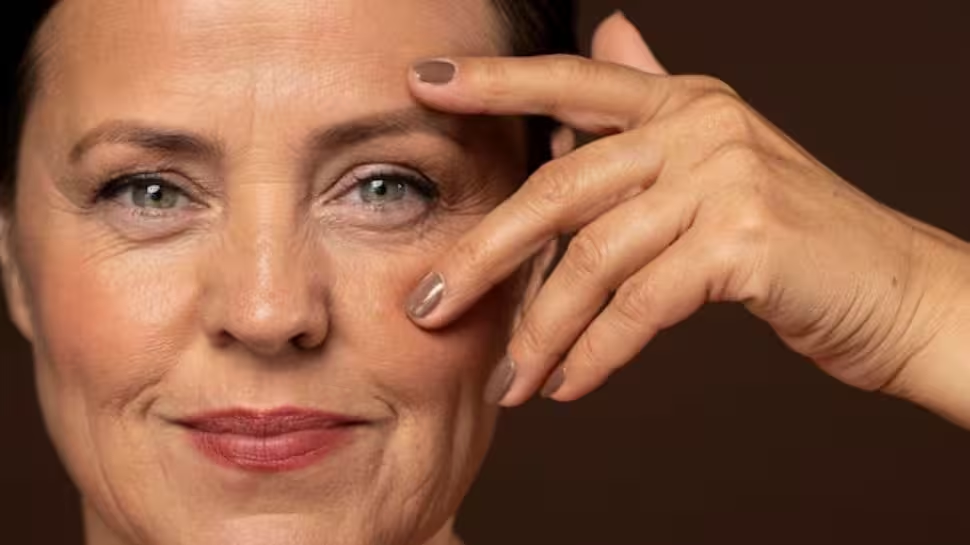
As screens have become literally inseparable from our daily life smartphones, laptops, tablets and LED lighting concerns about the exposure to blue light and the impact on skin have also increased. A lot of social media posts claim that blue light is the main cause of premature ageing, pigmentation and dull skin.
But what percentage of this is pure science and how much is just a marketing ploy? Dermatologists provide their opinion on the issue whether blue light is really ageing our skin or the fear is blown out of proportion. Dr. Vidushi Jain, Dermatologist and Medical Head, Dermalinks shares her insights on blue light exposure and skin ageing: myth or reality.
What Exactly Is Blue Light?
Blue light or High Energy Visible (HEV) light is a part of the visible light spectrum and is emitted by the sun naturally. Even if the major source of blue light is still the sun, the number of devices such as mobile phones, computers, and TV that used LED lights that emit blue light is increasing. But their intensity is much lower than that of the solar radiation.
Is it true that blue light can harm the skin?
According to medicine, blue light does biologically affect the skin, but there are certain limitations. The research shows that very long exposure to high, intensity blue light can go deeper in the skin than even UVB rays, reaching the dermis. And this may result in excessive oxidative stress, thus the body reacts by producing free radicals which in turn causes collagen and elastin the proteins responsible for skin firmness and elasticity are damaged.
Additionally, some research works have revealed that blue light may cause melanocytes activation thereby leading to hyperpigmentation getting worse which is a case that is usually observed in individuals with dark skin (Fitzpatrick skin types IIIVI). The above makes blue light to be a solid risk factor that can induce melasma and post, inflammatory pigmentation.
What about its comparison with UV damage?
Things should be looked at from a different angle and not in a direct comparison. Although still an important factor, blue light radiation is far less potent than ultraviolet (UVA and UVB). In fact, UVB and UVA are the main and most significant external sources of premature skin aging, wrinkling, as well as skin cancer. The emission of blue light from electronic devices is significantly lower than that of the sun. Therefore, normal screen usage is unlikely to result in accelerated aging.
On the other hand, the continuous exposure to blue light predominantly in urban indoor lifestyle, where one is likely to find people working for 810 hours in front of a screen daily, may gradually lead to the situation of skin damage that is not evident at the moment but will be there when time comes and if the person is also exposed to other environmental factors.
The Rise of Blue Light Protection Skincare
Very quickly, the skincare industry has put out a plethora of products that purpose is to protect skin from blue light. The product label ingredients to help in this regard are antioxidants (vitamin C, vitamin E, niacinamide), iron oxides, and certain botanical extracts. These substances are thought to assist in neutralizing free radicals generated by HEV light. As a matter of fact, skin care loaded with antioxidants will definitely be of good use to the skin. However, dermatologists warn not to concentrate aging caused by blue light alone and disregard other factors.
Who Should Be More Careful?
Maybe the blue light exposure would be more of a concern for: Individuals with pigmentation disorders like melasma People with darker skin tones, who are prone to uneven pigmentation Professionals with prolonged screen exposure (IT professionals, content creators, office workers), Those already exposed to high levels of pollution and UV radiation For these people, a thorough skincare regimen is a must.
Practical Dermatologist, Approved Tips
Sunscreen remains vital: Broad-spectrum sunscreens that protect against UVA and UVB are still the most potent anti-ageing weapon. One component that may add an additional layer of protection against visible light is iron oxides in tinted sunscreens.
Antioxidants should be used daily: One serum containing vitamin C, ferulic acid or niacinamide is the best weapon to fight the oxidative stress.
Try to cut down on unnecessary screen time: Digital hygiene such as taking breaks from the screen and reducing the brightness is a good idea.
The good lifestyle still works: Proper sleep, good nutrition and intake of water have a far greater impact on skin ageing than just the time spent in front of a screen.
Myth or Medical Reality?
The truth is not far from either side. Blue light is not a myth the light does have measurable effects on the skin, especially in terms of oxidative stress and pigmentation. However, it is not the main cause of premature ageing. Compared to UV radiation, blue light is a minor contributor to skin ageing. Dermatologists think that it is always good to be aware but there is no need to panic. A comprehensive skincare regimen, regular sun protection and making
(This article is based on information available in the public domain and on input provided by experts consulted.)