
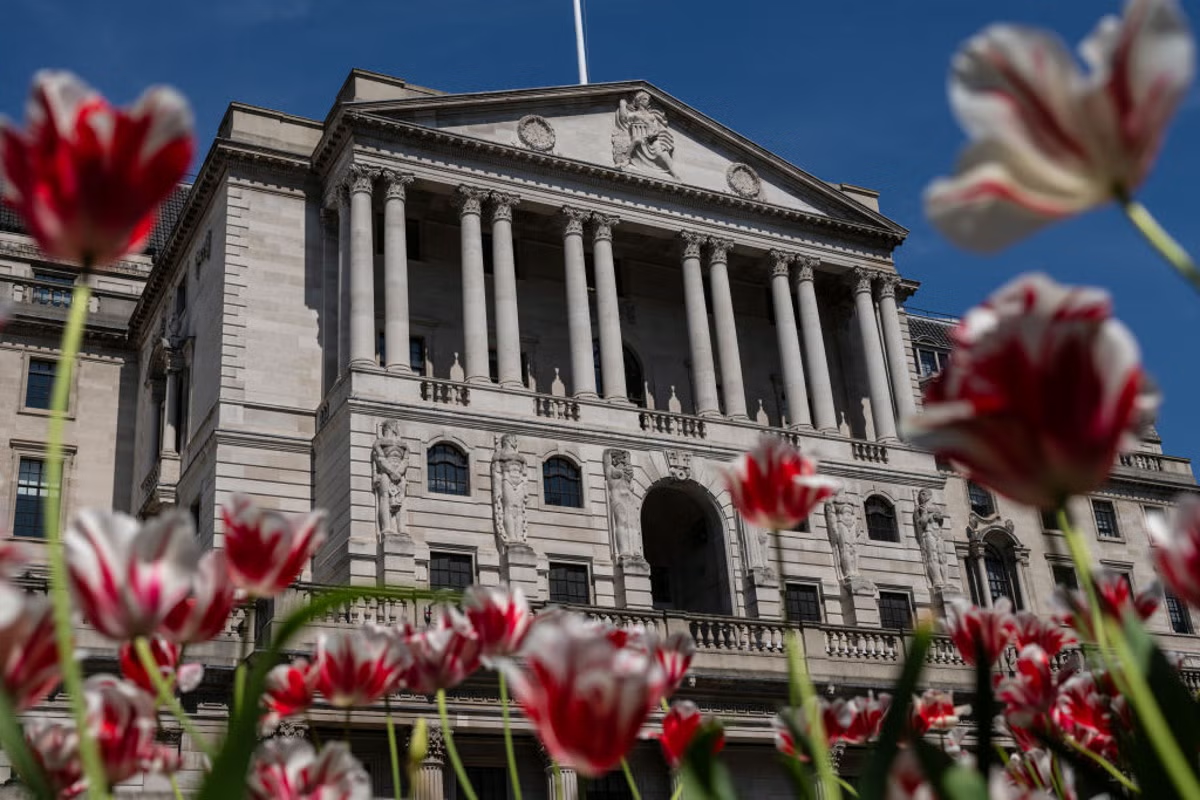
The Bank of England has interest rates at 3.75 per cent, amid fears over the war in Iran and its impact on UK inflation.
Prior to US strikes Iran, it was widely expected that the BoE would continue its path of cutting rates, with inflation coming down and the economy in need of stimulation – but the Monetary Policy Committee has warned that inflation will rise “as a result of the new shock to the economy”, which has forced up global gas and oil prices.
On Thursday the committee played it safe – with a unanimous vote underlining the uncertain nature of the current climate.
The rising cost of energy has been dubbed “Trump-flation” by some, on account of it being a direct consequence of the US president’s decision to launch large-scale attacks on Iran, which has led to wider-spread war across the Middle East.
Interest rates staying higher means that mortgages will remain more costly than had been hoped for, with several lenders having put rates up in the past week or two in anticipation of the vote result.
On the other side of the equation is slightly higher rates for savers to enjoy, particularly as the timing coincides with the upcoming end of the tax year and “ISA season” taking hold as people look to take advantage of tax-free opportunities.
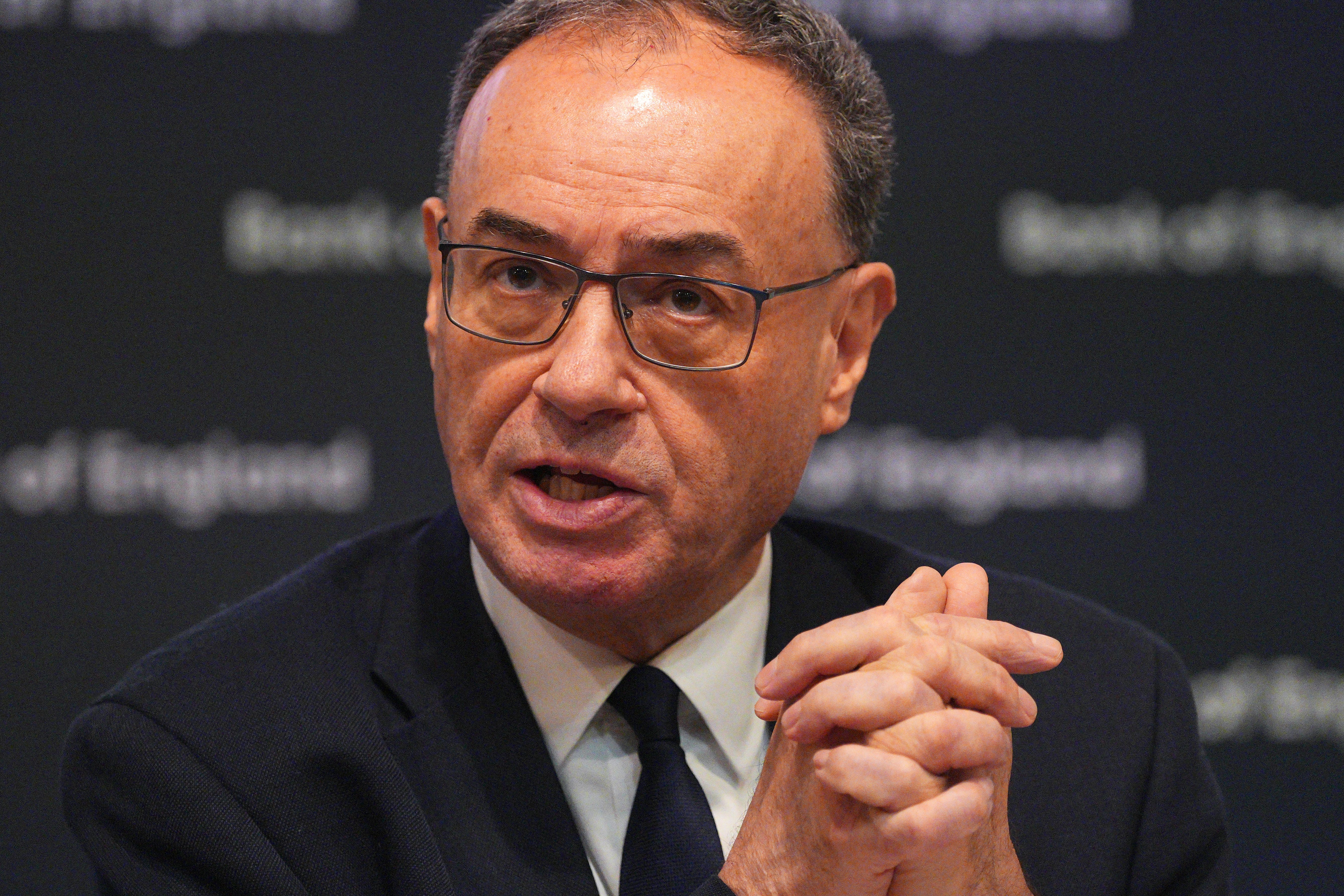
The Bank’s Monetary Policy Committee (MPC), a nine-strong band of economics experts overseen by Bank Governor Andrew Bailey, cut rates four times in 2025.
In Thursday’s minutes, the MPC warned: “Conflict in the Middle East has caused a significant increase in global energy and other commodity prices, which will affect households’ fuel and utility prices and have indirect effects via businesses’ costs.
“Prior to this, there had been continued disinflation in domestic prices and wages. CPI inflation will be higher in the near term as a result of the new shock to the economy.

Get a free fractional share worth up to £100.
Capital at risk.
Terms and conditions apply.
ADVERTISEMENT
Get a free fractional share worth up to £100.
Capital at risk.
Terms and conditions apply.
ADVERTISEMENT
“The Committee will continue to monitor closely the situation in the Middle East and its impact on global energy supply and energy prices. It stands ready to act as necessary to ensure that CPI inflation remains on track to meet the 2% target in the medium term.”
Kevin Brown, savings expert at Scottish Friendly, said: “The world has changed dramatically over the past few weeks, with the situation changing on a daily basis.
“Higher energy costs risk lifting inflation in the near term. However, this is largely imported rather than domestically generated, which helps explain why the Bank decided not to move today. By holding rates, the Bank is effectively buying time to assess whether these pressures persist, rather than signalling any renewed, definitive shift towards tightening.”
There remains uncertainty over what comes next, with the MPC set to meet for another vote near the end of April.
“The outlook remains finely balanced: rates could rise if inflation gains momentum, or fall if economic conditions continue to weaken. For consumers and investors alike, staying informed and seeking guidance will be essential as the landscape evolves,” said Adam Ruddle, LV’s chief investment officer.
Some will see the halting of rate cuts as a blow to Rachel Reeves, with the government still struggling to get the economy firing on all cylinders. A succession of cuts can help kickstart economic growth by encouraging businesses to spend and borrow more money.
Sir Mel Stride MP, Shadow Chancellor, blamed the government for “weakening” Britain’s outlook with still-high inflation rates. “Labour’s economic mismanagement has weakened our economy and left us vulnerable to external shocks. As the country braces for the impact of events in the Middle East, we go into this with the highest inflation in the G7,” he said.
“Instead of fixing the roof while the sun is shining, Labour have hiked taxes to a record high and fuelled inflation with reckless spending and borrowing – resulting in a flatlining economy and inflation well above target for all of 2025. Britain is paying the price for Rachel Reeves’ irresponsible choices.”
Liberal Democrat treasury spokesperson, Daisy Cooper, added that incoming cost rises would hurt British people.

“People across the country will be tightening their belts as Trump-flation forces the Bank of England into a corner,” she said.
“Today, we’re getting more of the same damaging rates that have forced people to shell out for ever higher mortgages.
“Starmer must get on the phone to Trump and urge him to end his illegal military action in the Middle East — so the British public don’t face eyewatering £800 increases to their mortgages.”
City analysts, including those at Goldman Sachs, still think it will cut rates two or three times this year, but the spike in oil and gas prices since the war started has given it pause for thought.
The wait-and-see approach may be followed by other central banks around the world.
Philip Shaw at Investec said: “The Bank of England’s decision to keep interest rates unchanged is really no surprise at all. A month ago, there had been speculation over a possible cut, but the hostilities with Iran have caused a surge in oil and gas prices which will be inflationary if sustained. We would not rule out reductions in rates later this year but first we need to see an end to the Iranian conflict and energy prices begin to come back down again as evidence that the UK is not staring a period of higher inflation in the face.”
Economists now expect the Bank of England to sit tight on rates until at least the summer, to check inflation does not get out of hand.
It, and global markets, are mostly betting that the Iran conflict will soon be over and that the cost of oil will fall, reducing the inflationary threat.
When oil prices hit their peak last week, some began speculating that the next move in rates might be up rather than down.
Peter Goves at MFS Investment Management, doubts that. He says: “Depending on the magnitude and duration of the shock, the Bank of England could resume cutting but only later on in the year. We struggle with the idea the Bank of England can or will hike any time soon, which will largely weigh on an already delicate demand backdrop.”
City economists still think Bank base rate will end the year at 3 per cent. But that does assume that inflation doesn’t defy expectations and rise above its present 3 per cent.
The Bank of England’s official target for inflation is 2 per cent, set by the government.
