

It’s a question that is causing controversy this fashion month. After having made moves to cut back on real fur, should the industry ban wool next?
Earlier this week, Peta protestors stormed the runway at the Cos fashion show during New York Fashion Week, bearing placards emblazoned with the slogan: “Sheep beaten and bloodied for wool. Don’t buy it.”
Catwalk invasions are not infrequent at fashion week – but this one generated horrified headlines after Steven Kolb, the president of the Council of Fashion Designers of America and therefore one of the industry’s most powerful figures, was filmed physically restraining an activist. Kolb has since been placed on leave from the CFDA. “My actions were wrong and I am deeply sorry,” Kolb wrote in an Instagram apology. “I take full responsibility for my actions.” Peta has since said it plans to meet with Kolb to discuss ending the use of wool and animal skins in clothing.
The Kolb furore was followed up by a similar protest in London, where Peta activists held up similar signs at the H&M show, this time featuring the words: “H&M: Wool is bloody cruel. Drop it!” After the debacle in New York, the protestors were able to walk the runway before being escorted out of the venue by security.
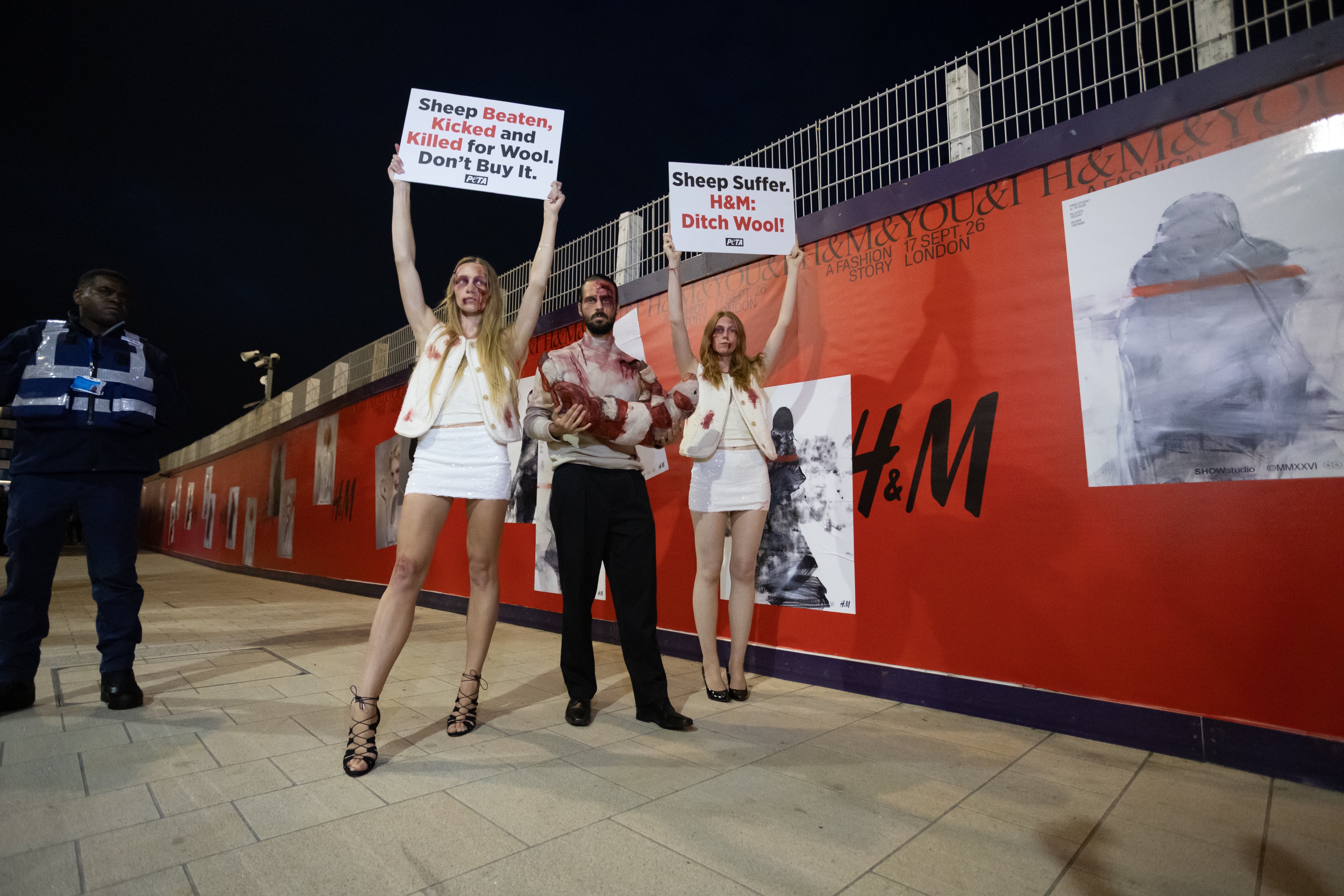
“We respect everyone’s right to express their opinions,” a spokesperson for H&M told The Independent. “Animal welfare is very important to us, and we agree that no animal should be harmed to make our products. That is why we rely on some of the strictest third-party standards and certifications when sourcing animal-derived fibres for our products.”
By now we are well used to conversations about the use of fur, leather and even feathers in fashion. So why has wool become the main talking point this autumn?
Peta has long held a firm stance on the matter. The animal rights group argues that sheep are treated as “wool-producing machines”, and has urged consumers to stop buying garments made from the material. And in a 2018 publicity stunt, they even sent a letter to the sleepy Dorset village of Wool – a place previously best known for apparently inspiring settings in Thomas Hardy’s Tess of the D’Urbervilles – asking them to change its name to Vegan Wool.
In the view of animal rights activists, the global wool industry is riddled with welfare issues and cruel practices. For thousands of years, humans have selectively bred sheep so that they produce as much wool as possible through continuous growth; domestic sheep no longer shed their coats naturally as a result. Without human intervention, the weight of this can be uncomfortable, and the overgrown hair can stop the sheep from properly regulating their temperature.
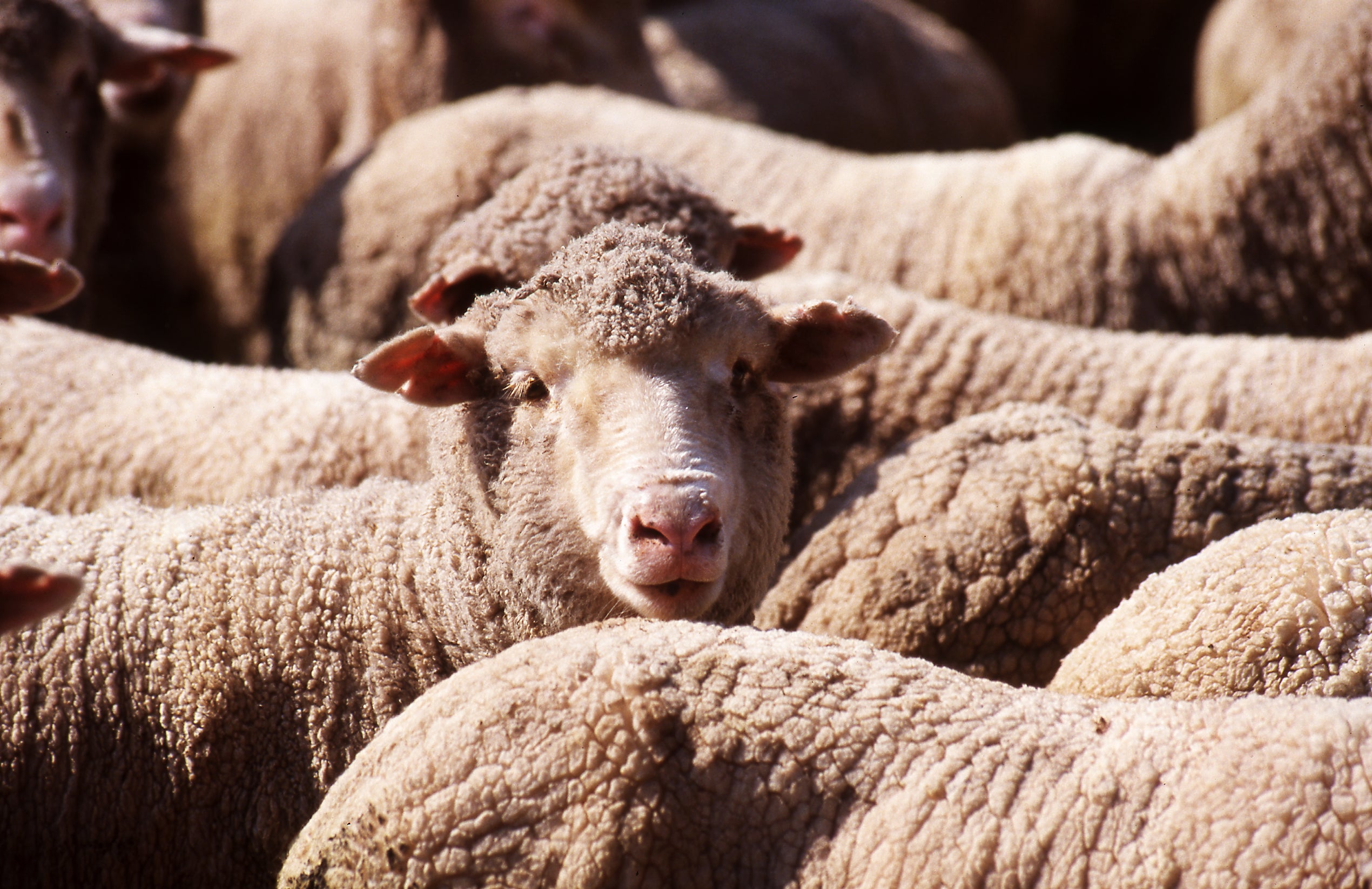
Other controversial practices that are still widespread include tail docking and castration. And in Australia, one of the world’s top wool-producing countries, the brutal process of mulesing is still legal.
This involves cutting chunks of skin from a sheep’s hindquarters, often without any pain relief, in order to prevent flystrike, a painful condition caused by flies laying eggs in their wool. Again, selective breeding plays a part here, as the insects are especially drawn to very woolly sheep, whose heavy fleeces and wrinkled skin offer an appealingly humid environment.
For thousands of years, humans have selectively bred sheep so that they produce as much wool as possible,
Peta’s present focus on H&M Group – which also owns the brand Cos, among other brands such as Arket, Monki and Weekday, comes after a Peta Asia investigation into a South African wool farm allegedly linked to the company’s supply chain; the organisation claimed the farm sold wool through a broker that supplied the Group with “‘responsibly’ sourced wool”.
Footage from activists showed workers kicking and stamping on sheep, dragging animals around by their limbs and shearing them carelessly, in a way that left them injured. In a statement to Vogue, H&M Group said that all the virgin wool used in its products “comes from farms certified to the RWS [Responsible Wool Standard], a third-party certification system owned and governed by Textile Exchange”. They added that following investigations, the operation in question had its licences suspended.
It’s not just welfare concerns, either – environmental activists cite the industry’s relatively high carbon footprint, particularly thanks to the amount of methane that sheep emit, and the way that farming might damage the land, if sustainable practices aren’t put in place. But we should also bear in mind that wool may well be more durable than synthetic counterparts – and doesn’t contribute to microplastic pollution. As with all conversations around sustainability and fashion, the answers are rarely black and white.

Plus, not all wool is created equal. British sheep benefit from some of the most stringent welfare standards in the world – and there are strict penalties for anyone who violates these.
All of the wool produced in the UK is non-mulesed, and the 2006 Animal Welfare Act takes into account the “five freedoms” for animal wellbeing: freedom from discomfort, from hunger and thirst, from pain, injury or disease, from fear and distress, as well as the freedom to exhibit normal animal behaviour.
And earlier this year, the Department for Environment, Food and Rural Affairs (Defra) launched a consultation proposing changes to lamb castration methods and tail docking practices, with the aim of improving animal welfare.
Footage from activists showed workers kicking and stamping on sheep, dragging animals around by their limbs and shearing them carelessly, in a way that left them injured
If you want to start changing the way you shop, look out for the Shepherd’s Crook, which is a certification mark promising that a product is made from traceable wool that has been sourced from UK sheep farmers.
Another logo to be aware of is the aforementioned Responsible Wool Standard, which was introduced by Textile Exchange, a nonprofit organisation focusing on sustainable practices in the fashion and textile industry. This voluntary standard sets out detailed requirements for the production, processing and sale of wool, such as regulations around animal welfare and eco-friendly land management.
Farms are audited by a third-party body to make sure they’re following these rules – although Peta has expressed scepticism, describing the programme in 2023 as “nothing but a humane-washing tactic”. Indeed, some activists argue that textile supply chains are simply so opaque as to become impossible to police; they see guidelines like these as a way of making us feel better about a fundamentally cruel practice. Textile Exchange, for their part, recently told Vogue that humane handling of animals is a “fundamental requirement” of its certification, and that the mistreatment of animals is “unacceptable”.
Certification programmes might not be an all-encompassing solution, but they are helping to drive up standards and, hopefully, make brands more accountable. And whether or not the industry starts listening to Peta’s calls, protests like these certainly serve as a reminder that we would all do well to start asking more questions about where our clothes are coming from.

