

Airports are usually designed to move people quickly, through check-in counters, security gates and boarding areas. But Guwahati’s new airport terminal takes a different approach. According to information released by the Prime Minister’s Office, the terminal has been designed around Assam’s natural and cultural identity, with a striking “Sky Forest” featuring nearly one lakh plants. The idea is to bring the landscape of the Northeast into the airport itself, turning a transit space into something closer to a living introduction to Assam. The terminal, inaugurated in December 2025, is built around the theme “Bamboo Orchids”, drawing inspiration from the state’s forests, orchids, bamboo and wildlife. Scroll down to read more…
An airport designed to feel like assam
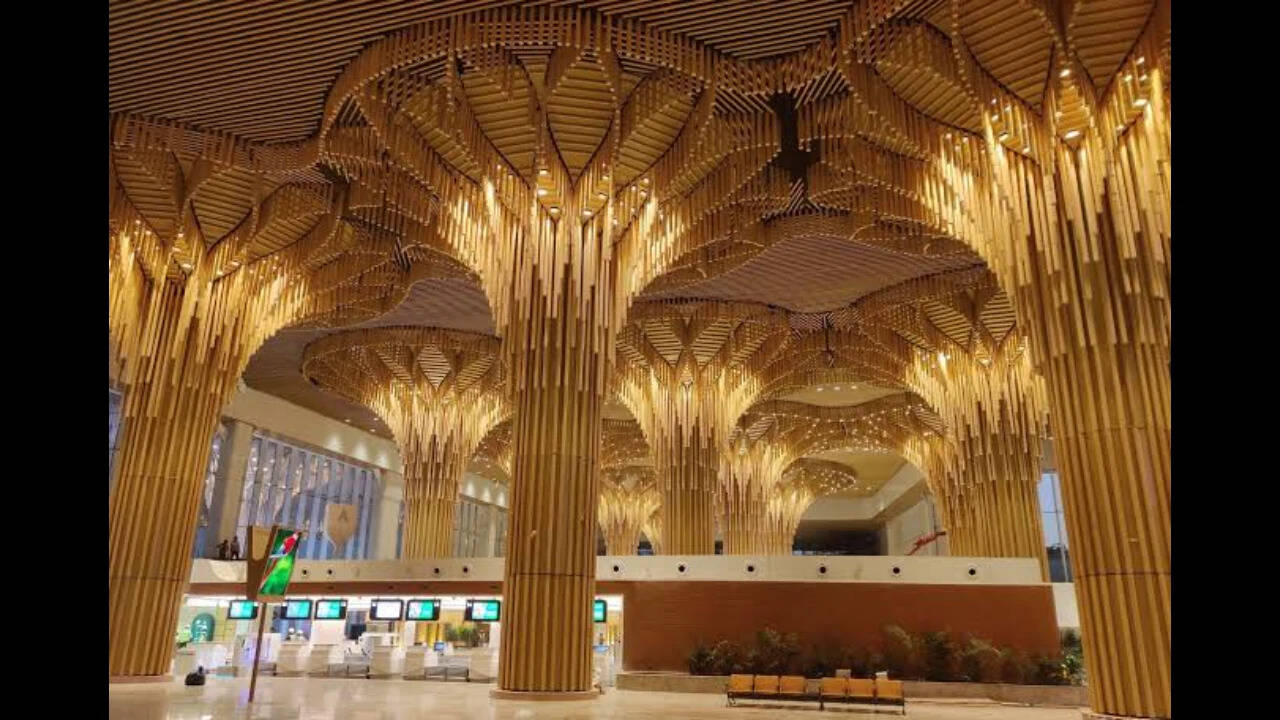
The idea behind the terminal was not simply to add greenery to a conventional airport. Its architecture was conceived to reflect the place where it stands. Orchids, bamboo and the landscapes associated with Assam appear throughout the terminal. The design incorporates 57 orchid-inspired columns, while elements inspired by the one-horned rhinoceros and the traditional Assamese japi also feature in the building. For passengers arriving in Guwahati, the experience begins before they step outside the airport. That is where the Sky Forest comes in.
What is the ‘sky forest’?
The Sky Forest is an extensive landscaped area within the terminal, designed to resemble a forest environment. It contains nearly one lakh plants representing around 100 species of local flora. Rather than placing a few decorative plants around waiting areas, the project makes vegetation a central part of the arrival experience.The space combines plants with natural light and the surrounding architecture, creating the impression of walking through a green landscape. The concept is particularly fitting for Guwahati, a gateway to a region known for its forests, biodiversity and distinctive plant life.
Why bring a forest inside an airport?
There is a practical design philosophy behind the idea. Modern architecture increasingly uses biophilic design, incorporating elements of nature into built environments. Plants, natural light, water and natural materials can make large indoor spaces feel less sterile and more connected to their surroundings. An airport is an interesting place to apply that idea.
Travellers spend hours navigating crowds, queues and security procedures. By placing greenery along the passenger route, the designers have attempted to soften that experience while giving the building a stronger connection to its location. Instead of looking like an airport that could be anywhere in the world, the terminal is intended to feel unmistakably Assamese.
Bamboo plays a major role too
The nature theme extends beyond the plants. The terminal incorporates bamboo sourced from the Northeast, using the material extensively in its architectural and interior elements. Bamboo has long been associated with the region’s traditional construction, crafts and everyday life, making it a natural choice for a building designed to showcase Assam and the wider Northeast. Orchid-inspired architecture is another recurring feature.The combination of bamboo, orchids, greenery and natural light gives the terminal a visual language rooted in the region rather than relying solely on conventional airport architecture.
More than just greenery
The new terminal is also a major infrastructure project. The building covers roughly 1.4 lakh square metres and is designed to handle around 13.1 million passengers a year. Its design incorporates sustainability-focused features, including the use of natural light and systems intended to improve water management. That scale makes the Sky Forest particularly unusual. This is not a small garden attached to an airport terminal. It is part of a much larger attempt to integrate nature into a high-capacity transportation building. And there is a reason that matters in Guwahati.The city serves as one of the principal gateways to Northeast India. Millions of passengers passing through the airport may be visiting Assam for the first time. The terminal therefore doubles as an introduction to the region, using architecture and plants to communicate a sense of place.
The idea behind the ‘living forest’
The phrase “living forest” captures the ambition of the project, but it needs some context. The Sky Forest is not a naturally occurring forest ecosystem. It is a carefully landscaped indoor environment containing a large collection of plants selected for the space. Its significance lies in the design approach: nature is not being treated as something outside the airport that passengers will discover later. It has been brought into the building and made part of the journey itself.

