
What does it mean when brown patches appear on an otherwise healthy lawn? In reality, the issue could stem from drought, dog urine, fungal disease, pests, or excessive fertilizer. Yet many homeowners automatically place the blame on lawn grubs.
The difficulty is that this common assumption is frequently incorrect, and even when grubs are present, minor populations are not actually problematic.
Treatment should only be applied following the confirmation of an actual grub infestation. Fortunately, checking is straightforward, but action must be taken within a specific window of time to prove effective. And that moment is now here.
How to know whether grubs are the culprit
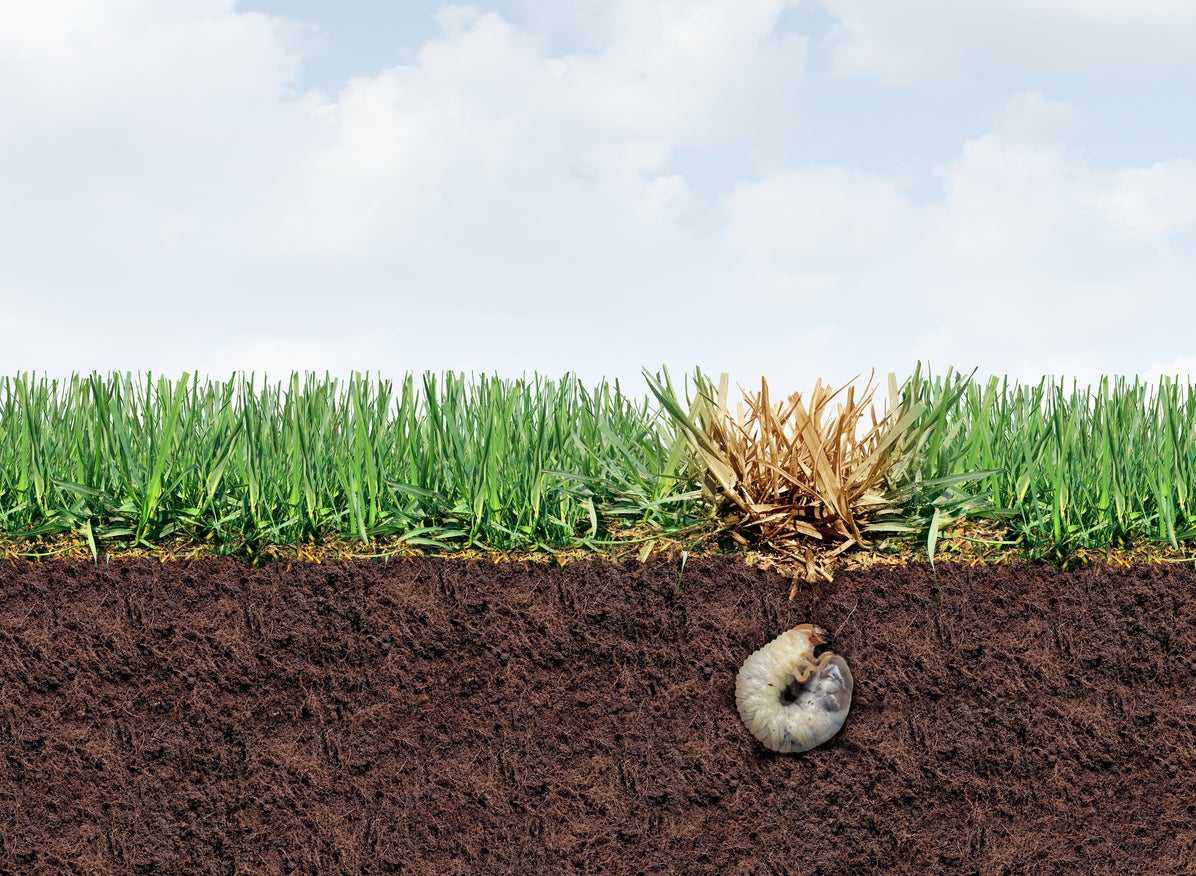
Grubs are the early life forms of beetles, including European chafers, and Asiatic, Japanese and Oriental beetles. They live close to the surface under lawns and other plants, where they feed on roots, disconnecting the roots from the plants’ top growth.
Confirming their presence is easy: Dig up a 3- to 4-inch-deep (7.6 to 10 centimeters), 12-inch-square (930 square centimeters) section of symptomatic lawn that partially overlaps the border of healthy grass.
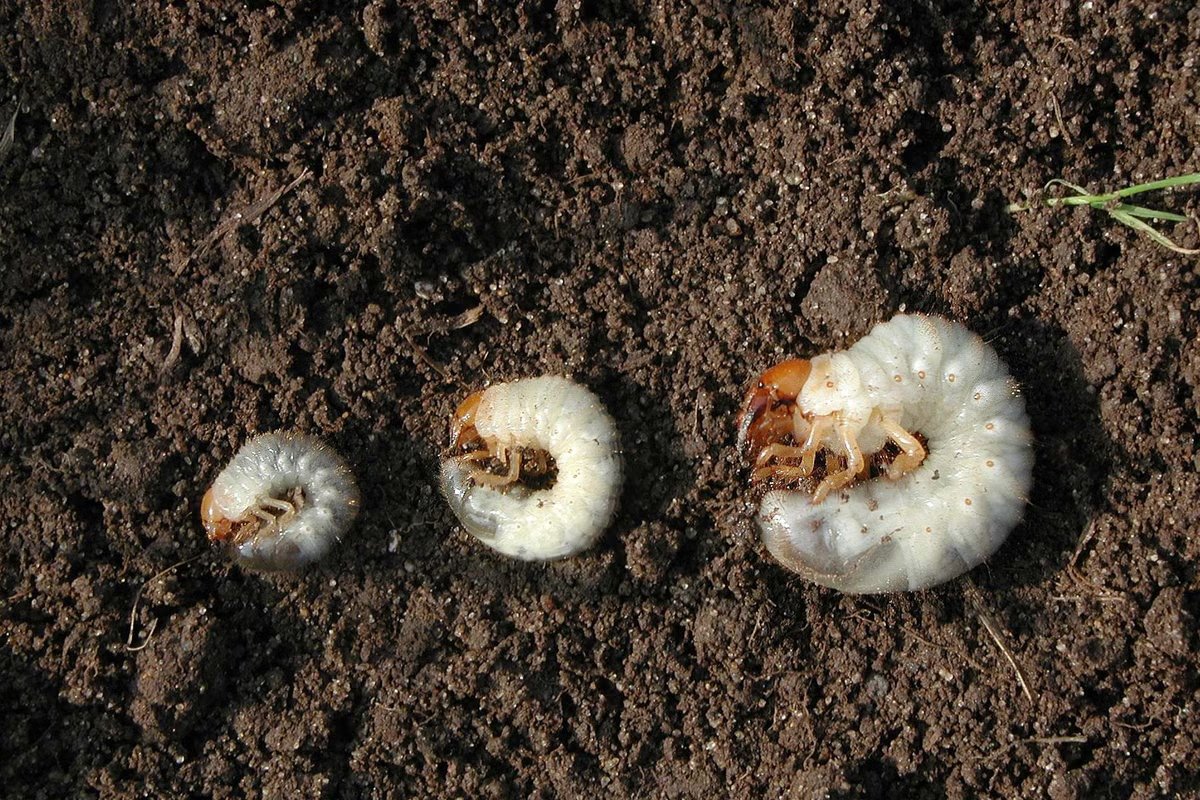
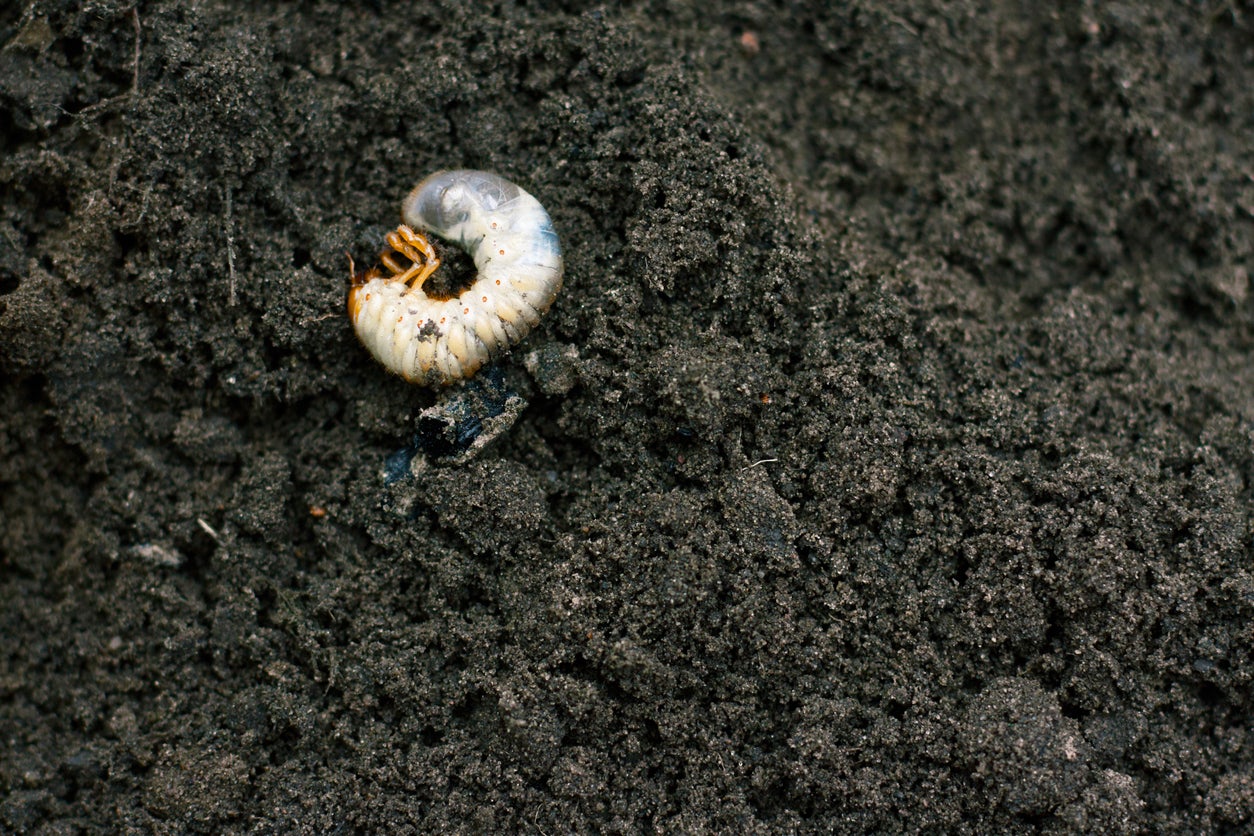
If there are grubs in the lawn, the whitish, brown-headed, half-inch to 1-inch-long (1 to 2.5 centimeters) beetle larvae, which resemble shrimp, will be visible either on the underlying soil or on the underside of the sod-like square you removed. They’re generally curled into the shape of the letter C.
Fewer than 10 grubs per square foot of soil is normal and does not indicate an infestation, so you should not take any action. Instead, seek out other potential causes.
If grubs are the problem, what’s the solution?
Treatment against grubs should only be applied if there are 10 or more of the insects present under the section of turf you removed. Heavily infested lawn sections will easily roll up like a carpet when you attempt to remove them, their roots severed by the feeding insects.
Because grubs are most vulnerable to pest-control measures when they are young, those measures will only be effective if applied in late summer.
Milky spore powder is a natural product that targets only Japanese beetle grubs. Unfortunately, it’s not always easy to discern between the species. If you are certain your grubs are the Japanese variety, you can give it a try, but success rates are mixed, with better outcomes reported in warmer regions.
Beneficial nematodes are microscopic, non-segmented worms that attack soil-dwelling insects, including all types of grubs. They’re a more universal approach, with higher success rates. They, too, are natural, as they already exist in the soil; you would just be adding more. The nematodes work by infecting grubs with a bacterium that can kill them in as little as 48 hours.
There are many nematode species available, so read package labels and look for the Heterorhabditis bacteriophora (Hb) strain, which specifically targets grubs.
To optimize effectiveness, water the soil well before applying either treatment.
Avoid using chemical treatments, which can be toxic to earthworms, honeybees and other pollinators, pets and wildlife. Some are even toxic to humans.

