
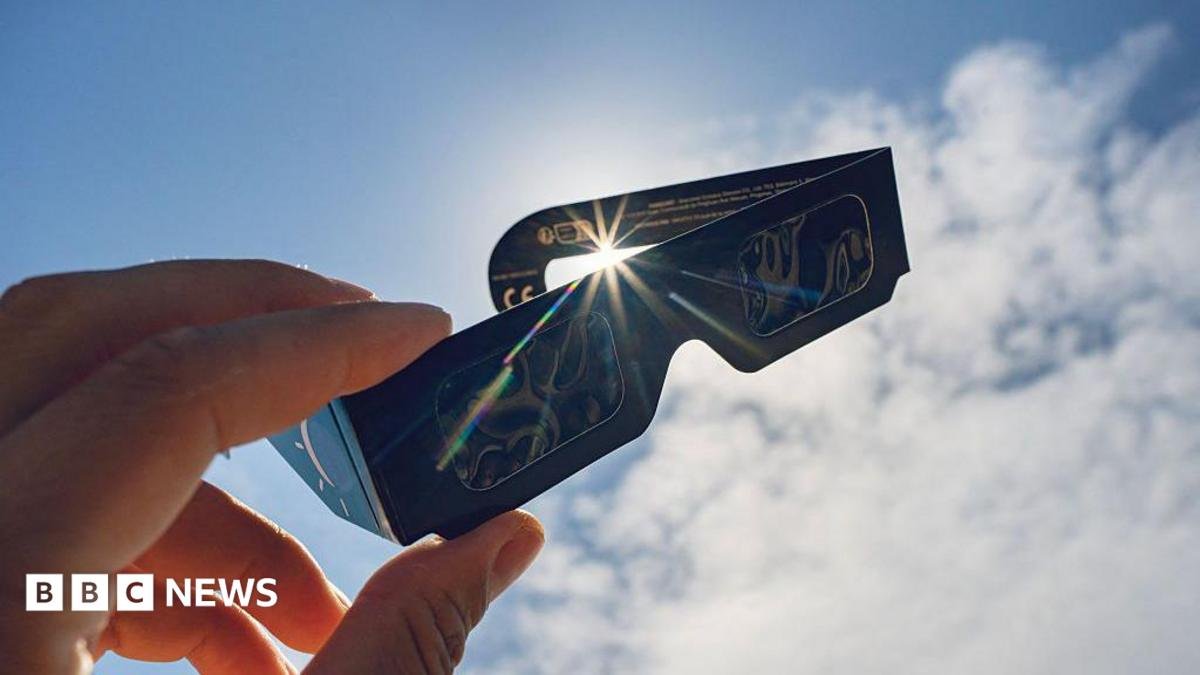
Even just a small part of the Sun breaking through the glasses can harm your eyes, the Royal College of Ophthalmologists has warned, adding that the safest way to watch the event is indirectly – such as through a livestream or broadcast.
“Crucially, the retina has no pain receptors, so people will not feel the damage as it happens,” explains the college’s president Mohamed Elalfy.
The college reported around 70 cases of people experiencing vision problems after watching 1999’s eclipse – around 40% of those affected had looked at it for less than a minute.
Anyone who notices a change in their vision after looking at the Sun should seek advice from an eye-care professional.
If you cannot get your hands on proper glasses, the advice is to not simply opt for everyday sunglasses instead.
Imo Bell, a planetarium astronomer at The Royal Observatory Greenwich, says the specialist glasses are “very, very different” to regular sunglasses, which will not offer protection.
“They block out so much light that you can’t see anything through them except the Sun,” she told the PA news agency.
The UKHSA explains that regular sunglasses can also reduce glare and make it more comfortable for you to look at the Sun for longer – causing more damage.
You should not use binoculars, telescopes or the viewfinder of a camera even with your eclipse glasses on, because their magnifying effect can nullify the protection of the glasses and damage your sight.
For those without glasses or wanting to watch directly, you can do so using a pinhole projector.
You can make a simple one with a single sheet of card or something more ambitious using a cardboard box.
“We’re not going to get one this good for a really long time,” says Bell. “So, it’s important not to miss it, and to be prepared.”

