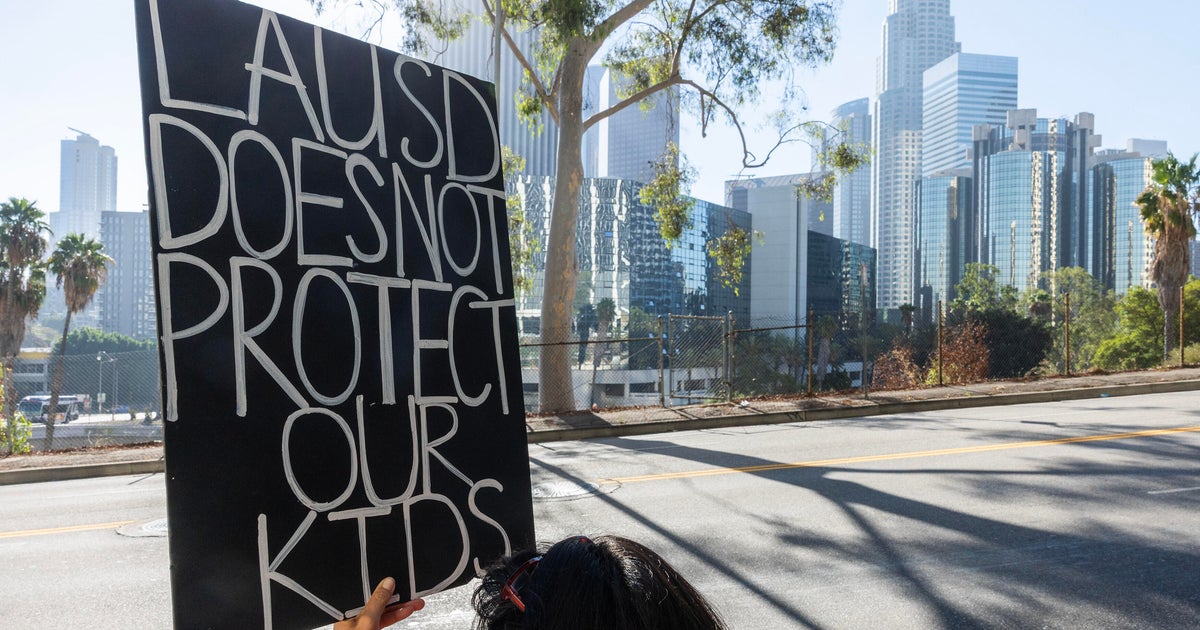
While the Los Angeles Unified School District has made steady improvements to lower the number of students experiencing fights, threats, drug incidents, weapons issues and suicide risks, school safety experts warn the district has more work to do.
Student fights and threats are still significantly up compared to four years ago, according to LAUSD data.
In the 2025-2026 school year, there were 6,131 fights, a 21% jump from four years ago, and 4,015 student threats, an 11.5% increase from the 2022-2023 school year.
Monica Harmon, executive director of Speak Out Against Bullying Inc., says the school district needs to implement stricter measures.
“There’s no consequences. There needs to be consequences,” she said after an anti-bullying assembly at an elementary school on Thursday. “So many kids get in trouble, the students report it, and then, you know, they’re back in school the next day. They’re not suspended. There need to be tougher restrictions.”
Ronald Stephens, executive director of the National School Safety Center and professor of education emeritus at Pepperdine, reviewed the LAUSD data. He called the numbers “very concerning.”
“I will tell you from a litigation standpoint, the questions the school district will be asked if something serious happens is, ‘What did you know, and when did you know it, with respect to the fighting and aggression and illegal substance, and then, when you learned of it, what did you do about it?’ So, it will be important for the school district to take some steps in terms of enhancing their supervision, or some other type of training or intervention or partnership,” Stephens explained.
“The school district does indeed have a safe school plan, but clearly, their existing plan, with these other red flags that are emerging, suggests that they will need to do something else to enhance their supervision and support for students at risk.”
Stephens added that the data should inform the school district’s protocols moving forward.
“With those kinds of numbers jumping over the last few years, it really suggests to go back to the drawing board and talk with students, with parents, with teachers, and get some good advice on what they might suggest, because most of this work in keeping schools safe is not about rocket science,” he said. “It’s about having a physical presence and a care for students.”
Los Angeles Police Department Capt. Eric Eppolito says his agency is making a focused effort to increase school outreach this year to help prevent smaller problems among students in schools from growing into bigger ones.
“When you talk about bullying, that can lead to a lot of things, from minor to something really serious. You know, as the kids get older, it gets even more problematic. You’re dealing with fights and things that escalate from there,” Eppolito said. “So, if we can teach someone on the front end to communicate better and to solve their issues through communication, and if that doesn’t work, then we can get ahead of the problems.”
Over the last five years, police have not had an active presence at LA public schools.
CBS California Investigates took a closer look at the district’s safety data, because parents are furious about school safety in the wake of the death of 17-year-old Xavier Nungaray at Franklin High School last week.
Harmon says she hopes her bullying prevention assemblies, which end with students taking an anti-bullying pledge, will help prevent more tragedies down the road.
“Reinforcing the message to the kids not to be witnesses, rather to speak up and say something,” Harmon said. “What I’m seeing on social media, like what happened to the student at Franklin High School, there were students standing around watching, recording. It would have taken one or two students to save that little boy if they stepped up, and we need to get that culture of kids not to be afraid to speak up in the schools.”
The new LAUSD data, presented at a school board meeting in late September, also shows that weapons-related incidents and reported incidents of students considering suicide — what the district calls “suicide risk” — have continued to decline significantly over the last four years.
There were 923 weapons-related incidents last school year, down 38% compared to four years ago. Last year, there were 10,055 incidents of suicide risk, down 14% compared to four years ago. Suicide risk, however, has been the most pervasive school safety problem facing students in LAUSD for the last five years in a row.
To read the district’s presentations on the data for the 2025-2026 school year, click here. To see the data from the 2022-2023 and 2023-2024 school years, click here.
A spokesperson for the LAUSD wrote the following statement to CBS LA:
“Student safety and well-being remain a priority for Los Angeles Unified. The latest data show decreases in reported fighting and physical aggression, threats, weapons incidents and suicide risks compared with the previous school year. However, we recognize that reports of student conflict remain a concern, and we must continue working to prevent incidents and ensure students have access to the support they need.
“This year, we continue to strengthen prevention efforts through Positive Behavior Interventions and Supports and Restorative Practices, which help schools establish clear expectations, build positive relationships, address conflict and hold students accountable while repairing harm. We are also continuing to provide training and resources for school staff, families and students on mental health supports, healthy relationships, and creating safe, welcoming school environments.
“We work with community partners to support violence prevention and intervention and connect students and families with additional resources. Schools reinforce campus supervision plans and identify areas where additional attention may be needed.”