
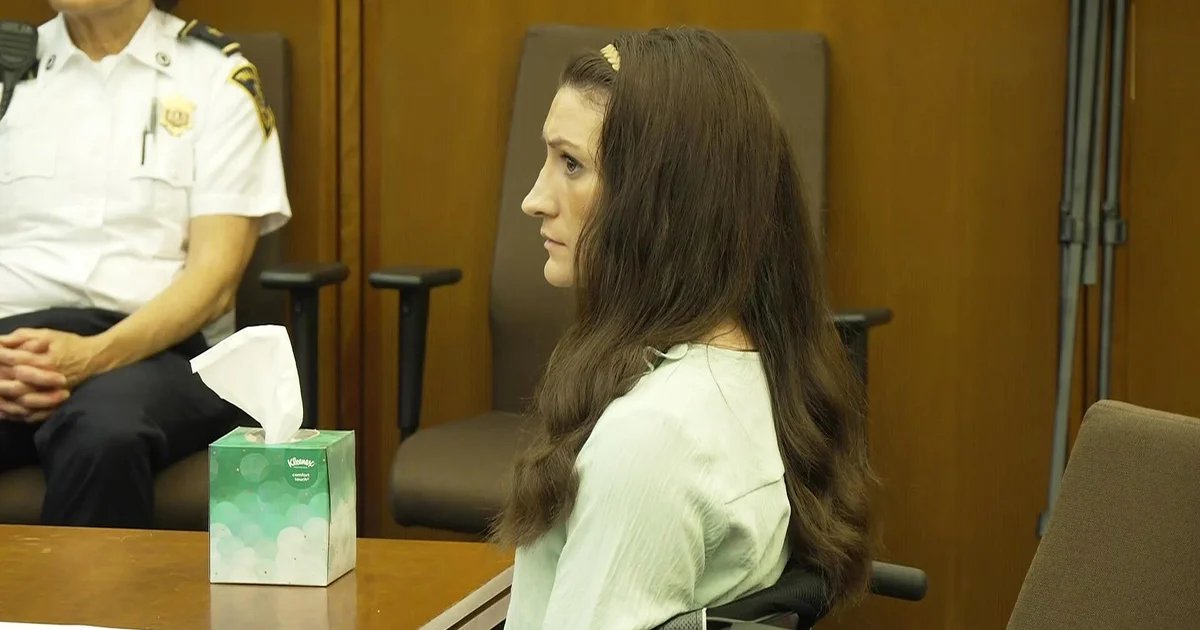
Psychiatrists who treated Lindsay Clancy before she killed her three young children in Duxbury, Massachusetts, on Jan. 24, 2023, began testifying in her high-profile murder trial on Friday.
Clancy is facing first-degree murder charges in the deaths of 5-year-old Cora, 3-year-old Dawson and 8-month-old Callan. The defense says she was overmedicated and suffering from an extreme episode of postpartum psychosis when she strangled the children.
Plymouth Superior Court Judge William Sullivan said the jury should expect a full day of testimony Friday.
You can watch the trial live in the embedded video, on CBS News Boston or on the CBS News Boston YouTube page while court is in session.
Lindsay Clancy’s first psychiatrist testifies
Dr. Jennifer Tufts, Clancy’s first psychiatrist, took the stand just before 12:30 p.m. Clancy had begun seeing Tufts in September of 2022.
Prosecutor Jennifer Sprague began by questioning Tufts about whether Clancy had tried medication before, specifically during her time in nursing school. Tufts testified that Clancy had reported trying an SSRI and did not report any side effects while taking it.
Sprague asked Tufts if Clancy ever said she was hearing voices telling her to hurt herself, hurt other people, or kill someone. Tufts said that Clancy answered “No” to all of them.
Tufts testified that Clancy’s biggest concern was anxiety when she came in originally, and she had recommended she go to individual therapy and take sertraline, otherwise known as Zoloft. She said that Clancy was concerned about side effects from the medication.
“I recall that she was generally reluctant to take medications, but at this point she was considering it and was interested in learning about what medications might be helpful for her,” Tufts said.
Clancy had also said she had tried Zoloft while she was postpartum with her second child, Tufts testified. Tufts said Clancy told her that she had some common side effects, such as appetite issues and upset stomach, when she initially took the medication.
During a follow-up appointment later in September, Tufts said that Clancy had told her she elected not to take the Zoloft because she was able to sleep a bit more.
Sprague read a message from September 30, 2022 from the online medical portal that Clancy used to contact Dr. Tufts about needing to extend her maternity leave from work.
“… While I am just feeling better enough to function without medication. I did reach out to my employer about extending my leave for reasons of post-partum anxiety/depression. I don’t feel mentally well enough to return to taking care of patients with a baby at home that still won’t take the bottle. I know this will trigger my anxiety too much, and also having to stay up all night as a nurse, I don’t feel it’s possible right now …”
Clancy then saw Tufts the first week of October to fill out the form required to extend her leave. After the appointment, Clancy began to take the Zoloft.
At their fourth appointment together, Tufts noted that Clancy appeared depressed. Tufts testified that Clancy was concerned about developing suicidal thoughts in the future.
“She was feeling pretty poorly after starting the Zoloft, so we were following her closely,” Tufts testified.
Clancy discontinued taking the Zoloft, and Tufts prescribed Clancy the lowest dose of Ativan on October 21, to help with her ongoing anxiety and “significant symptoms.”
The two then met for a follow-up appointment on October 26, 2022 where Clancy said the medication was helping her feel less anxious, but was not helping her sleep. Clancy was then also taking Benadryl, an over-the-counter allergy medication that can cause drowsiness to help her sleep. Tufts said she recommended that Clancy begin to take Buspar for her anxiety as well.
Tufts and Clancy then met again on November 2, where Clancy said she had not taken the Buspar because she was “too afraid to start a new medication.” Tufts said she discussed slowly reducing the Ativan at that appointment with Clancy because “it was only supposed to be a short-term medication” because the medication can cause dependency.
Clancy and Tufts met again on November 22, where Tufts said that Clancy told her she had also enrolled at a South Shore perinatal mental health clinic and was going to start Prozac. At this point, Tufts said that Clancy was still taking Ativan and Benadryl as well.
Tufts testified that they met again on December 1 when Clancy had attempted to taper off the Ativan, but was having trouble sleeping, so they discussed different medication combinations. Clancy was also prescribed another antidepressant, Remeron, and an antipsychotic, Seroquel, by the South Shore facility at this time. Tufts said that Clancy had not started taking the Seroquel, but reported having intrusive thoughts on Remeron and wanted to stop taking it.
“She said it was a feeling like I am going to die,” Tufts testified. “She denied having suicidal ideation, but she was feeling pretty badly. She said she was close to it, meaning close to having some suicidal thoughts, and that she was feeling very hopeless. She didn’t have any active thoughts of hurting herself.”
Tufts said that she advised Clancy to only have one person have her medication after Clancy had said: “I keep reaching out to different people and not sticking with the plan.”
Tense moment in courtroom
Before testimony resumed just after noon on Friday, Clancy’s attorney, Kevin Reddington, claimed he heard prosecutors say “shut her up” on a hot mic, as Clancy cried during autopsy testimony on Thursday.
“This is not like ‘Handmaid’s Tale.’ You can’t tape her mouth shut,” Reddington was heard saying to Judge Sullivan before heading to sidebar.
Right before the lunch break, Sullivan said he wanted to make something “crystal clear.”
“There is to be no inappropriate comments or disruptive comments to be made inside of this courtroom. If anybody is found to make those, they will be immediately escorted out and barred,” Sullivan said. “There are microphones all around, so if I get a report of that, there’s going to be some serious issues and serious problems … There’s going to be no warnings, no yellow card. You’re out.”
The District Attorney’s office said that they had “pulled the video. The camera pans away and one of our prosecutors says “shut it off,” meaning to take down the autopsy photos from the large screen.”
Lindsay Clancy’s McLean psychiatrist testifies
The first psychiatrist to testify Friday was Dr. Alia Goodheart of McLean Hospital, a psychiatric hospital in Belmont where Lindsay Clancy was admitted for voluntary inpatient treatment on Jan. 1, 2023. She left early, after nearly five days, to attend her daughter Cora’s birthday party. Clancy then had follow-up outpatient treatment at McLean up until the murders on Jan. 24.
CBS Boston 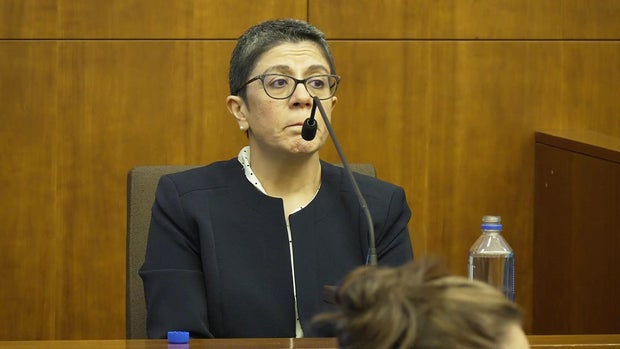
Goodheart said Clancy told her she was having side effects from medication and found it hard to sleep without medicine. The doctor testified Clancy was a low-level risk patient who was “anxious” and her diagnosis was “major depressive disorder, severe without psychotic features.”
When prosecutor Shanan Buckingham asked Goodheart about her observations of Clancy’s mental status, the doctor told the court, “I can’t remember certain elements … she was appropriately dressed, speech was normal rate and volume, she was polite and cooperative.”
Buckingham also asked Goodheart if she observed any signs of psychosis with Clancy, and the doctor replied, “No.” She also said Clancy was specifically asked if she had a plan to kill herself or harm others and “she denied it,” the doctor said.
“I did not have any concerns about her safety or a risk for anybody else,” Goodheart testified about discharging Clancy on Jan. 5, 19 days before the murders. “She had never stated that she had any thoughts of harming anybody else.”
Clancy was then sent home with a two-week supply of Ativan and Trazodone, medicines to treat depression, anxiety and insomnia.
Goodheart testified for about an hour before Clancy’s attorney Kevin Reddington began his cross-examination of her around 10:45 a.m. She left the stand just before 12:30 p.m. on Friday
“How many women have you treated that are suffering from postpartum psychosis?” Reddington asked her. After a long pause, Goodheart replied, “I haven’t seen any.”
Clancy’s mental health is a key issue at trial. Her ex-husband Patrick Clancy testified last week that she started making suicidal statements and told him she had thoughts of hurting the children after switching to a new medication in December 2022.
CBS Boston 
Lindsay Clancy trial day 9
The first witness on the stand Friday morning was Kimberlee Hardy, the former director of the Kingsbury Club, a fitness center in Kingston. She testified briefly about Cora and Dawson spending time in the playroom there in 2022 and early 2023 and that Lindsay Clancy “seemed happy to be with them” and always picked them up on time.
She was followed by the 58th witness for the prosecution, Sarah Carney of Duxbury, a friend of the Clancy family for several years. Carney was on the stand for about 10 minutes and spoke about seeing Lindsay Clancy after her treatment at McLean. Carney said Clancy appeared to be quiet and thinner.
Lindsay Clancy trial this week
On Thursday, a childhood friend testified that Clancy texted her and said she had been taking a medication that caused some “dark thoughts.” Clancy said she was trying to wean herself off the medication and try new ones to remove the side effects. Another friend said Clancy told her that she was feeling “like a zombie” shortly before the murders, and a coworker said Clancy reported “negative side effects from the medication.”
Clancy also wrote about her mental health struggles in diary entries that were read aloud in court on Monday.
“I feel like I’m drowning every day,” Clancy said in one entry.
On Tuesday, prosecutors showed the prescription pill bottles seized from the Clancy home after the murders. They say that while Clancy was prescribed several drugs for her mental health, she was not taking many pills from each bottle.
If you or someone you know is in emotional distress or a suicidal crisis, you can reach the 988 Suicide & Crisis Lifeline by calling or texting 988. You can also chat with the 988 Suicide & Crisis Lifeline here.
For more information about mental health care resources and support, The National Alliance on Mental Illness HelpLine can be reached Monday through Friday, 10 a.m.–10 p.m. ET, at 1-800-950-NAMI (6264) or email info@nami.org.

