
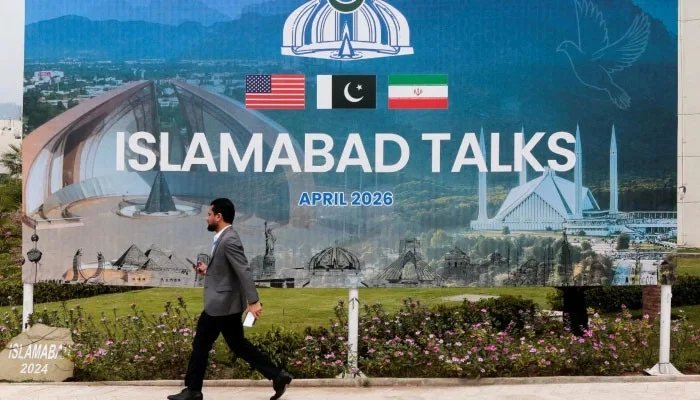
Regional and global developments over the past 18 months have placed Pakistan in a strategic sweet spot. Counterterrorism cooperation, personal diplomacy with President Trump, critical minerals deals, and an active mediating role in the US-Iran war have vastly warmed relations with the US.
Simultaneously, China demonstrated its firm commitment to Pakistan’s sovereignty and territorial integrity during the brief Pakistan-India war last May. Pakistan’s robust response to India’s aggression last May has enhanced its military and diplomatic credibility in the region and globally, leading to the Pakistan-Saudi Defence Pact and possibly such defence agreements with other GCC states as well as the formation of the Islamic ‘Quad’ – Pakistan, Saudi Arabia, Turkiye and Egypt. And, Islamabad’s relations and leverage with Iran have improved as a consequence of its impartial position and mediatory role in the ongoing conflict.
The considerable benefits to Pakistan flowing from its good fortune, military credibility and adroit diplomacy include: expanded regional and global influence; diminished prospects of Indian aggression; US and Western support for its economic stabilisation; enhanced prospects of foreign investment, from the Gulf, the West and China; expansion of trade with the region and beyond; expanded defence production; and access to advanced technologies.
We must be ambitious in our objectives and utilise the present propitious environment to realise rapid growth and social, economic and technological transformation. Apart from seeking greater access to external credit, we should negotiate a durable restructuring of Pakistan’s external debt which consumes over 60 per cent of the national budget.
We should exploit our agricultural potential through massive investments in improving infrastructure, efficiency and productivity. Expand manufacturing, from the current dismal 10 per cent to at least 20 per cent of GDP, to create jobs and exportable surpluses. Produce cheap and abundant energy (essential for industrialisation and to power the data and AI centers critical for the digital economy of the future) by encouraging the full exploitation of our sunshine to generate massive solar power and the fuels of the future (ammonia and hydrogen) and mining the massive (170 billion tons) reserves of Thar Coal efficiently and at scale (to generate power, coal to liquids and gas and thus reduce dependency on oil and gas imports).
Support professionally formulated, structured and executed public and private projects that can attract domestic and foreign investment. Secure the lifting of restrictions on technology access. Accelerate the indigenous production of defence systems, especially drones, missiles and aircraft. Acquire SSBMS for a credible second strike capability. Utilise strategic leverage with the GCC, China, the US and others to secure positive responses to our objectives and investment into our economic and defence projects.
Setting aside for the moment the permanent threat of Indian aggression, there are several challenges that could impede prospects for the realisation of these opportunities.
First, it is unclear how the Iran war will end. The best scenario is the one envisaged in the Islamabad MoU – peace and cooperation between the US and GCC States with Iran. However, this is not assured. It seems equally likely that the conflict will end in a tense impasse. The fighting may end, but tensions remain between Iran, the US, Israel and, to varying degrees, with the GCC states.
Under such circumstances, Pakistan will be obliged to continue to walk a tightrope in its relations with Iran and the GCC as well as the US. Pakistan’s defence agreements with Saudi Arabia, Kuwait and perhaps other GCC States could create friction with Iran, especially if Tehran feels newly emboldened by its ‘success’ in repelling the US-Israeli aggression.
Second, the positive relations established with the Trump Administration may come under strain. The Democrats are likely to win the House of Representatives and possibly the Senate in the upcoming midterm elections. This could dampen Trump’s close relations with Pakistan’s leadership and revive the pro-India power centres in Washington. And, once the Iran war is over, Trump’s attention may turn elsewhere, diminishing Pakistan’s profile on his agenda. Indeed, an electoral setback in the midterms caused by the Iran war may lead to blame being laid at the door of the mediators.
Third, the realisation of the above-mentioned opportunities may be jeopardised by domestic threats. Investment flows and project execution will be discouraged -as we have seen-by an adverse security environment, including the recurring terrorist attacks in Balochistan and Khyber Pakhtunkhwa. Hence, the critical need to eliminate cross-border terrorism through a comprehensive military and political strategy, and to arrest the emergence of strife in AJK.
Fourth, unless we improve our economic governance, Pakistan may miss the opportunities offered by the current circumstances. Despite active diplomacy at the highest levels, most of the contemplated major investment projects, even those to which the Gulf countries have committed support, have yet to be executed.
Security concerns are one reason for this unfortunate situation, but not the only one. There are glaring shortcomings in the preparation of investment proposals and projects, and the grim hand of bureaucratic and structural hurdles – high corporate taxes, incentives to invest in unproductive real estate instead of manufacturing, corruption, lethargy, incompetence – has stifled both domestic and foreign investment in the country for decades.
These are challenges which can be addressed and overcome through well-considered policies and competent execution, driven by national interest and commitment. To this end, dedicated working groups, consisting of the best expertise available within and outside the country, could be established in each key area to formulate policy, develop specific projects and actions and oversee their implementation, with the full support of the country’s leadership.
The writer, a veteran diplomat, is a former permanent representative of Pakistan to the United Nations.
Disclaimer: The viewpoints expressed in this piece are the writer’s own and don’t necessarily reflect Geo.tv’s editorial policy.
Originally published in The News

