
The Fed acknowledged that inflation remained “elevated”, which it said was in part due to rising energy prices, but said US economic activity was expanding at a “solid pace despite uncertainty caused by the conflict in the Middle East”.
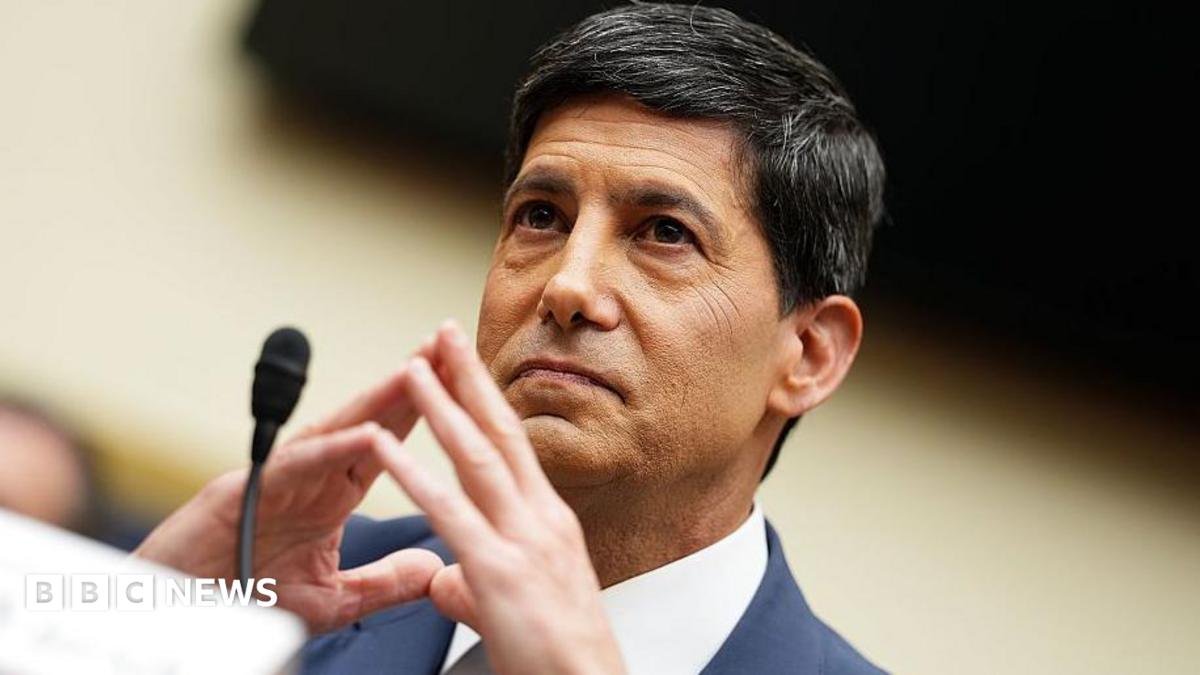
Warsh said he had wanted to and succeeded in having a “family fight” with his fellow policymakers on the rates decision.
“I asked for a good family fight, and I got one. That’s the purpose. That’s the design feature,” adding that “there was a large majority support for the decision that we made in the room”.
US stock markets ended the day lower following the decision. The benchmark S&P 500 hit its lowest level in a month, while the tech-heavy Nasdaq was down about 9% from its June record high. The Dow Jones index fell by the largest amount on the day by 2.19%.
Markets have been rattled in recent days by declines in AI-chip stocks, concerns over the amount of money being spent by big tech firms on AI infrastructure and development and rising oil prices.
Richard Flynn, managing director at Charles Schwab UK, said the “biggest smoke signal” for the Fed going forward was the energy market, with the ongoing conflict in Iran likely to influence future rate decisions.
Warsh, who was appointed by US President Donald Trump in May, has held interest rates twice since he took over as chairman.
He previously told Congress that the central bank had “no tolerance to persistently elevated inflation”.
President Trump pushed Warsh’s predecessor, Jerome Powell, to cut interest rates, and has made it clear he expects Warsh to fulfil his demand for reductions in borrowing costs for Americans.
But the new Fed chairman has said his “goal” is “for there to be no politics” and has stressed the importance of the Fed’s independence.
Richard Carter, head of fixed interest research at investment management firm Quilter Cheviot, said Trump would be watching the Fed’s decision with interest, particularly with the US mid-term elections less than 100 days away,
“The president will want to deliver positive news on the economy,” he added. “Inflation continuing to remain elevated and the looming potential for rate hikes certainly makes that narrative difficult to achieve.”

