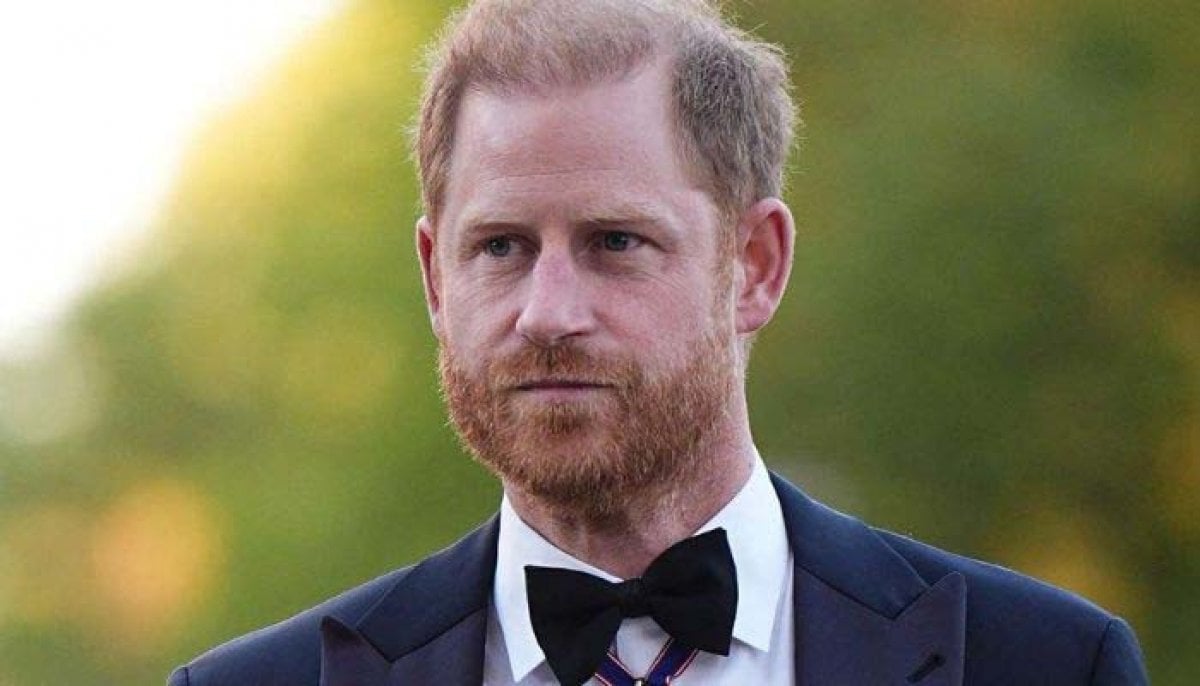
Prince Harry opened up about his years of buried trauma.
On October 8, in the new session of MasterClass, Redefining Grief: Building Resilience Through Loss, the Duke of Sussex looked back at the difficult period when he went to Canada with Meghan Markle and their son Prince Archie for Christmas holiday break, in 2019, away from the high pressure environment he had described.
“Being in Canada, away from the stressful environment where presumably my body was just pumped full of adrenaline, within two or three days, I experienced this adrenaline crash, something that I’d never experienced before,” Prince Harry revealed.
He went on to say, “It was as if I needed stress in order to get the adrenaline to make my brain function because I became useless around the house.”
“I actually slipped into depression for about two weeks and I felt like I couldn’t function without adrenaline,” Harry added.
He revealed that the move was planned “to get some space away from everything just to be able to think.”
Dr. Mary-Frances O’Connor spoke with Harry during the session, saying, “Grief is physiological as well as emotional, and what we know from research is that there are very common responses to the loss of someone important in our life.”
As Prince Harry’s mother, the beloved Princess Diana died in a car accident when he was just 12 years old, the Prince opened up about numbness which followed her death, stating, “For 15, 20 years, when I was being asked, ‘Are you okay?’ My response was, ‘I’m fine.’ It was numbness, emotional shutdown.”
“And without knowing it, adrenaline was pushing me, was driving me,” he continued, “It was the driving force of what took me to joining the military at the age of 20. It was the perfect distraction. I couldn’t really think about much else apart from the task at hand.”
The former working royal also noted that his military experiences triggered his earlier trauma, following his second Afghanistan tour, in 2013. “The things that I saw, the things I experienced, appeared to be a trigger for other traumas that had stored themselves within me.”
He went on to say, “I started to realize that I probably had become seriously depleted when just putting a simple dress shirt on — the tightening of the collar — literally felt like I was suffocating, and I would be experiencing panic attacks just in the car on the way to work.”
“And that’s when I realized, ‘Okay, there’s something bigger, there’s something else that you need to look into here,’ ” Prince Harry shared.
While the Dr Mary-Frances added, “The thing is, if you are a lead foot on the gas pedal all the time, pushing all that gas through your body, it’s not sustainable.”
“What we know from research is that people who are under chronic stress, that cortisol eventually becomes depleted. And that means you’re foggy, right? It means you don’t perform very well. It means that you feel exhausted, even just getting up in the morning,” the neuroscientist said.
“The brain fog is something that I can really relate to as well,” Harry responded.
It is pertinent to mention here that Prince Harry returned to his homeland in August for an extended stay after almost six years.