
While the missiles fly in the Middle East, the most immediate shockwaves are being felt in regional capitals, as well as in the sprawling markets and boardrooms of Pakistan.
The recent collapse of the US-Iran ceasefire MoU, a landmark interim agreement known as the Islamabad Memorandum, brokered by Pakistan itself to temporarily halt the war and reopen the Strait of Hormuz, has thrust global geopolitics back into a state of unpredictability. For Pakistan, a nation already navigating a perilous path towards economic stabilisation, the resumption of hostilities is an immediate, domestic economic emergency.
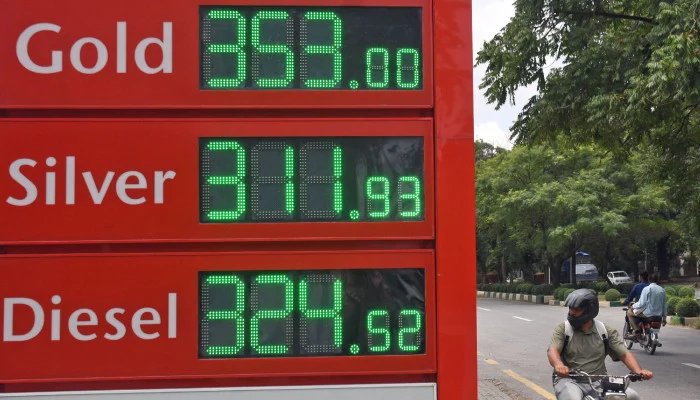
To understand the sheer scale of Pakistan’s vulnerability, one must look at the immediate correlation between the Middle Eastern conflict and the domestic consumer price index (CPI). The data from the past quarter paints a stark picture. In May 2026, at the height of the initial US-Iran escalations, Pakistan’s inflation hit a brutal two-year high of 11.7%, driven largely by a staggering 36.8% year-on-year surge in transport costs, directly linked to the conflict’s impact on global oil markets.
When the brief diplomatic miracle of the June ceasefire held, the relief was instantaneous, though short-lived. By the end of June 2026, national CPI inflation eased down to 11.1% on a year-on-year basis, and on a month-on-month basis, the country actually witnessed a deflation of 0.3%, signalling that the runaway pricing pressures were finally beginning to cool. However, with the war resuming, that temporary buffer has been wiped out. Global crude prices are once again reacting to the threat of supply chain disruptions, climbing toward $100 as Red Sea risks rise. For Pakistan, this means the recent inflation slowdown is guaranteed to reverse, forcing the State Bank of Pakistan to keep interest rates painfully high, thereby choking off private sector credit and industrial growth precisely when the country desperately needs economic expansion.
If runaway energy prices deliver the physical blow, the conditions attached to Pakistan’s IMF program define how far the government can go to cushion the public from it, without risking the country’s financial lifeline in the process. Pakistan is currently operating under the strict parameters of a $7 billion IMF Extended Fund Facility (EFF) program. During the recent reviews completed in May 2026, the IMF disbursed $1.32 billion, bringing total current support to $4.8 billion. In its assessment, the Fund explicitly noted that Pakistan had achieved a hard-won baseline of economic stability despite the ongoing Middle East war, but this praise came with a rigid, non-negotiable mandate. Domestic energy prices must remain completely in line with global costs.
While the government’s ambitious New Energy Vehicle (NEV) Policy 2025-30 aims to eventually decouple the economy from imported oil, severe deficits in grid readiness and a delayed public charging infrastructure rollout mean this transition offers no immediate salvation. Consequently, as the Gulf conflict drives up fuel prices, Pakistan faces a binary choice. On one hand, the government can pass the surging fuel costs directly to the public. In a country already suffering from significantly diminished purchasing power, pushing petrol and electricity prices even higher will instantly accelerate inflation across all sectors, from food logistics to basic manufacturing, risking potential social unrest.
On the other hand, if the government absorbs the shock by subsidising fuel prices at the pump, it will immediately breach the IMF’s strict primary surplus target of 1.6% of GDP. Violating this core condition would undoubtedly derail the entire EFF programme, halting future disbursements and sending a disastrous signal to bilateral partners and global bond markets.
The energy-inflation nexus is not a burden shared equally across Pakistani society; it falls hardest on those with the least capacity to absorb it. Lower-income households spend a far larger share of their earnings on transport, cooking fuel, and electricity, so when the Gulf conflict pushes crude prices upward, the resulting surge in transport costs, food logistics and utility bills acts as a deeply regressive tax.
In this context, renewable energy becomes a socioeconomic necessity. Pakistan is already living through one of the fastest solar transitions in the world. As per Ember, the country’s total electricity demand grew 21% over just two years, but grid-supplied electricity didn’t drive that growth at all, the entire 33 TWh increase in demand from FY23 to FY25 was absorbed by distributed solar generation, which alone grew by 36 TWh over the same period – driven almost entirely by households and businesses reacting to unreliable and expensive grid power.
Every panel installed is effectively a hedge against the next Gulf flare-up, insulating a household or a farm from a crude price shock the government cannot control. Solar has proven especially valuable to farmers, who have turned to it out of sheer necessity, escaping diesel-fired irrigation pumps whose fuel costs move in lockstep with the same Middle Eastern volatility driving national inflation. If Pakistan wants renewables to serve as genuine insulation for the broader population, financing solar adoption for low-income households and smallholder farmers deserves to be a central pillar of the country’s crisis response, alongside austerity.
Yet solar adoption, however fast-moving, is still a household-level response; it cannot substitute for the state’s fiscal reckoning with this crisis. The immediate reality of that reckoning is already unfolding. In preparation for the next tranche of funding, the IMF has imposed stringent new conditions, mandating semi-annual gas tariff adjustments beginning this month, followed by strict annual electricity tariff revisions.
Simultaneously, the sheer panic induced by the renewed Middle East conflict has forced the state to explore domestic austerity measures, including emergency fuel conservation and cuts to non-essential development expenditures to protect the balance of payments. However, for these strategies to be truly effective, austerity must progress into a national culture of conservation and improved consumption habits. Otherwise, while these harsh internal cuts might artificially compress demand and satisfy international lenders in the short term, they risk plunging an already fragile economy into a deeper recession.
It is precisely to buy this critical time that Pakistan’s economic diplomacy has leaned on traditional allies. Recent high-level meetings in Riyadh have resulted in Saudi Arabia committing $3 billion in additional financial support and extending an existing $5 billion deposit to help shore up Pakistan’s foreign exchange reserves, while also supporting the energy sector through deferred oil payment facilities.
The ceasefire’s collapse is a reminder that diplomatic goodwill is no match for geo-economic reality. Yet Pakistan is not without agency. As the conflict persists, policymakers face a clarifying task of managing the near-term burden of imported inflation with candour, while accelerating the structural reforms already within reach: a broadened tax base and sustained investment in domestic clean energy. The country’s solar surge is proof that it can adapt with remarkable speed when circumstance demands it. What remains is to translate that instinct into deliberate policy, so that the nation’s economic fate is no longer written in the Strait of Hormuz.
Arfa Ijaz is an environmental engineer and an energy researcher working at the Sustainable Development Policy Institute (SDPI), Islamabad.
Sarim Zia is a researcher at SDPI, working on energy, climate and economic policy issues.
Originally published in The News

