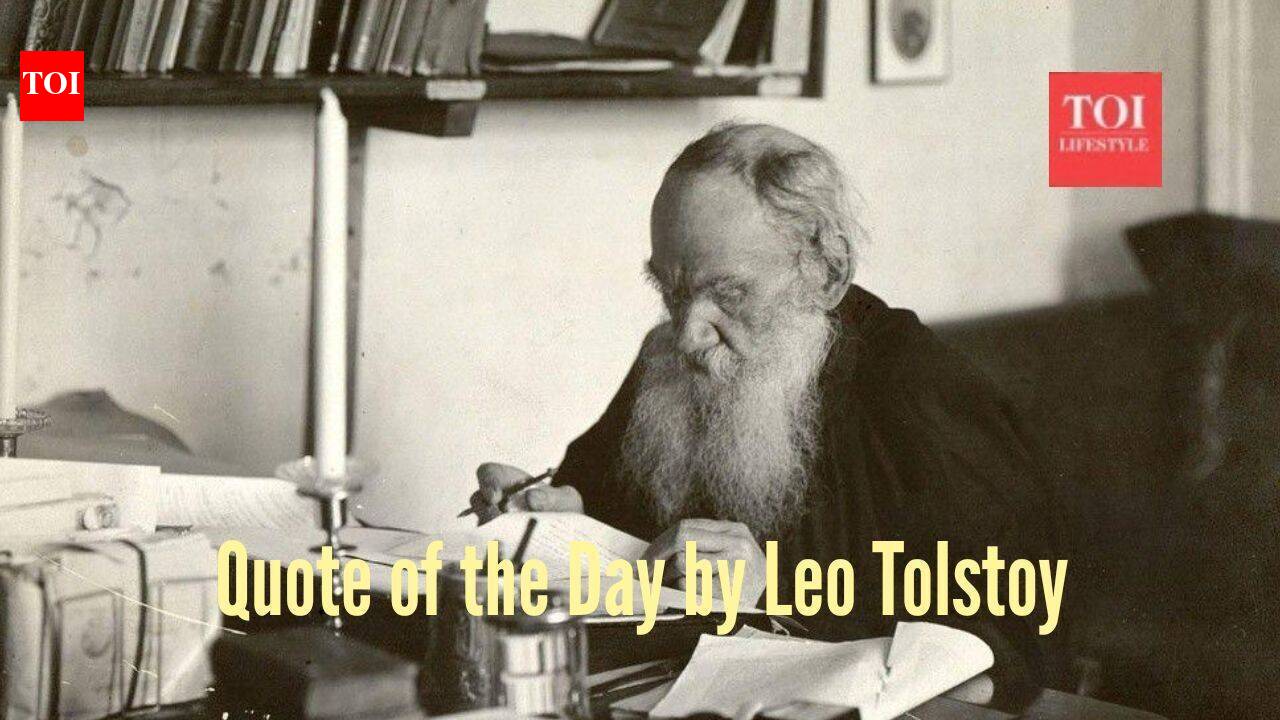
Leo Tolstoy was not merely one of the greatest novelists the world has produced; he was also a man who spent his life wrestling with some of the most difficult questions of human existenc, love, marriage, death, faith, morality, wealth, war, family and the search for meaning. His extraordinary achievement was to turn these questions into stories populated by characters who felt startlingly real. More than a century after his death, his novels continue to speak to readers because his central concern was not a particular time or society, but the human condition itself.Born on September 9, 1828, at Yasnaya Polyana, his family’s estate in Russia, Tolstoy belonged to the Russian aristocracy. He lost both his parents at a young age and was raised largely by relatives. As a young man, he entered Kazan University but left without completing his degree. His early adulthood was turbulent. He gambled, accumulated debts, pursued romantic relationships and struggled to find a sense of purpose.His experiences in the army, however, began to transform him. Tolstoy served in the Caucasus and later in the Crimean War. What he witnessed during military service gave him material for his early literary works, including Childhood and The Sevastopol Sketches. These writings established him as a serious young writer and revealed a quality that would remain central to his work: an extraordinary ability to observe people closely.Tolstoy’s great novels came later. War and Peace, published between 1865 and 1869, combined sweeping historical events with intensely personal stories. what ultimately moved society.Then came Anna Karenina, one of the greatest novels ever written. Published in the 1870s, it begins with a marriage and an affair but expands into a profound examination of love, family, social expectations, jealousy, loneliness and the search for a meaningful life.What makes Tolstoy’s writing remarkable is its psychological depth. His characters are rarely simply good or bad. They contradict themselves, change their minds, behave selfishly and then generously, experience guilt, desire, fear and hope. They often do not fully understand themselves. Tolstoy understood that human beings are complicated precisely because they are capable of holding conflicting emotions at the same time.His writing style was equally distinctive. He could move effortlessly from enormous historical events to the smallest detail of a person’s expression or gesture. A battlefield, a ballroom, a family dinner and a private moment of despair could all receive the same intense attention. He avoided making his characters feel like literary constructions; instead, they seem to think and breathe independently of the author.But Tolstoy’s life changed dramatically after his literary triumphs. In middle age, he experienced a profound spiritual and moral crisis. He married Sophia Behrs in 1862, and they had a large family. Sophia played an enormous role in managing the household and supporting his literary career, including repeatedly copying his manuscripts.responsibilities.Tolstoy died in 1910, aged 82, after leaving his home in search of a simpler existence. His final years had become almost symbolic of the conflict that had defined his life: a world-famous aristocratic writer trying to escape the privileges and possessions that had once defined him.His impact is difficult to overstate. War and Peace and Anna Karenina remain foundational works of world literature, while his ideas about non-violence influenced political and social movements far beyond Russia. His greatest legacy, however, may be his insistence that literature should make us look honestly at ourselves.Tolstoy did not simply write about people. He examined why people behave as they do and asked whether they could become better.Quote of the Day“A man is like a fraction whose numerator is what he is and whose denominator is what he thinks he is.”Leo Tolstoy’s metaphor of the fraction is deceptively simple. The numerator represents what a person actually is his abilities, character, actions, achievements and perhaps his real contribution to the world. The denominator represents what he thinks he is his self-image, ego, ambitions and opinion of his own importance. The brilliance of the metaphor lies in what happens mathematically: the larger the denominator becomes, the smaller the fraction becomes. Imagine someone who is genuinely talented but believes he is extraordinary. His actual abilities may be considerable, but his inflated opinion of himself makes the overall “fraction” smaller. Conversely, a person who has modest abilities but does not exaggerate his importance may possess a healthier relationship with himself.Tolstoy was pointing towards one of the oldest human problems: the gap between who we are and who we imagine ourselves to be.Modern life makes this gap particularly relevant. Social media encourages people to construct carefully edited versions of themselves. Professional success can become an identity. Wealth, appearance, popularity, education and status can all become measures through which people decide how important they are. The danger begins when perception becomes more important than reality.The quote is therefore not simply about humility. It is about self-awareness. There is another layer to Tolstoy’s idea: our self-image can also distort our understanding of failure. If we believe we must always be successful, a setback can feel like an attack on our identity. But if we understand ourselves honestly strengths and weaknesses included failure becomes information rather than humiliation. In that sense, the quote offers a powerful lesson for everyday life: the healthiest relationship with oneself comes from reducing the distance between reality and self-perception.The answer requires honesty. We may discover that we are less extraordinary than we imagined. But we may also discover that we are stronger, kinder, more capable or more resilient than we had given ourselves credit for. That is perhaps the real wisdom behind the metaphor. Self-knowledge is not about thinking less of yourself; it is about seeing yourself accurately. And for Tolstoy, that honest vision of oneself was the beginning of a more meaningful life.Tolstoy’s metaphor of the fraction is deceptively simple. The numerator represents what a person actually is his abilities, character, actions, achievements and perhaps his real contribution to the world. The denominator represents what he thinks he is his self-image, ego, ambitions and opinion of his own importance.The brilliance of the metaphor lies in what happens mathematically: the larger the denominator becomes, the smaller the fraction becomes.Imagine someone who is genuinely talented but believes he is extraordinary. His actual abilities may be considerable, but his inflated opinion of himself makes the overall “fraction” smaller. Conversely, a person who has modest abilities but does not exaggerate his importance may possess a healthier relationship with himself.Tolstoy was pointing towards one of the oldest human problems: the gap between who we are and who we imagine ourselves to be.Modern life makes this gap particularly relevant. Social media encourages people to construct carefully edited versions of themselves. Professional success can become an identity. Wealth, appearance, popularity, education and status can all become measures through which people decide how important they are. The danger begins when perception becomes more important than reality.The quote is therefore not simply about humility. It is about self-awareness.A person who knows his limitations can learn. Someone convinced that he already knows everything has little reason to grow. A person who recognises that his success is partly the result of circumstances, opportunities and the help of others may remain grateful. Someone who believes that everything he has achieved is entirely his own doing can easily become arrogant.In that sense, the quote offers a powerful lesson for everyday life: the healthiest relationship with oneself comes from reducing the distance between reality and self-perception.e.
Quote of the Day by Leo Tolstoy: “A man is like a fraction whose numerator is what he is and whose denominator is…”

By admin
0
10

RELATED ARTICLES