
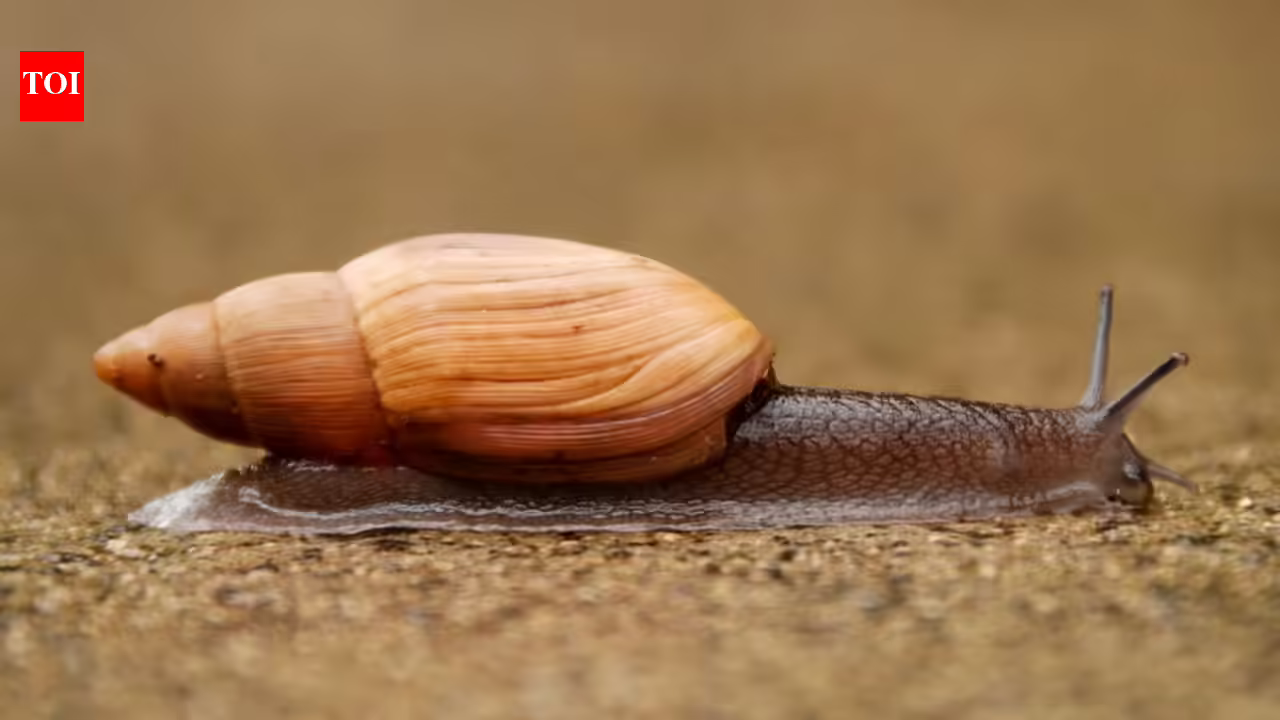
In 1955, wildlife officials in Hawaii released a meat-eating “cannibal” snail to control an invasive pest. But the plan went terribly wrong. Instead of eating the pest, the predator turned on the islands’ rare native tree snails, pushing them close to total extinction, reports NPR.What was meant to be a simple pest control idea quickly turned into a huge disaster for nature. Today, scientists are working around the clock to protect Hawaii’s last remaining native snails from the killer hunter humans brought in seven decades ago.Known locally as kāhuli, these colorful tree snails were once so common in Hawaii that old stories say they hung from trees like Christmas ornaments. Because they evolved over millions of years on isolated islands, the roughly 750 different species earned the nickname “jewels of the forest” for their bright, detailed shells.However, more than half of those species have completely disappeared in less than a single lifetime. The main reason for this fast crash goes back to the mid-1900s, when officials brought in the rosy wolf snail from Florida. They hoped it would eat the giant African land snail, another invasive pest. Instead, the meat-eating rosy wolf snail began tracking down and eating native tree snails.The rosy wolf snail is an expert hunter. It follows the slimy trails left behind by other snails, catches up to them, pulls them out of their shells, and eats them. Because native tree snails grew up without dangerous hunters like this, they have no natural way to defend themselves.Along with losing their forest homes to farming and having their eggs eaten by rats brought in on ships, the rosy wolf snail pushed Hawaii’s native snails to the edge of vanishing forever.
The last line of defence: A snail emergency room
To stop total extinction, scientists have stepped in with extreme rescue efforts. Inside a small, air-conditioned trailer near Honolulu, the Snail Extinction Prevention Program—run by Hawaii’s Department of Land and Natural Resources (DLNR)—acts as a safe shelter.The facility holds 40 different native snail species. Each snail is tiny, about the size of a small coin or a fingernail. For several species, this trailer is the only place left on Earth where they still exist, because their wild family members are completely gone.David Sischo, who runs the program for the DLNR, explained how serious the situation is to NPR: “Most people, when they think endangered species going extinct, they think of pandas and tigers and elephants, but imagine having 40 different panda species that are all as rare as pandas are. That’s what this facility is.”The trailer works like a hospital intensive care room. Inside special climate tanks, life-support machines control the temperature and spray light mists to copy the wet air of Hawaiian rainforests. Automatic sensors monitor the tanks day and night, sending alerts 24 hours a day if anything goes wrong.Inside rows of clear plastic pet tanks, the surviving snails come in many shapes and colors.Achatinella fulgens has a pale yellow shell with a thick black stripe wrapping around it. Other snails feature patterns like tartan cloth, shiny gold-green shells, or tight swirls that look like tiny cinnamon rolls.
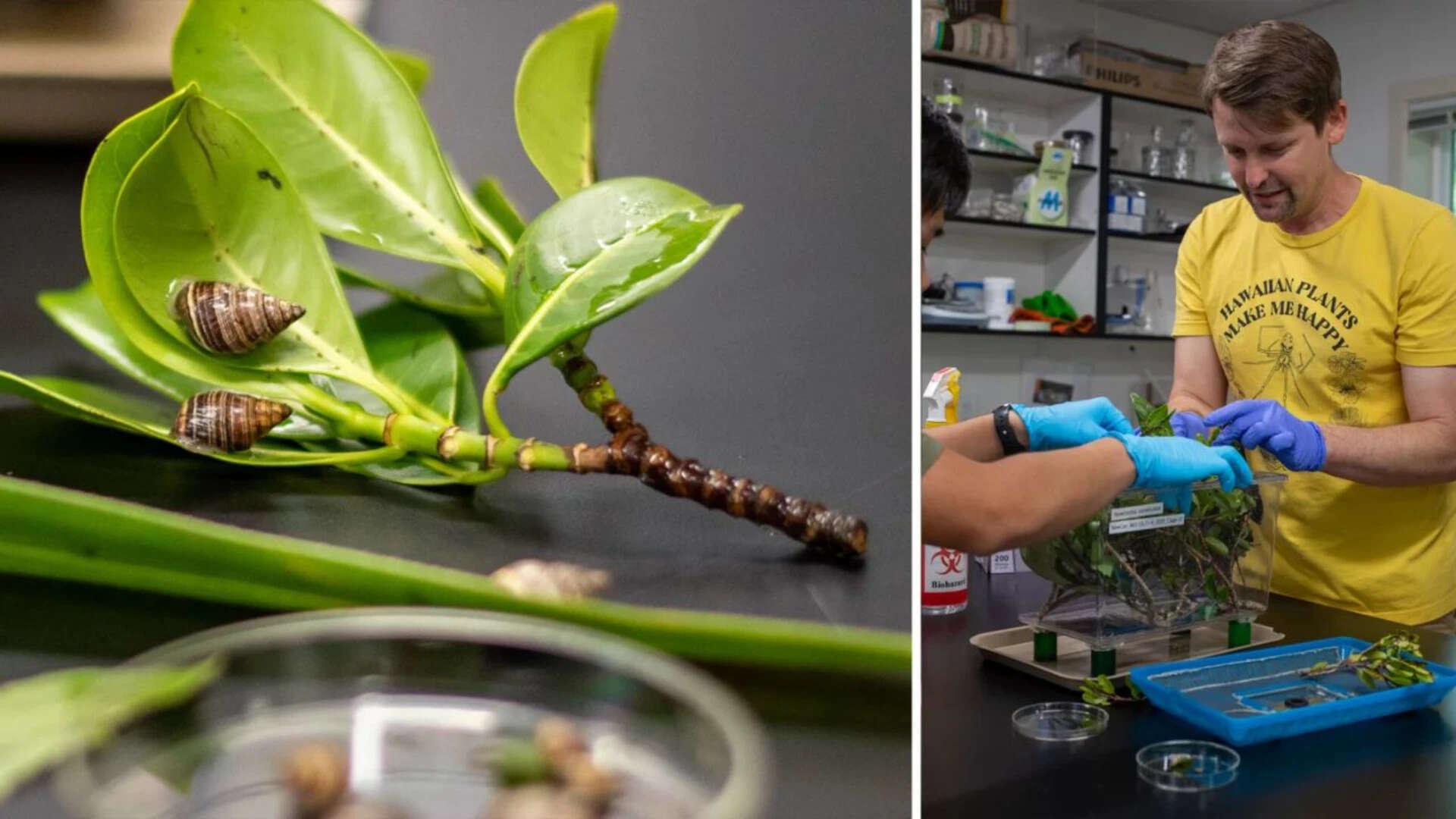
Inside this lab, Sischo and his team care for 40 species of snails. For some snails, it’s the only place they live, having been brought into captivity to stave off extinction.
Biological and cultural loss
Losing these tiny creatures affects more than just how the forest looks. Hawaii’s tree snails do important jobs in nature. Unlike pests that ruin plants, tree snails do not eat leaves. Instead, they eat the fungus growing on leaves, keeping trees clean and turning waste back into food for the forest.They also mean a lot in Native Hawaiian culture, where people used their shells to make traditional lei necklaces. Old island legends even say the snails can sing.“In Hawaiian tradition, snails sing,” Sischo says. “They represent voice. So they were probably one of the most revered invertebrates in the world.”Even with their big role in nature, breeding native tree snails in captivity is very slow work. Unlike most bugs and snails that lay hundreds of eggs, Hawaiian tree snails grow up slowly. They are five years old before they can have babies, and they give live birth to only one to five babies a year.Building back a safe population from just a few survivors takes many years, and the work puts a lot of stress on the team. To feed the captive snails, workers must gather fresh wild leaves, which carries a constant risk of bringing deadly germs into the clean tanks.“It is super stressful,” Sischo says. “All of us feel it. People might think it’s silly to feel that for snails, but if we mess up, it’s over for a species. So yeah, I have sleepless nights.”There is zero room for mistakes, a reality shown by recent sad events. A heavy storm once caused a landslide that knocked down trees holding one of the last wild groups of Achatinella fulgens. Sischo’s team managed to save only six living snails from the mud. Another time, scientists found a species they thought was already gone, but by the time they went back to collect them, the snails had vanished completely.These losses are shown clearly by “George,” a single snail of the species Achatinella apexfulva who lived out his life in Sischo’s lab. As the last known snail of his kind, George died without finding a mate, marking the final end of his entire species.
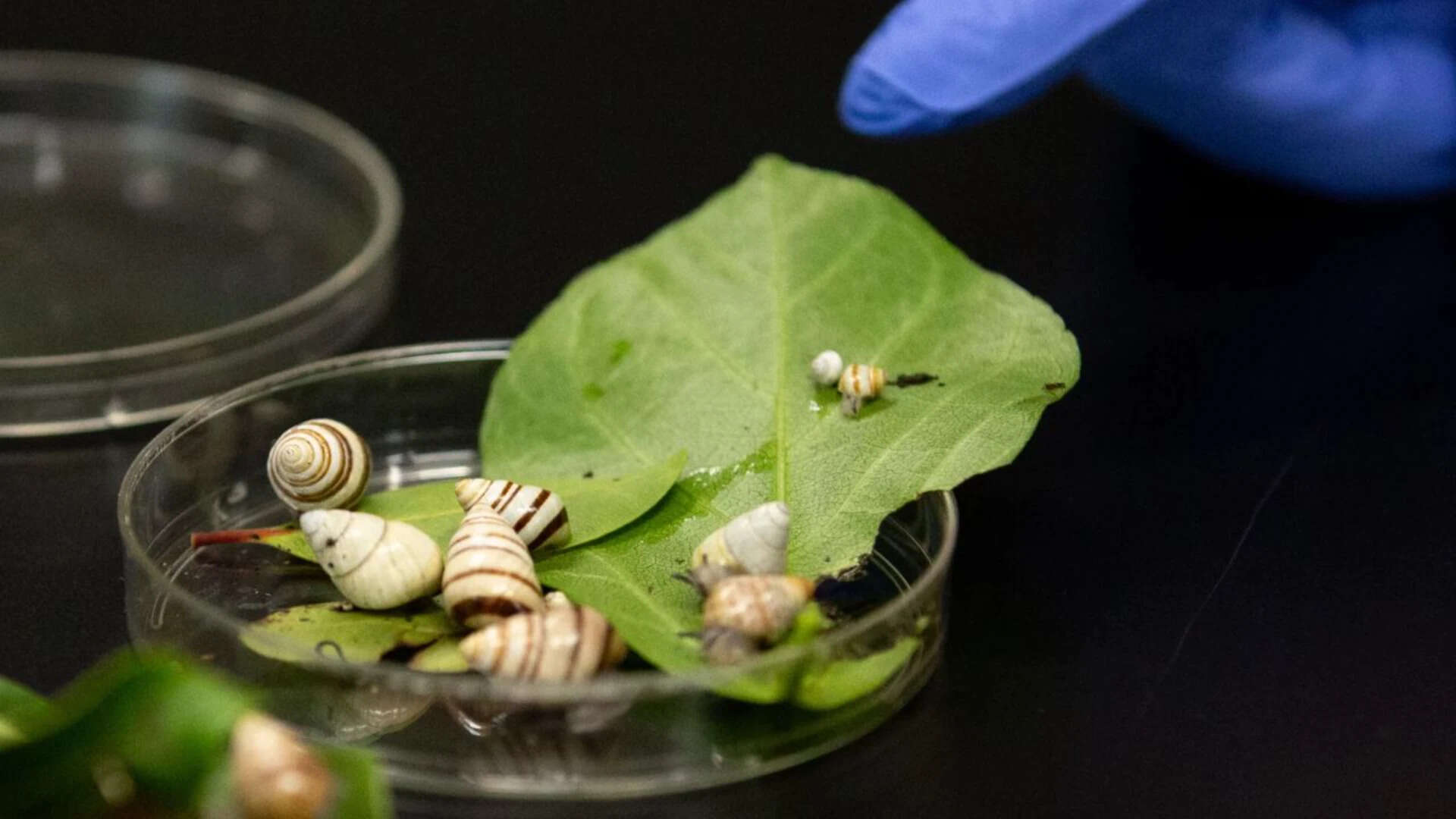
Sischo and his team were only able to find six remaining Achatinella fulgens in the wild. Now, in captivity, their population is slowly growing.
Medieval defences in the rainforest
Despite these tough challenges, rescue efforts are moving into a new phase: bringing snails back to the wild under close care. Scientists are getting ready to release selected captive-born snails back into safe spots in their old mountain habitat.To give these slow-breeding animals a real chance to survive, the DLNR team builds special predator-proof fences in the mountains of Oahu. These high-security zones use clever physical traps designed specifically to block the hunting rosy wolf snail.The outer walls feature rough metal strips that snails hate crawling over, sharp metal edges that trap them if they try to climb up, and electric wires near the top that give a tiny shock. To make sure no hunters are trapped inside, workers spend months searching the ground, crawling on hands and knees through fallen leaves to spot invasive snails and their eggs, which are as small as a Tic Tac mint.Sidney Stiefel, a field worker with the team, explained the tough search work:“You’re on your hands and knees, in the rain, in the hot sun, feeling and looking.”Even entering the quarter-acre fenced park takes strict safety steps, including drawbridge ladders that get pulled up as soon as workers cross the fence.“We don’t take any chances,” Sischo explains. “So we go in and then pull up the drawbridge. It’s almost like they’re trying to storm the castle.”
A new reality for global conservation
There are now 13 predator-free snail parks working across the Hawaiian Islands, with 10 more being planned. However, experts stress that these protected pens are just a safety net, not a full fix. Until scientists find a reliable way to get rid of rosy wolf snails in open forests, native snails cannot safely live in the wild on their own.This problem matches a growing trend around the world: as climate change, habitat loss, and invasive pests spread, more wild animals are becoming completely dependent on human care just to stay alive.For Sischo and his team, the daily fight to protect these ancient island snails is a duty they refuse to give up on. “I feel it’s unacceptable to let a species go,” Sischo says. “I feel like we have to try, at the very least. We’re not going to be able to save everything, but we have to try.”

