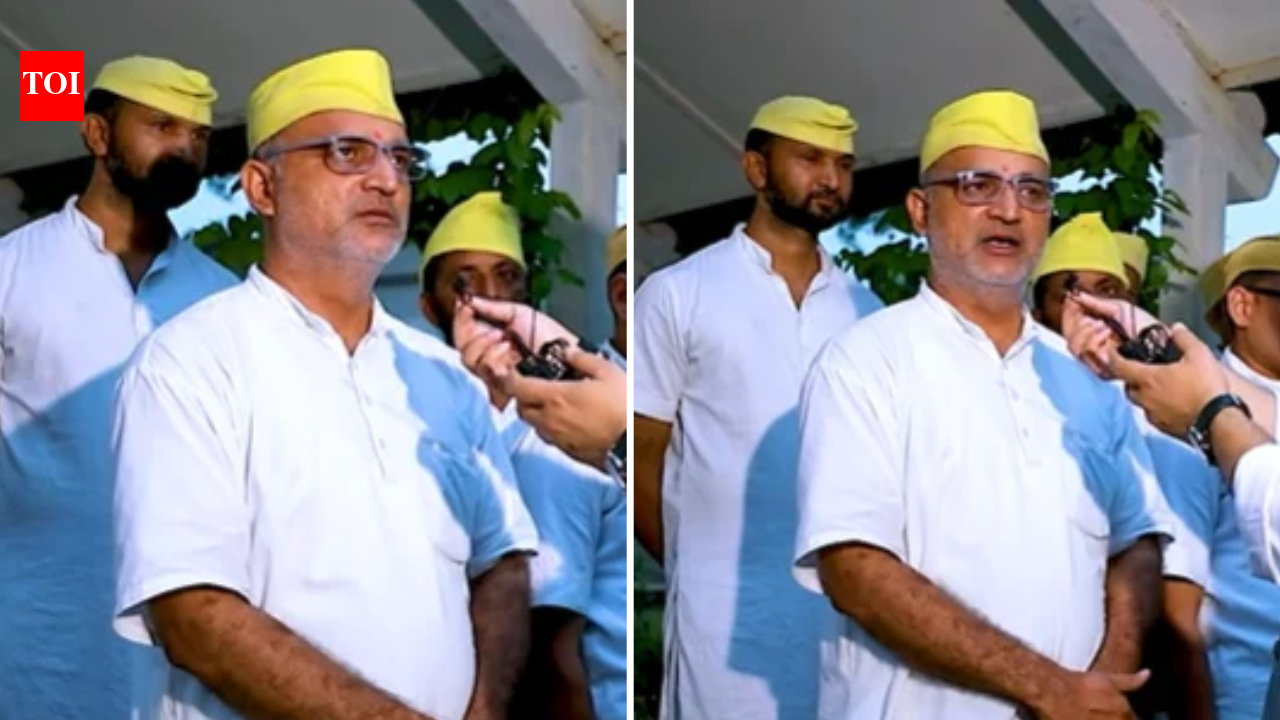
A question about his crime gets a short answer. A question about his daughters changes the mood of the conversation completely.In an emotional interview, an inmate at Sabarmati Central Jail speaks about the killing that put him behind bars, the fight during which it happened and the regret he has carried since. But it is his family – particularly his two daughters – that appears to bring the consequences of that one moment into sharp focus.In the interview with Game Changers With MJ, when asked what crime he committed, the man simply answers, “302”. He confirms that he killed someone and says the incident happened during a fight. There is little elaboration about the crime itself. Instead, when asked whether he regrets it, he makes his feelings clear: “Pachhtawa toh khoob hai” – he has a great deal of regret he says.The conversation then moves to the people waiting for him outside prison. He speaks about his two daughters, a son and his ageing parents. His parents have grown old, he says, and there are difficulties at home. But when his daughters come up, his emotions become harder to contain.One daughter is going to college. The other, he explains, has physical and mental disabilities and will need his care throughout her life. That is where the reality of his imprisonment appears to hit differently. He knows there is a daughter who may need him for years to come, yet he is spending those years inside a prison.The thought leaves him emotional.The inmate describes the crime itself as something that happened in anger and makes no attempt to defend the decision. “Maine gusse mein kiya jo kaam galat tha. Bahut galat tha,” he says what he did in anger was wrong, very wrong.It is a simple admission, but in the context of his family, it takes on a different meaning. The fight may have been a moment, but the consequences have extended into his children’s childhood and education, his parents’ old age and the responsibilities his family now has to manage without him.Yet prison has not completely cut him off from those responsibilities.During the interview, he speaks about the work he has been doing inside jail. For around three years, he says, he has worked with diamonds. He earns about Rs 800 from the work and tries to save part of it for his family.His daughter is studying in Class 12, and he says he has been putting aside around Rs 5,000-7,000 to help meet her expenses.It is a striking detail in an otherwise painful conversation. He cannot accompany his daughter to college, help her with everyday decisions or simply be present at home. But from inside prison, he is trying to contribute in the limited way available to him.For him, the distance is not just physical.His daughters are moving into different stages of their lives. His parents are growing older. One daughter may need lifelong support. And the man who says he should have been there for them is instead trying to fulfil fragments of that responsibility from behind prison walls.The interview does not offer a neat resolution to what happened. There is no undoing the killing and no way to recover the years already lost.What it does reveal is how the aftermath of a violent act can continue far beyond the person who committed it. The prisoner is serving his sentence, but his family is living with another kind of consequence – his absence.And perhaps that is why the conversation becomes most emotional when the crime itself is no longer the subject.It is his daughters he is thinking about.The college-going daughter. The daughter he believes will need his lifelong care. The children growing up while their father remains behind bars.His words return to the same realisation: “Maine gusse mein kiya jo kaam galat tha. Bahut galat tha.”A moment of anger, he now appears to understand, did not end when the fight was over. For him and his family, it became a consequence they have to live with every day.
‘I regret killing him’: Sabarmati jail inmate breaks down over daughters, says, ‘I did something very wrong in anger’

By admin
0
13

RELATED ARTICLES