
Soccer is a game of failure — especially this summer.
Each game at the 2026 World Cup has featured about 80 possessions per team. And each team has scored about 1.5 goals per game. Those teams, in other words, are failing to score goals with 98% of their possessions.
Those teams generate around only 12 shots per game, so 85% of those possessions don’t lead to an attempt on goal. And even when they do, those shots fail to become goals 88% of the time.
But we all put up with the constant futility because there’s a likely payoff hidden behind all of these hopeless statistics, right? Right?
Yeah, um, not quite.
The biggest World Cup in history brings with it an even greater avalanche of failure. Of the 48 teams attempting to win the World Cup this summer, 47 (98%) will fail. Add up all of the World Cups this century, and come the end of this summer, 240 different groups of players will have tried to lift the World Cup — and 233 will have fallen short.
Of course, not all failures are created equal. Injuries happen, refs make mistakes, arbitrarily drawn borders and random demographic patterns determine rosters, socioeconomic factors overwhelm tactics and the ball keeps bouncing.
So from now until the end of the tournament, we will grade the 47 failures — continually updating this page, with the most recently eliminated teams listed first — based on a combination of pretournament expectations, in-tournament performance and whatever else is worth considering.
The grades will be on a traditional A-to-F scale. Yes, you can get an A for failing or an F for failing. I can’t think of a sentence that better sums up the World Cup than that.
All numbers come courtesy of the stats app Futi or Stats Perform data, unless otherwise noted. All projections cited come from Michael Caley’s PADDLIN’ model.

How they got eliminated: Lost to Switzerland in the round of 32
Final grade: C
In the moment, this seemed like the most important thing that had ever happened:
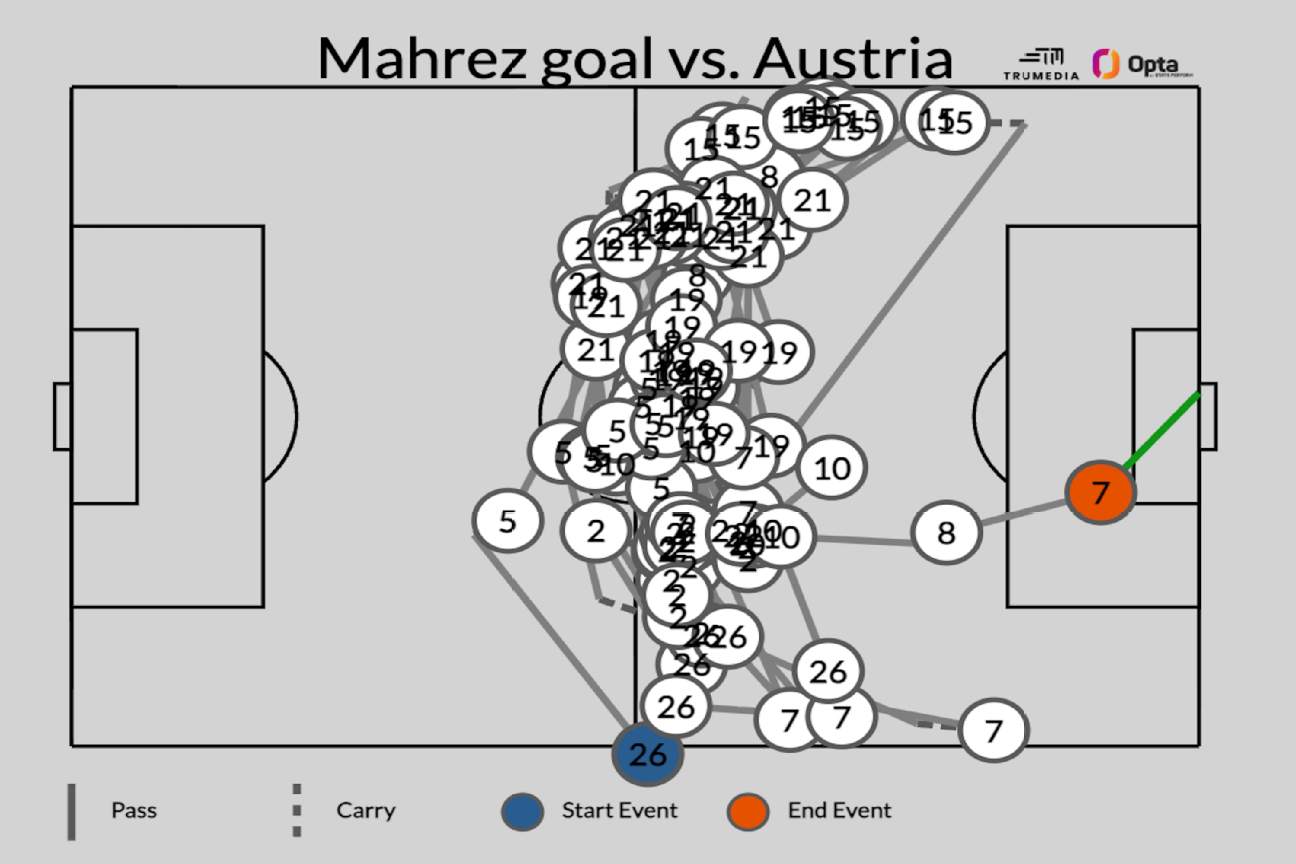
Algeria’s 100-plus-pass sequence against Austria was, well, I’ve never seen anything like it. A team only completes 100-plus sideways passes in a row when both teams have stopped trying, and it certainly seemed like Algeria and Austria had stopped trying in injury time of a tied match where both teams only needed a tie to advance.
Then, bang: one forward pass, a goal, Austria are out, Iran are advancing, Algeria are playing Spain.
Then, of course, another bang: Austria scores, Austria are playing Spain, Algeria are playing Switzerland, and Iran are out.
And then, a whimper: Algeria go out meekly, with an uncompetitive 2-0 loss to Switzerland.

How they got eliminated: Lost to Portgual in the round of 32
Final grade: B-
Here is what it has taken to eliminate Croatia from the last three World Cups:
– 2018: Kylian Mbappé
– 2022: Lionel Messi
– 2026: a computer chip inside of a soccer ball
As a “numbers guy” or whatever you want to call me, I would normally bristle at the idea that there is something innate within the Croatian national character that allows them to summon higher levels of performance when their backs are against the wall. But, well — the Croatian national team has spent the past 10 years constantly summoning higher levels of performance when their backs were against the wall.
Some better luck against Portugal — or, a better-played first half — and they’re playing again on Monday.

Austria
How they got eliminated: Lost to Spain in the round of 32
Final grade: C
Ralf Rangnick & Co. got a real rough draw. Just think about who the USMNT, Canada and Mexico have collectively played through the first four matches. The toughest opponent? Probably Switzerland. Austria, meanwhile, are going home after the round of 32 because they’ve played half of their games against Argentina and Spain.
Austria weren’t bad; they, unfortunately, weren’t all that interesting, either. I thought the Red Bull counter-pressing approach could pose some tricky questions this summer, but it just didn’t really pan out. They were outshot in all four of their matches.

Bosnia-Herzegovina
How they got eliminated: Lost to the United States in the round of 32
Final grade: B+
Before the tournament started, I got an email from a Bosnian journalist: “Your prediction that Bosnia and Herzegovina will not win a single point in the group stage caught some attention in our media.” To my colleagues in Sarajevo: Your team proved me wrong. As we saw against the USMNT, this was ultimately just a really limited team. They didn’t have the capacity to create any quality chances despite playing the final 30 minutes with an extra player.
In other words, when I look at Bosnia-Herzegovina’s performance at the World Cup — a draw against hosts Canada, a competitive knockout-round appearance — I can’t really see anything they could’ve done differently to achieve slightly better results. No, I see a team that just about maxed out its potential.

Senegal
How they got eliminated: Lost to Belgium in the round of 32
Final grade: C+
You don’t blow a 2-0 lead with four minutes left unless two things happen: You stop playing your game, and you get incredibly unlucky.
And this expected-goals race chart, from Futi, shows how Senegal fell prey to both. The green bars are Senegal, the red bars are Belgium, and the dots represent the goals:
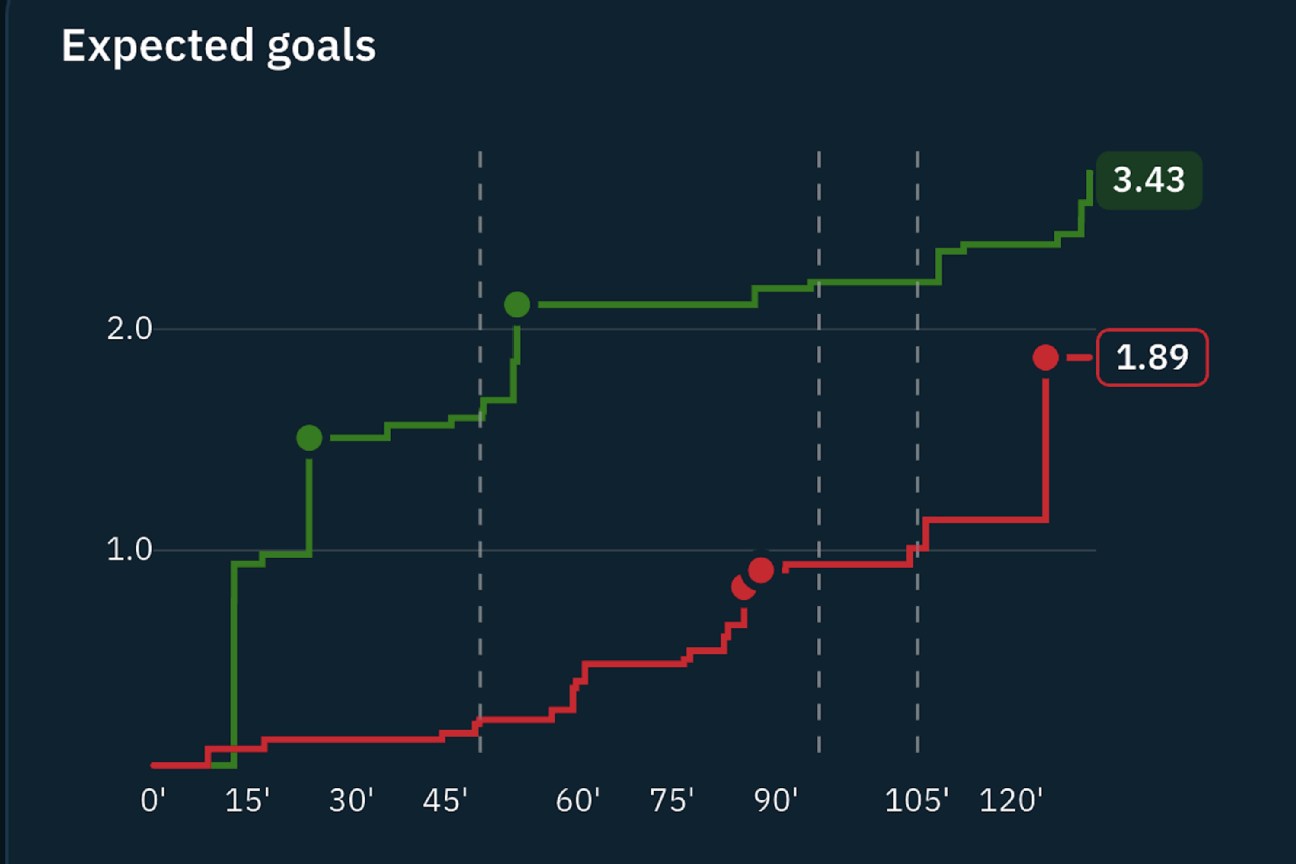
To start, Senegal created 3.43 expected goals to Belgium’s 1.89. That’s a “best team in the Premier League against the worst team in the Premier League type gap,” and it’s probably even underselling the difference since 0.8 of Belgium’s xG came from the controversial penalty at the end of extra time. Ignoring which specific chances went in and looking at the overall quantity and quality of them, Futi’s model estimates that Senegal win this game 58% of the time and Belgium just 22%.
And yet, I want you to direct your eyes to the line that comes after Senegal’s second goal. See how it’s flat? Yeah, after they went up 2-0, Senegal didn’t attempt another shot until they were tied 2-2. And it wasn’t like they’d lucked into two goals off counterattacks or something; they were absolutely pummeling Belgium and created huge chances every time they went forward.
Taking their foot of the gas didn’t make Senegal likely to lose the lead, but it certainly opened up the possibility for it to happen.
Congo DR
How they got eliminated: Lost to England in the round of 32
Final grade: A-
This was Congo DR’s first World Cup since 1974. They played four games, three of which were against Portugal, Colombia and England — all currently top-10 teams in the world. And they’re leaving with a neutral goal differential: five goals scored, five conceded. And there’s no real luck in there, either; their expected-goal differential wrapped up at plus-0.19.
If you wanted to quibble, you could say they sat back too much after taking the lead against England. Their best period of the game, the first 25 minutes, coincided with them having a nearly 50% share of possession. After that, it dropped down to 38%, as they watched the lead slip away.
But it’s been more than 50 years since this team has been in this tournament. If our biggest complaint is that they were good enough to play aggressively against England, then that’s still a massive leap forward.
How they got eliminated: Lost to Mexico in the round of 32
Final grade: C-
Their 77th-minute winner against Germany was one of the moments of the tournament and perhaps the best argument in favor of the ridiculous and convoluted eight-best-third-place-teams-advance structure. But this team finished second in CONMEBOL qualifying and allowed just five goals across those 18 matches. With Chelsea‘s Moisés Caicedo, Paris Saint-Germain‘s Willian Pacho, and Arsenal‘s Piero Hincapié, they were supposed to be contenders for the quarterfinals.
Instead, they were the third-best team in their own group and went out meekly to Mexico in the round of 32. While their finishing was erratic from start to finish, the defense, which allowed 30 shots in their two losses and four goals across four games, is what ultimately let them down.
How they got eliminated: Lost to France in the round of 32
Final grade: C-
How to grade these guys?
On the one hand, they won zero games in their World Cup qualifying group, and then they qualified for the knockout stages of the World Cup. Success!
On the other hand, they have a pair of peak-age strikers who moved for close to a combined $250 million in transfer fees last summer, and they created just 3.68 expected goals across four matches.
They destroyed a shambolic Tunisia team in their opener and didn’t really put up much of a fight after that. Even their draw against Japan required a one-in-50 finish from Anthony Elanga to salvage a point and a place in the knockout rounds. We shouldn’t really ever expect Sweden to beat France, but they got outshot 25-8 and barely put up a fight.
How they got eliminated: Lost to Norway in the round of 32
Final grade: B-
There’s a tendency among managers to think that their “ideas” are more important than the players at their disposal. So, you get coaches who think their way of playing is the best way, and then they marginalize the skills of their best players because it doesn’t fit within their “game model” or whatever you want to call it.
You have those coaches, and then you have Emerse Faé.
Even though he’s still a teenager, Yan Diomande is Ivory Coast’s best player, and they got him the ball over and over and over again. Defenders and midfielders typically rack up the most touches on most sides, but Diomande is a left winger and his 251 touches led the team. His 131 touches in the attacking third were nearly double anyone else on the team.
Although he didn’t play for a possession-dominant team, Diomande exits the tournament leading all players in expected assists created, progressive carries, and take-ons. A lot of managers wouldn’t turn over their entire attack to a teenager, but Faé deserves credit for doing just that.
How they got eliminated: Lost to Morocco in the round of 32
Final grade: F
The Netherlands were close to flawless in the group stage, and they found a starting XI that might’ve been more balanced than any other team in the tournament. Up top, Brian Brobbey provided the kind of physical, focal-point striker that works so well in the simplified international game, and he seemed like a perfect companion for goal-scoring wingers Cody Gakpo and Donyell Malen.
The midfield balance was great: Tijjani Reijnders is a top-notch off-ball runner, Ryan Gravenberch is a world-class ball carrier, and Frenkie de Jong covers all the ground and does all the passing. And then the defense made sense, too. Denzel Dumfries is more of a wingback than a fullback — the kind of player who thrives in the opposition penalty area, not the kind you’d ever want to play in a back four.
But a back five meant one fewer midfielder or one fewer attacker. Instead, Ronald Koeman played Micky van de Ven, a center back for his club team, at left back to balance out Dumfries on the other side. Then center backs Virgil van Dijk and Jan Paul van Hecke provided tons of passing from the back, and keeper Bart Verbruggen showed how he’s quickly becoming one of the best in the world.
The only part of the group stages in which the Netherlands struggled was when they took the lead against Japan and Koeman subbed on a bunch of defenders. They tried to grind out a one-goal win and ended up tying 2-2. But they kept the back four and won the next two matches by a combined 8-2 scoreline.
Koeman had learned his lesson … right?
Nope!
Although the Dutch were favored against Morocco, Koeman opted for a back five, but this wasn’t just any back five. It was a back five that included Van de Ven — who, again, is a center back for his club team — playing as a wing back. After scoring eight goals in the group stage, the Netherlands generated six total shots in 120 minutes against Morocco. Sure, they got to penalties and almost won, but they hung on for dear life — by choice! — in a match they were favored to win:
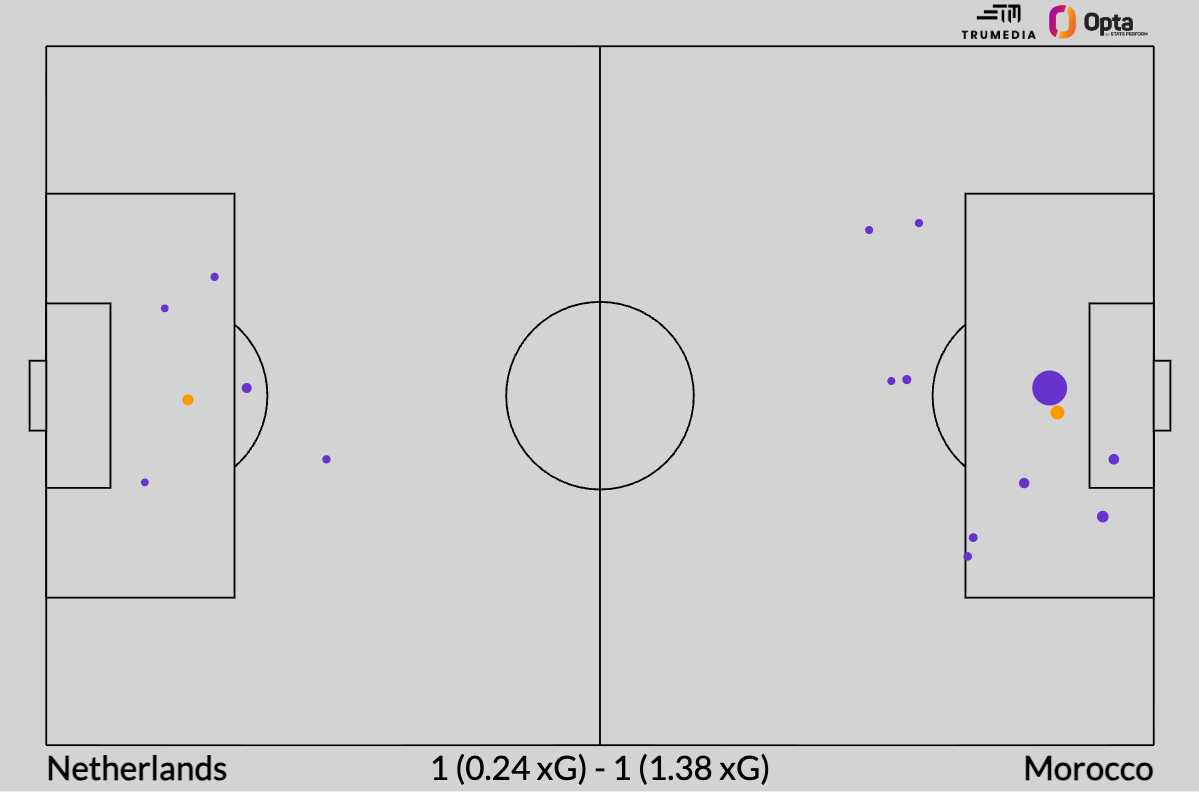
Morocco are a very good team, but would Koeman have started six center backs against France had they made it to the latter rounds? Seven if they played Argentina? Eight if they played Spain? Honestly, I can’t even really blame any of the Dutch players. When allowed to play the positions that they normally play, they were all fantastic.
Their coach failed them.
1:20
Klinsmann: Germany’s World Cup elimination is an embarrassment
How they got eliminated: Lost to Paraguay in the round of 32
Final grade: D
I think manager Julian Nagelsmann summed it up best after the shootout loss to Paraguay, “We have not done much during this tournament.”
They routed Curacao, which: congrats on doing your job. They played well against Ivory Coast for about 20 minutes in the comeback 2-1 win. Their starters lost to Ecuador in the meaningless-for-them final group match. And then they looked mostly clueless against Paraguay’s low-block for all of regulation.
Despite controlling 82% of final-third possession, Germany generated just 0.79 expected goals across the first 90 minutes. They totally dominated extra time — Paraguay didn’t attempt a shot and completed just 54 passes across the 30 added minutes — but that’s to be expected when there’s a large talent gap between the two sides.
Now, I don’t think this Germany team is as talented as any of the prior four iterations — and that’s the biggest issue facing German soccer right now. The Bundesliga has become uncompetitive, it’s falling behind the other European leagues financially, and the youth pipeline seems drier than it’s been in a while.
But as for what just happened: I had Nagelsmann on my list of the top 10 or so coaches in the world coming into this tournament, and I thought he’d have Germany doing what they did at the Euros in 2024: pressing high and executing the kinds of positional rotations we usually only see at the club level. In other words, that he’d be making Germany even better than the quality of their roster.
Instead, the exact opposite happened.
 Japan
Japan
How they got eliminated: Lost to Brazil in the round of 32
Final grade: B-
It’s a disappointing exit for Japan, but I don’t mean that because they were up 1-0 against Brazil at halftime and then attempted one total shot in the second half as they watched their lead inevitably slip away. Rather, it’s disappointing because of the capriciousness of international soccer.
In order to make a run at the World Cup, any country outside of the top five or so needs a bunch of mostly uncontrollable factors to align for one month every four years. You need to hope your best players don’t all play the same position, that you’ve found a coach who hasn’t yet been scooped up by a club team that could pay him a lot more money, that your best players are around the same age, that you get a good draw, and that everyone stays healthy.
Japan got most of those things — except the last two. Canada finished second in their group, a much easier group than Japan’s, and got to play South Africa; Japan got to play Brazil. Then, before the tournament, Japan’s captain, Liverpool midfielder Wataru Endo, and their best player, Brighton winger Kaoru Mitoma, both got hurt. And then, during the tournament, their other best player, Real Sociedad’s Takefusa Kubo, also got hurt.
Given all of that, a competitive departure from the round of 32 still feels like a success.
 South Africa
How they got eliminated: Lost to Canada in the round of 32
Final grade: B
After the opening game of the tournament against Mexico — multiple red cards, never came close to scoring — South Africa looked like they’d be in the mix for a last-place finish. And then they outplayed Czechia and South Korea with their strange, methodical insistence on not necessarily dominating possession, but on keeping the ball whenever they did get it. Only six other teams have moved the ball more slowly up the field — a trait we normally associate with teams like Spain and Manchester City. They barely laid a glove on Canada, but they were the lowest-rated team in Caley’s model to make the knockouts.
Khuliso Mudau was one of my favorite players to watch, too: a lanky, languid right back with a 1960’s mustache, a piece of gum always in his mouth, and an obsession with nut-megging as many opponents as possible.
 Iran
Iran
How they got eliminated: Finished third in Group G
Final grade: A
Well, their inability to shift into a more possession-based approach once they went a man up against Belgium speaks to an inherent weakness. But who cares?
This team had everything else go against them, in ways they mostly couldn’t control: an ongoing war with one of the co-host nations, their domestic league being suspended because of the war, organizers forcing them to put their home base in a different country from where all their games were, organizers forcing them to fly back to Mexico immediately after each of their matches. Not to mention multiple interventions of marginal offside technology that gives the illusion of precision and seems increasingly removed from the spirit of the actual rules, and a 95th-minute goal in a match they weren’t playing in that eliminated them from the competition with what was basically the final kick of the group stage.
Despite all of that, Iran didn’t lose a game at the 2026 World Cup. What might’ve happened if they were just allowed to play soccer like everyone else?
 South Korea
How they got eliminated: Finished third in Group A
Final grade: D-
Coming into the final match, South Korea were on the verge of securing the closest thing they’d get to a home game in the round of 32: playing in Los Angeles. And rather than nabbing a favorite like France or Argentina, it would’ve been against a very beatable Canada side stripped of its own home-field advantage. All they needed to do was beat South Africa, who had looked like one of the worst teams in the competition through two matches.
Instead, their manager benched star player Son Heung-Min, they genuinely got outplayed by South Africa in a 1-0 loss, and now they’re going home. The reason this isn’t an F is because they played quite well in the win against Czechia, and only the double-save of the tournament kept them from tying Mexico:
A HEROIC SAVE FROM RANGEL TO KEEP MEXICO IN THE LEAD! 🤯
South Korea was so close to the late equalizer! pic.twitter.com/LN4bRk6ep6
— FOX Sports (@FOXSports) June 19, 2026
If that goes in, I’m not even writing about them yet. But, well, it did.
 Uzbekistan
How they got eliminated: Finished last in Group K
Final grade: D-
I’m starting to think that it might’ve been a bad idea to get rid of the coach who qualified the nation for its first World Cup and replace him with a guy whose only real managerial achievement was claiming the Chinese Football Association’s “Coach of the Year” honors in 2017.
Uzbekistan came into the tournament looking like a fringe knockout contender; I had them 34th in my rankings, Michael Caley had them 35th. In their first competitive matches under Fabio Cannavaro, they looked like one of the worst World Cup teams we’ve seen this century. Only two sides in 2026 produced worse goal differentials than their minus-9, and they generated only 18 total touches inside the penalty area. No other country finished with fewer than 25.
 Scotland
How they got eliminated: Finished third in Group C
Final grade: C-
Scotland’s opening win against Haiti made this seem a little more disastrous than I think it actually was. Or maybe it covered up how disastrous it actually was? The Scots got outshot 15-9 against Haiti, 12-6 against Morocco, and 21-14 against Brazil. That’s just not going to cut it, especially since the third-place finishers ended up being way better than most pretournament projections suggested. It seemed like three points, with a slightly negative goal differential, was going to be enough; instead, only one third-place team with three points even advanced, and that was Senegal with a plus-2 goal differential.
Brazil and Morocco are both, arguably, top-10 teams in the tournament. I don’t think it was realistic for Scotland to get out of this group on the positive side of the goals ledger.

How they got eliminated: Last place in Group G
Final grade: C
They came into the tournament as the worst-rated team in their group, put up a fight against Iran and Egypt, and then got hammered by Belgium. That broad outline — expect nothing against Belgium, be competitive against the other two — would’ve been a realistic goal for the Kiwis to set. They gave themselves a chance for the bounces to go their way — and then the bounces did not go their way.
The big disappointment is that they had the lead against Iran twice and also opened the scoring against Egypt. And so the wait for their first World Cup win continues.
How they got eliminated: Last place in Group H
Final grade: D-
All Saudi Arabia had to do to advance to the round of 32 was beat a team from a country with a population of 530,000 people. Instead, even though the match ended scoreless, they got dominated by a team from a country with a population of 530,000 people.
The bigger the circle, the higher the expected-goal value of the chance:
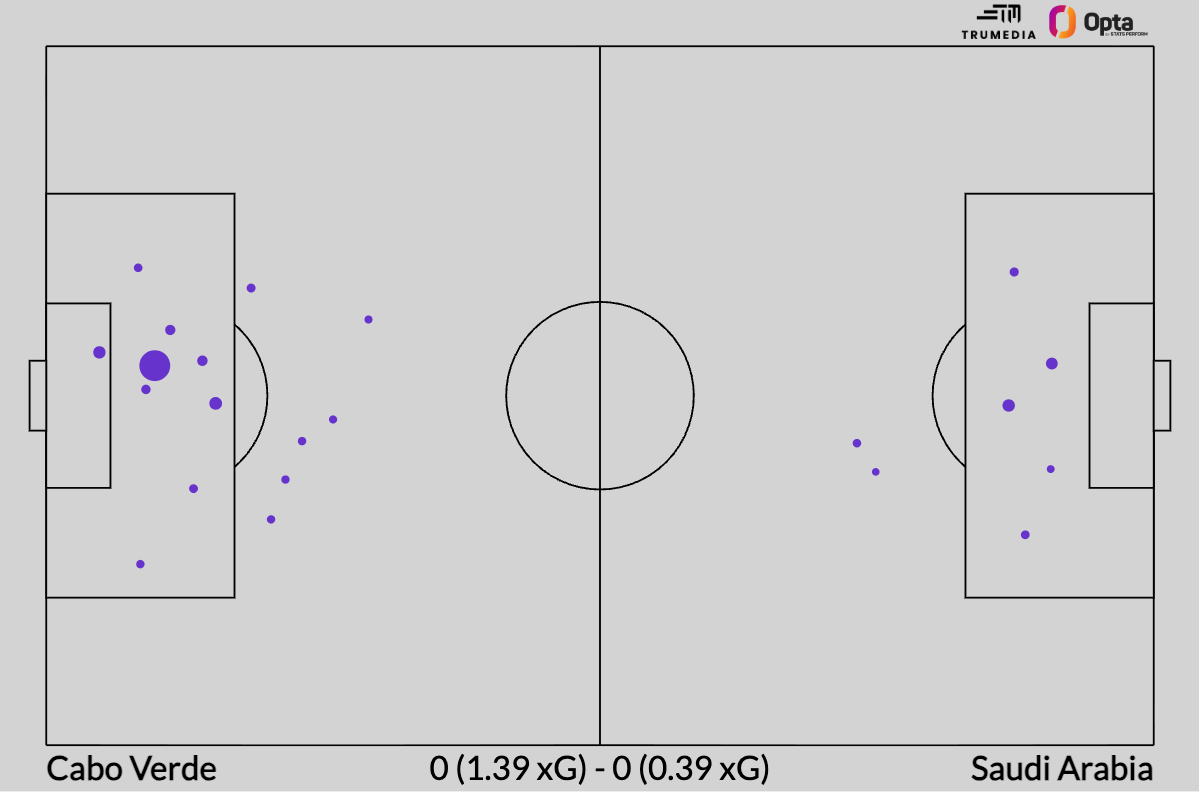
At the time of their elimination, their 17 total shots attempted was the joint-fewest for teams that had played all three group stage games. It tied them with Qatar, hosts of the 2022 World Cup. Saudi Arabia will host the 2034 World Cup.
How they got eliminated: Third place in Group H
Final grade: F
After his team lost 5-1 to the United States in a friendly last November, Uruguay manager Marcelo Bielsa diagnosed the problem with his team: “I’m toxic. Being around me makes people worse.”
After his team lost 1-0 to Spain to seal their elimination from this summer’s World Cup, Bielsa summed up his two-year tenure as Uruguay manager: “I don’t need to speak any further about our performance at the World Cup. If you ask how they are going to remember me, they will remember me as having left nothing.”
I think it might be time to retire? Or start writing existentialist poetry? Uruguay’s only real gears at this tournament were “SMASH” or “SMASH HARDER.” Without some terrible errors from veteran keeper Fernando Muslera, they’d easily be on to the knockout rounds — but this team just didn’t have it.
After going down 1-0 to Spain in the 42nd minute of their final match, they attempted two total shots. My rankings, and Caley’s rankings, both had them 13th before the tournament began. They’re the “best” team to miss the knockout round.
How they got eliminated: Finished last in Group I
Final grade: C-
It was great to have Iraq back in the World Cup for the first time in 40 years, yet they were doomed from the start. Before the tournament, I’d ranked France as the best squad in the tournament, Norway ninth and Senegal 11th. That would be a rough knockout-round slate; it’s an impossible group stage schedule. We can’t really say that getting outscored by 12 goals to one is a success, but they got none of the luck they would’ve needed to find a way to the knockout rounds.
How they got eliminated: Finished last in Group E
Final grade: B
If your country only has 150,000 people in it, shouldn’t you get an A just for qualifying for the World Cup? Well, 25 of the 26 players on the team were born in the Netherlands, so it’s not quite true that 0.03% of the island’s male population was playing for the national team this summer.
But it also is true that a 37-year-old dude playing in the United Soccer League — the league below MLS — set the record for saves in a 90-minute World Cup match. The bigger the dot, the higher the expected goals value of the chance:
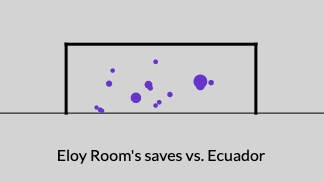
Based on the location of those 15 shots, we’d expect the average goalkeeper to concede 2.27 goals. Room, of course, conceded zero — against a team starting players from Arsenal, Paris Saint-Germain, and Chelsea. Up until the final whistle against Ivory Coast, Curacao somehow still had a shot to qualify for the round of 32.
How they got eliminated: Finished last in Group A
Final grade: D-
They had set plays — and almost nothing else.
All of their goals came from set pieces, 18 of their 34 shots came from set pieces and 1.38 of their 2.37 expected goals came from set pieces. That’s a fine balance for one of the first-time participants without any top-level talent — a team trying to eke out every edge it can. But most of Czechia’s starting XI plays in a top European league.
This is the kind of side that should be making the round of 32 and getting within range of an upset win to boost it into the round of 16. Instead, Czechia finished last in one of the weakest groups in World Cup history.
How they got eliminated: Finished last in Group B
Final grade: F
They came into the tournament as the 95th-ranked team in the Elo ratings — the lowest-rated team in the history of the World Cup. And Qatar leave the tournament ranked 99th.
Sure, they fluked into a draw with Switzerland, but this is the worst team I’ve ever seen participate in this tournament. Qatar are terrible at everything, but especially defending: 10 goals conceded, 72 shots against, 160 touches allowed inside their penalty area.
Qatar spent hundreds of billions of dollars to land the rights to host the 2022 World Cup — they might need to double that if they want to have a competent national team.
How they got eliminated: Finished last in Group L
Final grade: C-
They gave us two of the most boring first halves of the World Cup, and their first two matches featured just 33 total shots — the fewest of any team after two rounds. It almost worked, too?
Panama generated 38 touches inside the opposition penalty area and conceded only 29 against Ghana and Croatia, and I think it was smart of them to drag their games down into the low-event muck of finishing randomness. They didn’t have enough attacking talent to put the ball into the goal.
How they got eliminated: Finished last in Group J
Final grade: C+
They entered the tournament as the 38th-ranked team in projections. They then lost to Austria and Algeria, were eliminated after two matches, and their ranking … stayed the same. Jordan scored in both matches and were tied with 15 minutes left in each one.
They also left a really sweet note — and actual sweets — in the locker room after the game against Algeria. I make the rules here: I’m giving them brownie points.
How they got eliminated: Finished last in Group F
Final grade: F
They lost their opening game 5-1, fired their manager (Sabri Lamouchi), hired a new guy (Herve Renard) who didn’t know the players, and then lost the following game 4-0. Oh, and all that happened before they played the best team in their group, the Netherlands.
It’s not as though Tunisia are some first-time, happy-to-be-here side that qualified only because of the expanded field, either. No, Tunisia won games at each of the previous two World Cups! And they’ve qualified for six of the past eight tournaments! Act like you’ve been there before, guys!
How they got eliminated: Finished last in Group D
Final grade: F
According to manager Vincenzo Montella, “Not every time the team that plays better wins the game. That’s the sport we’re playing. That’s football.” He’s absolutely right — as long as he’s not talking about his team.
Turkiye were unlucky not to score in their first two matches, but they went down early against two teams they were supposedly better than, and then resorted to 27 shots from 25 yards and beyond — six more than any team had attempted across their first two matches since 2014.
A team with Juventus’s Kenan Yildiz and Real Madrid’s Arda Güler, two of the best young creators in the world, has to have a better comeback plan than that.
How they got eliminated: Finished last in Group C
Final grade: C-
Haiti entered the tournament with just a 15% chance of getting out of the group, in a tournament where two-thirds of the teams advance to the knockout rounds. They played well in their opener against Scotland — controlling 61% of the final-third possession and outshooting their opponents 15-9 — but couldn’t turn the control into a goal and lost 1-0.
Sure, they gave Brazil too much space in the next match and lost 3-0, but I’m not sure better tactics would’ve mattered much. They were eliminated before they scored a goal.

