
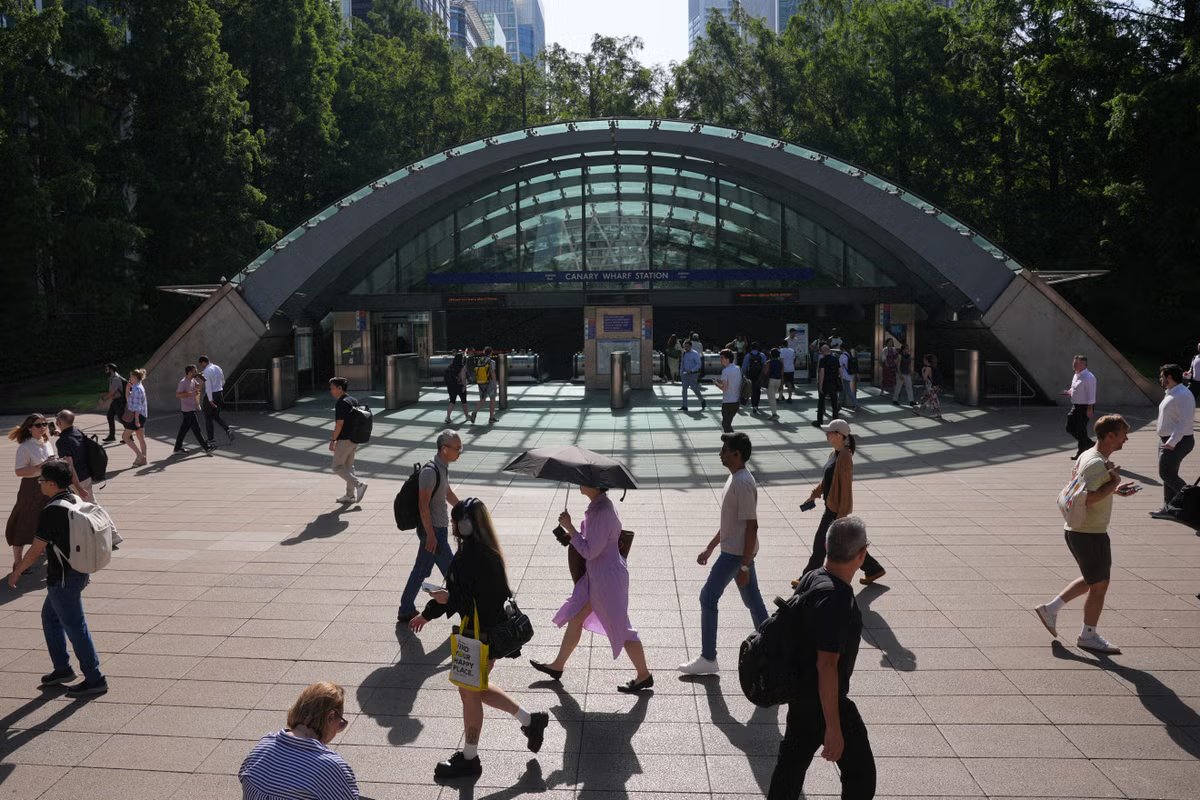
Companies in the UK’s services industry reported the steepest decline in activity last month for three-and-a-half years, as the Iran war drove up business costs and dampened demand, new figures show.
Some hospitality firms were nonetheless boosted by the Fifa World Cup in recent weeks.
The S&P Global UK services PMI survey showed a reading of 48.8 in June, down from 49.3 in May and the lowest since January 2023.
Any reading above 50.0 means the sector is growing while any reading below signals it is contracting.
June’s reading marked the second month in a row that activity has declined, marking a setback for the services industry which had been growing for more than a year before that.
Businesses in the sector, which includes hospitality, leisure, transport and financial and professional services, typically reported lacklustre economic conditions in the UK and a general risk-aversion sentiment among clients linked to the Middle East conflict.
Alongside uncertainties stemming from the war in Iran, political uncertainty in the UK was negatively affecting client confidence, according to the survey.
This led to declining levels of new work received by companies in the service sector for the fourth month in a row.
Sir Keir Starmer announced his resignation last month after several weeks of pressure from Labour MPs, with Andy Burnham seen as the frontrunner to replace him.
Some consumer-facing businesses also pointed to the heatwave in late June as reducing the number of visitors to shops.
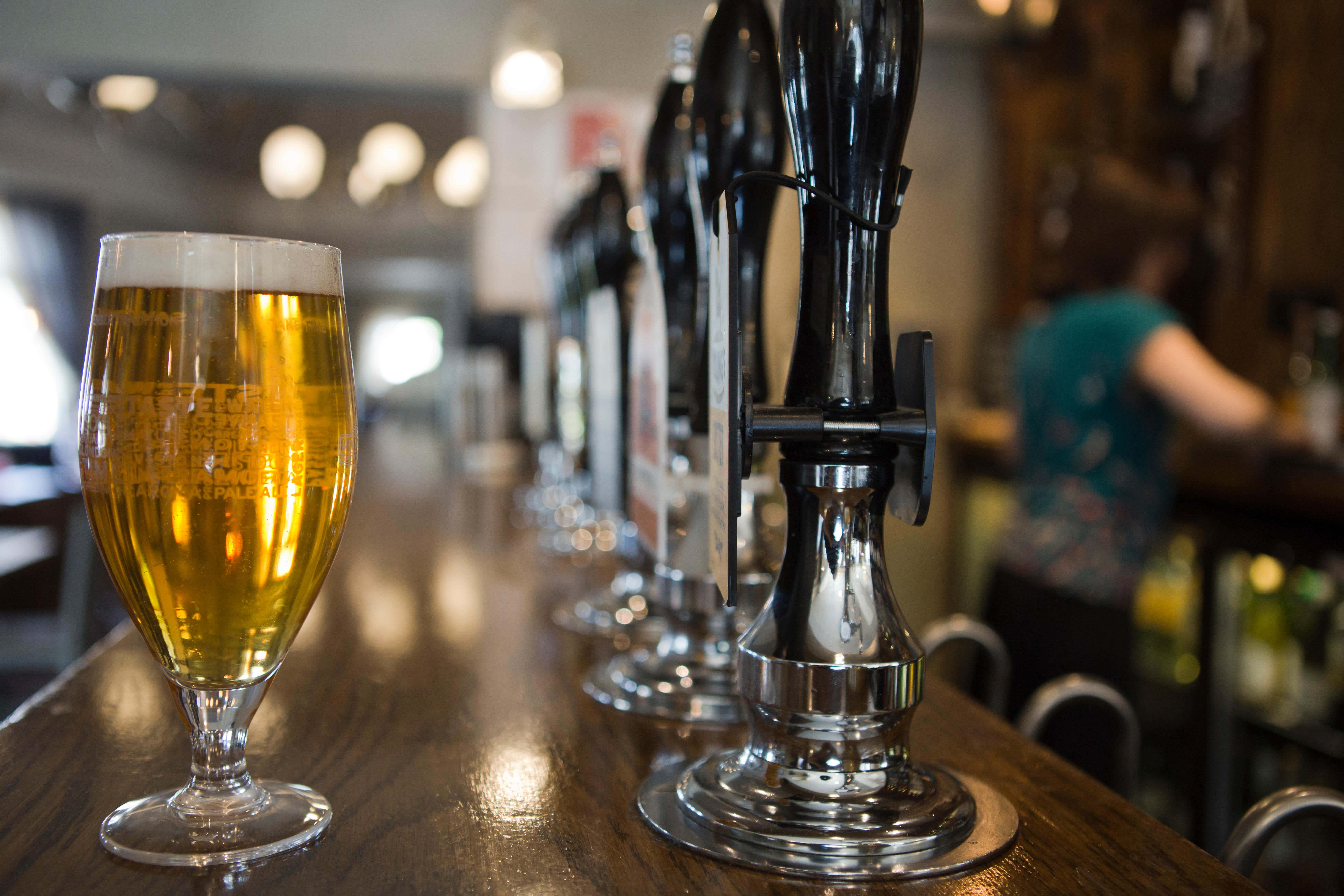
Despite this, some hospitality firms said the Fifa World Cup had boosted demand in recent weeks, as supporters flocked to pubs and venues to watch and celebrate.
Tim Moore, economics director at S&P Global Market Intelligence, said: “June data confirmed a clear loss of momentum for the UK economy during the second quarter of 2026, following a positive start to the year.
“Strong cost pressures, lacklustre demand and business uncertainties arising from the Middle East conflict were the most prominent themes highlighted by service sector firms in June.
“This led to fragile investment sentiment, elevated risk aversion among clients and squeezed consumer budgets, which in turn contributed to the fastest reduction in new work for just over three-and-a half years.”
Job-cutting continued in June, at the fastest rate since February, largely in response to rising business costs, according to the survey.
However, the rate that suppliers were hiking prices slowed last month after accelerating in April in the aftermath of the conflict.
“This was largely due to lower fuel prices, but there were still many reports of suppliers passing on higher transport, wage and raw material costs in June,” Mr Moore said.
Matt Swannell, chief economic adviser to the Item Club, said: “After a strong first quarter, the UK economy has already shown signs that it’s losing momentum, with GDP (gross domestic product) falling by 0.1% in April.
“Despite the recent falls in energy prices, we expect growth to remain weak over the rest of the year.
“Household real income growth is still expected to slow, financial conditions will remain tight and, even with a change in Prime Minister, we think fiscal policy remain restrictive in the near term.”

