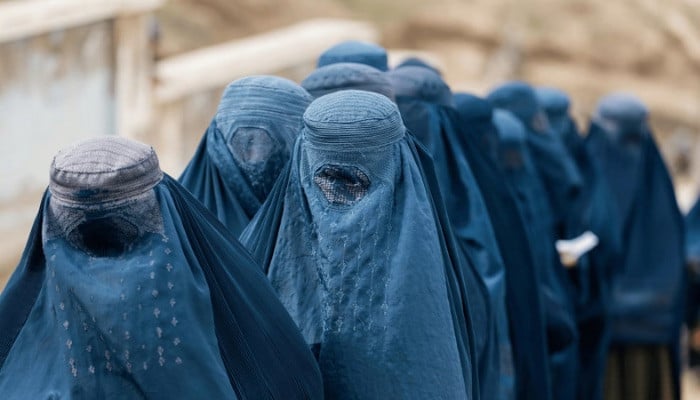
A reported Taliban directive in Afghanistan’s northern Balkh province has drawn international attention.
According to an investigation by Afghan outlet Zan Times and The Guardian, officials and healthcare workers have been instructed to stop using women’s first names in official documents, medical records, and prescriptions.
The generic term “Bibi” is to be used instead. The term means “granny” or “older woman.” Testimonials cited by El Paìs, including from activist Lalah Osmany, say some women are also called “goat” or “cow.”
Erasing women’s names is not new to Afghan society. Women have long appeared in official documents as the “wife” or “daughter” of a male relative, and their names are often omitted from wedding invitations and gravestones.
The policy has dire consequences in medical settings. Patient identification depends on unique identifiers. A hospital in which many patient records and prescriptions share one name, as Osmany describes it, invites misfiled records, confused prescriptions, and treatment errors.
This compounds an already strained system. Male doctors in many provinces have been told not to treat female patients, in some cases even in emergencies, unless a male guardian or female staff are present.
Women have been barred from medical training since December 2024. UNICEF has described a “dual crisis” as trained women health workers are retiring or leaving while no replacements are being trained.
Identity paperwork creates a parallel problem. A 2024 UN report found that women already struggle to obtain civil documents, since a male chaperone is required and some are reluctant to accompany them. Such documents are typically prerequisites for healthcare, education, humanitarian aid, and banking.
Erasing names from records could deepen that exclusion.
Activists frame the policy as the logical next step in a sequence of restrictions that moved from education and employment to movement, speech, and now personhood on paper.
The policy’s significance lies less in its novelty than in its direction. A custom of social convention is being converted into state administration, and administrative erasure is harder to challenge than social habit. Whether the directive spreads will be the signal to watch.