
A federal appeals court on Monday declined to block the Army from detonating five tons of explosives containing lead azide at a munitions plant in Iowa.
President Trump has said the government won’t move forward unless Iowa’s incoming Democratic governor signs off, although technically the governor-elect’s input is not required and he is not yet in office.
Following the ruling, the Army noted Monday night that current Iowa Gov. Kim Reynolds “has given her support to go forward.”
“It is the unanimous judgement of our people — the Army, Navy, EPA, ATF, FBI, DARPA, DoE, CDC, HHS, FEMA and every other agency involved — that the Army should proceed with an extensively mitigated, carefully controlled detonation, which will occur this Wednesday morning, as previously scheduled, based on forecast wind conditions,” Adam Telle, acting secretary of the Army, said.
The court’s ruling came after environmental groups warned the planned detonation could send a plume of toxic lead particles into the surrounding area, and argued the Environmental Protection Agency hadn’t given enough notice or weighed the risks before giving the Army permission to move forward. The government has argued the detonation is necessary because the lead azide has become unstable and could unexpectedly explode.
The 8th Circuit Court of Appeals temporarily blocked the detonation last week to give itself time to issue a longer-lasting ruling. On Monday, the court said the environmental groups that challenged the plan had failed to show they are likely to succeed.
“We are mindful of the very real risks presented by the Army’s planned detonation of the stores of degraded lead azide,” the ruling said. “However, we must acknowledge the realities of the situation: the degraded explosives present a risk of an uncontrolled and unplanned explosion, which would occur without the benefit of the safety measures that the Permit puts in place.”
Mr. Trump said earlier Monday the government would not carry out the detonation, which the Army said over the weekend was scheduled for Wednesday, until the appeals court ruled and unless Democratic Iowa Gov.-elect Rob Sand signed off. Mr. Trump added that government experts felt detonating the material was the best option.
“If [Sand] or the Courts do not agree, we will have no choice but to not proceed with the controlled removal of these hazardous materials, and be forced to hold the incoming Governor responsible for any and all death or destruction caused by this very unfortunate, and longterm, situation,” the president said on social media.
Sand said on social media the Trump administration “should make this decision based on the information they have from the people they brought in to do the job months ago and have been on the ground in Middletown for weeks.”
“Everyday Iowans are entitled to know how Middletown came to this situation, and learn why the administration believes this is the best path forward,” Sand said.
The government has argued that even if the appeals court had stayed its EPA permit, the Army has the legal right to move forward without a permit to “respond to the immediate threat of an uncontrolled explosion.” The Army has warned that it needs to act before cold weather causes lead azide crystals to break down, making a spontaneous explosion more likely.
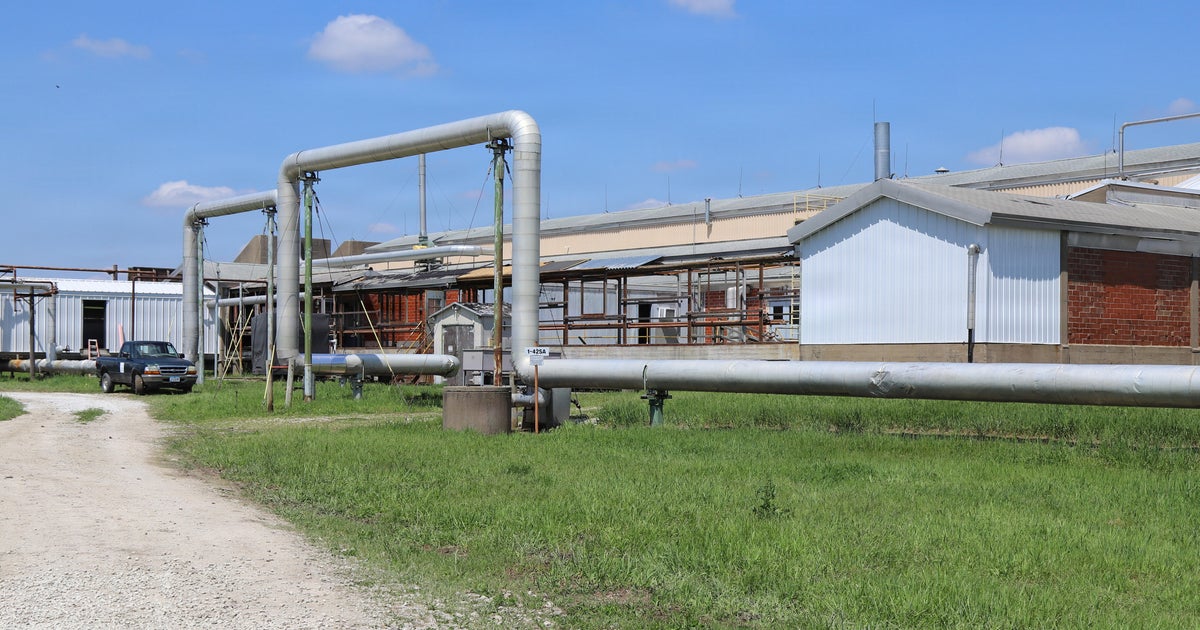
The Army has stored the lead azide in earthen-covered containers for decades at its ammunition plant in Middletown, a small town located near the Mississippi River in southeastern Iowa. The EPA has said the government discovered earlier this year that the material deteriorated over time, risking explosion if it is moved or disturbed.
As part of an earlier detonation plan slated for Friday, the Army asked some Middletown residents to temporarily evacuate their homes for six hours, and said people could expect loud noises, vibrations and a dust plume.
Environmental groups and Iowa and Illinois politicians from both parties criticized the plan, arguing the detonation could lead to widespread lead contamination in both states and pressing the EPA and Army to consider other options.
The Sierra Club and the Iowa Environmental Council asked the federal appeals court to step in and review the EPA’s permit last week, arguing the plan would create “a plume of lead dust that will blanket homes and communities, possibly as far away as 100 miles or more.”
The environmental groups said the EPA failed to fully assess the risks of the detonation or consider alternatives, and argued the Army was operating on an “extraordinarily rushed timeline” that prevented residents from getting enough notice.
On Monday, a panel of three appellate judges sided with the federal government. The court found that the EPA “adequately incorporated safeguards” to mitigate the risks, including barriers and plans for environmental monitoring, and the Army considered a range of alternatives.


