

Want to bookmark your favourite articles and stories to read or reference later? Start your Independent Membership today.
Already a member?
Log in
I wasn’t sure what to expect when I turned up for my first polynucleotides treatment – more commonly known as salmon sperm injections – to rejuvenate my eye area.
I’m never going to go under the knife. But my eyes look tired, and my under-eye skin could do with a bit of rejuvenation. That is what led me to take the more subtle approach used by celebrities, including Jennifer Aniston and Kim Kardashian, who swear by polynucleotides to maintain an understated, youthful under-eye appearance.
In fact, it is the treatment du jour for those who want that coveted, less-is-more approach to skin regeneration. Which is what inspired me to make an appointment with Dr Galyna Selezneva. A former psychiatrist, Dr Selezneva is based in Knightsbridge, at the Lanesborough hotel, and is one of London’s most in-demand aesthetic doctors for non-surgical regenerative procedures.
Polynucleotides are usually derived from salmon DNA fragments and act as a biostimulator that signals to your own skin cells to repair and regenerate, Dr Selezneva tells me, which in turn improves collagen and elastin production, hydration, and overall texture.
But I was taken by surprise when Dr Selezneva announced she would be using sperm from premium trout, not salmon, to achieve the results on me.
“People often associate polynucleotides with salmon,” she said, wielding a collection of super-fine needles – all of which she ended up using on me in what I can only describe as a painless experience (almost unheard of). She explained that one consideration with trout is that trout farming can provide a more controlled environment than salmon, which can help with consistency and traceability of the source material. “What is important to me is the quality and purification of the DNA, the formulation.”
The procedure, which is also used for hair thinning, only took 15 mins, but Dr Selezneva told me that results will happen over the next few months and can last up to a year.
“I see polynucleotides as a treatment for skin quality rather than something that changes the architecture of the face,” said Dr Selezneva. “We are trying to make the skin healthier and better quality, so the result can be very subtle.”
I signed up to two sessions – a few weeks apart – with prices starting at an eye-watering £800 a syringe for the whole eye area (full disclosure: I did not pay for my treatments).

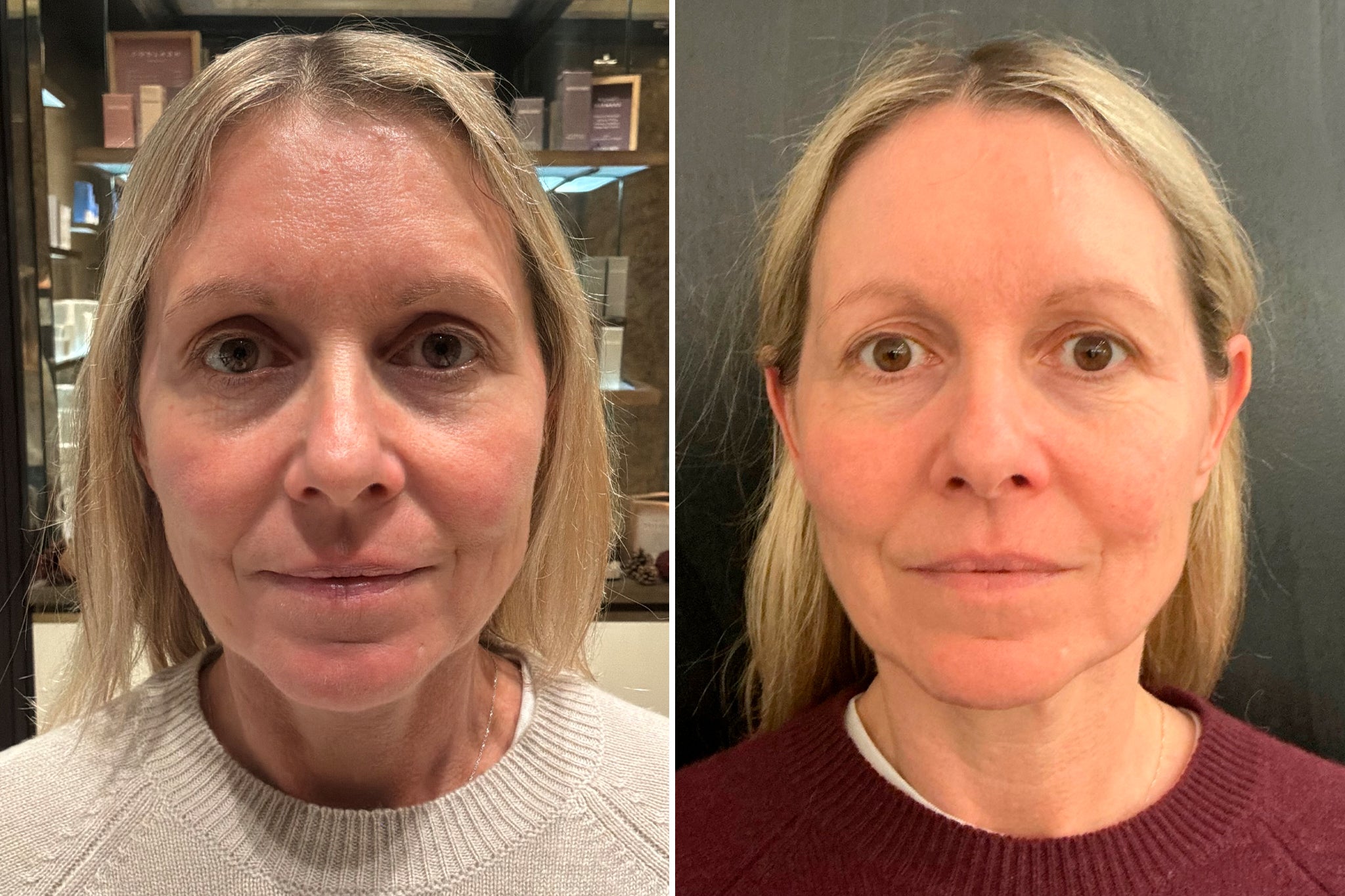
As I left the clinic and caught my reflection in the mirror of a lift, the bags under my eyes looked droopy, red and swollen, like I had been partying non-stop for weeks or been bitten all over my eye area by a mosquito. Luckily, it was only temporary; by the next day, I looked normal.
I don’t know if it’s psychological, but a week later I was convinced I looked better. It was very slight, but my under-eye area looked brighter, as if the skin had been rejuvenated.
The benefits of red light therapy are often the subject of debate, but I have been using my red light wand in an attempt to boost the results. I think it has helped to calm any post-injection irritation, swelling, and mild bruising.
I returned a few weeks later for my second treatment. This time Dr Selezneva used a Korean automated injection system called Dermashine to micro-dose the trout DNA into my eye area.
She used different needles and different injection approaches depending on the area, the quality of the skin and what she was trying to achieve, with the aim of minimising unnecessary trauma and discomfort and making the treatment quicker.
A change in the skin around the eye area is a normal part of ageing. As we lose collagen and elastin, the skin becomes thinner and drier. “There is repeated movement from facial expression, and the supporting tissues underneath the skin also change,” says Dr Selezneva. “Sun exposure and lifestyle add to this.”
Genetics, she says, also influence how we age, but are not the whole story.
“What they can do is improve some of the qualities we associate with younger, healthier skin — better hydration, improved texture and elasticity and a fresher appearance.”
Polynucleotides do not create volume around the eyes, like filler. “But it’s more about maintaining skin quality rather than correcting established ageing,” says Dr Selezneva. “The intention is to improve the quality of the skin itself — its hydration, texture and resilience.”
In my view, polynucleotides are a secret weapon for eye area renewal.
Women don’t necessarily want to look twenty years younger. They want to look like a very good version of themselves”
Dr Galyna Selezneva
Still, it is a costly addition to a skincare routine. Maintenance doses are, on average, every six to nine months – some women have it every three months. I’ve noticed that sleep, good nutrition and multivitamins also seem to work wonders on my under-eye appearance.
The ideal result for any treatment, says Dr Selezneva, is when somebody looks rested, healthy and somehow better — but nobody can quite work out what you have done. And that is how I’d describe the results for me. My eyes look less hollow, and the skin texture looks more hydrated and juicier. I look brighter – and as if I’ve had a mini break even though being a single working mum of two young children is a mad juggle.
It’s often said that a change is as good as a rest – but I’d say having a bit of trout sperm certainly does the trick too.


