
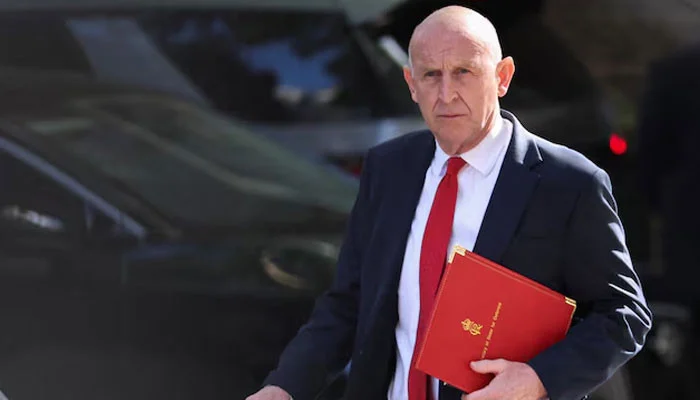
- Healey resigns over delayed, disputed DIP.
- Resignation comes after Streeting quit in May.
- Military leaders call for increasing defence budget.
British defence minister John Healey quit on Thursday in a dispute over military spending, accusing Prime Minister Keir Starmer of failing to commit the government resources that are needed to defend the country at a time of heightened threat.
The unexpected resignation, accompanied with a scathing public letter, compounds the pressure on Starmer when he is facing a likely leadership challenge and exposes the crisis at the heart of government — how it can ramp up defence spending when there is no money to spare.
Britain’s defence and finance ministries have been locked in talks for months over how to meet rising demands to expand military spending, delaying Britain’s Defence Investment Plan (DIP) which was expected to be published last year.
Military leaders have stressed the plan is needed to meet the rising threat level at a time of frequent Russian incursions into British waters, but the government is already struggling to reduce debt while the overall tax burden at its highest level in decades.
The high-profile resignation comes as Starmer struggles to hold onto power, after Wes Streeting resigned as health minister in May and as another challenger, Andy Burnham, attempts to return to frontline politics to launch a leadership bid.
“You have been unable, and the Treasury has been unwilling, to commit the resources that the nation needs to defend the country at this time of rising threats,” Healey said in his letter to Starmer.
Britain’s defence industry has been infuriated over the delay to the plan, saying it cannot invest in long-term programmes.
The UK is contending with the US pivoting away from protecting Europe while at the same time the US-Israeli war with Iran exposed Britain’s lack of military readiness with its navy unable to immediately deploy an advanced warship to the region.
The defence plan is aimed at laying out the funding for military equipment and services to ensure the armed forces move to a state of “warfighting readiness”, and Starmer said on Wednesday it would be published before a Nato summit beginning on July 7.
“Your DIP financial settlement — which I was first given in full on Monday afternoon this week — falls well short of what is required for defence and the country at this dangerous time,” Healey said.
“I am being forced to make decisions that would reduce the readiness of our forces and increase the risk to personnel on operations, and could make the country less safe.”

