
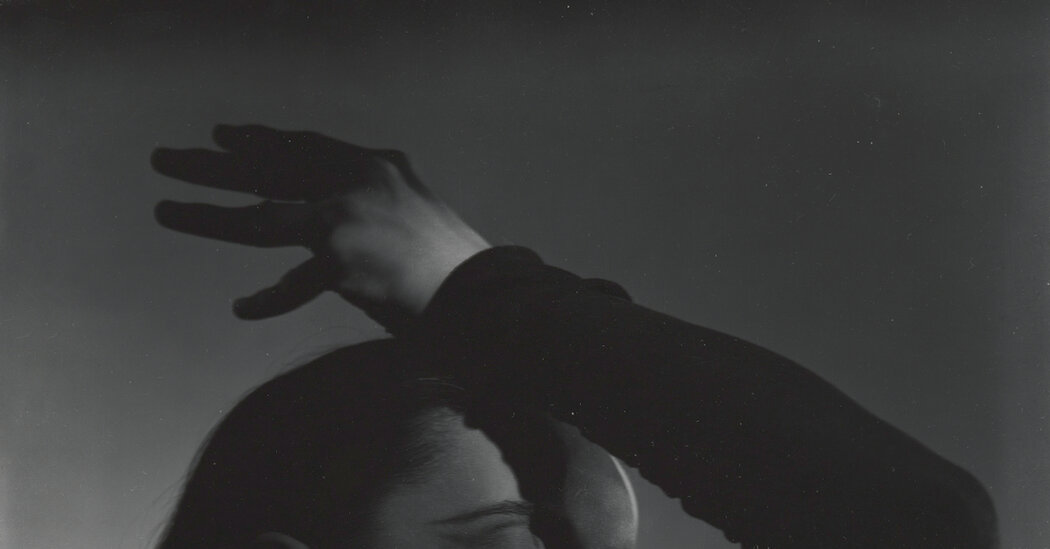
Her influence can be seen in the works of Alvin Ailey, Merce Cunningham and Paul Taylor, three renowned modern dance choreographers who trained under her. Madonna was once a student. (She named her “Madame X” tour for the nickname Graham had given her.) So was Twyla Tharp, who went on to forge her own brilliant path. Graham even lives in the experimental choreographers of today who use somatic methods that connect the mind and body, encouraging internal awareness. Their dances look different, but the impulses are not so far removed.
From that first performance in 1926, her choreography landed like a bomb in a landscape where vaudeville and ballet ruled the day. Graham’s legacy is still going strong, as made evident in the company’s recent season at New York City Center — her company is the oldest dance group in the country — even if newer repertory has been a consistent weak spot.
BORN IN ALLEGHENY, PA., in 1894, Graham spent her teenage years in Santa Barbara, Calif. It was in California that she saw her first dance performance, by Ruth St. Denis, a choreographer whose Orientalist works explored Asian mysticism. Graham went on to study at the Denishawn school, led by St. Denis and her husband, Ted Shawn, who would later make American virility in male dancers his thing.
Graham danced with the Denishawn company, along with two other modern innovators, Doris Humphrey and Charles Weidman. When she left, she performed in the Greenwich Village Follies and taught Denishawn technique. That is until Shawn, as Agnes de Mille wrote in her Graham biography, demanded that she pay $500 for the use of Denishawn exercises and material.
“It was on this small and perverse point — Shawn’s possessiveness and Martha’s penury — that the birth and development of modern dance hinges,” de Mille wrote. (Graham and de Mille had a long, complex friendship.)
Graham was barely making ends meet. Without Denishawn technique she had to create her own. During the 1920s, she conceived her principles of contraction and release, in which movement is initiated from the pelvis. In her technique, tension and release — fueled by the inhalation and exhalation of the breath — drives the body to indisputable strength or excruciating vulnerability.

