
Want to bookmark your favourite articles and stories to read or reference later? Start your Independent Membership today.
Already a member?
Log in
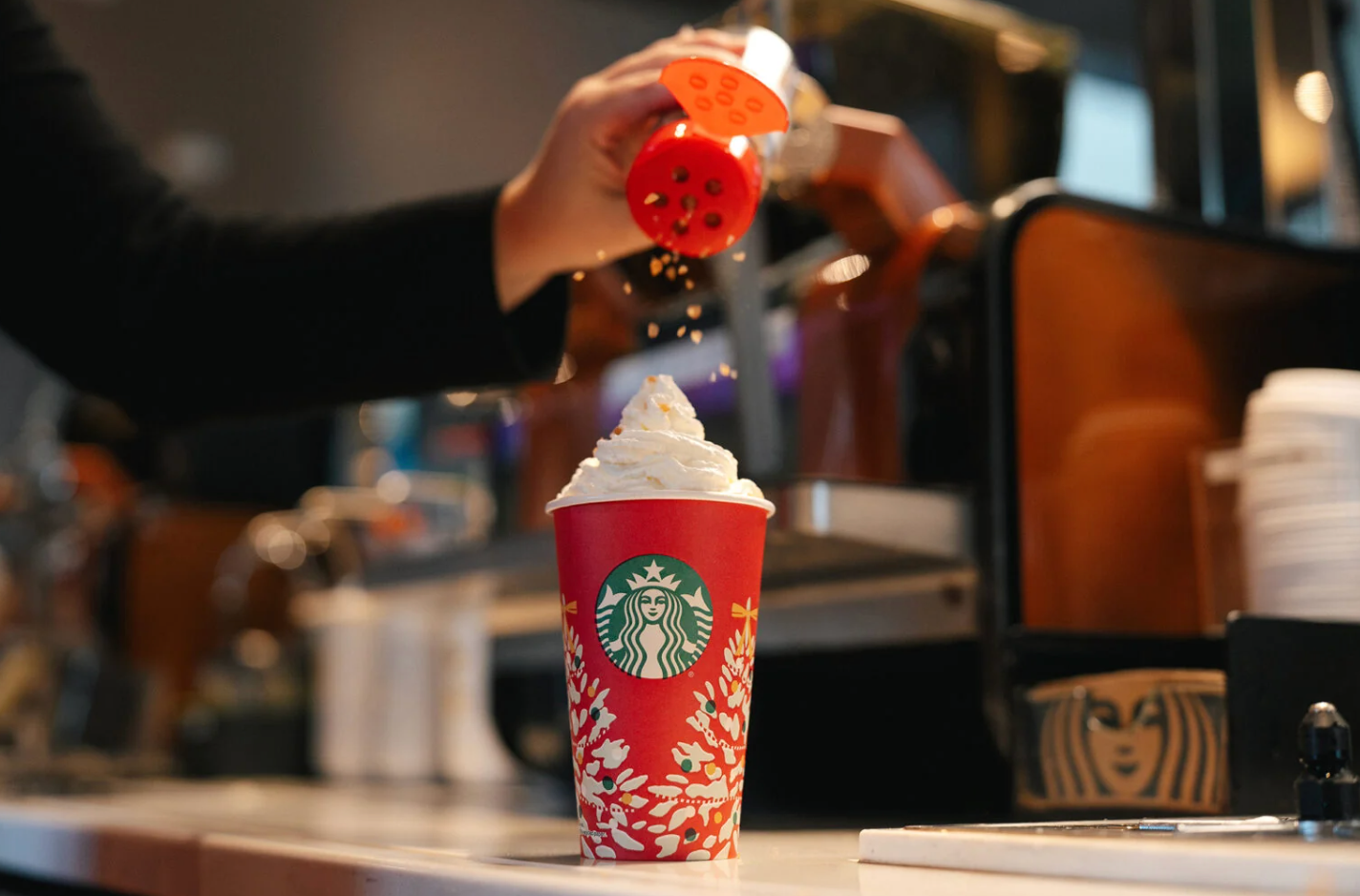
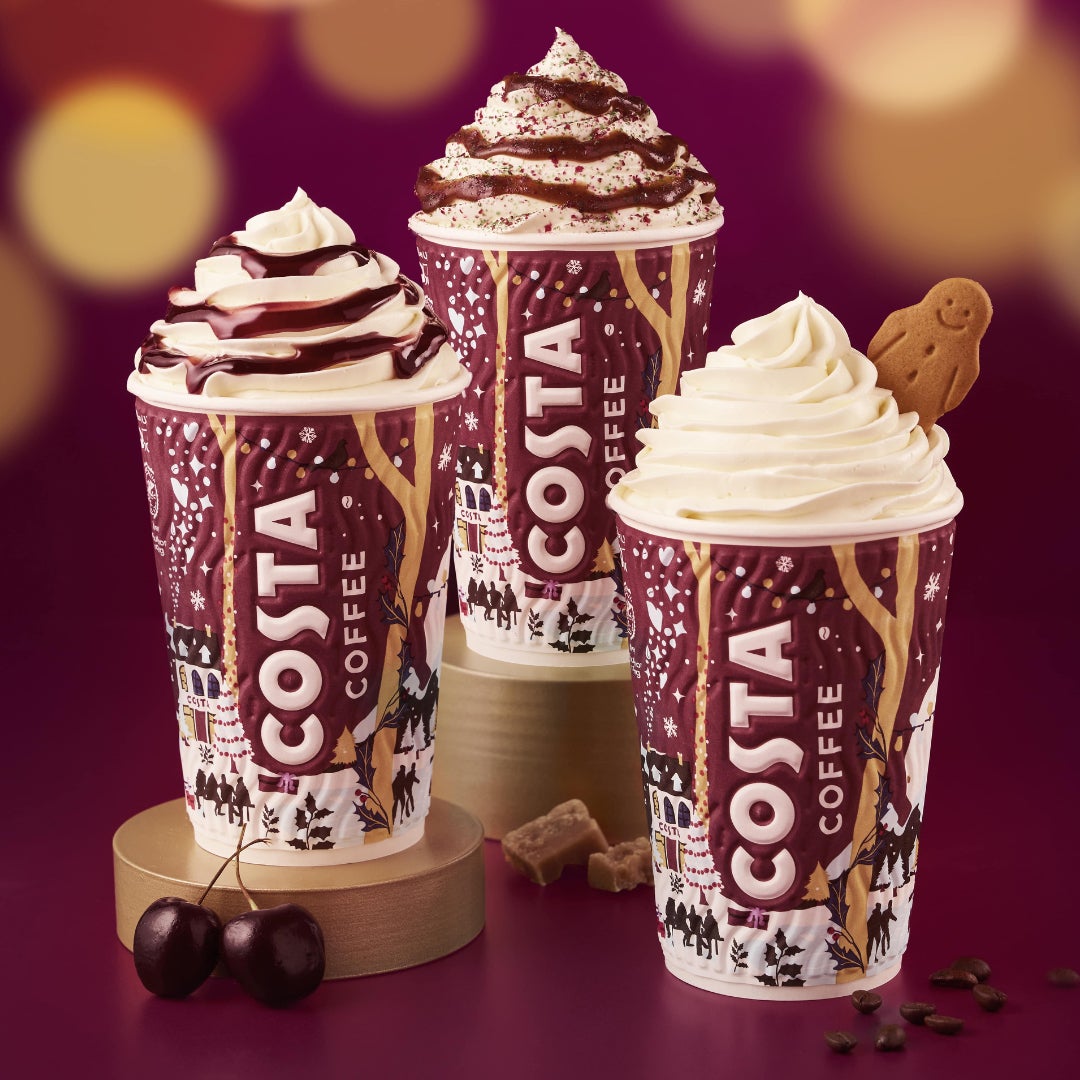
The Christmas coffee has become incredibly big for its boots. Costa, not content with the chocolatiness of their hot chocolate, has put a brownie on top of it. Starbucks is serving peppermint mocha as a frappuccino and white chocolate foam with matcha, which sounds a bit like a tongue twister no one wants to be doing when they’re ordering their daily caffeine. And, in a development that will surely surprise absolutely no one in Britain, you can now buy Terry’s Chocolate Orange in liquid form.
The appeal is obvious. It’s cold. It’s often wet. It’s dark by four in the afternoon. There’s something about clutching a hot drink that tastes a bit like a Quality Street tin that seems like an entirely sensible decision at this time of year.
Festive drinks menus are in full swing at Britain’s high street coffee shops and, not to outdo one another, they are more elaborate than ever. The boring question is which one is the best. The better one is what, exactly, we’re all drinking.
“What I find interesting is how some of these drinks have evolved into something much closer to a dessert, with multiple flavoured syrups, whipped cream, chocolate sauces and increasingly elaborate toppings,” says Rhiannon Lambert, registered nutritionist and founder of Rhitrition. “There’s absolutely nothing wrong with enjoying a dessert, including one in drink form! However, I do think it’s important people are aware of what they’re consuming, particularly when a drink marketed as a coffee can contain significant amounts of sugar and saturated fat.”
It’s not easy to decipher from a glance at the menu on your lunch break either. You might expect a hot chocolate with a brownie on top to be the most indulgent thing in there. It isn’t. Nor is some concoction with gingerbread syrup in it. And if what you’re after is a “lighter” peppermint matcha, it depends entirely on where you buy it.
So I did the hard work for you. Here’s how 10 of this year’s festive drinks stack up, from the lightest to the most indulgent.
Rank | Drink | Calories | Sugar | Sat fat |
1 | Greggs Candy Cane Mint Iced Matcha Latte | 116 | 9.7g | 1.9g |
2 | Caffè Nero Praline Flat White | 125 | 17.8g | 1.7g |
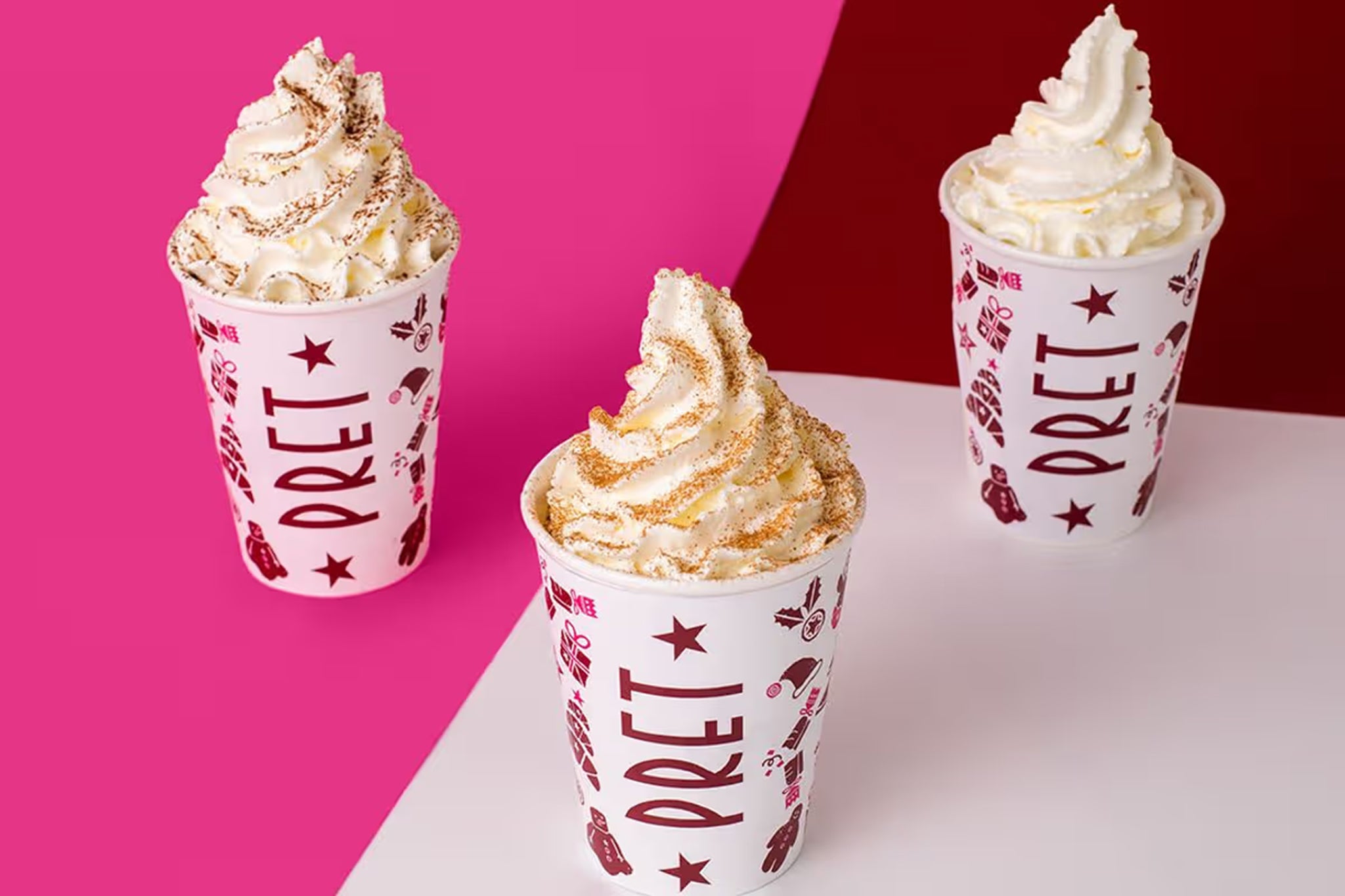
3 | Pret Gingerbread Latte | 184 | 25g | 2.9g |
4 | Costa Gingerbread Iced Matcha | 233 | 24g | 8.5g |
5 | Starbucks Iced Peppermint White Chocolate Matcha | 336 | 38.8g | 10.4g |
6 | Caffè Nero Gingerbread Latte | 361 | 25.9g | 13.8g |
7 | Costa Terry’s Chocolate Orange Hot Chocolate | 366 | 42g | 11g |
8 | Costa Ultimate Yule Brownie Hot Chocolate | 411 | 50g | 12g |
9 | Caffè Nero Salted Caramel and Orange Hot Chocolate | 425 | 40.1g | 14.3g |
10 | Starbucks Peppermint Mocha Frappuccino | 443 | 59g | 12.4g |
At the most indulgent end of our ranking, and therefore the losing end, is Starbucks’ Peppermint Mocha Frappuccino, below a drink that literally comes with a brownie and another with salted caramel. It had the most calories and total sugar of anything we looked at, though not the most saturated fat. The winner of that coveted award goes to Caffè Nero with its Salted Caramel and Orange Hot Chocolate.
Yes, even our own metrics can’t be trusted, let alone theirs. A drink can be highest in calories and lowest in sugar, and vice versa. “Calories, sugar and saturated fat all tell us something different, and a drink that’s lower in one isn’t necessarily lower in the others.”
Sugar, too, isn’t as simple as it seems. The NHS recommends no more than 30g a day for adults. But that applies to “free sugars” – those added by manufacturers or naturally present in honey, syrups and fruit juice.
The grams next to Starbucks’ festive frappuccino, for example, represent “total sugars”, which may include the lactose naturally occurring in milk, among other things. “While we can’t determine the exact free sugar content of these drinks, flavoured syrups, chocolate sauces and sweetened toppings will very likely be contributing significant amounts,” Lambert says.
The confusion only compounds the more you delve into the list. A gingerbread latte sounds like it should be much the same wherever you get it. It isn’t. Caffè Nero’s has almost twice the calories and nearly five times the saturated fat of Pret’s, but there’s less than a gram of total sugar between them. “This demonstrates how much the nutritional composition can vary between drinks that sound very similar,” says Lambert. “It also highlights why it’s important to look beyond sugar alone when comparing these drinks, as saturated fat is another key consideration. Regularly consuming too much can raise LDL cholesterol levels, an established risk factor for cardiovascular disease.”
The comparison holds up at the chocolate counter too. Most of us would be hard-pressed to explain the difference between a chocolate orange hot chocolate and a hot chocolate with a chocolate orange on the label. Yet Costa’s Terry’s version has more than twice the saturated fat of Pret’s Orange Hot Chocolate, while they’re virtually level on sugar.
If the winner of this silly game surprises you, that doesn’t surprise me. Greggs, home of the nation’s favourite mediocre sausage roll and not somewhere one generally veers towards for restraint, has the Candy Cane Mint Iced Matcha, with the fewest calories and the least amount of sugar of all the festive drinks we reviewed. Of course, it also has the Candy Cane Mint Hot Chocolate, with 163 more calories and 22.3g more sugar, for anyone who wants to pooh pooh nutritional values.
“Caffè Nero’s Praline Flat White is another option at 125 calories,” says Lambert, “although its 17.8g of sugar is a useful reminder that lower calories don’t necessarily mean lower sugar.” It’s also an 8oz cup. Some of what you’re seeing in that column is how much liquid there actually is.
What if you’d quite like that one with the brownie anyway? “I think the most important thing to emphasise is that you don’t necessarily need to change your order at all!” says Lambert. If you do want to cut back, her first suggestion is to opt for a smaller serving, arguably the only adjustment you can make that doesn’t require a discussion about how many pumps of sugar are in your drink at eight in the morning.
You could also leave off the toppings to avoid incurring too much seasonal affective disorder. “It’s worth considering the extras, such as whipped cream, chocolate drizzle and additional toppings. These can contribute extra sugar and saturated fat, so choosing to leave them off or ask for a little less can make a difference.”
Neither Lambert nor I are suggesting that purging your festive sins means going all the way from peppermint chocolate to an Americano, even if it might make you feel smug. Apparently, even temperature plays a role. Starbucks’ hot Peppermint Mocha has fewer calories than the frozen one. The Praline Flat White at Nero, which is smaller, is a more virtuous form of indulgence than the Gingerbread Latte. Neither is an imitation of the one you’re giving up, but both are suitably festive to feel accomplished in your December drink choice.
Even your choice of milk isn’t a shortcut or a saviour. “Milk choice can also influence the nutritional content of a drink, although switching to a plant-based alternative doesn’t automatically make it healthier,” Lambert says. The rule is simple: if you want less sugar or fat, choose a less sugary or fatty milk. Milks “made with dairy milk or fortified alternatives can contribute valuable nutrients, including protein, calcium, iodine and vitamin B12, all of which play important roles in maintaining health.”
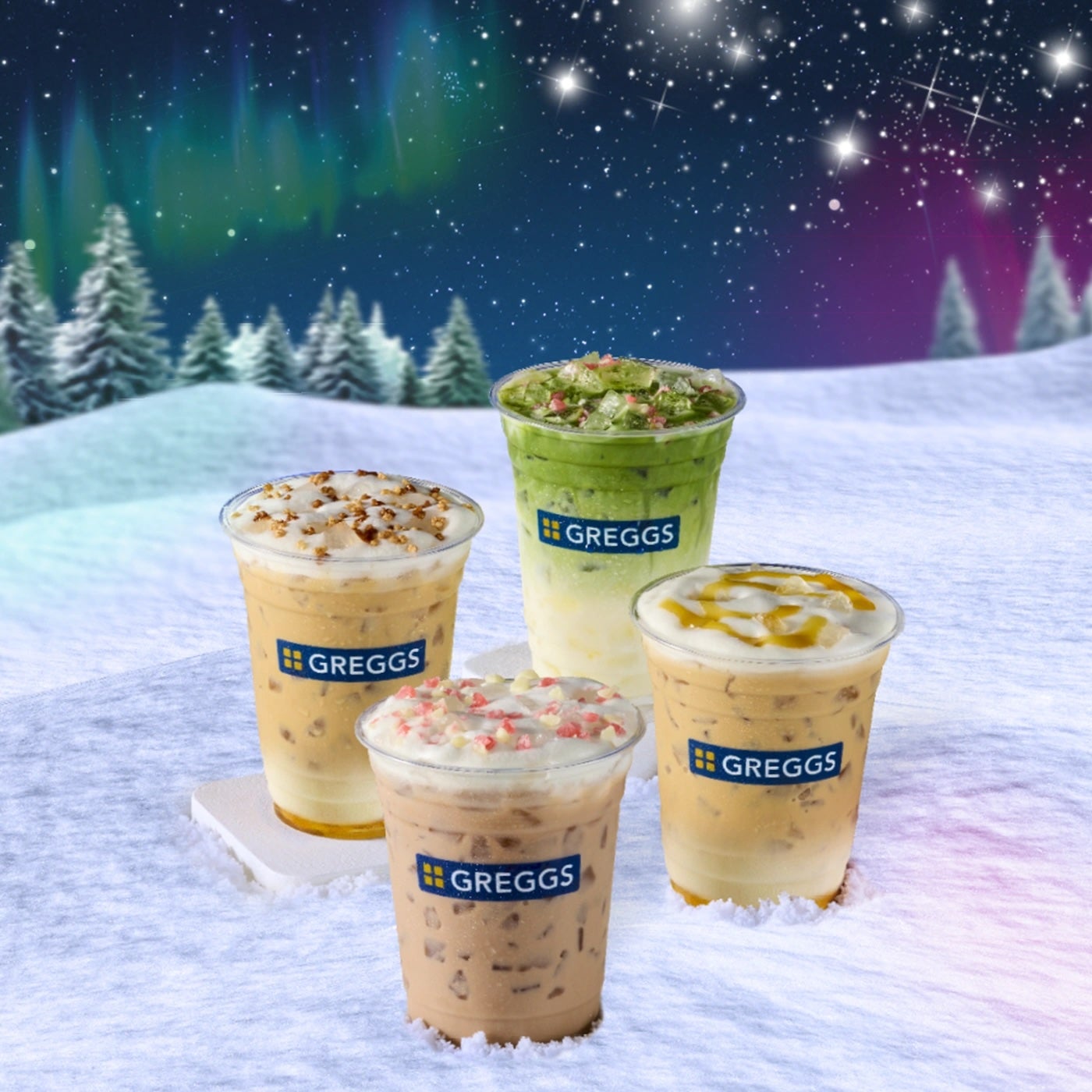
Neither is matcha, despite its good press. “Matcha is a particularly interesting example because it’s developed something of a ‘health halo’ in recent years,” says Lambert. It does contain polyphenols, though their specific benefits are not proven. And, at the end of the day, it’s more to do with everything else poured on top of it. There’s four times as much sugar in Starbucks’ peppermint matcha as there is in the Greggs equivalent. Costa’s gingerbread version sits somewhere between them in terms of sugar, but has substantially more fat than Greggs. “The overall recipe, serving size and additional ingredients all matter,” says Lambert. Green is a colour, not a nutritional breakdown.
If reading all this is making you queasy, it’s worth considering how drinking it might make you feel. “Research suggests that energy consumed in liquid form may be less satiating than an equivalent amount consumed as a solid food, although this depends on the drink’s protein and fat content,” says Lambert. Which is something calories, or how generous the barista is with the squirty cream, can’t tell you.
The better question is whether one of these festive drinks is a one-off Christmas treat or a Monday-Friday December routine. Consuming too much free sugar can increase the risk of tooth decay. “When something is presented as an everyday coffee, we might not necessarily consider its nutritional composition in the same way we would a slice of cake or another dessert,” Lambert says. A decent rule of thumb is to buy the one you actually want when you fancy it, and give the numbers a closer look if it’s becoming your go-to order.
All that being said, even nutritionists like Lambert like this time of year. “Christmas is a time for enjoying seasonal flavours, and food is about so much more than nutrients,” she says. “It’s also about tradition, enjoyment, social connection and making memories.” She likes a chai latte for the warming spices and, if it’s hot chocolate, would rather have a dark one – Gail’s does a 70 per cent version. “I’ve just seen that Gail’s has launched a new White Chocolate Matcha for Christmas, and it genuinely looks like the best thing in the world!
“Sometimes something can just be delicious, and that’s reason enough.”

