
Employing the crying laughing emoji (officially named Face with Tears of Joy) with unabashed enthusiasm.
Telling a perfect stranger you like their shoes.
Gasping with delight at the sight of livestock roaming near the roadside.
Super cringe… right?
A verb that once described the action of drawing back or recoiling in fear, disgust or pain has since morphed into a standalone adjective (or noun) used to describe anything that causes secondhand embarrassment or comes across as awkward.
But to whom? Who exactly is so deeply troubled by these random acts of mirth? Maybe I’ve been too busy sorting aDOT and YAC (yikes) to notice, but has a single person or, perhaps, a coalition of judges been appointed as the Official Arbiters of Taste? Given how much “cringe” is referenced, I imagine there must exist a chronically online task force set up to systematically stamp out any whimsy, frivolity and/or earnestness. After all, the only thing worse than being a try-hard is to actually try hard at something.
I don’t clap when the plane lands. But two months ago, I sat next to a young woman who did her best “When Harry Met Sally” impression and let out a boisterous, “OH, THANK GOD!” the second we touched down at O’Hare. My dated movie reference aside, her outburst genuinely amused me. Was it cringe? Sure. Still, I bet the flight crew was deeply touched when she personally thanked every single one of them for helping her overcome a crippling fear of flying. Have we become so afraid of looking foolish that we’ve stopped expressing delight… or worse, stopped feeling it altogether?
No thanks. If being cringe means posting overhead shots of the best ramen in Connecticut, going all-in on “Shout” at a wedding, or hyping up my best friend at an open mic night, then crown me the Queen of Cringe. To that point, you can also consider me a Cringe Commish, because I will always cruise down Narrative Street, I will never stop tallying RB touch totals, and I will forever applaud an analyst with the onions to buck the consensus (even if they miss).
With six teams on bye, we’re all making uncomfortable calls this week. Whether it means rolling with Brock Purdy in an unsettling matchup, holding our noses while we throw a dart at a Broncos receiver, or clenching our cheeks while streaming Mike Gesicki, our choices will probably elicit some side-eyes. And ultimately, that’s a good thing. Because it means we’re doing the work: folding in the facts and checking our feelings.
Start and sits for Week 11

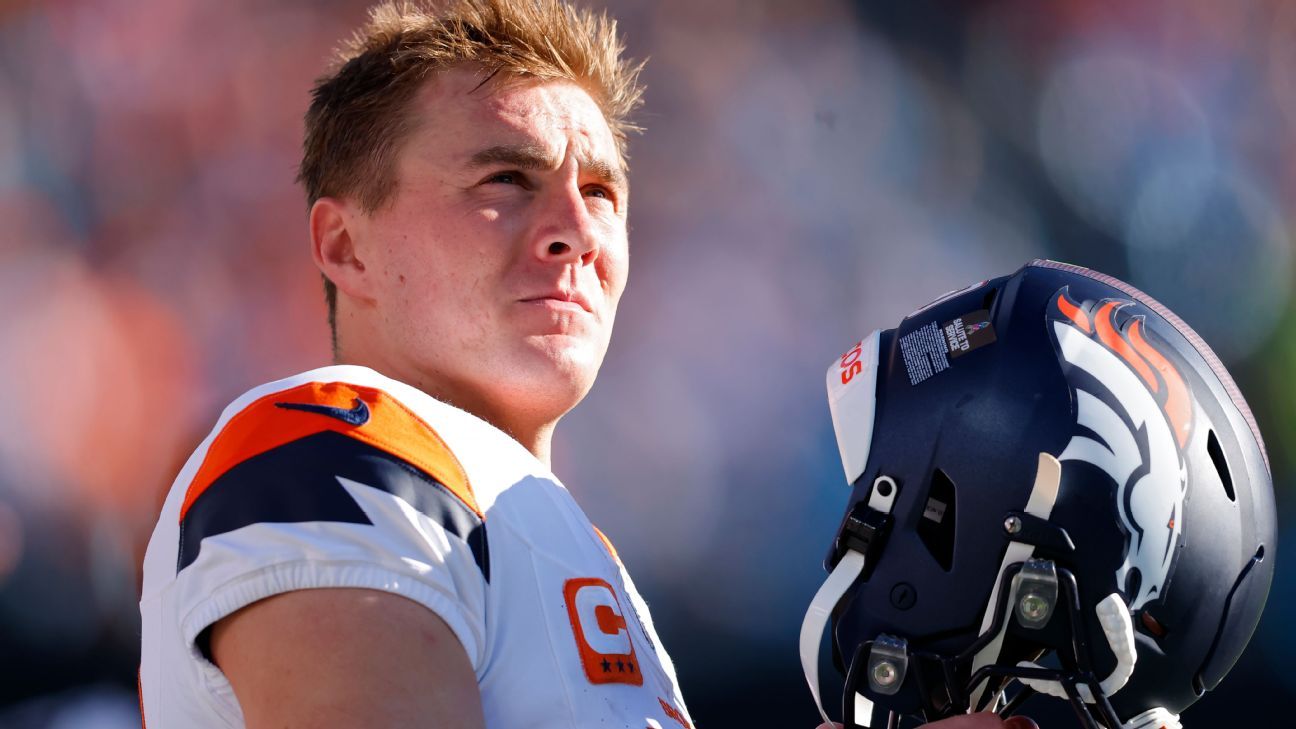
Blithely indifferent to online critiques, Sean Payton brashly regained control of the Broncos’ offensive playcalling duties in Week 5. Since then, the offense has become more balanced, Nix’s production has found more consistency and Denver has ripped off a five-game win streak.
The numbers suggest this surge is more than just a lucky stretch. Over his past three outings, Nix has posted three of his four highest fantasy point and yardage totals of the season. He has additionally recorded three straight multi-TD efforts, a notable improvement after tallying just seven touchdowns across his previous six games. With the offense humming, Nix is primed to keep crushing in Week 11.
The matchup certainly helps. Coming off a bye, Nix will host a beleaguered Raiders defense that has allowed the fourth-most fantasy points per game to quarterbacks (19.9). Aside from Justin Herbert, every QB to face Las Vegas has scored at least 15 fantasy points, including Drew Lock, Malik Willis and Geno Smith. That vulnerability stems from a one-dimensional pass rush and poor red zone defense, as the Raiders generate just 10.5 pressures per game (tied for third fewest in the NFL) and have surrendered a league-worst 22 passing touchdowns (tied with the Cardinals). With plenty of time to throw against a leaky secondary, Nix is firmly locked in as a top-10 fantasy play at the position this weekend.

Currently the virtual game’s RB13 in fantasy points per game (16.7), Warren has emerged as a fantasy mainstay, buoyed by a versatile skill set. Still, his recent usage and subsequent slip in production require a deeper examination. His 38% snap rate last week marked his second-lowest share of the season and continued an alarming downward trend that has seen his playing time drop every week since Rico Dowdle‘s return in Week 6 (74%, 62%, 58%, 38%). That reduced workload resulted in his first game with single-digit carries (7), his first effort under 70 scrimmage yards (41) and his first outing without an explosive run last Sunday. Worse yet, Pittsburgh lost LG Mason McCormick to an ankle injury, and Michael Pittman Jr.’s return to the lineup threatens to siphon targets away from the backfield.
The upcoming matchup against Philadelphia only compounds these concerns. The Eagles’ defense has given up the eighth-fewest fantasy points per game to running backs (20.0), holding all but seven to fewer than 10 fantasy points and permitting only three to clear 15. While Philadelphia faces the second-most rushing attempts in the league, the Eagles remain in the middle of the pack in yards allowed per carry. Additionally, Vic Fangio’s unit has successfully quieted backfields through the air, inviting the third-fewest running back targets per game (4.3) while surrendering the fewest receptions per game (3.1), the second-fewest receiving yards per game (17.4) and the fewest yards after catch per reception to the position. Outside of Kyren Williams, no running back has caught more than two passes against Philadelphia this season, with all other backs combining for just 18 catches and 90 yards. Managers should consider Warren a hopeful RB2 in a less-than-ideal situation this weekend.

No shame in highlighting a revenge game! Pollard rolls into Dallas with a gorgeous amount of momentum for a matchup against his old team, having gone over 23 fantasy points in three consecutive efforts. It’s a streak he had never managed in back-to-back games prior to this stretch. This recent surge has been fueled by a massive spike in scoring, as he has found the end zone six times over his past three outings after tallying just a single touchdown across his first six games. He has also remained heavily involved as a pass catcher, highlighted by a career-high eight receptions last week.
A trip to Arlington figures to keep things rolling, as the Cowboys have been the single most generous defense to running backs this season (29.3 fantasy points per game). Through 10 games, Dallas has surrendered 11 or more fantasy points to 12 backs, including three who cleared the 30-point mark. Dallas’ run defense has been regularly bullied, allowing a league-worst 154 rushing yards per game and 5.2 yards per carry while ranking 27th or worse in both average yards before contact and yards after contact. Further working in Pollard’s favor is Dallas’ generosity to RBs through the air, having given up the seventh-most receiving yards per game, the fifth-most yards per reception and tying for the most receiving touchdowns allowed to the position. Given his multifaceted usage and a fantastically exploitable matchup, Pollard carries locked-in RB1 appeal for Week 11.

There’s no sugarcoating it: Nabers’ production has slumped with J.J. McCarthy at the helm. With the receiver posting nearly identical stat lines and fewer than 10 fantasy points in back-to-back outings, Nabers’ overall profile appears tarnished. There still, however, remains room for optimism. Even with trade deadline additions Jessie Bates III and Jordan Davis set to debut for Jacksonville, it will take time for the new pieces to jell, and Davis’ interior presence should funnel New York’s offense toward the pass.
Jacksonville has allowed the 14th-most fantasy points (32.6) and the fifth-most receiving yards per game (170.2) to wideouts. For context, 12 players at the position have managed 10 or more fantasy points when facing the Jaguars defense. More specifically, Jacksonville has surrendered the sixth-most receiving yards and seventh-most yards after the catch to perimeter receivers while tying for the fewest touchdowns (2) and fourth-fewest targets allowed to the slot. This alignment split favors Nabers over Isaiah Likely, who has logged nearly three times as many slot snaps (270 to 91) and hauled in all four of his end zone scores from the interior.
Speaking of Likely, he and Nabers are tied for the team lead in end zone targets, with six apiece. Nabers, however, has scored on just one of those looks, while Likely has converted four. As much of a gut punch as that may be, the gap suggests a positive touchdown regression ahead for Nabers. This scoring upside makes him a strong top-12 fantasy wide receiver for Week 11. With favorable road matchups against Detroit and Dallas during the final two weeks of the fantasy playoffs, his long-term outlook is even better. Hold on!

Jordyn Tyson‘s upward trajectory was mulled and predicted in this column last week. His ascent admittedly occurred at an unforeseen clip, leaving Olave investors understandably panicked. No need to ring the alarm bells just yet. The vet excels at winning downfield, having recorded five catches of 33 or more yards (only Jaxon Smith-Njigba, Christian Watson, Matthew Golden and DeMario Douglas have more). In his first game alongside an active Tyson (against the Browns), Olave posted a massive 18.9 aDOT, his second-highest mark in any contest over the past three seasons. Rather than cannibalizing his role, Tyson’s presence (5.7 aDOT) offers a stark contrast to Olave’s 12.7 season average, allowing the veteran to operate as a higher upside option.
Interestingly, the only game over the past three seasons in which Olave logged a deeper target profile came against the Bears in Week 7 of 2025 (19.7 aDOT), a contest in which the Saints’ No. 1 wideout erupted for five catches, 98 yards and two touchdowns. That sets the stage nicely for this week’s trip to Soldier Field. While Chicago has surrendered the ninth-fewest fantasy points per game to wide receivers (29.4), the secondary remains vulnerable to explosive plays. In fact, wideouts have generated the fifth-deepest aDOT against the Bears, resulting in the second-most yards per reception allowed (16.0) and the third-most completions of 40-plus yards (12). Furthermore, four WRs have eclipsed the 100-yard mark against Dennis Allen’s unit. Likely chasing points with his team as 11.5-point road dogs, Kellen Moore — who is well-acquainted with Allen’s schemes — should lean heavily on Olave’s vertical appeal, positioning the pass catcher to bounce back into top-15 positional fantasy territory.

Diggs undeniably paced the Commanders in targets at the Meadowlands last Thursday night. A detailed review of the numbers, however, indicates that he’s not the copy-and-paste replacement for Terry McLaurin that many had anticipated. Since Week 8, Diggs has posted a 62% snap rate, trailing Antonio Williams (84%) by a wide margin. Diggs also ranks third among Washington pass catchers with 81 routes run over that three-game stretch, sitting behind both Williams (94) and Chig Okonkwo (84). Still, Diggs is primed for another strong primetime outing in a projected shootout versus Cincinnati. The matchup features a 53.5-point projected game total, which is the second-highest of the slate and tied for the highest in a game for either team this season.
On paper, Cincinnati appears tough against receivers, allowing the 10th-fewest fantasy points per game (29.7), the 10th-lowest catch rate and the eighth-fewest receiving yards per game to the position. Exactly 12 WRs have reached 16 or more fantasy points — with Zay Flowers being the lone receiver to hit 80 receiving yards — when facing Al Golden’s improved unit.
However, those numbers are heavily skewed by Cincy’s dominance on the perimeter, where the Bengals allow the second-fewest receiving yards and rank inside the bottom five in targets, receptions and catch rate allowed to boundary receivers. Inside, there exists a different story, as the Bengals surrender top-10 marks in targets, receptions, yards, yards per reception, yards after the catch and YAC per reception to the slot. That vulnerability gives Diggs a clear path to WR2 fantasy production in a potentially high-scoring game, even if his long-term role remains capped.

In a cringe-inspired column, who better to end on than Loveland? The takeoff was rough, but since Week 6 the second-year tight end has averaged 14.8 fantasy points per game (TE4). That surge has been backed by reliable volume and steady yardage, as Loveland has logged at least 50 receiving yards in four straight games. He’s also drawn five or more targets in six consecutive outings, a streak bested this season only by Trey McBride, George Kittle, Brock Bowers and Tyler Warren. Zooming out to Week 4, he ranks sixth among tight ends in receiving yards (329) and is tied for fifth in red zone targets (7).
That steady role isn’t going anywhere with fellow tight end Cole Kmet on injured reserve. On top of that, Ben Johnson has had an entire bye week to cook up fresh designs for his premier tight end, and the matchup against New Orleans should only amplify the results. The Saints defense has surrendered the seventh-most fantasy points per game (16.0). Additionally, New Orleans has invited the seventh-most targets to tight ends, while giving up the fifth-most yards after catch per reception and the second-most first downs to the position. Afforded high-end volume, creative scheming and an exploitable matchup, Loveland carries clear top-five positional appeal this week.


