
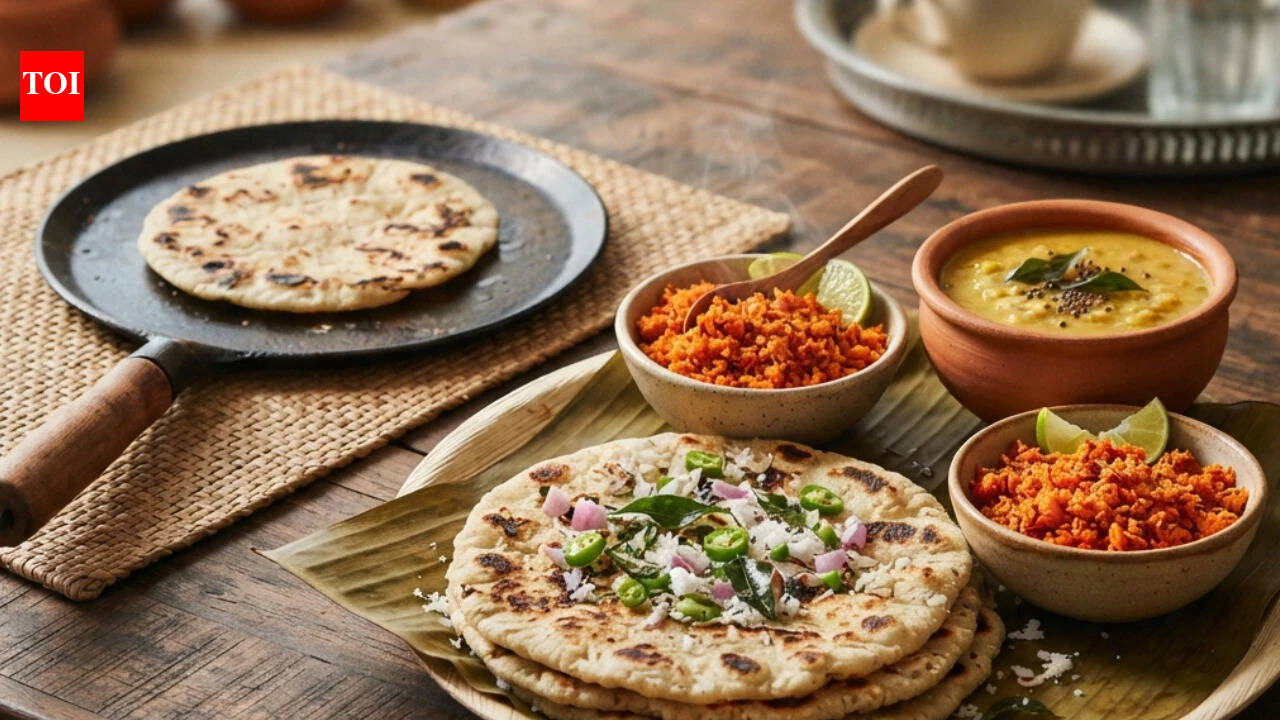
A flatbread does not always have to be made with wheat flour and water. In Sri Lanka, one traditional favourite brings coconut straight into the dough. Called Pol Roti, this rustic flatbread has a nutty flavour, a slightly crisp outside and a soft, chewy centre.Unlike India’s everyday chapati, which usually plays a supporting role alongside dal, vegetables or curry, Pol Roti can easily become the highlight of a meal. It is particularly loved with spicy coconut sambol, making every bite a mix of warmth, crunch and heat.
What exactly is Sri Lankan Pol Roti ?
In Sinhala, one of Sri Lanka’s official languages, pol means coconut, and that’s exactly what makes this flatbread what it is. Freshly grated coconut goes into the dough along with flour, water and salt. Plenty of cooks also add chopped onion, green chilli and curry leaves.The coconut adds a mild sweetness and richness, and it makes the roti denser and thicker than an ordinary chapati.
Why does it taste different from Indian roti?
The biggest difference lies in what goes into the dough. Indian chapati usually relies on whole-wheat flour, water and sometimes salt. Its mild flavour allows curries and vegetables to take centre stage.Pol Roti, however, does not need to wait for its accompaniment to become interesting. Grated coconut adds moisture, texture and a mildly sweet, nutty taste. Onions, chillies and curry leaves can make it even more flavourful.Its texture is also noticeably different. It is thicker, denser and slightly chewy rather than thin and flexible.
Why is spicy sambol its favourite companion?
One of the most loved ways to eat Pol Roti is with pol sambol, a fiery Sri Lankan coconut relish.Made using grated coconut, red chillies, lime juice, salt and often onion, pol sambol brings a sharp, spicy and tangy flavour to the plate.Another accompaniment is lunu miris, a hot chilli and onion relish. Pol Roti can also be enjoyed with dhal curry, meat curry or simply salted butter.The combination works because the mild sweetness of coconut balances the heat and sharpness of the relishes.
A different relationship with everyday food
Indian roti and Sri Lankan Pol Roti reflect different approaches to a familiar staple. One keeps the bread relatively neutral, while the other builds flavour into the bread itself.Pol Roti is commonly enjoyed for breakfast or as part of a main meal. Its coconut content makes it filling, while its accompaniments add layers of flavour.Neither flatbread needs to replace the other. They simply show how two neighbouring food cultures have given everyday flour-based cooking their own identities.Disclaimer: Traditional recipes and preparation methods can vary across Sri Lankan households and regions. The ingredients and accompaniments mentioned here represent commonly found versions of Pol Roti.


