
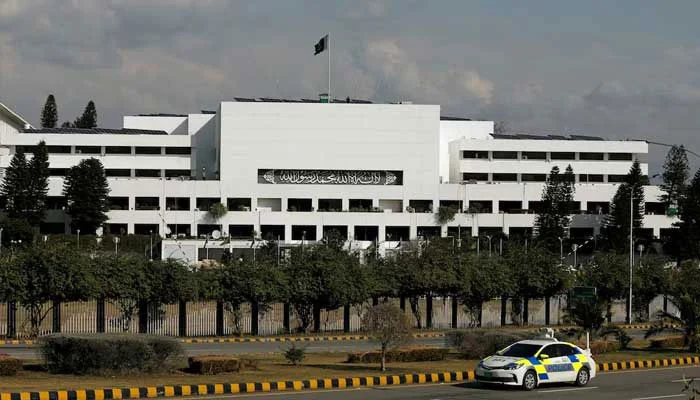
The 18th Constitutional Amendment was one of the most consequential democratic reforms in Pakistan’s constitutional history. By devolving 17 major subjects from the federation to the provinces, it sought to correct decades of over-centralisation and strengthen the federation through the principle of subsidiarity: that governance should operate at the lowest effective level closest to citizens.
The intent was both noble and necessary. Pakistan’s federal structure required strengthening, and provinces needed greater ownership of development priorities, public services, and governance responsibilities. Yet, more than fifteen years later, an honest assessment is essential.
Halfway devolution
Pakistan successfully devolved authority from Islamabad to the provinces, but meaningful devolution largely stopped at the provincial capitals. Instead of decentralising power further toward districts, municipalities, and communities, provinces retained political, fiscal, and administrative authority within highly centralised structures. In effect, Pakistan replaced one centralised system with four additional centralised systems. This has created a profound contradiction: Pakistan decentralised upward to provinces, but not downward to people.
Today, education, health, municipal services, agriculture extension, water management, and local infrastructure — for remote districts, to the extent of the appointment of Naib Qasids — are still controlled from provincial secretariats in Lahore, Karachi, Peshawar, and Quetta. District governments either do not exist in any meaningful form or operate weakly, deprived of fiscal authority, administrative autonomy, and institutional continuity.
Provincial bureaucracies often justify this centralisation by arguing that district governments lack technical expertise, financial discipline, or institutional capacity. But this becomes a circular trap. Capacity cannot emerge without responsibility and continuity. No institution becomes competent without authority, practice, and accountability over time.
The consequences are visible across Pakistan: slow service delivery, weak accountability, administrative inefficiency, urban decay, regional disparities, and rising public frustration owing to the size and scale of provinces. Pakistan’s governance crisis today is not merely a resource problem; it is increasingly a structural design problem.
The gap in fiscal decentralisation
One of the least discussed weaknesses of Pakistan’s post-2010 governance framework is incomplete fiscal decentralisation within the provinces themselves. Under the National Finance Commission (NFC) Award, provinces rightly insist on their constitutional share of federal revenues according to agreed criteria such as population, poverty, backwardness, revenue generation, and inverse population density. Provinces strongly defend fiscal federalism when dealing with Islamabad.
Paradoxically, however, most provinces have failed to institutionalise similar principles within their own territories. Provincial Finance Commissions (PFCs), meant to ensure formula-based and equitable transfers to districts and local governments, remain either absent or largely ineffective. Consequently, intra-provincial resource allocation has become highly centralised and discretionary.
Instead of predictable and transparent fiscal transfers, development spending is concentrated through provincial departments and politically controlled allocation systems. This weakens district ownership, undermines local planning capacity, and perpetuates inequalities within provinces themselves.
The contradiction is striking: provinces demand rules-based decentralisation from Islamabad, yet deny rules-based decentralisation to districts. This has weakened the true spirit of the 18th Amendment.
Development economics consistently shows that successful decentralisation requires the simultaneous transfer of political, administrative, and fiscal authority. Pakistan partially devolved the first two, but meaningful fiscal decentralisation within provinces remains severely constrained. No governance system can function effectively when service delivery responsibilities are notionally decentralised while financial authority remains concentrated at the top.
The case for competitive federalism
Perhaps the greatest casualty of Pakistan’s current governance model has been the disappearance of competitive dynamics within the federation, owing to the monopolistic nature of provincial structures. Healthy competition among provinces, districts, and cities is one of the most powerful drivers of development in modern states. It creates incentives for efficiency, innovation, responsiveness, and performance. Unfortunately, Pakistan’s governance architecture has largely suppressed these dynamics.
Districts possess little fiscal or administrative autonomy to innovate independently. Provincial governments themselves face limited benchmarking or competitive pressure, as over 90% of their budget is guaranteed under the NFC from the federal government. Resource allocation often becomes politically driven rather than performance-oriented. Governance systems therefore evolve into administrative monopolies instead of competitive ecosystems.
This is precisely the opposite of what successful development experiences around the world demonstrate. The remarkable rise of China was not driven merely by central planning from Beijing. It was accelerated by intense competition among provinces and cities to attract investment, expand exports, modernise industry, and achieve higher growth rates. Provincial leaders were evaluated on measurable development outcomes including industrial expansion, export performance, poverty reduction, and GDP growth.
Competition among provinces created innovation, experimentation, and rapid policy learning. When Shenzhen succeeded, other cities adapted. When Guangdong industrialised rapidly, others accelerated their reforms. Competition generated momentum for development.
Similarly, India accelerated after the 1991 economic reforms because Indian states began competing economically. Gujarat, Maharashtra, Karnataka, Tamil Nadu, and Telangana sought to outperform one another in investment attraction, digital governance, industrialisation, infrastructure, startup ecosystems, export competitiveness, and ease of doing business. Competitive federalism became one of the strongest drivers of India’s economic dynamism.
Competition without a race to the bottom
However, competitive federalism must not become a race to the bottom. Provinces and districts should not compete by weakening labour protections, environmental safeguards, or social welfare obligations merely to attract investment. Pakistan requires a model of “collaborative-competitive federalism,” where competition exists within strong national standards.
Provinces should compete in educational outcomes, healthcare quality, investment facilitation, infrastructure delivery, export performance, innovation ecosystems, and governance efficiency, while remaining committed to national goals, environmental sustainability, labour rights, equity, and social protection.
Pakistan urgently needs to reintroduce healthy competitive dynamics into its governance structure. Districts should compete on literacy improvements, healthcare performance, tourism development, investment attraction, digital governance, environmental sustainability, women’s participation, export growth, and municipal management. Provinces should compete on industrialisation, agriculture modernisation, educational quality, export diversification, climate resilience, and governance reforms.
This can be institutionalised through annual district competitiveness rankings, governance scorecards, innovation indexes, export rankings, public benchmarking dashboards, and performance-linked fiscal incentives. What gets measured gets improved. Competition transforms governance from patronage management into performance management.
A disappointing development record
Ultimately, governance systems must be judged not by constitutional theory alone but by measurable outcomes. The critical question is simple: has Pakistan’s post-2010 devolution model delivered substantially better human development outcomes?
The evidence remains disappointing. Between 2010 and 2025, Pakistan continued to lag behind several South Asian countries across key social indicators, despite possessing major strategic advantages, a large domestic market, and immense demographic potential. Countries with fewer resources moved ahead more rapidly in literacy, female education, maternal health, child nutrition, healthcare access, population planning, sanitation, and human development.
Bangladesh made remarkable gains in female education, healthcare delivery, and social development through strong grassroots institutions and localised service delivery systems. India benefited from state-level competition where successful reforms in one state pressured others to improve.
Pakistan’s slower progress cannot simply be explained by a lack of resources. The deeper issue has been governance effectiveness. Devolution transferred functions to provinces but failed to sufficiently empower districts and municipalities where actual service delivery occurs. In many cases, administrative layers increased without corresponding improvements in outcomes.
Citizens in remote districts still struggle with weak schools, inadequate healthcare, poor municipal services, unsafe drinking water, ineffective urban management, and slow administrative responsiveness.
Pakistan is now among the fastest-urbanising countries in South Asia. Yet mega-cities such as Karachi, Lahore, and Faisalabad continue to be managed through heavily centralised provincial structures. Managing complex metropolitan systems, involving waste management, transport, housing, pollution control, urban planning, and water supply, from distant provincial secretariats is administratively unsustainable. The visible decay of urban governance across Pakistan is directly linked to weak and underpowered municipal institutions.
This does not mean devolution itself was a mistake. On the contrary, decentralisation remains essential for a country as large and diverse as Pakistan. The problem is that Pakistan implemented partial devolution rather than genuine decentralisation.
Decentralisation as a leadership pipeline
An overlooked benefit of decentralised governance is leadership development. Competitive governance systems create continuous pipelines of leadership. Talented individuals at the district, municipal, and provincial levels gain opportunities to emerge, innovate, perform, and grow politically through measurable public service delivery.
Strong nations are built not merely by a handful of central leaders but by ecosystems that continuously produce capable leadership at every tier of governance. Today, Pakistan’s democratic structure remains excessively concentrated for a country of nearly 250 million people. Collectively, Pakistan has roughly 1,171 elected public offices at the National and Provincial Assembly levels. Political opportunity and decision-making therefore remain concentrated among a very small segment of society relative to the country’s size.
This challenge becomes even more serious when viewed against Pakistan’s demographic realities. Nearly 60% of Pakistan’s population is under the age of 30. This young population is increasingly educated, connected, aspirational, and eager to participate in governance and nation-building.
Yet centralised systems provide limited entry points for youth leadership. Without empowered local governments, millions of talented young Pakistanis remain spectators rather than stakeholders in governance. Excessive centralisation also concentrates access to state resources and decision-making within narrow political and administrative elites.
Globally, strong local governments function as leadership academies for nations. Many successful leaders around the world began their careers as mayors, municipal councillors, district administrators, or local representatives. Local governance provides practical training in problem-solving, administration, negotiation, budgeting, and public accountability.
Empowered local bodies create thousands of leadership opportunities across districts, tehsils, municipalities, and union councils. They open space for women, youth, professionals, entrepreneurs, academics, and community leaders to participate meaningfully in public life. For a youthful country like Pakistan, this a democratic imperative.
The need for constitutional protection of local governments
One of the greatest structural weaknesses of Pakistan’s governance architecture is the absence of institutional continuity in local governments. District and municipal systems are repeatedly created, amended, suspended, or dissolved whenever provincial political interests change. Local governments are treated as political instruments rather than permanent constitutional pillars.
Pakistan therefore requires constitutional protection for the continuity, tenure, and timely elections of local governments. Just as National and Provincial Assemblies enjoy constitutional continuity, district and municipal governments should receive similar protection to ensure stability and predictable governance.
Having remained associated with Pakistan’s development planning for over three decades, I have reached a clear conclusion: Pakistan cannot achieve its national development goals without addressing this structural governance question. Plans, visions, and policies matter. But even the best national strategies cannot succeed if the machinery of implementation remains over-centralised, slow, discretionary, and disconnected from citizens.
The missing link in Pakistan’s development journey is not merely more funding or better policy documents. It is a governance architecture that empowers districts, creates competition among provinces and local governments, rewards performance, develops new leadership, and brings decision-making closer to the people.
True devolution recognises that citizens are not passive recipients of governance but active participants in shaping their own development. Nations become stronger when power, opportunity, and responsibility are widely distributed rather than concentrated within narrow administrative centres.
Without such reform, even the best national plans will continue to lose momentum in weak execution. With it, Pakistan can unlock the full energy of its federation and accelerate its journey toward URAAN Pakistan and Pakistan@100.
Two pathways forward
In my view, Pakistan’s future governance architecture must evolve toward one of two pathways, or perhaps a combination of both. First, genuinely empowered district governments. Pakistan has roughly 160 districts. If these districts are provided real fiscal authority, administrative control, local planning powers, and accountable leadership, they can become dynamic engines of development. Globally, districts and municipalities are often the most effective units for service delivery.
Second, gradual reorganisation into more administratively manageable provinces. Pakistan increasingly requires a more balanced provincial structure consisting of a minimum of 12-15 provinces.
This is not a radical proposition. Administrative reorganisation has historically accompanied development transitions in many countries. India has created multiple new states since 1947. Smaller administrative units often perform better because governance becomes more responsive, regional disparities narrow, citizens gain greater representation, and administrative systems become more manageable. Smaller units also generate competitive federalism by creating multiple centres of policy innovation and economic ambition.
The 21st century rewards governance systems that are agile, innovative, localised, responsive, and competitive. No provincial capital, regardless of its efficiency, can adequately manage the diverse realities of every district, tehsil, and union council spread across vast territories. The future belongs to nations that empower local leadership and create multiple centres of excellence rather than concentrating authority within centralised administrative hubs.
This debate should not be viewed through narrow ethnic or political lenses. The objective is not to weaken provinces or create fragmentation. The objective is to strengthen Pakistan by improving governance effectiveness, accountability, participation, and development outcomes.
One of the greatest obstacles to genuine decentralisation in Pakistan is resistance within provincial power structures. Many provincial leaders view empowered local governments as a dilution of their authority rather than a strengthening of governance. As a result, devolution is often weakened through delayed local elections, weak fiscal transfers, and excessive controls. Visionary leadership, however, must recognise that strong local governments do not weaken provinces; they create stronger governance, better service delivery, and deeper democratic legitimacy.
When districts prosper, provinces prosper. When provinces compete constructively, Pakistan progresses faster. The real question before Pakistan is simple: can a country of nearly 250 million people achieve world-class governance through four excessively centralised administrative systems, given the size and scale of ours?
The evidence from development economics, management theory, and global experience increasingly suggests the answer is no. Pakistan’s next leap forward will depend on whether its political leadership has the courage to build a governance system capable of delivering on the aspirations of its people in the twenty-first century.
The writer is the federal minister for planning, development, and special initiatives. He tweets/posts @betterpakistan and can be reached at: [email protected]
Disclaimer: The viewpoints expressed in this piece are the writer’s own and don’t necessarily reflect Geo.tv’s editorial policy.

