

Want to bookmark your favourite articles and stories to read or reference later? Start your Independent Membership today.
Already a member?
Log in
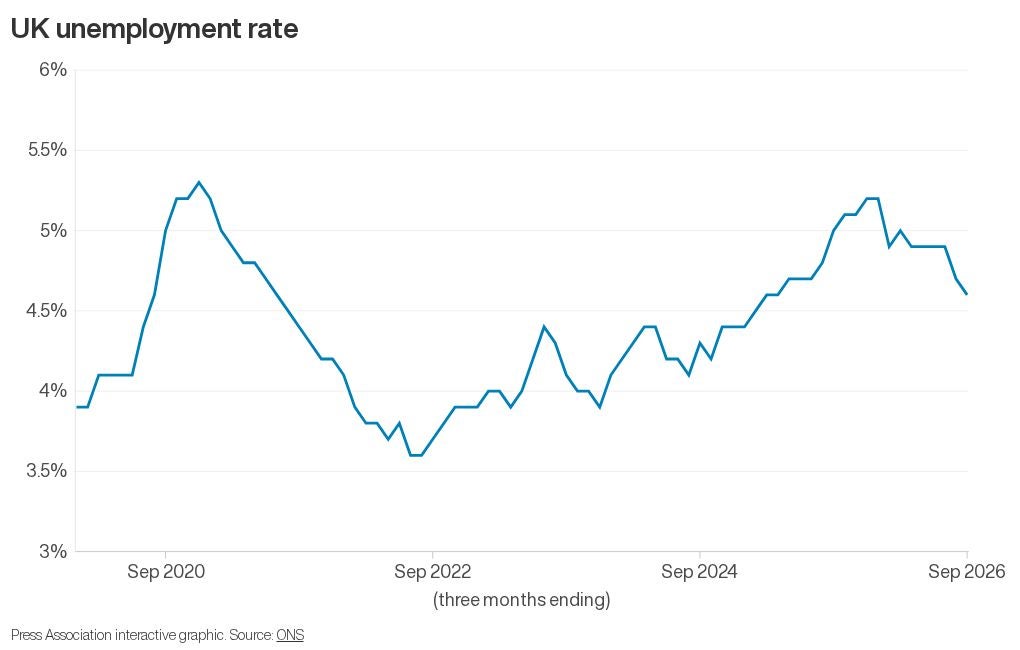
The UK’s unemployment rate has unexpectedly dropped to its lowest point in over a year, despite a continued steep reduction in available job vacancies.
Data from the Office for National Statistics (ONS) indicates that the jobless rate decreased to 4.6 per cent for the three months through to September, down from 4.7 per cent recorded in the preceding three-month period.
This represents the lowest level since April 2025, defying widespread forecasts among economists who had expected the rate to hold steady.
Nonetheless, vacancies fell by 22,000 over the quarter down to 690,000, marking the largest quarterly drop recorded since June 2025.
Payroll employee numbers also experienced a steep reduction, falling by 34,000 in October to 30.2 million, though these provisional figures remain subject to revision.
The ONS reported that growth in regular earnings slowed to 3.5 per cent in the three months to September, down from 3.7 per cent previously, though it continued to be outstripped by Consumer Prices Index (CPI) inflation, up 0.4 per cent in real terms.
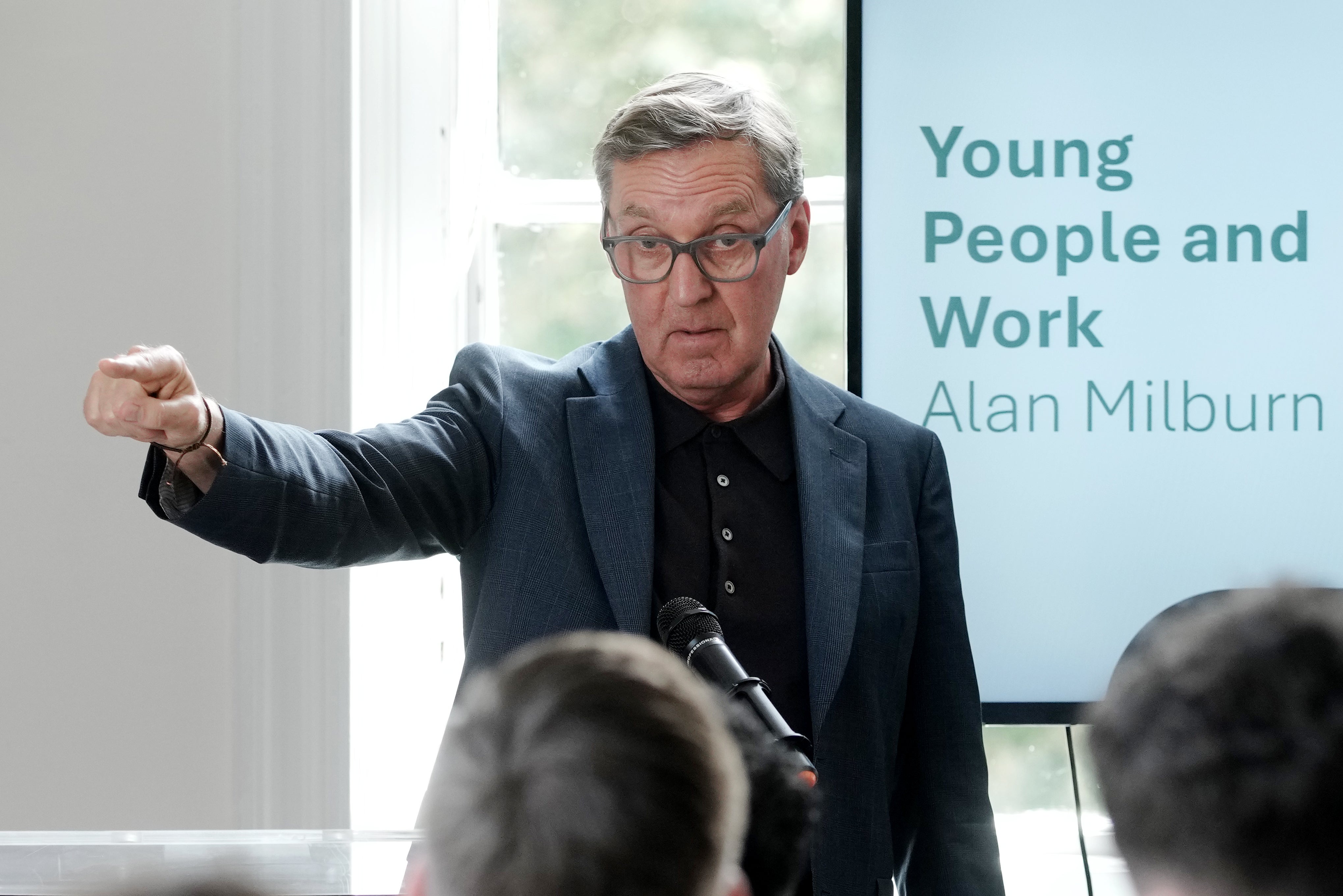
The release of the data arrives as a long-anticipated report on youth unemployment by former Labour health secretary Alan Milburn is published on Tuesday, setting out significant reforms to address the expanding numbers of young people across the UK not in education, employment or training – referred to as Neets.
The ONS figures showed unemployment among 16-24 year-olds eased back to 15.1 per cent in the latest three months, but that the inactivity rate for those not in work or full-time education remained high at 20.8 per cent.
Liz McKeown, ONS director of economic statistics, said it was a “mixed picture overall”.
She added the drop in vacancies was “concentrated in smaller businesses, which report that increased labour and operating costs are affecting their hiring decisions”.
“Meanwhile, regular wage growth slowed, driven by a fall in public sector wage growth, as the recent impact from the timing of pay awards has started to drop out of the numbers,” she said.
Martin Beck, chief economist at WPI Strategy, said the numbers showed that outside of the pandemic years, vacancies were now at their lowest level since 2014.
He said: “The problem isn’t that businesses are firing workers. It’s that they’re increasingly reluctant to hire them.”
He said this “raises further questions about the wisdom of government policies that have made employing people more expensive and potentially more burdensome, notably higher employer National Insurance contributions and expanded employment rights”.
He also warned against the Bank of England raising interest rates further after this month’s hike from 3.75 per cent to 4 per cent, which he said could badly impact the jobs market.
He said: “The danger now is that policymakers become so preoccupied with preventing another inflation shock that they overlook the damage being done to employment and growth.
“With hiring weak, wage pressures easing and energy prices retreating, another rate rise would risk turning a prolonged jobs market slowdown into something altogether more serious.”
A DWP spokesperson said: “Despite the difficult global backdrop, the unemployment rate is falling, and the number of people in work is rising.
“We are determined to go further. Our £2.5 billion youth employment support will give almost one million young people opportunities to earn and learn, while wider reforms including improving Jobcentres, will create a more personalised work and skills advice service for all.
“But we won’t be complacent and the Milburn Review will help shape our next steps for young people not in education, work or training.


