
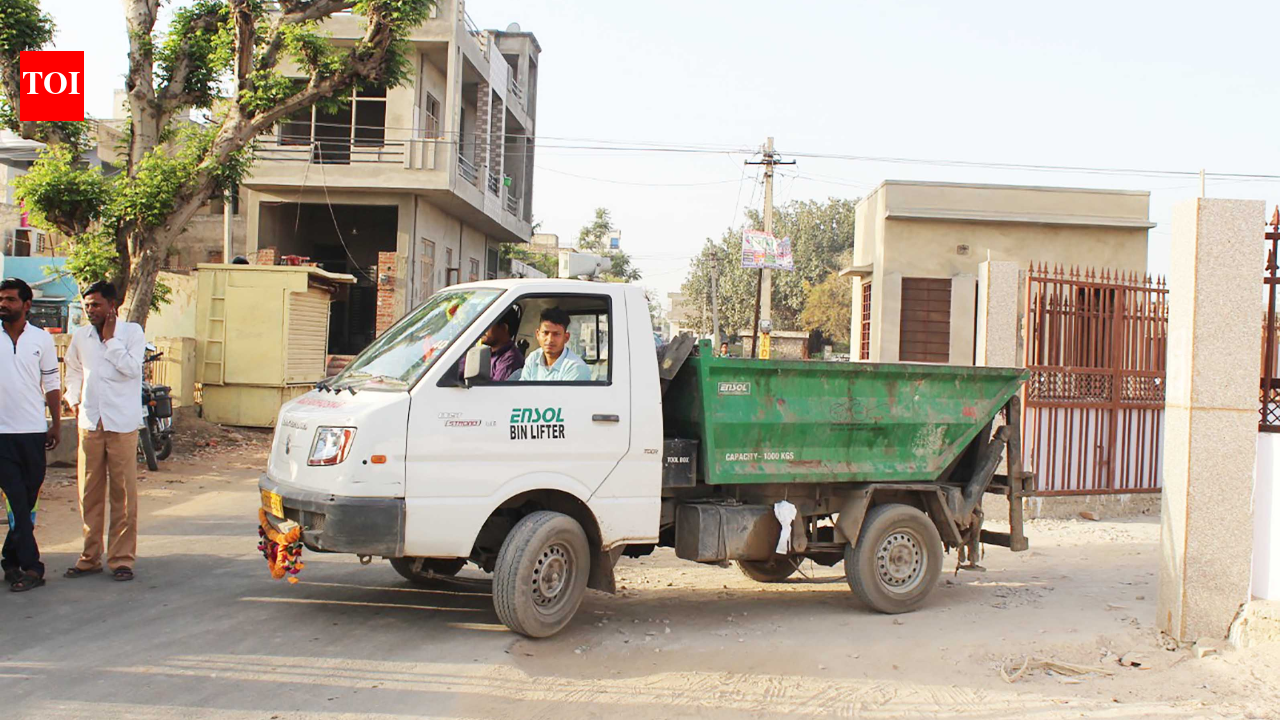
In September 2014, Abhishek Gupta and Abhinav Shekhar Vashistha were engineering students who had been given the responsibility of leading a cleanliness campaign at their college. They brought together more than 100 volunteers, organised clean-up drives and awareness programmes, and even held a half-marathon that attracted thousands of participants.The campaign ended on October 2. But the two friends continued thinking about the waste they had seen around them. Twelve years later, they are the co-founders of WeVOIS Labs, a Jaipur-based waste-management company that works across more than 36 cities. The company reports reaching 46 lakh people every day, managing more than seven lakh tonnes of waste and supporting over 2,000 sanitation workers and field staff.Their journey began with a question: could technology make waste collection more organised, help cities track where garbage goes and reduce the amount that ends up in landfills?According to a report by Raajwrita Dutta for The Better India, Gupta and Vashistha met in 2012 while studying mechanical engineering at the Indian Institute of Information Technology (IIIT), Jabalpur. Gupta grew up in Agra, while Vashistha spent his childhood in Jaipur. Working together on college festivals, student bodies and campus projects helped them discover their shared interest in solving problems.
A college cleanliness campaign led to a business idea
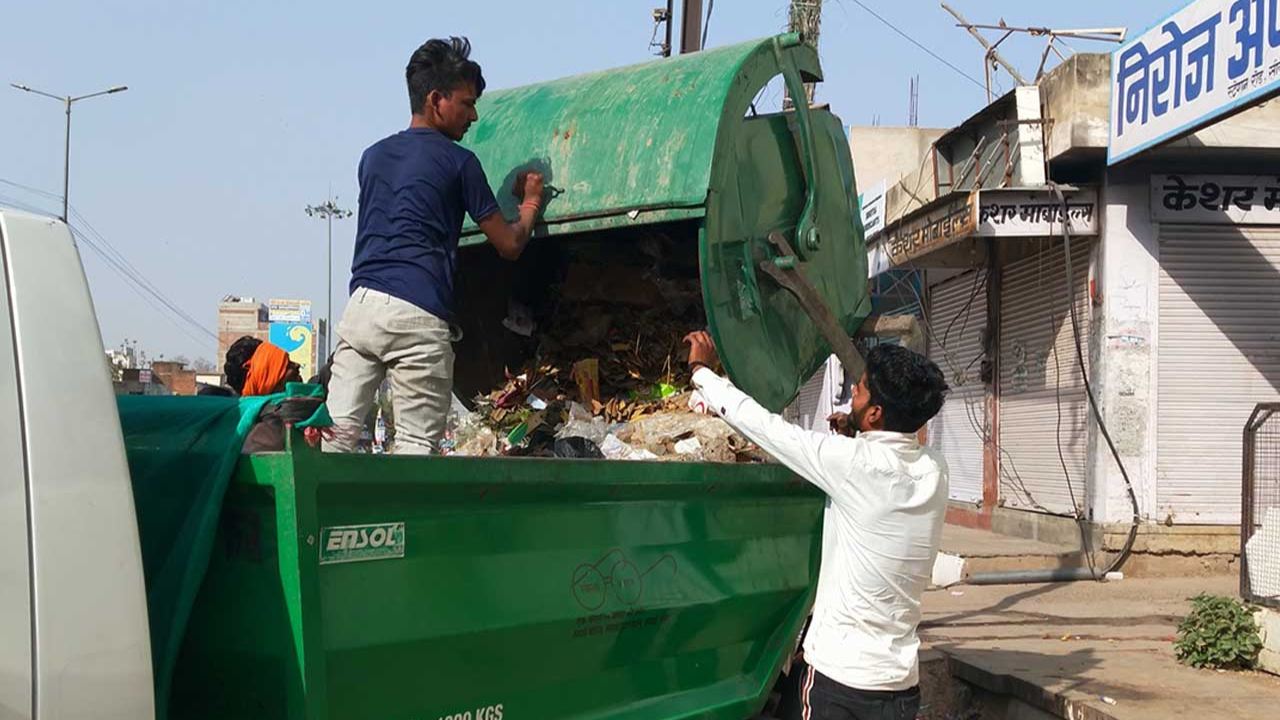
Image courtesy: WeVOIS
In September 2014, the two students were selected to lead their college’s cleanliness initiative in the weeks before the launch of the Swachh Bharat Mission. More than 100 students joined the campaign, taking part in brainstorming sessions, clean-up drives and community activities. The team also organised awareness programmes and a half-marathon that attracted thousands. The campaign ended, but the experience changed how they looked at their surroundings.The two began noticing overflowing bins, dumping grounds and piles of garbage. They read reports and studied urban sanitation systems. They also realised that cities often lacked reliable information about where waste was collected, how it was transported and what happened to it afterwards.After graduating in 2016, Gupta joined IIT Delhi for research, while Vashistha moved to IIT Bombay. However, both remained interested in building something that could address an everyday problem. By 2018, they had begun developing a technology platform to help cities track waste collection. Their first opportunity to test the idea came in Sikar, Rajasthan.They formally launched WeVOIS Labs on December 6, 2018. Their original plan was to develop software for municipalities. However, after the Sikar pilot showed improvements in collection and operational efficiency, local authorities asked them to manage the services themselves. On April 1, 2019, the company began its waste collection operations.
How technology tracks waste collection
WeVOIS’s system is designed to follow waste from the point it is collected to the stage where it is processed. According to the company’s official website, it provides technology-based, door-to-door waste collection services using an automated Internet of Things (IoT) system. Its stated approach combines collection operations with digital monitoring to improve efficiency.The company digitally maps properties in the areas it serves, including houses, apartments, hotels, hospitals and commercial establishments. Each property is assigned a unique Radio Frequency Identification (RFID) tag.Collection routes are planned using this information and shared with drivers through mobile phones. Residents can track collection vehicles and receive alerts before they arrive. When a worker collects waste, the RFID tag is scanned, creating a digital record of the visit. Supervisors and municipal authorities can use a central dashboard to monitor collection routes, attendance and vehicle movement.
What happens after the garbage is collected?
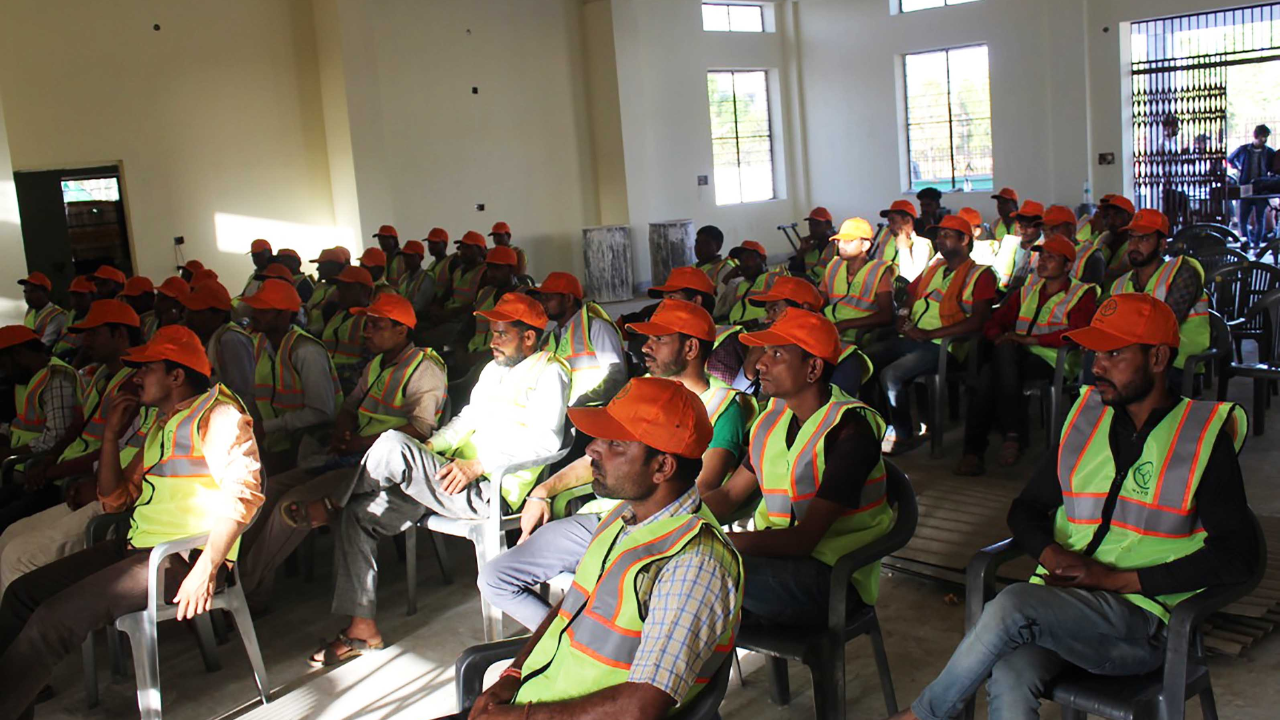
Image courtesy: WeVOIS
The founders also wanted to address what happens after waste leaves a household. Wet waste is sent for composting and other forms of organic processing. Dry waste reaches material recovery facilities, where paper, plastic, cardboard, metal, glass and textiles are separated.According to the company’s technology profile on the NITI Aayog Frontier Tech platform, cameras, sensors and AI-enabled systems help identify and sort recyclable materials. Recyclables are sent to authorised partners, while non-recyclable waste is converted into refuse-derived fuel, which can be used by industries such as cement manufacturing.The company also established a textile recycling facility in Jaipur after identifying discarded clothes and fabric as another waste stream that needed attention. It collects pre-consumer and post-consumer textiles from households, residential societies, donation drives and manufacturing units. Workers sort the material and process discarded fabric into reusable fibres.
From Sikar to more than 36 cities
After its initial operations in Sikar, WeVOIS expanded across Rajasthan and later entered Maharashtra, Tamil Nadu, Uttar Pradesh, Haryana and other states. According to the company’s profile published on the NITI Aayog Frontier Tech platform on October 29, 2026, its operations now cover more than 36 cities and reach over 46 lakh citizens daily. The company reports having managed more than seven lakh tonnes of waste since it began collection operations in 2019. The company supports more than 2,000 sanitation workers and field staff. Its long-term target is to help build 100 zero-waste cities.


