
The John F. Kennedy Center for the Performing Arts felt like a school shuttered for summer vacation.
When David Jones recently arrived for the first time in months, there were new metal detectors in the lobby but hardly anybody for the security guards to wave through. He hoped to pick up new sheet music, but the building’s librarian was not there. Neither were most of the faces he used to see daily. Outside, the large banners that typically promoted new shows had come down.
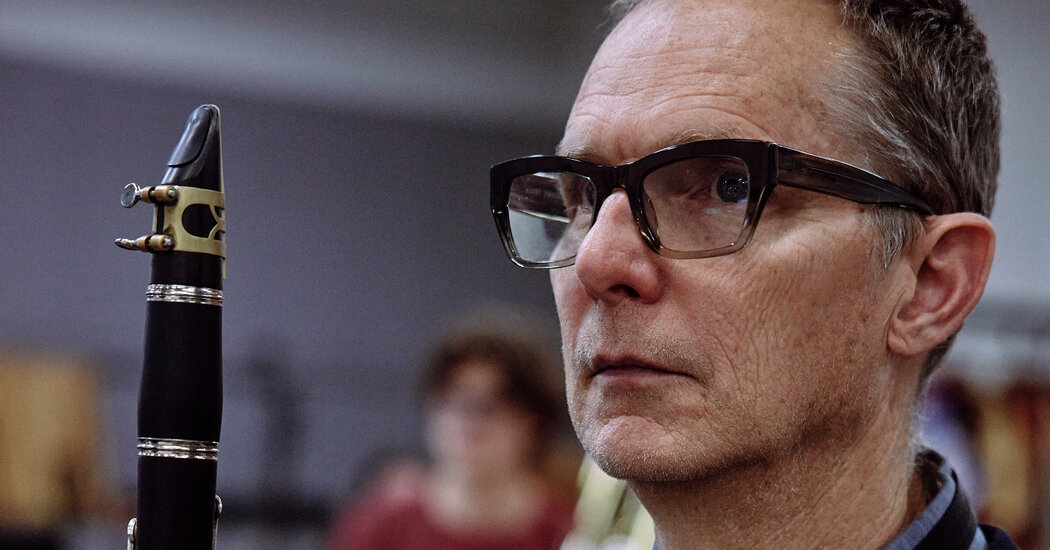
Jones, 60, has been the principal clarinetist of the Kennedy Center Opera House Orchestra since 1998. From its perch beneath the stage, the group anchors performances for the Washington National Opera and ballet and theater productions at the treasured cultural institution.
But this year, Jones has rarely stepped foot in the building.
President Trump’s takeover of the traditionally nonpartisan center kept many of the groups Jones was scheduled to perform with away from Washington. The creative team behind “Hamilton” was among the first to protest. After Trump’s name was added to the building’s facade, the San Francisco and New York City ballets followed suit. The Washington National Opera decided to pack up and leave its longtime home.
The cascading cancellations were devastating for the orchestra and its 61 professional musicians. Their annual salary is paid by performance and the lack of work has been demoralizing. The whole ensemble last played together in the Kennedy Center with the American Ballet Theater in February.
And the future is even bleaker: The Kennedy Center is scheduled to close in July for a two-year renovation.
The instability is an unexpected coda to Jones’s career. Through the Clinton, Bush, Obama, Trump and Biden administrations, all he has known are late-night shows and long stretches of rehearsals. A performance of “The Nutcracker” could be followed by a rehearsal for a show with the Temptations or Wagner’s “Ring” cycle. He has played with opera greats like the tenor José Carreras and annually at the Kennedy Center Honors, including with Aretha Franklin in 2015.
“The variety that I get to do is almost like a dream come true,” Jones said.
Jones is always chasing a new sound, a new skill, a new expertise of the score in front of him. He makes his own clarinet reeds and scouts saxophone mouthpieces.
Those decades of expertise are now imperiled.
“When the sun goes down at night and I’m not at the Kennedy Center, for a moment I get nervous,” he said. “I’m going to have to get used to that feeling.”
A Coveted Seat
As a musician growing up in San Francisco, Jones saw the Louise M. Davies Symphony Hall as vaunted as the Vatican, so important and grand that only those of a certain caliber would be invited to play inside. Simply rehearsing there, as he did in high school as an inaugural member of the San Fransisco Youth Orchestra, was transformational.
“You’re playing in this space with these good players, and I realized, ‘Wow, this is what I want to do,’” he said.
Jones had been introduced to the clarinet by his grandfather, an amateur musician. In high school he borrowed an alto saxophone from a classmate and began to play that as well. Now, flute and piccolo are also in his repertoire.
After taking private lessons, Jones went on to study music performance at Northwestern University. Freelance gigs at weddings and bar mitzvahs tided him over while he prepared for auditions at esteemed orchestras. In one fantasy, he worried about whether he could finish his degree if he won a position while still in college. In reality, it took a decade.
It was not for lack of trying. There were auditions with the San Francisco Symphony, and separately the ballet; the Chicago Symphony and the city’s Lyric Opera; the Metropolitan Opera in New York; and orchestras across the South, including San Antonio, Dallas, New Orleans and Charleston, S.C.
For each audition, Jones would practice for hours to master Mozart, Leonard Bernstein and the rest of the clarinet canon. He paid for plane tickets and hotel rooms across the country, all to play before judges for five minutes.
By the time he won a seat at the Kennedy Center, he had two toddlers at home. The moment, he said, felt like “Christmas and your birthday and everything at once.”
“The day you begin an instrument, you’ve begun practicing for that audition,” he said. “So you feel the weight of, ‘I have been preparing for this experience for the last 25 years.’”
The Kennedy Center’s orchestra is filled with similar stories. One member left a military band last year for the orchestra’s versatility. Another dropped out of a Ph.D. in mathematics to play the horn professionally. Some graduated from the Juilliard School and several have played with the Metropolitan Opera.
The musicians became a family, hanging out between rehearsals and celebrating after big shows in the orchestra’s lounge. It is furnished with couches, puzzles and an old television from Jones’s mother. The framed pictures on one wall include a group photo with Justice Ruth Bader Ginsburg.
Each musician has a locker for instruments and a mailbox for new sheet music. These days, both are empty.
‘Punched in the Chest’
The first sign of trouble for the orchestra came during last year’s world premiere of “Schmigadoon!,” which spoofs Golden Age musicals. A few hours before a performance in February 2025, President Trump announced his intentions to fire Kennedy Center board members and install himself as chairman.
“It felt like we were just punched in the chest,” Jones said.
Suddenly, the Kennedy Center became a political battleground.
A new dance director, echoing directives from the administration to rid the center of what it called “woke” programming, promised to “end the dominance of leftist ideologies in the arts.” Drag performers protested inside the theater during the opening night of “Les Misérables” after President Trump walked the red carpet. In a reversal from his first term, where he boycotted the Kennedy Center Honors, he became the first president to host the annual event. His love for 1980s musicals was on display, with Jones and other musicians playing “The Music of the Night” from “The Phantom of the Opera.”
At the opening of the Kennedy Center in 1971, a group of local musicians performed Bernstein’s “Mass,” which Jacqueline Kennedy had commissioned for the occasion. The musicians convened again and again as ballets from around the world began to travel to Washington and productions of “Candide” and “West Side Story” took the stage. After a strike, the group was recognized as a formal orchestra in 1978 and began holding rigorous auditions like industry counterparts.
The Kennedy Center Opera House Orchestra says it is the only group in the country dedicated to performing for three genres: opera, ballet and musical theater. It has separate contracts with the Kennedy Center and the Washington National Opera that outline a base guaranteed salary and contributions to health insurance accounts.
Without the Kennedy Center engagements, members have not seen a full paycheck in months.
“The orchestra plays an integral role in performances at the center,” the Kennedy Center said in a statement, “and as we wind down towards renovations, members under the collective bargaining agreement remain to be compensated independent of the performance schedule.”
After the opera severed its long-term relationship with the Kennedy Center in January, things got complicated. For days, Jones’s parking pass and his identification card to gain access to the building no longer worked. A management team of three people dwindled to one through layoffs. The other employee followed the opera in the divorce.
The Kennedy Center has since reshuffled its remaining staff to support the orchestra and assured the musicians they will remain employed while the building is closed. Both of the orchestra’s contracts are set to expire next year.
New Routines
The orchestra’s musicians are reckoning with the disruption. Danielle Cho, a cellist, has taken on more private students. Peter de Boor, a horn player, is kept busy by his involvement with a local musicians’ union.
Chris Jewell, a bassoonist, puts the unease more bluntly.
“To now be facing the possibility of having to find a new career at this point in my life when the orchestra is operating at the highest level and audiences were previously robust, it all seems so pointless,” he said.
Jones has started to play more tennis. He practices music at home in Silver Spring, Md., and also gives private lessons to college students.
Instead of a musical life based at the Kennedy Center, Jones finds himself on the road. He has pinch-hit in performances at the Signature Theater in Arlington, Va., and played with a local group called the PostClassical Ensemble at Georgetown University. This summer he will perform at Wolf Trap in Virginia, substitute on Broadway and play at Lincoln Center with the New York City Ballet.
Jones is still playing with the Washington National Opera, which is now a roving company. He drove to George Washington University for “The Crucible” and Baltimore and Bethesda, Md., for “West Side Story.”
Before the Kennedy Center closes this summer, Jones will get to play inside its opera house once again, beneath the red and gold chandelier that was a gift from Austria.
Most of his colleagues will not. “Moulin Rouge! The Musical” is a small production, with Jones playing the clarinet, piccolo, flute, tenor saxophone and baritone saxophone.
The orchestra’s reduced workload has pushed some members to take auditions elsewhere. But Jones is not thinking about retirement or looking for a new job. He treasures the one he has held for half his lifetime, the one he sometimes thinks of in the past tense.
“I was so lucky to have this time in that place,” he said.

