
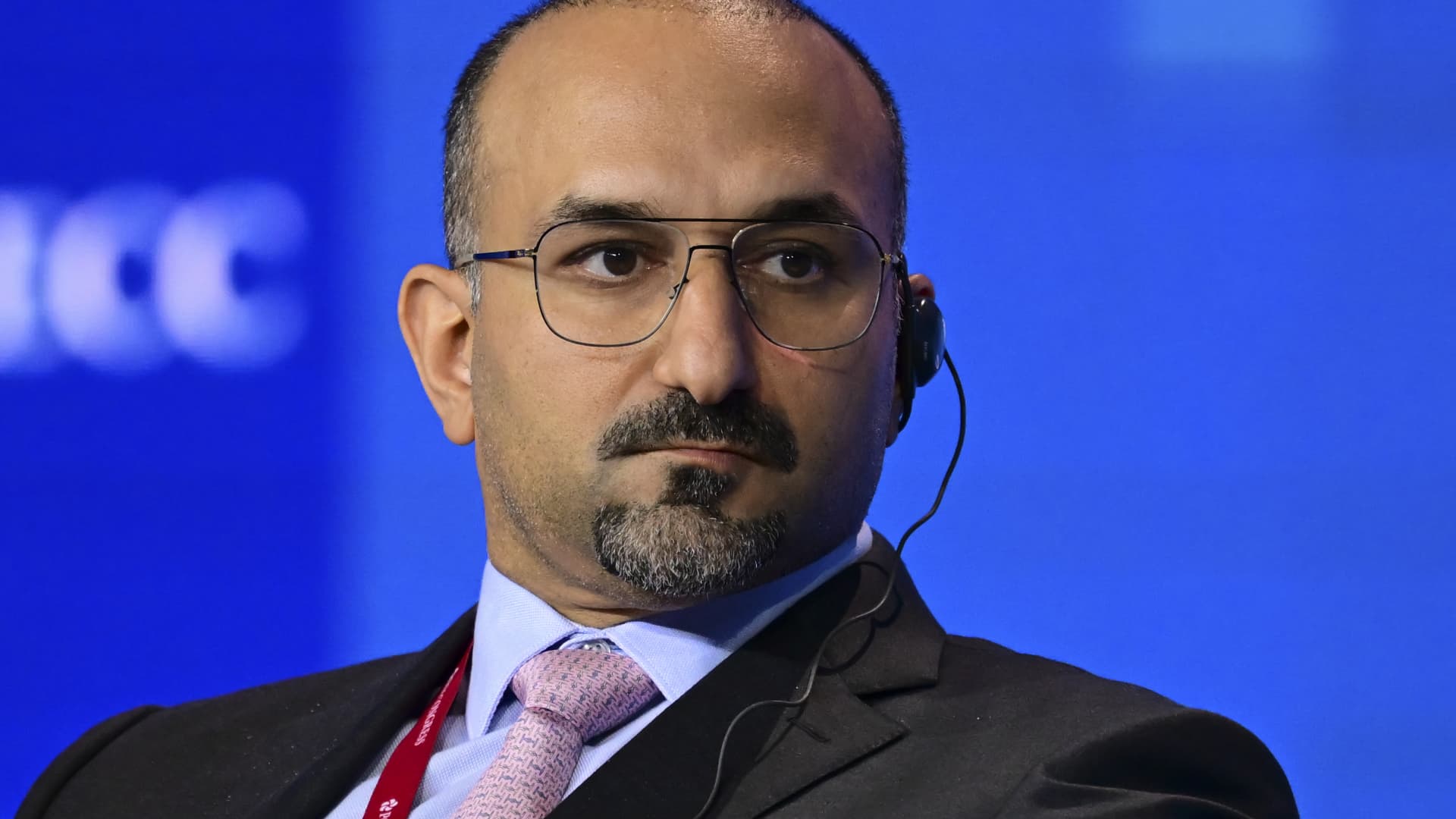
The trade deal between the U.K. and Gulf states is a “monumental achievement,” Bahrain’s industry minister told CNBC.
Abdulla bin Adel Fakhro, Bahrain’s minister of industry and commerce, said the free trade agreement, announced on Wednesday, was a win-win for the U.K. and Gulf Cooperation Council, and “very significant.”
“The size of this FTA [free trade agreement] is very big, the bilateral trade between the countries is very big and the investment between the countries is also very large,” he told CNBC’s Dan Murphy, saying he expected those areas of cooperation to grow thanks to the deal.
“We really consider it a monumental achievement; it is quite significant for both the GCC and the U.K,” he added.
Bahrain Minister of Industry and Trade Abdulla bin Adel Fakhro, attends the session held as part of the St. Petersburg International Economic Forum (SPIEF) in 2024.
Anadolu | Anadolu | Getty Images
The deal comes at a turbulent time for the GCC, with the U.S.-Iran war causing turmoil for the region’s key oil and gas industries, exports and economies. Regional ministers have been keen to stress that the GCC remains open for business, fearing the ongoing conflict could deter investors.
“The Iranian aggressions on the GCC were unprovoked and unacceptable and illegal, and the response of the GCC countries was very wise and very restrained, and focused on stability and continuing economic growth and even accelerating economic growth,” Fakhro said.
“Today, the GCC as a bloc is significantly more united, stronger and more integrated and focused on areas that we need to strengthen, whether it’s industrial manufacturing, supply chains and the like … than ever before,” the minister added.
Mutually beneficial
The GCC comprises Bahrain, Kuwait, Oman, Qatar, Saudi Arabia and the United Arab Emirates, which have a combined GDP of over $2 trillion and more than 57 million people.
The deal will remove an estimated £580 million, or $780 million, in duties a year, based on current U.K. exports to the GCC, once it is fully implemented, with £360 million of this amount “to be removed on day one of the agreement entering into force,” the U.K.’s Department for Business and Trade said.
Some Gulf tariffs on U.K. imports — such as those on cars, turbojets and aerospace parts, as well as food products like cheddar cheese and chocolate — will be removed immediately, while others, such as tariffs on EVs, will be removed after an agreed five or 10-year period.
Fakhro said the deal was beneficial to the Gulf with the U.K. seen as a leader in the fintech, services and advanced manufacturing sectors. “We expect there will be a lot more collaboration in those industries,” he said. The Gulf’s petrochemicals industry would greatly benefit from the trade deal, he added.
British Prime Minister Keir Starmer (L) is welcomed by Emirati Chairman of the Executive Affairs Authority Khaldoon Khalifa Al Mubarak as he arrives for a visit on April 9, 2026 in Abu Dhabi, United Arab Emirates.
Wpa Pool | Getty Images News | Getty Images
As the deal was announced on Wednesday, the U.K. described it as a “major win” and a “historic” agreement that could boost its economy by an estimated £3.7 billion ($4.9 billion) every year over the long term.
“The U.K. could see a boost to growth and higher wages for decades to come after becoming the first G7 country to secure a trade deal with the GCC today — strengthening our economic partnership with the region, supporting jobs in the long term, and bolstering domestic resilience,” the U.K.’s Department for Business and Trade said as the agreement was announced.
The deal with the GCC reflected the U.K.’s “solidarity and long-term cooperation with its Gulf partners,” according to the British government.
The deal is a welcome boost for British Prime Minister Keir Starmer, who faces challenges to his leadership, and as the U.K. economy comes under pressure due to the Iran war.
“Today’s agreement is a huge win for British business, and for working people who will feel the benefits in the years ahead through higher wages and more opportunities,” Starmer said of the deal.
“The Gulf states are valued economic partners and this agreement deepens that relationship, building trust and unlocking new possibilities for trade and investment,” he added.

