
Inflation is getting out of control, and I’m not talking about prices at the supermarket.
That’s right, folks. If you’ve been paying attention, the market for a quarterback in college football continues to go through the roof, and this week it seems another domino has fallen in the great signal caller NIL saga.
This page may contain affiliate links to legal sports betting partners. If you sign up or place a wager, FOX News may be compensated. This content was created by a team that works independently from the FOX newsroom.
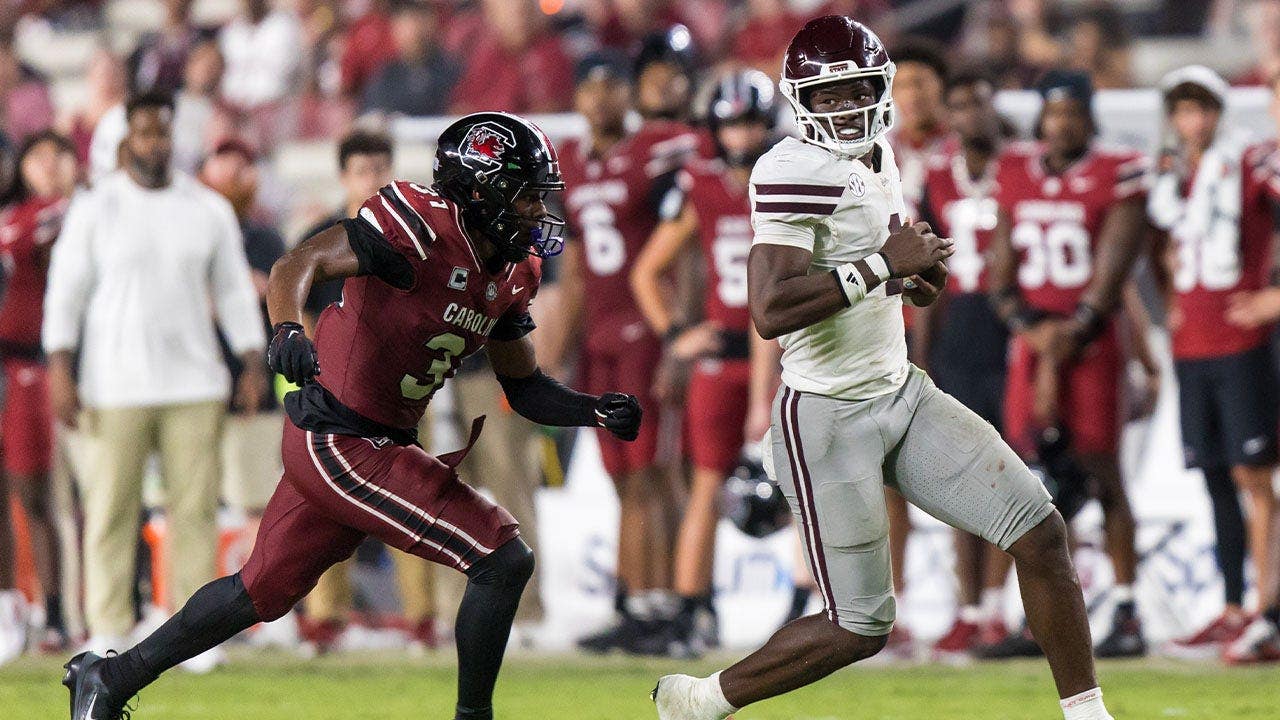
Mississippi State’s Kamario Taylor is now the new recipient of a $7.5 million deal to stay in Starkville, with reports that the number could climb north of $9 million with incentives.
Mississippi State Bulldogs quarterback Kamario Taylor (1) scrambles past South Carolina Gamecocks defensive back Kelvin Hunter (3) in the second half at Williams-Brice Stadium. Mandatory Credit: Jeff Blake-Imagn Images (Jeff Blake-Imagn Images)
Let’s get this out of the way right now: I’m happy for Taylor and for Mississippi State fans.
The Bulldogs haven’t had much to cheer about since the turn of the decade, and Taylor looks like one of the brightest young passers in the country, albeit with a limited sample size to his name.
KIRBY SMART CLARIFIES COMMENTS AFTER TAKING SHOT AT HOW MUCH COLLEGE FOOTBALL PLAYERS ARE MAKING
I also understand why MSU felt like they needed to do this.
With some of the transfer portal sharks circling and the market for quarterbacks only getting more competitive, it was smart for the program to lock down someone scouts believe will be a top-tier draft pick whenever he decides to leave.

Mississippi State Bulldogs quarterback Kamario Taylor (1) runs the ball against Wake Forest during the first half of the Duke’s Mayo Bowl NCAA college football game. The game took place in Charlotte, North Carolina, on Jan. 2, 2026. (AP Photo/Scott Kinser)
But there’s that pesky “market” word rearing its ugly head.
We’ve seen it in the NFL, where mediocre quarterbacks with thin resumes are given massive deals based solely on the fact that they were either high draft picks that flashed potential or are essentially warm bodies.
I won’t name names, but a certain South Florida franchise that I root for is still paying for their quarterback to ride the pine with another team about 650 miles to the north.
This will absolutely start happening in college, though some would argue it already has.
Remember when Texas Tech paid Brendan Sorsby somewhere in the neighborhood of $5-6 million because he had a solid season with Cincinnati?
That didn’t work out for the Red Raiders, and that was due to issues entirely off the field.

Texas Tech’s Brendan Sorsby looks on during the spring football game at Jones AT&T Stadium on April 17, 2026. (© Nathan Giese/Avalanche-Journal / USA TODAY NETWORK via Imagn Images)
How about when Tennessee paid Nico Iamaleava a reported $8 million (roughly $2.4 million a season) out of high school, only for him to heed the words of the Pet Shop Boys and “Go West” to UCLA?
That happened in 2022, when NIL was in its infancy, so you know those numbers are only going to trend upwards.
I mean no offense to Kamario Taylor, who by all accounts is a brilliant quarterback when healthy, but he’s thrown a total of 236 pass attempts in his career and hasn’t even played a whole season of football.
Imagine what a player like Keelon Russell will command if he continues to have the season he’s having with Alabama.
WHICH TEAMS HAVE THE MOST VALUABLE COLLEGE FOOTBALL ROSTERS HEADING INTO 2026 SEASON?
If the Crimson Tide end up winning an SEC Championship, their quarterback could ask for a small private island, and the boosters would either have to capitulate or watch him go to Miami or Texas A&M for a similarly hefty fee.
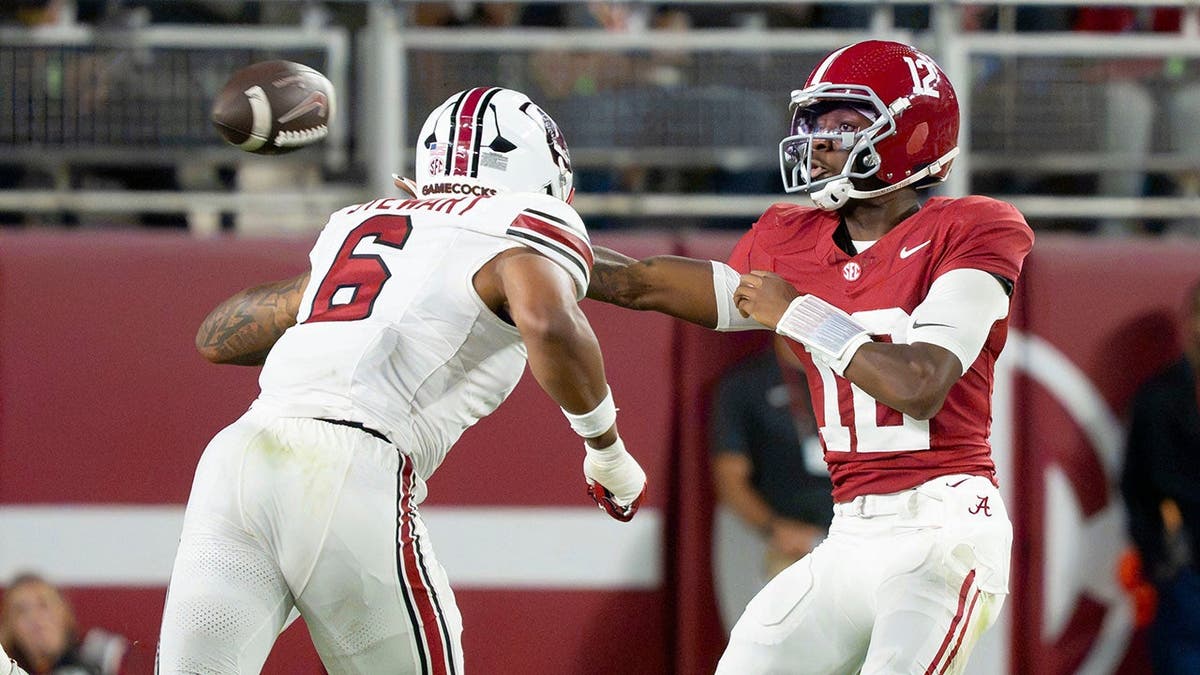
Alabama quarterback Keelon Russell makes a sidearm throw around South Carolina edge rusher Dylan Stewart at Saban Field at Bryant-Denny Stadium in Tuscaloosa, Ala., on Sept. 26, 2026. (USA TODAY Network via Reuters Connect)
CLICK HERE TO DOWNLOAD THE FOX NEWS APP
These rosters will continue to ratchet up in price.
Just a few seasons ago, Ryan Day publicly pleaded with his booster base, saying he needed $20 million to fund a championship roster.
Today, that number would get you laughed out of the room at most competitive, Power 4 programs.
I don’t know where the sport is headed from here, but one thing is for sure, this influx of money isn’t slowing down any time soon.
The sport is generating a ton of revenue and the players hold all the power.
Salary caps and collective bargaining agreements are all being quietly suggested, but for now, college football is still operating with a “wild west” format.
Whether or not that’s sustainable at this pace remains to be seen.


