
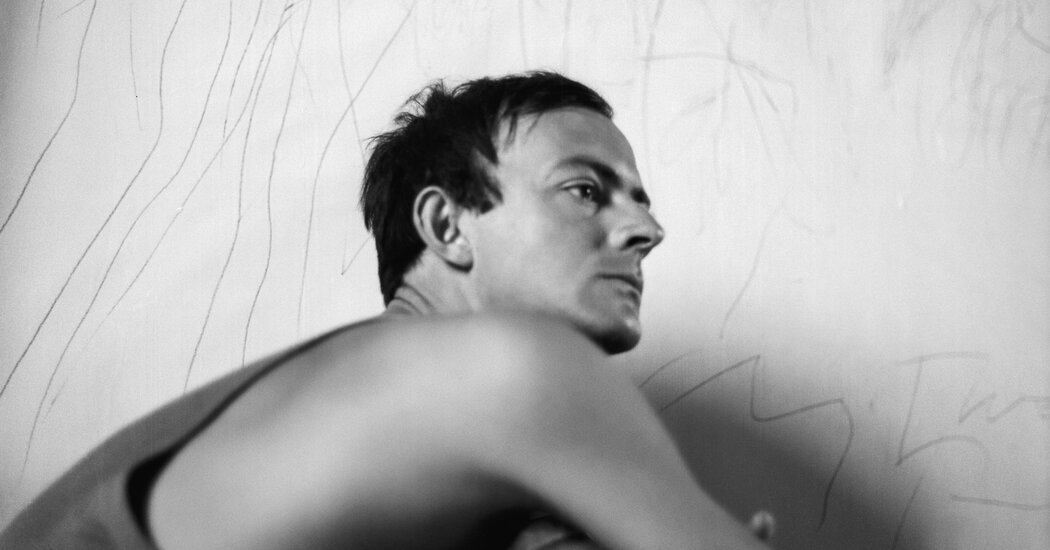
Cy Twombly’s paintings are daubed, scrawled, smeared and blotched, and his sculptures are assembled from castoff materials like wood scraps, metal pipe and nails. Unexpectedly beautiful, alluding to graffiti and classical mythology, they are among the great achievements of American art in the second half of the 20th century.
Just like his artwork, Twombly’s life confounded convention. In 1957, a few years after the breakup of his romantic relationship with Robert Rauschenberg in New York, Twombly went to Italy. In Rome he met Luisa Tatiana Franchetti, known as Tatia, who was the sister of Giorgio Franchetti, a collector of his art. Cy and Tatia married in 1959, and their only child, Alessandro, was born at the end of the year.
The couple eventually separated, although they remained very close and never divorced. Cy in the mid-1980s moved south of Rome to Gaeta, near his companion and assistant, Nicola Del Roscio, and Tatia later lived primarily in Ronciglione, in the countryside northwest of Rome. Tatia died in 2010, Cy in 2011. In 2022, their granddaughter, Maia Twombly, discovered cardboard boxes in the attic of the Ronciglione house that contained thousands of photo negatives that Tatia had made, primarily in the ’50s and ’60s.
She was delighted to find that they showed Cy relaxing before the camera. (“Rauschenberg was the only other person who ever photographed him that way,” she said.) Even better, along with privileged access, the pictures displayed Tatia’s artistic acumen. After printing them and making a selection, Maia has just published a book, “Stella Honey,” which was Cy’s term of endearment for his wife. A gallery show of the photographs will open June 3 at the Spazio Treccani Arte in Rome.

